

What a "feeding kit" actually is (and isn't)
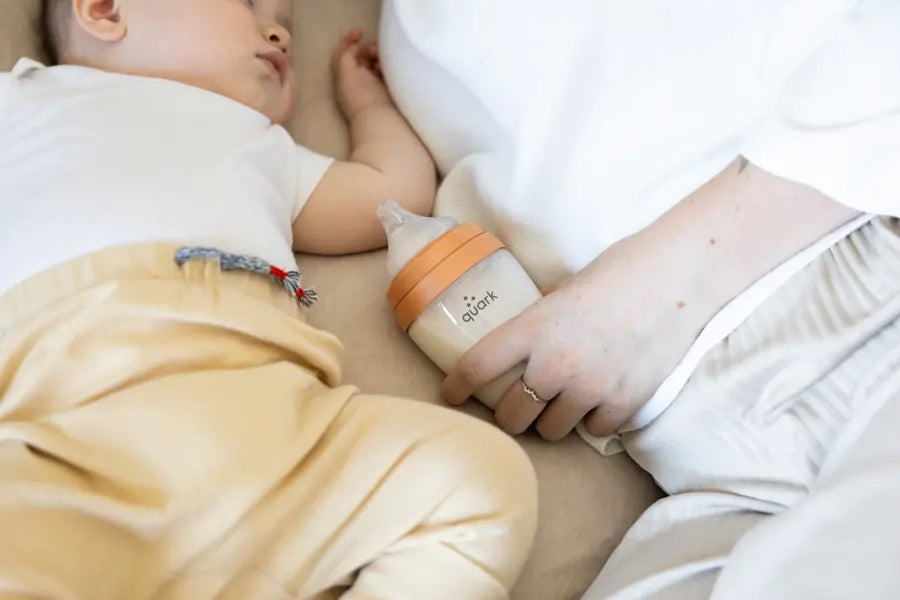
Your diaper bag carries everything: diapers, wipes, a change of clothes, the whole survival load. The feeding kit is the narrow slice inside it that handles bottles and only bottles. Keeping it as its own pouch matters more than it sounds: when a baby is hungry in a parking lot, you don't want to be excavating a full bag for a clean nipple. If you're still building the larger bag, our ultimate diaper bag packing guide covers the broad checklist; this article zooms all the way in on the part that gives a warm bottle away from home.

The mental model is simple. A good feeding kit answers four questions before you leave: Do I have a clean bottle? Is the milk still safe? Can I warm it where I'm going? And what's my plan if one of those fails? Pack to those four and you've covered almost every outing: the errand that runs long, the appointment that overruns, the "quick" visit that becomes lunch.
The travel feeding kit checklist
Here's the kit, item by item, with the reason each one belongs in a bag you're carrying on your shoulder. Treat the quantities as a starting point and scale them to how long you'll be out, but the honest rule of thumb is to pack for one more feed than you think you'll need.
| What to pack | Why it belongs |
|---|---|
| Bottles: one per expected feed, plus one | Pre-clean and pre-assemble them at home so you're never washing parts in a public sink. The "plus one" covers a dropped nipple or a feed that runs longer than planned. |
| Pre-measured formula (in a dispenser or individual portions) | Measure the powder at home; carry water separately and mix on the spot. It's faster, cleaner, and avoids made-up bottles sitting around losing their safe window. |
| Or chilled expressed milk, kept cold | An insulated pouch with an ice pack keeps expressed milk cold in transit. How long it stays safe is a real rule, not a guess. Follow the linked storage guide for the actual windows. |
| Clean water for mixing | Bring your own so you're not relying on whatever tap is available. Keep it separate from powder until you're ready. |
| A cordless way to warm | The single hardest thing to improvise away from home. A USB-C portable warmer means you're not begging for hot water or microwaving (which you shouldn't do anyway). |
| A power bank + USB-C cable | A cordless warmer is only as useful as its power source. One charged bank quietly removes the most common point of failure. |
| Minimal cleaning kit | A small bottle brush, a zip bag for "used" parts, and a few paper towels. You're containing the mess until you get home, not running a full wash on the go. |
| Burp cloth + bib | Feeding away from home is messier (unfamiliar position, distracted baby). Two cloths weigh nothing and save a clothing change. |
| One labelled backup of everything small | An extra nipple, an extra cap, an extra portion of formula. The small parts are exactly what gets dropped or lost, and exactly what you can't buy in a parking lot. |
If bottle-feeding itself is still new, it's worth grounding the kit in the feed it serves: our complete guide to bottle-feeding a newborn and our guide to bottle-feeding for breastfed babies both cover the rhythm you're trying to recreate on the road, so the kit supports a calm feed rather than a frantic one.
Milk and formula: pack cold, mix late
The two safe ways to carry food are "measured but not mixed" and "already liquid but kept cold." For formula, carry the powder pre-portioned and the water separately, then combine right before the feed. That keeps a made-up bottle from sitting at the wrong temperature for too long. For expressed milk, the job is keeping it cold and knowing your clock.
How long milk stays safe at room temperature, in a cooler, or once warmed is genuinely a safety question with real numbers, and we keep those numbers in one carefully sourced place rather than paraphrasing them here. Before a longer outing, skim our complete breast milk storage guide for the storage and thawing windows, and our guide to warming baby milk for what "warm enough, not hot" actually means. If you're prepping bottles to hand off as well (to a partner or a caregiver), the daycare bottle prep and labelling guide translates the same discipline into a label-and-store system.
Warming on the go: the part everyone underestimates
At home, warming is the easy step. Away from home, it's the one that turns a quick feed into a stressful one, because the usual options disappear. Hotel-room kettles are inconsistent, café staff are busy, and a thermos of hot water cools and overshoots. (We compared those exact fallbacks in our hotel hot-water guide if you want to see why they're so hit-or-miss.) This is the gap a cordless, controlled warmer is built to close.
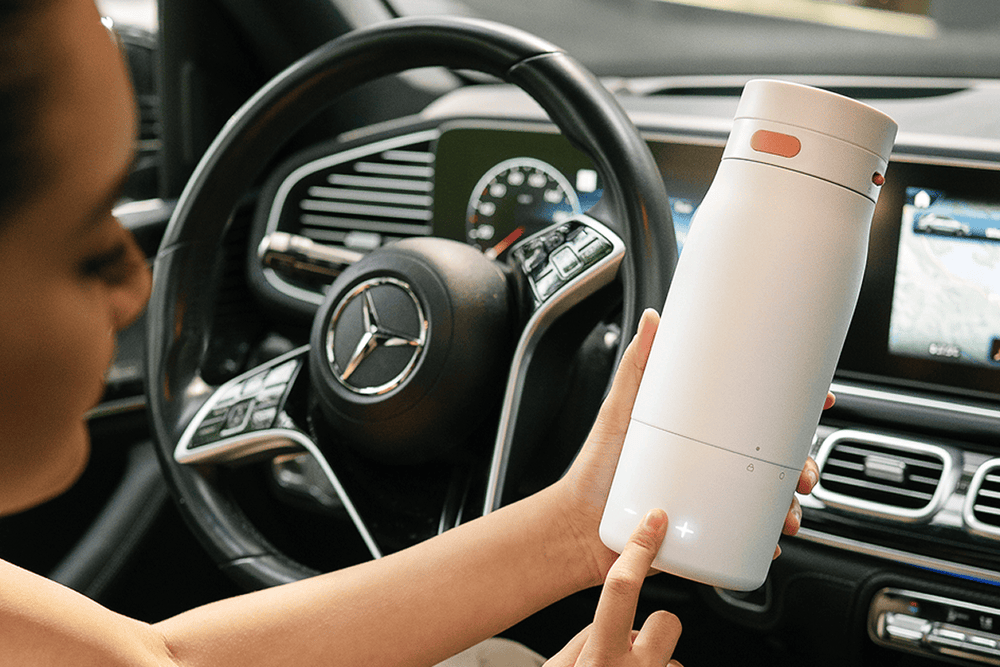
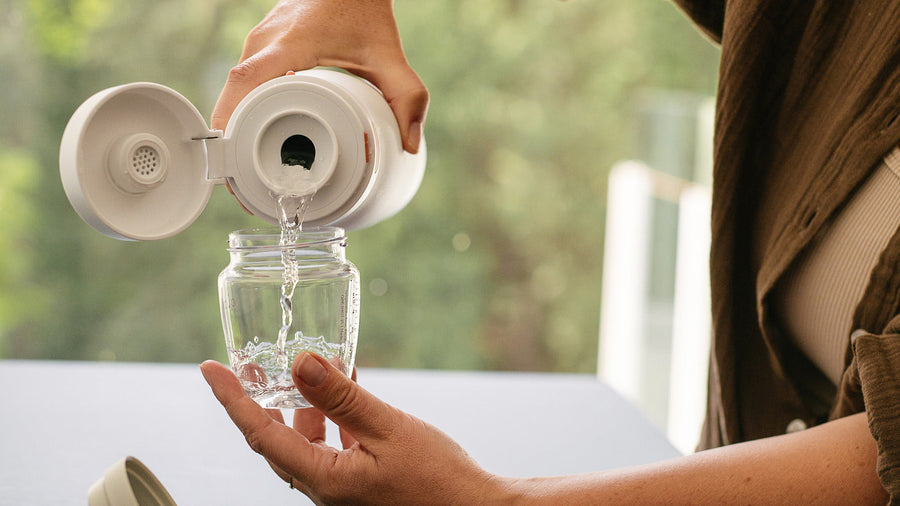
The BuubiBottle Smart Portable Milk Warmer is the piece of the kit that handles this. It's a USB-C powered, Tritan-made portable warmer that runs in a controlled 37–50 °C (98–122 °F) window and shows the temperature in real time, so "is it ready?" becomes a number rather than a guess. At 300 ml / 10 oz it's sized for a feed, and because it's cordless you're not anchored to an outlet or a heat source you don't trust. It doesn't break physics: a bigger, colder bottle still takes longer. But it removes the two slowest, most frustrating parts of warming away from home: finding heat and second-guessing the result.
Deciding whether a portable warmer is worth a slot at all? Our portable vs. traditional warmer comparison lays out the trade-offs, and our look at USB-C warming for travel covers why the power format matters once you leave the kitchen. For outings and errands, "cordless and controlled" beats "fast but tethered" almost every time.
Tailoring the kit to the trip
The same core kit flexes for the length and type of outing. A short errand and a day of flying are not the same packing problem.
- Short errands (an hour or two): one or two bottles, a single pre-measured portion, water, and the warmer. Lean, fits in the main pocket.
- Half- and full-day outings: scale up portions and water, add the insulated pouch with an ice pack, and double-check the power bank is charged. This is where the "plus one" feed pays off.
- Car rides: warming while moving is its own challenge. Never warm a bottle unsafely in a moving car, and plan a stop. Our guide to bottle warming for car rides and flights walks through doing it safely.
- Air travel: formula, expressed milk, and the water to mix them are generally allowed through security in reasonable quantities, but rules vary and get updated. Check the current TSA traveling-with-children guidance before you fly rather than relying on memory.
However you scale it, the win is the same: build the kit once as a self-contained pouch, restock it the moment you get home, and it's ready for the next outing without you having to think about it.
Frequently asked questions
What's the difference between a travel feeding kit and a diaper bag?
The diaper bag is everything: diapers, wipes, clothes, feeding. The feeding kit is the small self-contained pouch inside it dedicated to giving a clean, warm bottle. Keeping it separate means you can grab just the feeding part fast when your baby is hungry.
How many bottles should I pack for an outing?
A practical rule is one bottle per feed you expect, plus one extra. The spare covers a dropped nipple, a longer-than-planned outing, or a feed you didn't anticipate. Pre-clean and pre-assemble them at home so you never have to wash parts in a public sink.
Should I pre-mix formula before leaving home?
No. Carry pre-measured powder and clean water separately, then mix right before the feed. A made-up bottle has a limited safe window once mixed, so mixing on the spot avoids that clock running while you travel. For expressed milk, keep it cold in an insulated pouch and follow the linked storage guide for safe times.
How do I warm a bottle when I'm away from home?
Bring a cordless warmer with you rather than relying on hotel kettles, café hot water, or a cooling thermos. The BuubiBottle Smart Portable Milk Warmer is USB-C powered with a real-time temperature display, so you can bring milk to a gentle, body-temperature warmth without hunting for a heat source you can't control.
Can I take formula and breast milk through airport security?
Yes, formula, breast milk, and the water to mix them are generally permitted in reasonable quantities even though they exceed the usual liquid limits. The specifics change, so check the current TSA traveling-with-children guidance before you fly rather than relying on this article.
What does the BuubiBottle Smart Portable Milk Warmer add to a travel kit?
It closes the hardest gap in a travel kit: warming on the go. USB-C powered and cordless, it operates in a controlled 37–50 °C (98–122 °F) window and shows the temperature in real time, so you're not improvising heat or guessing when it's ready. Pair it with a charged power bank so the warmer always has a source.
What's the one thing parents forget most?
Backups of the small parts (an extra nipple, cap, or formula portion) and the power source for a cordless warmer. The small items are exactly what gets dropped or lost away from home, and exactly what you can't easily replace mid-outing.
Sources
- American Academy of Pediatrics (HealthyChildren.org) — Storing and Preparing Expressed Breast Milk
- Centers for Disease Control and Prevention — Infant Formula Preparation and Storage
- Centers for Disease Control and Prevention — Formula Feeding
This article is general product and packing education, not medical advice. For storage times, thawing, and exact warming temperatures, follow the linked sourced guides and your pediatric provider's guidance. Written by the Quark Editorial Team.


Leave a comment
All comments are moderated before being published.
This site is protected by hCaptcha and the hCaptcha Privacy Policy and Terms of Service apply.