

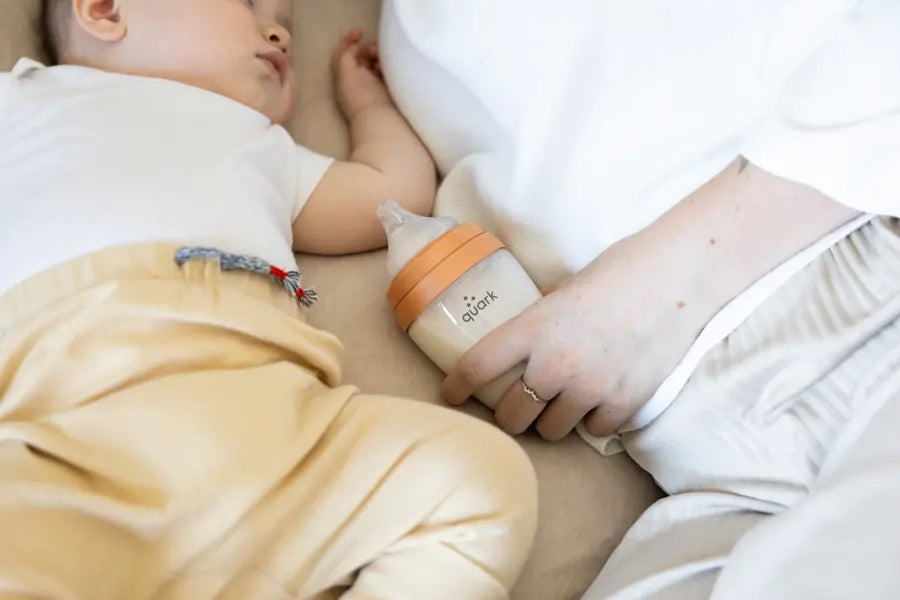
A travel bottle warmer should be chosen by the feed you are trying to solve, not by the most dramatic travel scenario. Car rides, flights, daycare pickup, stroller errands, and hotel stays each create different constraints: power access, upright storage, cleaning, caregiver handoff, and food-safety timing. The best choice is the one that makes a safe routine simpler without asking parents to stretch formula or breast-milk handling rules.
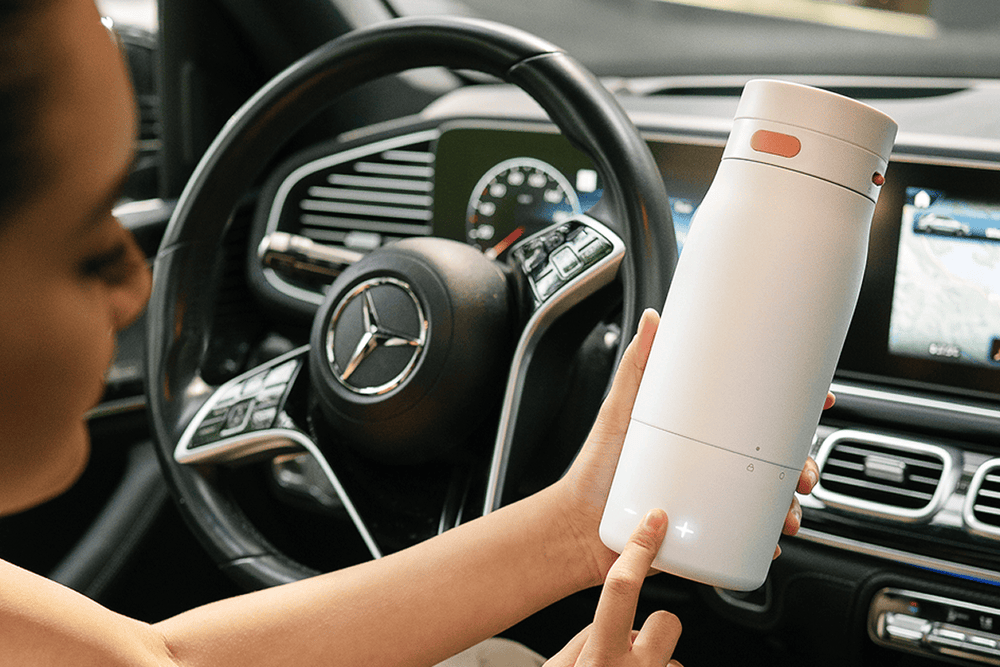
For most families, the practical checklist is: choose a warmer that can stay upright, shows temperature clearly, charges with a cable you will actually pack, cleans without a complicated sink routine, and fits your usual bottle volume. Quark Baby’s BuubiBottle gives parents a concrete spec example: 17 oz capacity, USB Type-C charging, an illuminated real-time temperature display, and a temperature you set to a single degree.
Start with the travel scenario
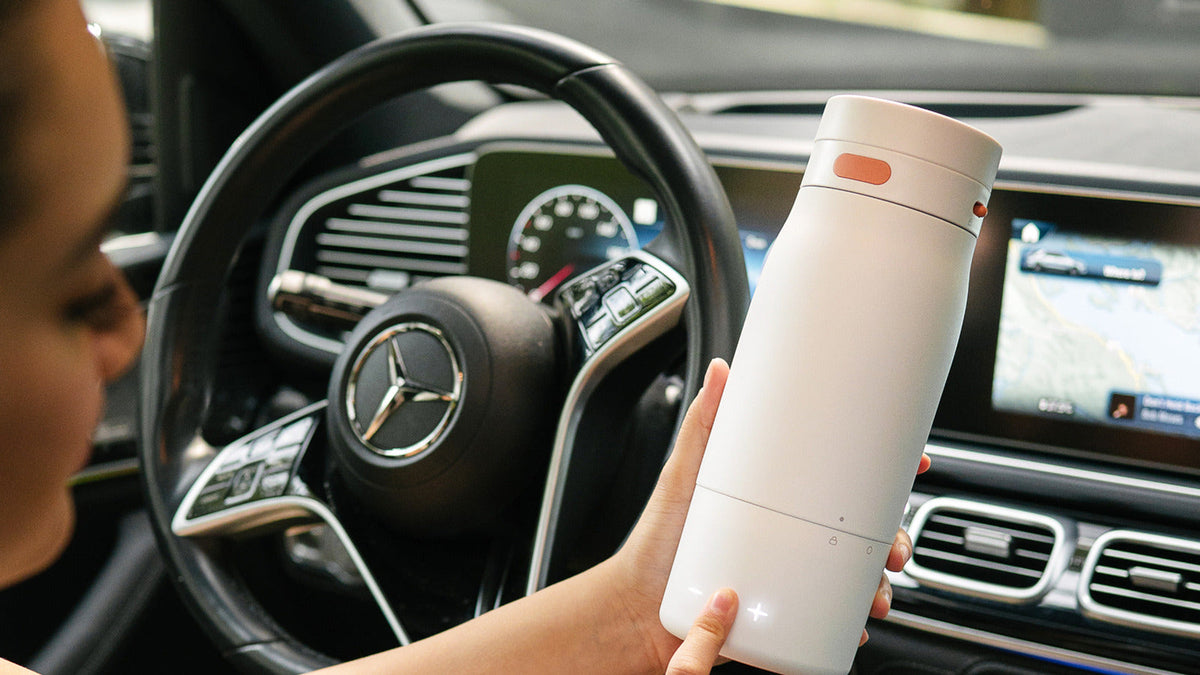
A car ride is not the same problem as a flight. In the car, the most important questions are whether the warmer can be packed upright, whether an adult can operate it only when the vehicle is safely stopped, and whether the bottle plan still works if traffic changes the schedule. On a flight, the questions shift to carry-on access, security screening, airline battery guidance, and whether you can clean parts before the next feed.
Day trips sit between those extremes. Parents may only need one prepared feed, a cable, and a backup plan. Longer outings need a stricter system: labeled milk or formula, a clean bottle path, a place for used parts, and a decision point for when a feed should be discarded instead of reheated.

Decision checklist: what to check before buying
- Capacity: Compare the warmer capacity with the bottle volume your baby actually drinks. A larger spec is not automatically better if it makes the device harder to carry.
- Power and charging: USB-C can reduce cable clutter, but the parent still needs a full charge before leaving and a realistic place to recharge if plans run long.
- Temperature visibility: A visible temperature readout helps caregivers avoid guessing with hot water. Parents should still swirl, check, and follow feeding guidance.
- Cleaning path: A travel warmer should not create a sink-dependent routine that breaks down at airports, parks, or daycare pickup.
- Bottle compatibility: Check whether your everyday bottle shape, cap, nipple system, and feeding volume work with the warmer before building a travel routine around it.
- Food-safety boundary: Warming makes feeding more comfortable; it does not restart the safe-use clock for formula or human milk.
How BuubiBottle fits the checklist
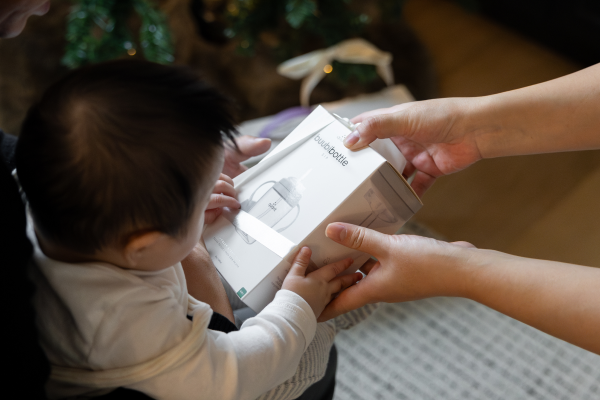
Quark Baby lists the BuubiBottle Portable Milk Warmer PRO with a 17 oz vacuum-insulated stainless steel vessel, 360° heating, a temperature you set that it then holds to a single degree, a Formula Preparation Mode that brings water to 158ºF / 70ºC, and recharging to 80% in about 90 minutes over 30W USB-C. The lighter original, the BuubiBottle Smart Portable Milk Warmer, lists 300 ml / 10 oz, Tritan construction, and a 37ºC to 50ºC / 98ºF to 122ºF range. The product page also cautions that battery life is not a reason to store formula or human milk at feeding temperature for extended periods.
Those specs are useful because they answer concrete buying questions. Capacity tells parents whether the warmer matches a typical feed. USB-C charging answers the cable question. The temperature range and display answer the visibility question. The travel-safe positioning matters for parents who plan to carry feeding gear instead of relying on a hotel kettle or a restaurant cup of hot water.
Car rides: choose for stability and handoff
For car rides, the buying decision should prioritize stability and caregiver handoff. A warmer that rolls around the footwell or requires attention while driving is not helping. Pack it upright, keep the cable with the device, and plan to operate it when parked. If grandparents, daycare, or another caregiver may use it, the controls and cleaning steps need to be simple enough to explain once.
Flights: choose for carry-on access and uncertainty
For flights, keep the warmer accessible and avoid burying feeding supplies at the bottom of a suitcase. Check current airline and airport rules for battery-powered devices and liquids. The safest public buying advice is not “this device solves every airline rule.” It is “choose a routine that you can explain, access, clean, and back up if a flight is delayed.”
Day trips: choose for repeatable simplicity
For day trips, a portable warmer is most useful when warming is a repeated need. If your baby drinks room-temperature formula or milk and outings are short, the simpler choice may be no warmer at all. If your baby strongly prefers warm feeds, or if caregivers need a consistent routine outside the house, a device with visible controls can reduce improvisation.

Common buying mistakes
- Buying for one rare emergency: Choose for routines that happen often, not for one imagined airport crisis.
- Ignoring cleaning: A warmer that is difficult to clean will not stay useful on real travel days.
- Assuming battery equals storage: A long battery claim is not permission to hold milk or formula warm for extended periods.
- Skipping bottle fit: Check the bottle system before relying on the warmer outside the house.
Caregiver handoff: the part parents forget
A bottle warmer may be used by more than one adult. Before buying, imagine the person who did not research the product: a grandparent, daycare backup, partner, or babysitter. They need to know where the cable lives, how much liquid goes in, what the display means, how to clean the device, and when to stop using a prepared feed. A product that only works when one parent remembers every detail is not a durable travel system.
The handoff test is also a safety test. Label milk, separate clean and used parts, keep written prep instructions for formula if needed, and avoid asking a device to solve a food-handling problem. The warmer should support the plan; it should not become the plan.
Next step in the Quark Baby ecosystem
If the checklist points toward a portable warmer, review the BuubiBottle Portable Milk Warmer PRO specs next. If you are still comparing warming methods, the Buying Guides hub can help you compare portable warmers, thermos routines, warm-water bowls, and travel feeding decisions.
FAQ
Do I need a bottle warmer for every car ride?
Is USB-C charging enough for flights?
Can a warmer keep formula ready all day?
Is a visible temperature display useful?
Should I buy the largest warmer I can find?
What is the first thing to test at home?
References
- CDC: Infant formula preparation and storage
- CDC: Breast milk storage and preparation
- CDC: Foods and drinks for 6 to 24 months
- Health Canada: Infant nutrition
- Health Canada: Safe food handling tips
- Quark Baby public product and collection specifications


Leave a comment
All comments are moderated before being published.
This site is protected by hCaptcha and the hCaptcha Privacy Policy and Terms of Service apply.