

Quick answer: Choose hotel hot water only when the source, container, timing, and cleanup are predictable. Choose a portable travel warmer when you need repeatable temperature visibility, your own clean bottle routine, and fewer hotel-room variables. In both cases, formula and breast-milk handling rules still apply — warming never extends safe holding time.
Hotel hot water can feel convenient because it is already there. A travel bottle warmer can feel safer because the parent controls the device. The better choice depends on the real travel problem: temperature control, bottle fit, cleaning access, power, flight delays, hotel uncertainty, and whether another caregiver needs to repeat the same routine. Compare the two by criteria, not by assuming one travel setup is always easier.
Safety note: Never microwave breast milk or formula — microwaves heat unevenly and create hot spots that can scald a baby’s mouth (CDC). Warm gently, swirl to distribute heat, and always test a few drops on your wrist before feeding. Do not overheat, which can degrade nutrients in breast milk. Do not repeatedly reheat a bottle, and discard any leftover milk or formula after a feed per CDC guidance. Warming never extends safe storage windows.
Travel warmer vs hotel hot water: how do they compare?
The warmer wins on control; hotel hot water wins on simplicity when the source is reliable.
| Dimension | Travel bottle warmer | Hotel hot water |
|---|---|---|
| Speed | On-demand once charged; predictable. | Fast if hot water is ready; slow if you must locate or boil it. |
| Temperature control / safety | Shows a target or current temperature when the product has a display. | Varies by kettle, sink, café, or thermos source. |
| Even heating / clean path | Warming container stays part of your own clean kit. | Hotel cups, kettles, or sinks may not be cleaned for infant feeding. |
| Portability / resilience | Battery and cable can be tested before leaving home. | Hot-water access may vanish during transit or a late check-in. |
| Cleanup | Parts packed with a known clean/used separation plan. | Hotel sinks and towels vary widely. |
| Cost | Higher upfront; justified by frequent travel. | Free, but unreliable and effort-heavy when conditions are poor. |

Where does hotel hot water create hidden variables?
In the container, the temperature, and the timing. Hotel hot water is not one method — it may mean an in-room kettle, lobby café water, a restaurant cup, a bathroom sink, or a thermos filled earlier in the day. Each version changes the risk profile. Ask whether the container is clean, whether the water is too hot, whether the bottle can sit upright, whether anyone might mistake warming time for safe storage time, and whether the setup can be repeated at 2 a.m. without improvising. The quality of the setup is controlled by the hotel and the room, which is why frequent travelers often prefer a dedicated device while a single predictable overnight trip may be fine on hotel water plus strict handling rules.
Where does a portable warmer create a cleaner routine?
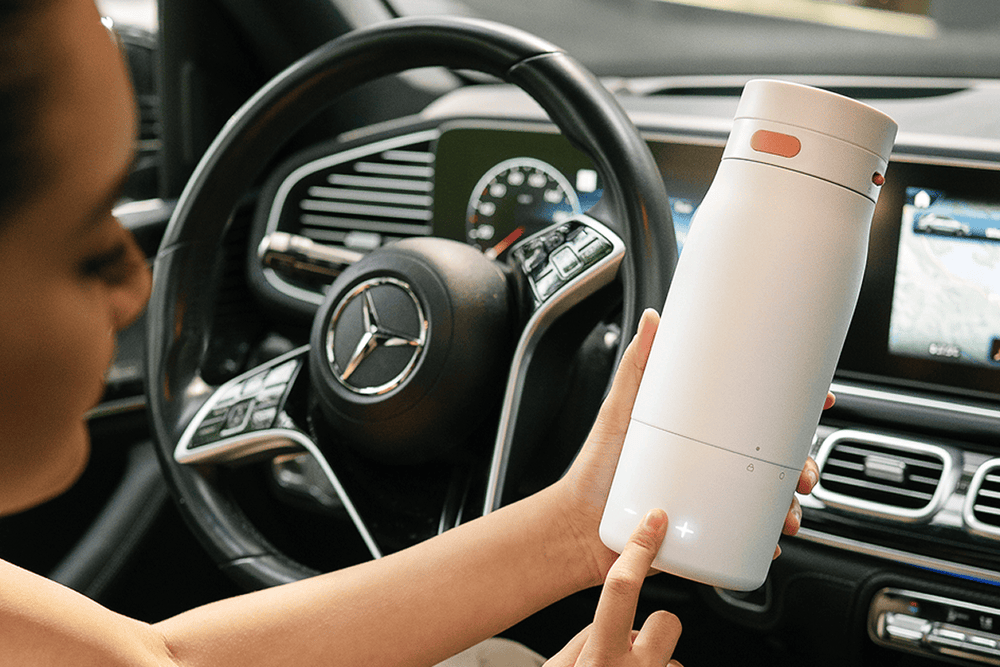
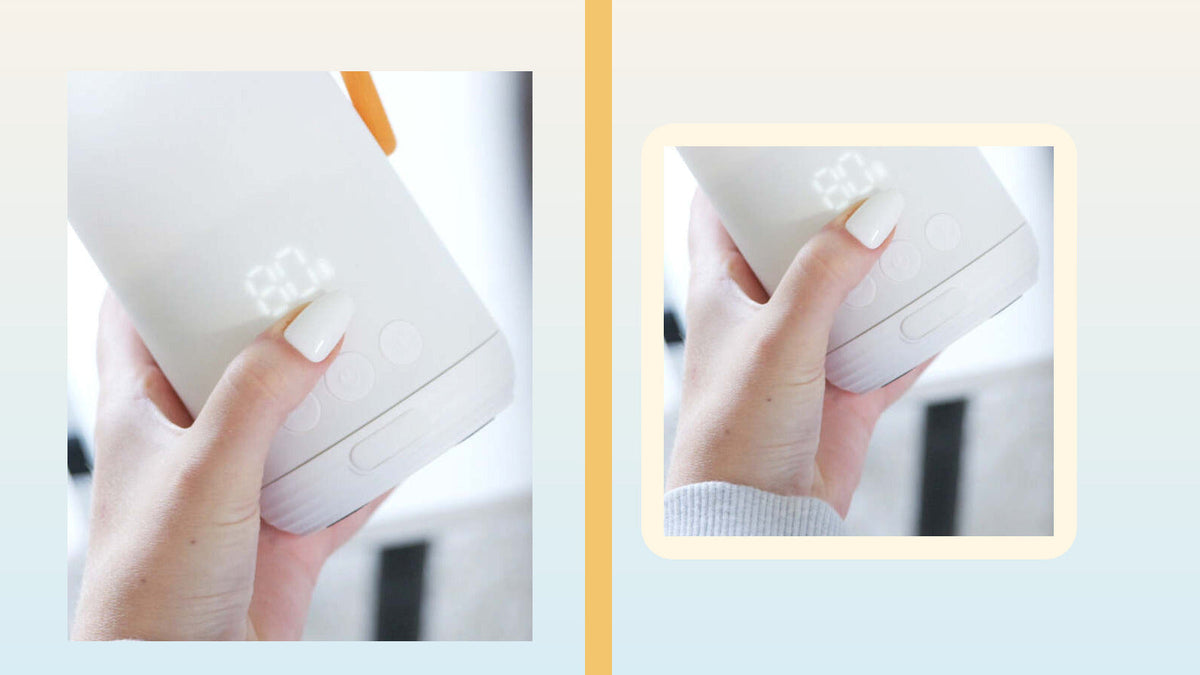
When you control the container, cable, charge, and bottle fit. A portable warmer is especially helpful when the same routine must work in a car, hotel, stroller basket, or guest room. Quark Baby lists the BuubiBottle with a 17 oz vacuum-insulated stainless steel vessel, USB Type-C charging, carry-on-friendly positioning, an illuminated real-time temperature display, and a temperature you set to a single degree. Those checks belong early in the decision: the capacity helps you compare your usual bottle volume, USB Type-C helps only if the cable is packed, and the display reduces guesswork — but none of it replaces milk or formula preparation and discard rules.

How should I handle cleaning and caregiver handoff on the road?
Decide the clean/used separation before you leave home. If a bottle is warmed in a mug or sink, that mug or sink becomes part of the feeding system, so plan a place for wet parts, used nipples, caps, and spills. A dedicated warmer still needs cleaning, but the parts and sequence are known in advance, which makes it easier to hand off to a partner, grandparent, or babysitter. Use a simple rule: the next caregiver should be able to identify the clean bottle, the milk or formula, the warmer or water source, the discard boundary, and the used-parts bag without reading a long text thread. For a related home-method comparison, see the bottle warmer vs warm water bowl guide.
What mistakes should I avoid?
Four common ones. First, treating a hotel kettle as if it were designed for infant feeding. Second, assuming a battery-powered warmer removes food-safety timing. Third, buying a warmer without testing bottle fit, cleaning, and charging at home. Fourth, forgetting nighttime use, when parents are tired and hotel lighting is poor. A reliable routine should work when the trip is messy, not only in a product photo.
For the product-specific next step, review the BuubiBottle Portable Milk Warmer PRO and compare the public specs — capacity, temperature range, charge type — with your actual feeding routine before you commit to a travel method.
Frequently asked questions
Is hotel hot water safe for warming a baby bottle?
It depends. Hotel hot water can work only when the container is clean, the source is predictable, the timing is controlled, and you have a safe storage plan for the milk or formula. A hotel kettle, mug, or sink is not designed for infant feeding, so use your own cleaned feeding gear when the source is uncertain.
Is a travel bottle warmer safer than hotel hot water?
Usually, yes. A dedicated warmer reduces hotel-room variables — unknown container cleanliness, variable water temperature, and unreliable late-night access — when used as instructed. It does not replace feeding-safety guidance or wrist-testing.
Can I keep a bottle warm in a hotel room for later?
No. Warming is for a near-term feed only. Do not hold feeds warm; follow formula and breast-milk storage and discard guidance instead, and discard leftovers after a feed.
Do I need a warmer for one hotel night?
Not necessarily. A short, predictable trip can work with a simpler routine if storage, warming, and cleaning steps are controlled. A dedicated warmer pays off most for parents who travel often or feed in unpredictable places.
Sources
- CDC. Breast Milk Storage and Preparation.
- CDC. Infant Formula Preparation and Storage.
- AAP / HealthyChildren.org. Feeding & Nutrition guidance.
- Quark Baby. BuubiBottle Portable Milk Warmer PRO product specifications.
- Quark Baby. BuubiBottle Smart Portable Milk Warmer product specifications.


Leave a comment
All comments are moderated before being published.
This site is protected by hCaptcha and the hCaptcha Privacy Policy and Terms of Service apply.