

Do you need a bottle warmer? No, unless one of five things is true
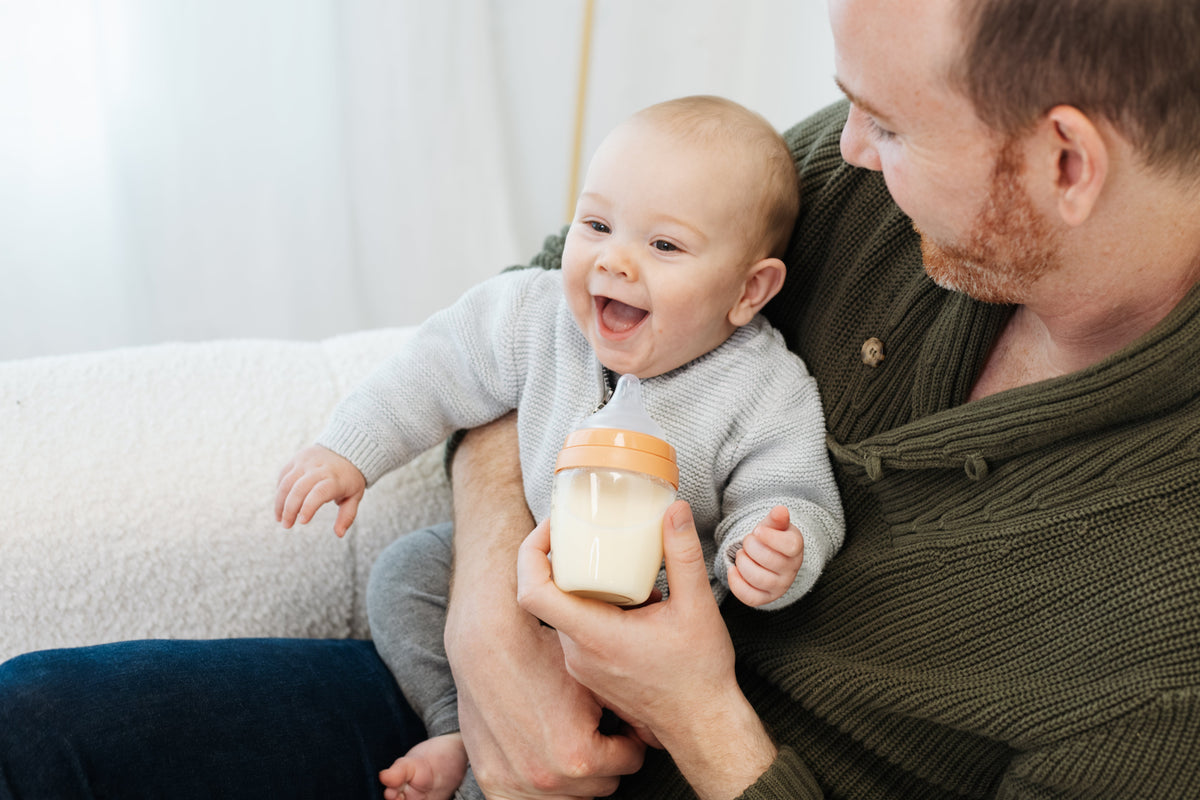
Most families do not need a bottle warmer. Plenty of babies take a bottle at room temperature or straight from the fridge without complaint, and warming a bottle at a kitchen sink costs nothing. A warmer becomes worth buying when warming stops being a kitchen task: frequent night feeds, feeds away from home, travel, daily combo- or formula-feeding, or a baby who reliably refuses cold milk. If none of those five describe your week, save the money.

That verdict says more about your routine than about your baby. Two families with similar babies land in completely different places: one warms a bottle four times a night, another never warms one at all. What decides it is when you feed, where you feed, and how particular your baby turns out to be about temperature. Below: who benefits, who can skip it, what the free alternatives actually cost you, and the honest case against buying one at all.
Who genuinely benefits from a bottle warmer
For some families, a warmer stops being a nice-to-have and becomes the thing that quietly saves the day. If you see yourself in two or more of the situations below, it's probably worth it.
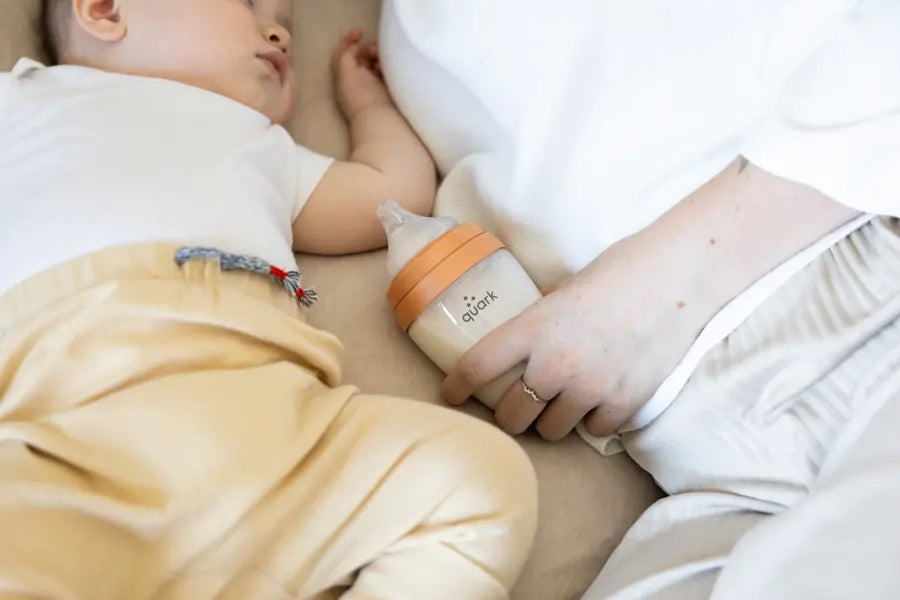
- Frequent night feeders. Warming a bottle at 3 a.m. is the part of the feed that wakes you up the most: stumbling to the kitchen, waiting on a kettle, second-guessing the temperature in the dark. A warmer you can run from the nightstand shortens exactly the part that costs you sleep. We dig into this specific scenario in our guide to warming a bottle for a night feed without fully waking up.
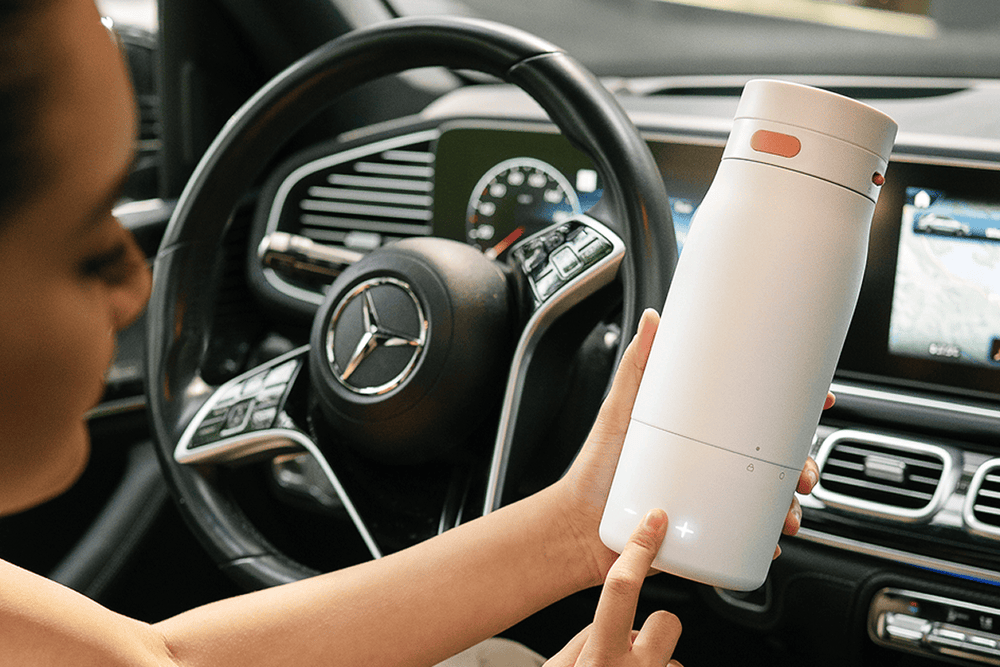
- Parents often away from a kitchen. If a lot of your feeds happen in a car, a stroller, a park, an office, or a relative's living room, "just use the kitchen" isn't an option. This is where away-from-home warming goes from convenient to genuinely necessary.
- Travelers. Airports, flights, road trips, and hotels rarely give you reliable warm water on demand. If you fly or drive with your baby, a portable option removes a real source of stress (see our notes on bottle warming on car rides and flights and surviving a road trip with an infant under one).
- Combo and formula feeders. If you're mixing breast and bottle, or building bottles from formula, you're handling more prepared milk more often, and a consistent, gentle warmth makes each of those feeds smoother. Our combo-feeding guide and formula-feeding guide put warming in the context of the whole routine.
- Babies who reject cold milk. Some babies simply won't take a cold or room-temperature bottle, and a refused bottle at the wrong moment is its own kind of crisis. If temperature is part of your bottle battles, our piece on common reasons for bottle refusal can help you figure out whether warmth is actually the issue.
Who can probably skip it
Just as honestly: a warmer is genuinely optional for a lot of families, and there's no prize for owning gear you don't reach for. You can likely skip one if:
- You're almost always home, within reach of hot water. If nearly every feed happens a few steps from your kitchen, an insulated flask of just-boiled water, or a bowl of warm water from the tap, does the job for nothing extra to store or clean. Plenty of parents already keep a flask going overnight, and if that habit works, a device is a convenience rather than a fix.
- Your baby happily takes room-temperature or cold milk. Not every baby cares about temperature. If yours drinks contentedly without it being warmed, warming is effort with no payoff, and there's nothing wrong with that.
- You exclusively breastfeed and rarely use bottles. If bottles are a once-in-a-while thing rather than a daily one, the case for dedicated warming gear is thin.
If you're in this group, you're not missing out. You've just got a routine that doesn't need the tool. The honest test is simply how often you'd actually use it.

What warming without a warmer actually costs you
Before you decide whether to buy anything, it's worth being specific about what you'd be doing instead, because "just use warm water" hides three different methods with three different costs.
If you're home, a bowl of hot water is the answer, and it's a good one. Stand the bottle in it for a few minutes, swirl, test a few drops on your inner wrist. It's free, there's nothing to store, and it's what we'd tell most families to do. Its two real costs are that it needs a tap and that you have to stand there. Best for: parents whose feeds nearly all happen at home.
An insulated flask of just-boiled water is the honest budget answer for going out, and plenty of parents run their whole night routine on one. The trade-off is that a flask has no setpoint. It starts near boiling and drifts down all day, so by the 3 a.m. feed you're pouring water at whatever temperature it happens to have reached and correcting by feel. We compare that directly in our portable warmer vs thermos piece. Best for: occasional outings, and anyone testing whether they'd use a warmer before buying one.
Skip the microwave. The American Academy of Pediatrics advises against microwaving bottles, because it heats unevenly and creates hot spots that can scald a baby's mouth even when the bottle feels fine on the outside. It is the fastest method and the one we would not use.
| Method | Needs a tap or outlet | Hands-free while it heats | How you hit the temperature |
|---|---|---|---|
| Bowl of hot water | Tap | No | By feel, wrist test |
| Running warm tap | Tap | No | By feel, wrist test |
| Insulated flask | Neither | No | By feel; drifts as it cools |
| Countertop warmer | Outlet | Yes | Setpoint |
| Cordless portable warmer | Neither | Yes | Setpoint |
| Microwave | Outlet | Yes | AAP advises against |
Read down the first two columns and the buying decision mostly answers itself: every free method needs a tap, and the two that don't need a tap are the ones you pay for. If your feeds happen where there's a tap, you already own the solution. Our warmer vs warm-water-bowl comparison runs the same test in more detail.
The reheating rules nobody puts on the box
This is where a warmer earns or loses its place, and it is the part most buying guides skip. Warming milk is not the same as reheating it, and the difference decides how much a warmer actually helps you.
- Freshly expressed or refrigerated milk can be warmed once and offered. If your baby does not finish it, the American Academy of Pediatrics advises using leftover milk within two hours or refrigerating it right away for the next feeding, because bacteria from the baby's mouth are now in the bottle.
- Milk that has already been warmed and left out should not be re-warmed a second time. Each warming cycle gives bacteria another window at a comfortable temperature. This is the single rule that most changes how a warmer fits your routine: it rewards warming small amounts on demand, not batch-warming ahead.
- Thawed frozen milk keeps in the fridge for up to 24 hours, but once thawed it should never be refrozen. A warmer that thaws gently is genuinely useful here; a microwave is not, because it heats unevenly and can scald.
- Formula is different again. Prepared formula left at room temperature should be used within two hours, and once your baby has drunk from it, within one hour. Powdered formula is not sterile, so prepared bottles should be handled more conservatively still — follow the timing printed on your formula tin.
Why this matters for the buying decision. If your routine involves warming one bottle at a time, on demand, a warmer saves you real minutes. If you were hoping to warm several bottles in advance and keep them ready, the reheating rules mean you cannot do that safely, and the warmer will not solve the problem you bought it for.
The case against buying one
We sell a bottle warmer, so take this section as the one where we argue against ourselves. These are the four reasons a warmer ends up in a cupboard.
- Most babies don't need warm milk at all. Warming is about acceptance and comfort, not nutrition. If your baby drinks cold or room-temperature milk happily, a warmer buys you nothing, and you won't know which kind of baby you have until you try.
- It can't do the thing people imagine buying it for. Most parents picture warming a few bottles ahead so the night is easy. The reheating rules above rule that out. A warmer speeds up one bottle at a time; it does not let you batch.
- It's another thing to clean, and the failure mode is water. Any warmer that works by sitting a bottle in water leaves standing water behind. Left in place between feeds, that's a film you'll be scrubbing later. Our warmer cleaning guide covers the routine, but the honest point is that it's a routine you didn't have before.
- A countertop model is dead weight the moment you leave the house. If the feeds that stress you are the ones in a car or a hotel room, a plug-in warmer solves none of them. Buying the wrong format is a more common mistake than buying a warmer you didn't need.
None of that makes a warmer a bad purchase. It makes it a specific one: it pays off for a particular week, and it gathers dust in every other week.

A quick "do you need one?" decision table
Find the line that sounds most like your week. None of these is a hard rule. They're a starting read to help you decide, not a verdict on your baby.
| Your situation | Likely answer | Why |
|---|---|---|
| Multiple night feeds, every night | Probably yes | Warming is the part that wakes you most; a bedside option protects your sleep. |
| Often feeding in cars, strollers, or out of the house | Probably yes | No kitchen means no easy heat source, so portability becomes essential. |
| You travel or fly with your baby | Probably yes | Reliable warm water is hard to find on the road or in the air. |
| Combo- or formula-feeding daily | Leaning yes | More prepared bottles, more often: consistency helps each feed go smoothly. |
| Baby refuses cold or room-temp milk | Leaning yes | If warmth is what gets the bottle accepted, it's worth removing the friction. |
| Almost always home, baby takes any temperature | Probably no | A bowl of warm water at the sink covers it for free. |
| Exclusively breastfeeding, bottles are rare | Probably no | Too few bottle feeds to justify dedicated gear. |
If you do need one, the "where" matters more than the "whether"
Here's the part most buying advice skips: for the families who do benefit, the key feature usually has less to do with whether to own a warmer and more to do with whether it works away from a kitchen. A countertop warmer is fine if every feed happens at home, but it does nothing in a car at 6 p.m. or a hotel room at midnight. That's the exact gap a portable warmer fills, and it's why we keep coming back to it for the night-feed, on-the-go, and traveling families above.
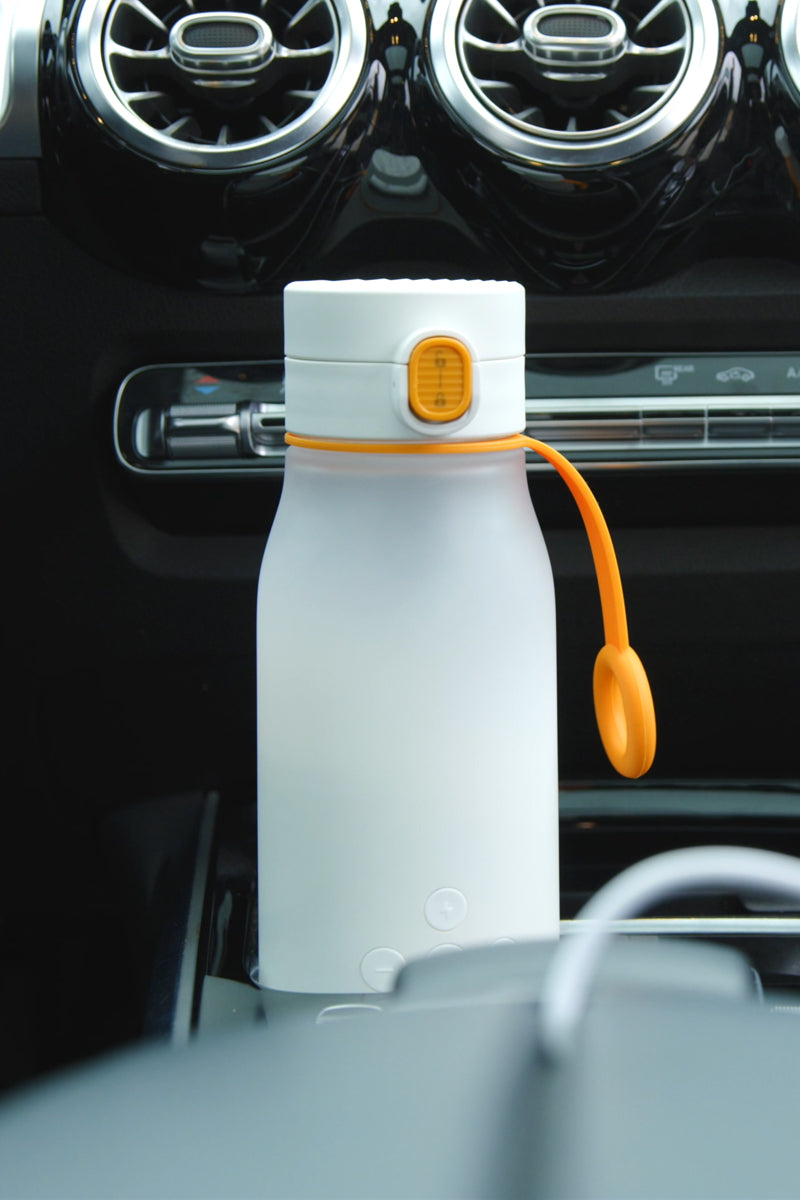
The BuubiBottle Portable Milk Warmer PRO is built for that "not near a kitchen" reality. It is cordless, with a removable vacuum-insulated stainless steel vessel, and it holds the temperature you set to a single degree rather than drifting the way a flask of hot water does. A Formula Preparation Mode brings water to 158°F (70°C) for powdered formula, and 360° heating brings a full 17 oz up evenly. If you're comparing formats rather than deciding whether to buy at all, our travel bottle warmer checklist is the shorter route.
If you decided yes, one number separates the whole category
Once you have decided a warmer earns its place, the shortlist sorts itself on a single published figure: the highest temperature the unit will reach. Everything below is what each manufacturer published on its own site, checked on 14 September 2026. We have not bench-tested them.
| Warmer | Highest temperature the maker publishes | Reaches 70°C for powdered formula? |
|---|---|---|
| Tommee Tippee LetsGo Portable | Body temperature, 37°C | No mode stated |
| Baby Brezza Superfast Portable | 103°F, about 39°C | No mode stated |
| The Baby's Brew 3.0 Pro | 110°F, about 43°C | No mode stated |
| BuubiBottle Smart | 122°F, 50°C | No |
| Grownsy Portable (Travel) | 131°F, about 55°C, water mode | No mode stated |
| Papablic Warmer & Sterilizer Pro | Not published | Claims sterilisation; temperature not published |
| Tommee Tippee Travel Flask | Whatever you pour in | Can carry water above 70°C, but has no display to confirm it still is |
| BuubiBottle PRO | 158°F, 70°C | Yes, Formula Preparation Mode |
Why that column exists. Powdered infant formula is not a sterile product. The CDC states that very hot water, around 158°F (70°C), is needed to kill germs that can be present in it, and names babies under two months, premature babies, and babies with a weakened immune system as those for whom this matters most.
And why most people can ignore it. If you are warming expressed milk, or formula you made up at home and chilled, you do not need 70°C — you need body temperature, which every unit on this list reaches. The 70°C question only bites if you make up powder while you are out, with a young baby. That is a narrower situation than the category's marketing implies, and it is the honest reason most of these warmers do not offer it.
Full detail on heating times, battery life and how many feeds each one manages per charge is in our eight-warmer comparison.
How to make the call for your family
If you're still on the fence, try this: picture a normal week and count how many bottle feeds would happen somewhere without easy warm water (night feeds, outings, the commute, travel). If that number is small, save your money. If it's a daily occurrence, a warmer is one of the few baby purchases that pays you back in calm, not clutter.
Two more honest pointers. First, temperature itself has real safety nuances that belong in a sourced guide, not a buyer's checklist, so for "how warm is warm enough," lean on our why-warm-milk temperature guide and the more detailed portable warmer temperature guide rather than guessing. Second, if you've already decided you want one and you're choosing between styles or models, the format question is its own decision: our portable vs. traditional warmer comparison and portable bottle warmer buying guide pick up exactly where this article leaves off. And if you're just getting started with bottles at all, our guide to bottle feeding for breastfed babies puts warming in its proper place: a small part of a much bigger picture.

Frequently asked questions
Do I really need a bottle warmer?
No for most families. Many babies take milk at room temperature or cold without any fuss, and if you're usually within reach of hot water, a flask or a bowl of warm water works fine. A warmer becomes worth it the moment warming stops being a kitchen task: frequent night feeds, feeding away from home, travel, combo- or formula-feeding, or a baby who reliably refuses cold milk.
Source: AAP — Storing & Preparing Expressed Breast Milk
Can you give a baby a bottle without warming it up?
Yes. There is no nutritional requirement to warm milk, and plenty of babies drink it cold or at room temperature without complaint. Warming is about acceptance and comfort. If your baby takes an unwarmed bottle, you can stop reading here and keep your money.
Source: AAP — Storing & Preparing Expressed Breast Milk
What are the downsides of using a bottle warmer?
Four, honestly. It's another item to clean and store; any water-bath design leaves standing water if you don't empty it; the reheating rules mean you can't warm bottles in advance the way most people picture; and a countertop model is useless the moment you leave the house. Those are the reasons warmers end up in cupboards.
Source: AAP �� Storing & Preparing Expressed Breast Milk
Do you need a bottle warmer if you use formula?
It depends on where you make the bottles, not on the formula itself. Formula doesn't have to be served warm. What changes with formula is that you're preparing more bottles more often, and powdered formula has its own preparation-temperature guidance, so a device with a fixed setpoint removes guesswork that a bowl of water can't. If all of that happens at your kitchen counter, you still don't need one.
Source: AAP — Amount and Schedule of Formula Feedings
How do I know if I'm one of the parents who does?
Three questions settle it for most people. Do you warm bottles anywhere other than your kitchen, such as a nursery at 3 a.m., a car, or a stroller? Are you out of the house long enough to need a feed while you're away? Does your baby reliably turn down milk that isn't warm? One yes is usually enough, because those are exactly the moments when "just use a bowl of warm water" quietly stops being an option.
Source: AAP — Storing & Preparing Expressed Breast Milk
My baby refuses cold bottles. Does that mean I need a warmer?
It depends on whether temperature is truly the culprit. If it clearly is, gentle warmth can remove that friction. But bottle refusal has several possible causes, so it's worth confirming temperature is the real issue first. Our reasons-for-bottle-refusal article walks through the alternatives.
Source: AAP — Storing & Preparing Expressed Breast Milk
I'm always home. Is a warmer still worth it?
No, with one exception. If nearly every feed happens steps from your kitchen, a warm-water bath costs nothing and does the job. The exception is night feeds: being home doesn't help much at 3 a.m., when the real choice is walking to the kitchen and waiting versus having warm milk already beside the crib. If your nights look like that, portability matters even if you never leave the house.
Source: AAP — Storing & Preparing Expressed Breast Milk
What makes the BuubiBottle Portable Milk Warmer PRO suited to those situations?
It is cordless and vacuum-insulated stainless steel, which is the part that matters if you already carry a flask: it holds the temperature you set to a single degree, in Fahrenheit or Celsius, and remembers the setting for next time. It heats a full 17 oz evenly with 360° heating, and a dedicated Formula Preparation Mode brings water to 158°F (70°C) — the reconstitution temperature widely used for powdered formula, which is not a sterile product. In other words it does the job the thermos in your bag is already doing, plus the one it cannot: hitting an exact number instead of whatever the water has cooled to.
Source: BuubiBottle Portable Milk Warmer PRO — specifications
Sources
- American Academy of Pediatrics (HealthyChildren.org) — How to Sterilize and Warm Baby Bottles Safely
- American Academy of Pediatrics (HealthyChildren.org) — Storing and Preparing Expressed Breast Milk
This article is general product education to help you decide whether a bottle warmer fits your routine; it is not medical advice. For temperature, storage, and safety specifics, follow the linked sourced guides and your pediatric provider's guidance. Written by the Quark Editorial Team.
Medically reviewed by Dr. Yang Last reviewed July 29, 2026.


Leave a comment
All comments are moderated before being published.
This site is protected by hCaptcha and the hCaptcha Privacy Policy and Terms of Service apply.