

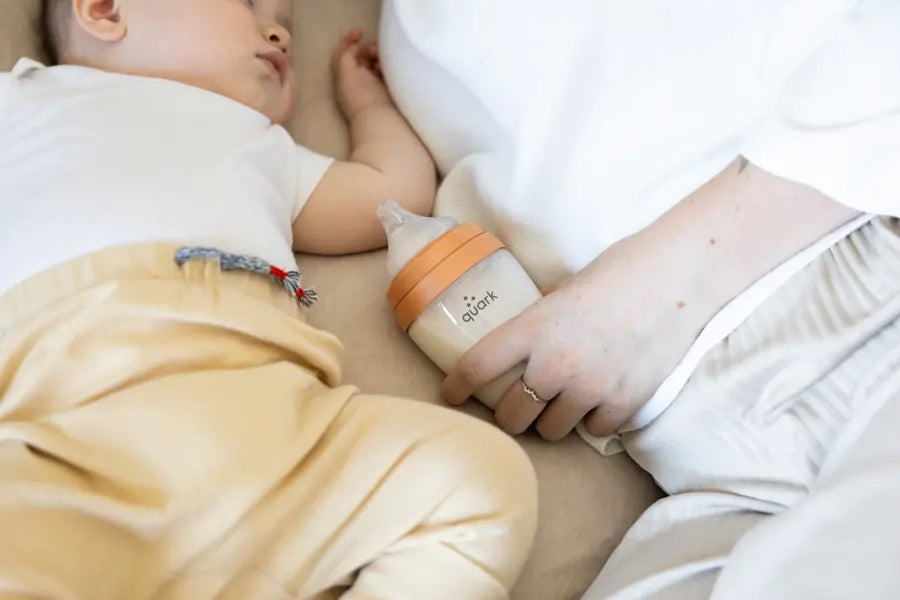
Both methods are safe when you follow a few simple rules. The real difference is consistency, speed, and how much guesswork you're willing to do at 3 a.m. A bowl or cup of warm water is free and works fine for the occasional feed, but it heats unevenly and you have to test the temperature every single time. A dedicated bottle warmer holds a steady, gentle temperature and removes the guesswork, which is why most parents who warm bottles often, feed at night, or travel end up reaching for one. Below we break down exactly when each method makes sense, what the safety guidance actually says, and how to choose.

The short answer: which method should you use?
If you warm a bottle only now and then, a cup of warm (not boiling) water is perfectly adequate and costs nothing. If you warm bottles daily, feed in the dark, or feed on the go, a warmer that holds a precise temperature will save you time and reduce the chance of serving milk that's too hot or too cold. Neither method should ever involve a microwave — more on why below.
Warming in warm water: when it makes sense
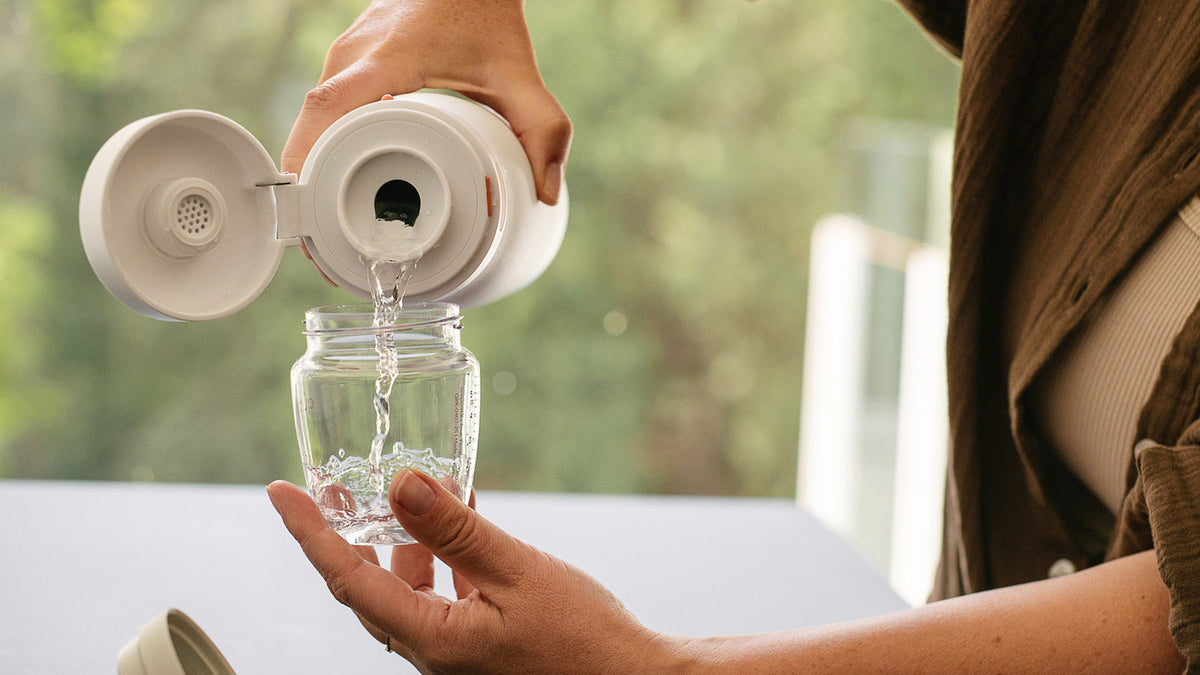
The warm-water bath is the method every major health authority describes first because it's gentle and needs no equipment. The U.S. Centers for Disease Control and Prevention (CDC) advises parents to "place the sealed container into a bowl of warm water or hold it under warm, but not hot, running water for a few minutes." The same approach notes that "the safest way to heat a bottle is in a dish of hot water," letting the closed bottle sit for a few minutes.
It's a great fit when:
- You only warm a bottle occasionally and don't want another gadget.
- You have easy access to hot water — a tap, or a thermos you already carry.
- You're at a restaurant or café that can hand you a cup of hot water.
The trade-offs: it heats unevenly, the temperature drifts as the water cools, and you have to wrist-test every time because there's no readout. It's also slow when the water isn't hot enough, and fiddly in the dark.
One safety rule people miss
Don't leave a bottle sitting in warm water to "keep it ready." Warm milk left out becomes a place for bacteria to grow. The CDC guidance is to use breast milk within 2 hours once it has been warmed or brought to room temperature, and to feed prepared formula within 2 hours of warming. Warm at feed time, not in advance.
Bottle warmers: when they make sense
A bottle warmer is a small appliance (corded for the nightstand, or cordless for travel) that holds water or milk at a set temperature so the bottle heats evenly and predictably. The appeal is consistency: you set it, it does the same thing every time, and many models show the real temperature so there's no guesswork.
A warmer is a practical choice when:
- You warm bottles daily and want a repeatable result.
- You feed at night and don't want to stand at the sink half-awake.
- You're out of the house and can't count on a source of hot water.
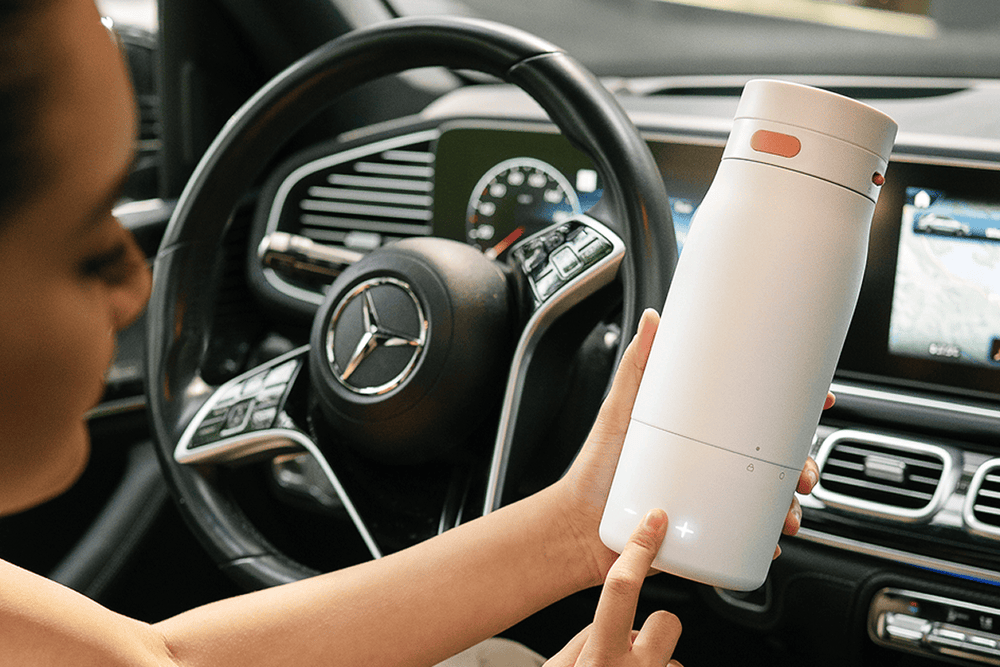
QB's own BuubiBottle Portable Milk Warmer PRO was built for exactly the travel-and-night-feed case: it's cordless, holds 17 oz in a vacuum-insulated stainless steel vessel, shows the real temperature on a display, and holds the exact target you choose to a single degree, anywhere between 37°C and 50°C. From room temperature it warms about 150 ml to 37°C in roughly four minutes. For tighter bags there's the smaller BuubiBottle Mini, and for bigger feeds the BuubiBottle Max.

Side-by-side: bottle warmer vs. warm water
| Buyer dimension | Warm-water bath (cup / bowl) | Bottle warmer |
|---|---|---|
| Speed | A few minutes if the water is already hot; slow if you have to boil first | Consistent and often faster; e.g. ~4 min for 150 ml to 37°C with the BuubiBottle |
| Temperature control | Drifts as water cools; no readout, so you guess and wrist-test each time | Holds a set temperature; many models display the real temperature |
| Safety / hot spots | Safe; even, gentle heat with no hot spots (unlike a microwave) | Safe; even, gentle heat. Avoid models that boil; keep below 40°C for breast milk |
| Night feeds | Fiddly in the dark; have to fetch and manage hot water | Set-and-go; ready at the nightstand or bedside |
| Travel / on the go | Depends on finding hot water; a thermos helps but is bulky | Self-contained; a cordless, TSA-compliant model warms anywhere |
| Cleaning | Just rinse the cup/bowl; nothing extra to maintain | Wipe the chamber; cordless milk-warming bottles double as the bottle itself |
| Cost / value | Free | An upfront cost that pays off with frequent, night, or travel feeds |
The one method to avoid: the microwave
Whichever side you land on, skip the microwave. Every major authority is unusually blunt here. The CDC says: "Never thaw or heat breast milk in a microwave. Microwaving can destroy nutrients in breast milk and create hot spots, which can burn a baby's mouth." The American Academy of Pediatrics (AAP) warns that microwaving "can allow the bottle to remain cool while hot spots develop in the formula that can burn the baby's mouth, even if you shake the bottle after warming." Health Canada echoes this, advising parents to "avoid using a microwave oven to warm prepared formula because it can create hotspots that can burn your child's mouth." A warm-water bath and a good bottle warmer both avoid this problem because they heat evenly.
How to warm safely, either way
- Keep it warm, not hot. Babies take milk best near body temperature. Don't overheat breast milk past about 40°C (104°F), which can compromise its quality.
- Always wrist-test. The CDC and AAP all say the same thing: put a few drops on the inside of your wrist. It should feel warm, not hot.
- Warm at feed time. Use warmed breast milk or formula within 2 hours, and never refreeze thawed breast milk.
- Never microwave. Hot spots can burn even when the bottle feels cool.
If you want the full picture on the temperature babies actually prefer and why, see our guide on why warming baby's milk matters and how to do it safely.

Frequently asked questions
Do I really need a bottle warmer, or is a cup of warm water enough?
You don't strictly need one. A cup or bowl of warm water is a safe, free way to warm an occasional bottle. A warmer becomes worth it once you're warming bottles daily, feeding at night, or feeding away from home, because it removes the guesswork and gives the same result every time.
Which is faster, a warmer or warm water?
It depends on your starting point. If you already have hot water on hand, a bath takes a few minutes; if you have to boil first, it's slower. A dedicated warmer is more consistent: the BuubiBottle warms about 150 ml from room temperature to 37°C in roughly four minutes, every time. For more detail, see how long a bottle warmer takes.
Is warming breast milk in warm water safe?
Yes, warming breast milk in warm water is safe. The CDC recommends placing the sealed bottle in a bowl of warm water or holding it under warm (not hot) running water for a few minutes. Keep the water warm rather than boiling, and wrist-test before feeding.
Can warm water cause hot spots the way a microwave does?
No, warm water does not cause hot spots. Hot spots are a microwave problem: microwaves heat unevenly and can leave scalding pockets even when the bottle feels cool. A warm-water bath and a bottle warmer both heat gently and evenly, which is exactly why authorities recommend them over the microwave.
What temperature should baby's milk be?
Aim for warm, around body temperature (roughly 37°C / 98.6°F). It should feel warm, not hot, on the inside of your wrist. Avoid heating breast milk above about 40°C (104°F), which can compromise its quality. The BuubiBottle Portable Milk Warmer PRO lets you dial in a target between 37°C and 50°C so you're never guessing.
Does warming breast milk destroy its nutrients?
No, gentle warming does not destroy nutrients. The risk comes from overheating: the CDC notes microwaving can destroy nutrients in breast milk, and overheating past about 40°C can reduce quality. Warm gently with water or a temperature-controlled warmer and you preserve what matters.
How do I warm a bottle on the go?
Without a warmer, carry a thermos of hot water, pour some into a cup, and set the closed bottle in for a few minutes. With a warmer, a cordless, TSA-compliant model like the BuubiBottle Portable Milk Warmer PRO heats anywhere on USB-C battery, with no hunting for a kettle.
Can I leave a bottle sitting in warm water to keep it ready?
No. Warm milk left out lets bacteria grow. Warm at feed time and use warmed breast milk or formula within 2 hours. A warmer that holds a safe temperature briefly is fine, but don't let any bottle sit warm for hours.
Is a bottle warmer worth the money?
For occasional warming, probably not: warm water does the job. For frequent, night, or travel feeds, most parents find the consistency and convenience well worth it. If you're still deciding, our guide on whether you need a bottle warmer walks through the trade-offs.

Bottom line
Both methods are safe heated gently and wrist-tested before every feed, and both beat the microwave, which authorities warn against because of hot spots. Choose the warm-water bath if you warm bottles rarely and want zero extra gear. Choose a temperature-controlled warmer if you value consistency, feed at night, or warm on the go. If that's you, the cordless BuubiBottle Portable Milk Warmer PRO was designed for precisely those moments. Questions about fit or your routine? Our team is happy to help.
Sources
- CDC — Storage and Preparation of Breast Milk
- American Academy of Pediatrics (HealthyChildren.org) — How to Sterilize and Warm Baby Bottles Safely
- Health Canada — Preparing and handling powdered infant formula
Reviewed by Dr. Yang. Last reviewed June 12, 2026. This article is general information, not medical advice; follow your pediatrician's guidance.


Leave a comment
All comments are moderated before being published.
This site is protected by hCaptcha and the hCaptcha Privacy Policy and Terms of Service apply.