

Baby product material claims can help parents compare feeding gear, but only when the claim is read narrowly. BPA-free, food-grade silicone, non-toxic, plastic, stainless, glass, soft, dishwasher-safe, or medical-grade language does not all mean the same thing. A label usually answers one specific question, not every safety, heat, cleaning, replacement, or use-case question.
Quick answer: read material claims by asking what part the claim applies to, what use the part is designed for, what heat and cleaning limits apply, and what the claim does not prove. Then compare the product page and instructions before turning a material word into a blanket safety conclusion.
Material-claim reading checklist
| Claim | What it can tell you | What it does not prove | Decision rule |
|---|---|---|---|
| BPA-free | BPA is not intentionally used in that stated part or material claim. | It does not prove every other chemical, heat, scratch, or wear question. | Check heat use, scratches, replacement, and product instructions. |
| Food-grade silicone | The silicone is positioned for food-contact use. | It does not mean every silicone part is identical or indestructible. | Check temperature, cleaning, odor, wear, and part function. |
| Non-toxic | Often broad marketing language. | It may not name the standard, test, or exact material. | Look for specific materials and credible documentation. |
| Dishwasher-safe | A cleaning method may be allowed for that part. | It may exclude lids, seals, nipples, electronics, or painted parts. | Read part-by-part instructions before washing. |

Product/spec evidence from Quark Baby
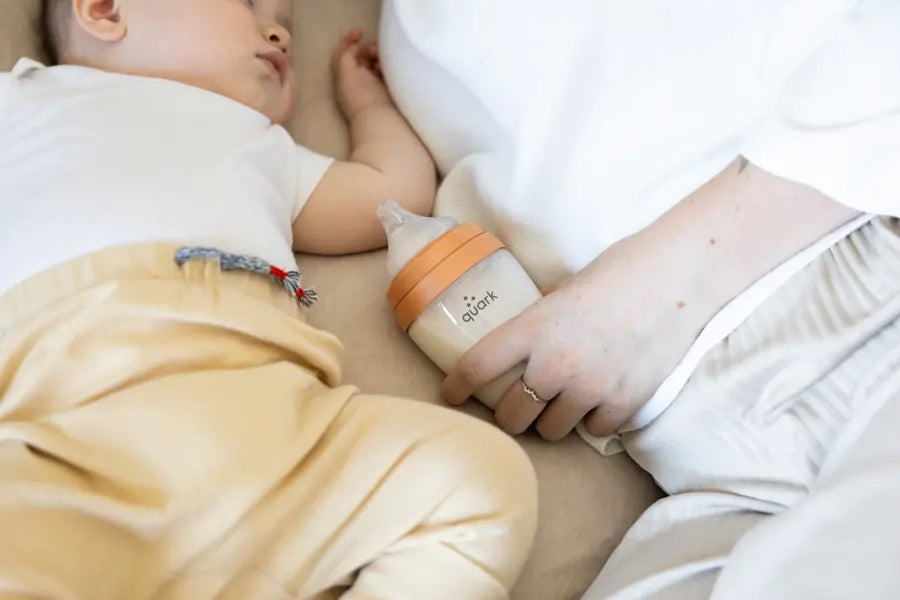
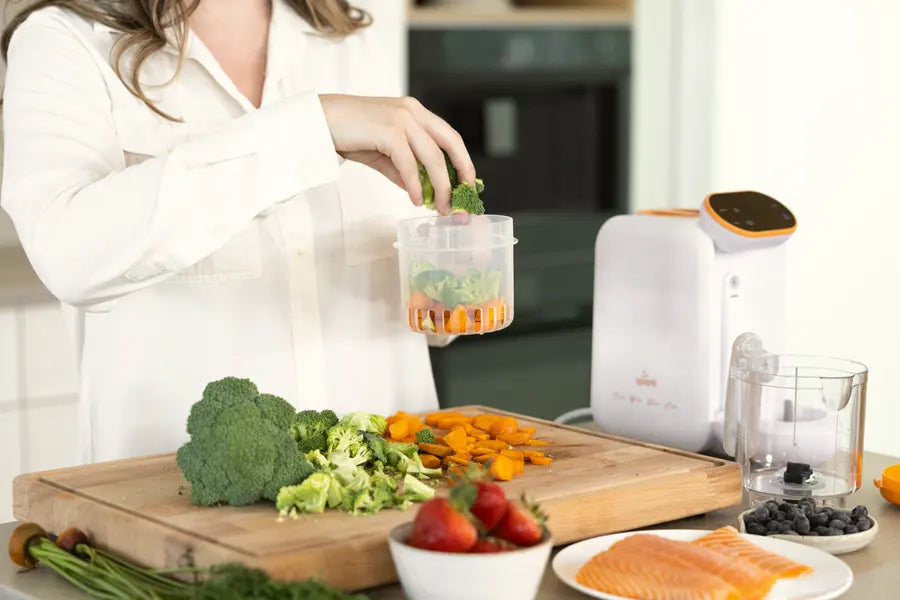
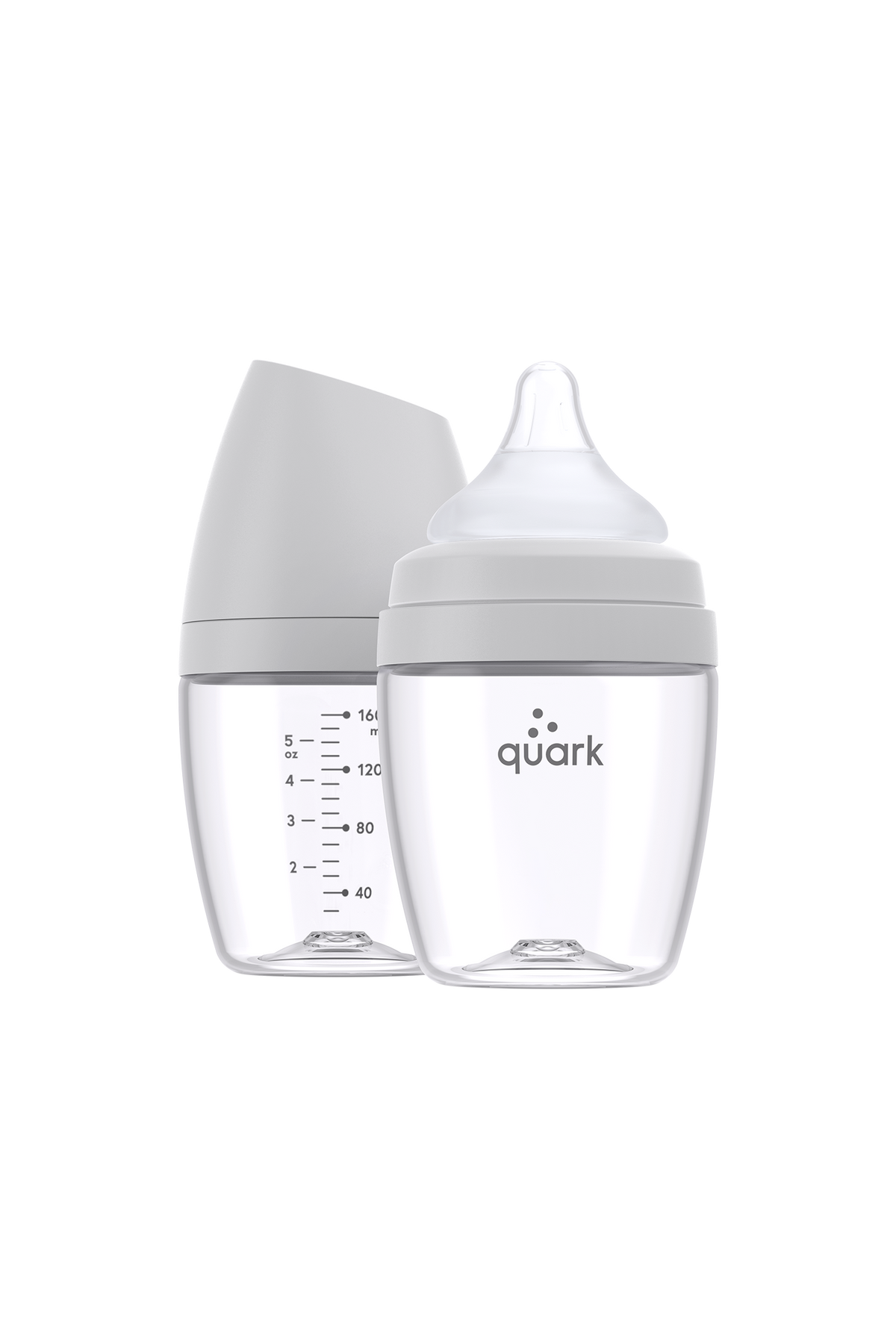
Quark Baby feeding examples include BuubiBottle, RealFeel bottle nipples, Fruuti feeder parts, Chiill freezer tray portions, SipKit straw parts, and other feeding accessories. These examples show why parents should read material claims by part. When the relevant product page lists measurable specs such as 300 ml / 10 oz capacity, USB charging, temperature range, or replacement guidance, treat those as separate checkable facts rather than material claims: a bottle body, nipple, straw, seal, tray, spoon, lid, and feeder tip each faces different heat, cleaning, chewing, replacement, and travel questions.
Material reading is not the same as choosing one universal material. Parents can also compare the silicone vs plastic baby feeding products guide before the glass vs silicone vs plastic baby bottles guide explains why the right choice changes by bottle body, nipple, travel, breakage, and cleaning job.
BPA-free: useful, but narrow
BPA-free is a specific claim. It is helpful because it addresses one parent concern, but it should not be stretched into a full product safety proof. Parents still need to know whether the product is designed for heat, whether it scratches or clouds, whether it should be replaced after wear, and which exact part carries the claim. The FDA reference below is included for BPA background, not as a claim that one product is universally safer.
Silicone claims: check the part and the job
Silicone can be useful for nipples, feeder tips, seals, trays, and soft parts because flexibility and mouth-feel can matter. Parents should still check whether the part is designed for food contact, freezing, heating, chewing, dishwasher use, and replacement. The claim belongs to the part and use case, not to every scenario the parent can imagine.
For a more focused material comparison, read the food-grade silicone baby products guide and compare it with product pages such as Fruuti Fruit Feeder or Chiill Silicone Freezer Tray.

How to avoid being misled
Parents can avoid most material-claim confusion with four questions. First, which exact part is the claim about? Second, what is the part supposed to do? Third, what heat, cleaning, storage, chewing, and replacement limits apply? Fourth, what is not being claimed? If a product page uses a broad word without specifics, treat it as a starting point for questions, not a final answer.
This approach also protects parents from false tradeoffs. Plastic can be useful when lightweight travel matters. Glass can be useful when visibility and rigidity matter. Silicone can be useful when softness, grip, or freezing matters. Each one can be the right choice in one part and the wrong choice in another.
Part-by-part product bridge
A material claim is clearest when parents map it to a product part. A nipple claim should be judged by mouth-feel, flow, bite marks, replacement, and cleaning. A freezer tray claim should be judged by freezing, release, lid fit, and odor. A straw or sippy part should be judged by brush access, hidden residue, and chewing. A bottle body should be judged by weight, heat, clarity, and travel risk.
Use product pages as evidence, not as slogans. Compare the RealFeel Bottle Nipples for nipple-specific questions, the Fruuti Baby Fruit Feeder for feeder-tip and cleaning questions, and the feeding collection for broader setup decisions. The goal is a material match to the job, not a universal material winner.
Final buying check
Before choosing, parents should walk through one real day rather than one ideal use case. Think about who prepares the bottle or food, where clean parts sit, what happens when the baby is already upset, and whether the cleaning routine still feels realistic at night or away from home. A product fits when it reduces decisions during those normal moments, not only when it looks useful in a product photo.
Next step
Start with the Quark Baby Feeding collection, then read each product page by part, claim, heat limit, cleaning rule, and replacement cue before deciding what the material label really means.
FAQ
Does BPA-free mean a baby product is completely risk-free?
Is food-grade silicone always the right material?
Can I trust broad non-toxic claims?
Should I read material claims by product part?
Does dishwasher-safe apply to every part?
What is the clearest way to compare material claims?
After-purchase material check
After buying a feeding product, keep checking the material claim against real use. Look for scratches, odor, clouding, tears, bite marks, warped lids, loose seals, and parts that no longer clean well. Replacement cues matter because a correct material choice on day one can still become the wrong part after wear.
One more check helps: if the routine only works when everything goes perfectly, simplify it. Parents need a setup that still feels clear with limited time, limited counter space, and a tired caregiver. That final reality check is often more useful than another feature claim.
References
- CDC: Infant formula preparation and storage
- CDC: Breast milk storage and preparation
- CDC: Foods and drinks for 6 to 24 months
- Health Canada: Infant nutrition
- Health Canada: Safe food handling tips
- FDA: Bisphenol A use in food contact applications
- Quark Baby public product and collection pages for referenced product specifications



Leave a comment
All comments are moderated before being published.
This site is protected by hCaptcha and the hCaptcha Privacy Policy and Terms of Service apply.