



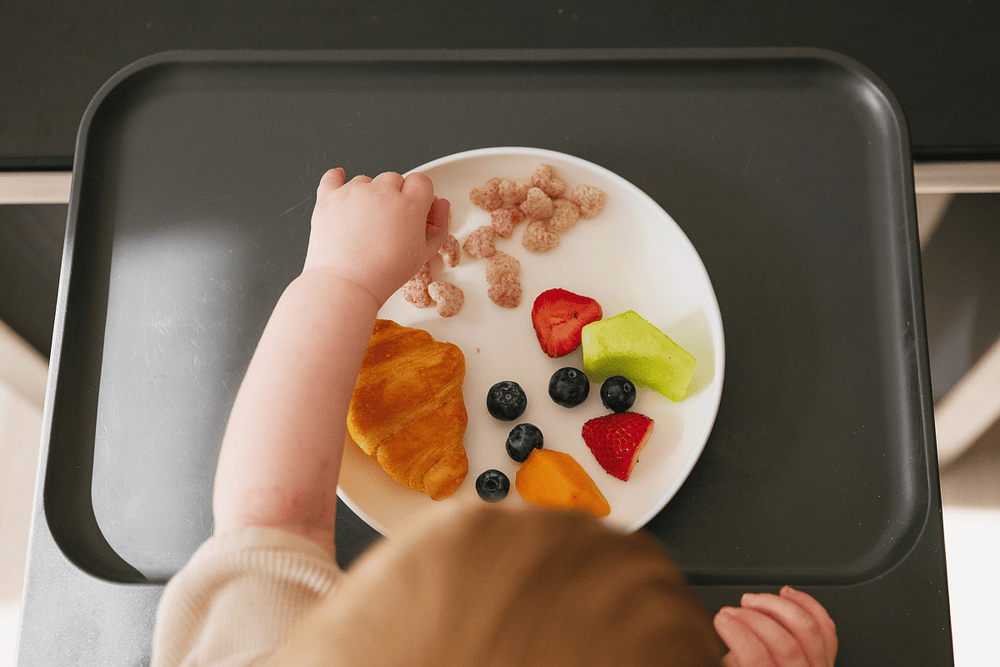

One Machine, Four Food Groups: How to Use a Baby Food Maker for Veg, Fruit, Meat, and Grains
The same machine treats a carrot, a pear, a little chicken, and a spoon of oats completely differently. Once you know how, first-food prep stops being four separate jobs.
Quark Baby · Medically reviewed by Dr. Yang · 6 min read
You bought the food maker imagining smooth, golden purees. Then you actually started: the carrot came out grainy, the pear turned to soup, the chicken refused to go smooth, and the oats glued themselves to the blade. The machine wasn’t the problem. Each food group just asks for a different steam time, a different amount of liquid, and a different amount of patience — and nobody tells you that on the box.
So here is the food-by-food version: what each group needs, where it usually goes wrong, and the one honest test for whether a baby food maker actually earns counter space in your kitchen. Wherever a real cooking temperature or an age window matters, that’s a conversation for your pediatrician and public-health guidance, not a blog — we’ll stick to how to run the machine well.

How a steam-and-blend food maker actually works
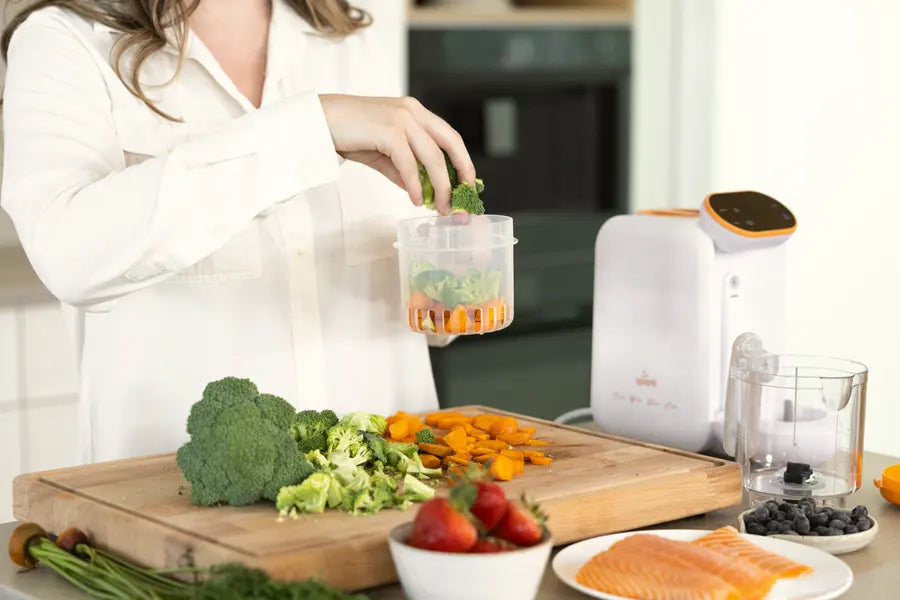
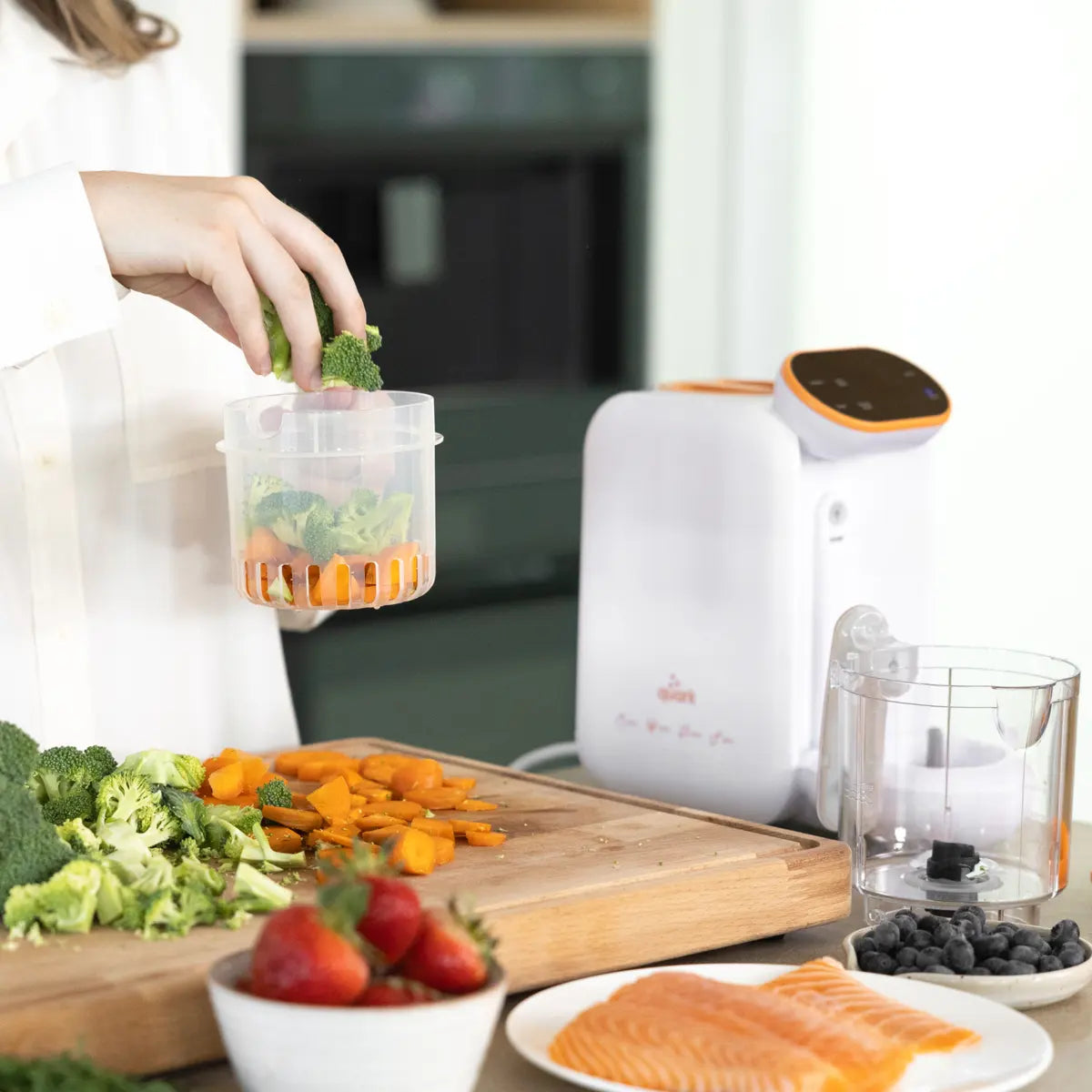
Most baby food makers, the Quook included, do two core jobs in one cup: steam to cook, then blend to the texture you want. That matters because the order is the same for every food group, and only the dials change. Steam softens; blending smooths; liquid controls how runny it ends up. Get those three levers right per food and you can run an entire week of purees through one device without thinking hard about it.
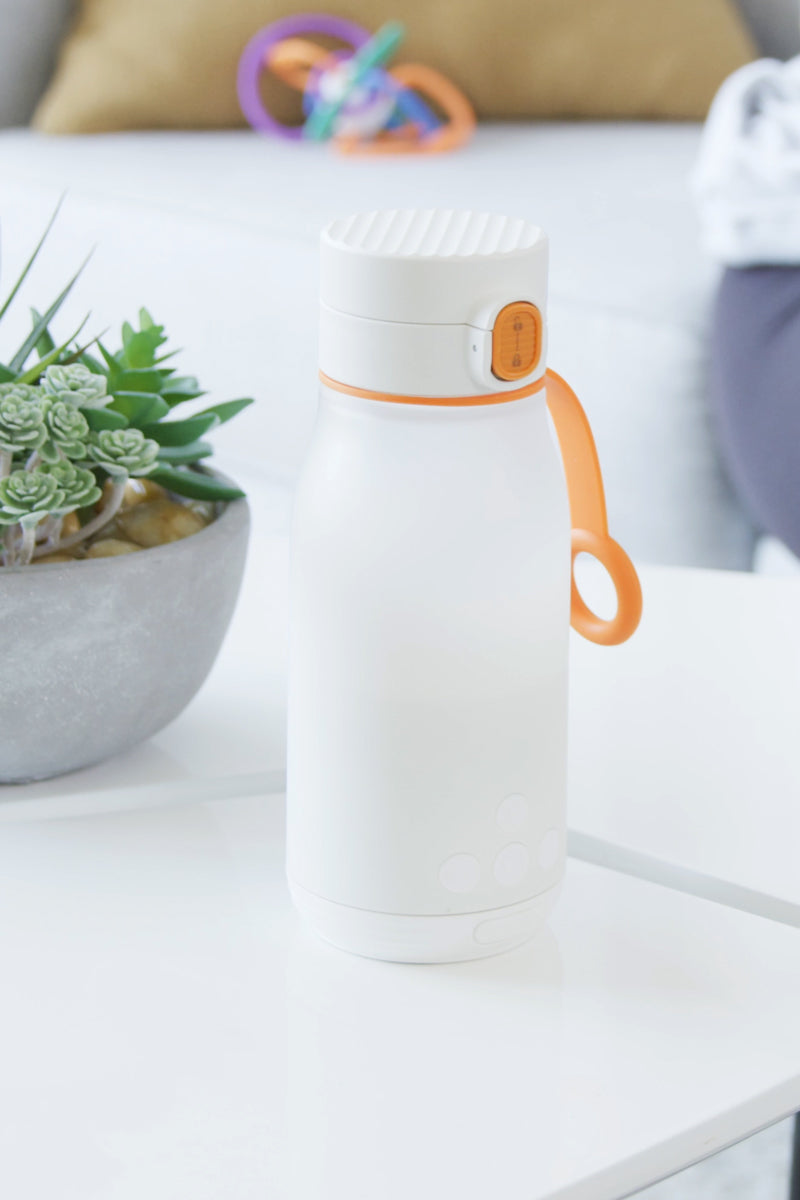
The Quook is listed as a 5-in-1: it steams, blends on auto or manual, warms bottles, and has a steam-sterilizing mode, all from a digital touch panel. For this guide the steam-and-blend half is what counts. If you want the warming-and-sterilizing side instead, the materials, cleaning, and capacity guide covers what those modes do and don’t replace.
Vegetables: steam longest, blend smoothest
Vegetables are where the machine shines and where impatience shows. Firm ones — carrot, sweet potato, butternut, peas — need a genuinely soft steam before they’ll blend silky. Pull them early and you get that grainy, fibrous puree that babies push back out. The fix is dull but reliable: cut into even pieces so they cook at the same rate, steam until a piece crushes easily against the side of a spoon, then blend with a splash of the steaming water until it pours off the spoon in a smooth ribbon.
Leafy and stringy vegetables (spinach, green beans, celery) keep a little fiber no matter how long you blend, so save those for slightly later texture stages rather than a baby’s very first spoon. For the order in which textures progress, lean on your feeding guidance rather than a fixed rule, and let the machine match the stage you’re already on.
Fruit: the opposite problem
Fruit flips everything. Ripe pear, banana, peach, or mango is already soft, so it needs little or no steaming and blends in seconds. The trap is liquid: add the usual splash of water and you get fruit soup that slides off the spoon. Start with no added liquid, blend, and only thin it if the texture is genuinely too thick. Apples and firm pears are the exception — a short steam mellows them and kills the gritty edge.
Vegetables forgive a long cook. Fruit punishes one. Same machine, opposite instinct.
Fruit also clings. Natural sugars leave a sticky film on the cup and lid, so a quick rinse right after blending saves you a scrubbing session later. If you batch fruit ahead, the Chiill silicone freezer tray portions purees into baby-sized cubes you can pop out one at a time.
Meat: the one that needs real care
Meat is the food group where convenience claims deserve the most scrutiny, and where the machine helps least with the part that matters. Cooking meat fully to a safe internal temperature is a food-safety step you own — follow your public-health and pediatric guidance for that, not a puree recipe. The food maker’s job starts after the meat is safely cooked: blend it longer than you think, with a little of the cooking liquid or a familiar puree (sweet potato is a classic) to loosen the dense texture into something a baby can actually swallow.
Plain blended meat is stiff and a bit grainy, which is normal; thinning it and combining it with a softer food is what makes it go down. Meat also leaves the most stubborn residue, so the clean afterward matters more here than with any other group. That’s a good moment to read the blades, basket, and cup cleaning guide before you make protein a regular part of the rotation.

Grains: thin first, rinse fast
Oats, rice, and other grains absorb liquid and keep thickening even after you stop blending, so a puree that looked perfect in the cup can set into paste on the spoon. Cook the grain a touch looser than you’d eat it yourself, blend, and have a little extra warm water or milk ready to thin it back down right before serving. The starch is also the reason grains leave that cloudy film around the blade — rinse the cup soon after, while it’s still wet, rather than letting it dry into a crust.
Once your baby is on grains and proteins, you’re past the smoothest stage, which is the moment a lot of parents start asking whether the machine is still pulling its weight against a jar. The food maker vs store-bought purees comparison is the honest place to weigh that.
So is a food maker worth it, or just a steamer and a blender?
If you only skim one thing: a steam-and-blend food maker is worth it when it makes the steaming-plus-blending-plus-cleaning loop genuinely repeatable for the foods you actually serve. If you’d only ever make smooth purees, a pot and a stick blender do the same job for less. Here’s our take on the three ways people approach it.
The all-in-one food maker is the pick if you’re doing this several times a week across food groups. Steaming and blending in one cup means fewer pans, fewer transfers, and one thing to wash. Best for: parents batch-cooking veg, fruit, meat, and grains on repeat. The honest trade-off is counter space and the blade clean after meat and grains.
A steamer basket plus a blender costs less and you may already own both. It does everything a food maker does — in more steps, more dishes, and more transfers, which is exactly what gets skipped on a tired evening. Best for: occasional purees, or testing whether you even enjoy making baby food. If you want the head-to-head, see the food maker vs steamer and blender breakdown.
Store-bought pouches and jars win on zero prep and zero cleanup, and they have a real place in a busy week. The trade is cost over time and less control over texture and ingredients. Best for: travel, daycare days, and weeks when cooking simply isn’t happening.
| Food maker | Steamer + blender | Store-bought | |
|---|---|---|---|
| Steam + blend in one cup | Yes | No | n/a |
| Things to wash per batch | Fewest | Most | None |
| Texture control | Full | Full | Fixed |
| Upfront cost | Higher | Lower | Per pouch |
| Good for batch prep | Yes | Yes | No |
Spec cells are the quick-scan layer; the prose above is the actual verdict. Verify current Quook specs and price on the product page before buying.
The one-week fit test
Before you commit, run a single realistic week in your head instead of one perfect demo puree: a vegetable batch, a fruit batch, a small meat blend, and a grain blend. Picture not just the cooking but the cooling, portioning, labeling, and washing — the parts that happen when the baby is already fussing. A food maker fits when it shrinks the number of decisions in that real week. If the cleanup loop is the thing that quietly stops you from cooking, a simpler setup or a few pouches is the smarter call, and there’s no shame in it.
If a puree doesn’t come out right, here’s what’s normal.
- Grainy vegetables usually mean not enough steam — cook softer next time, not longer blending.
- Runny fruit means too much liquid; start with none and thin only if needed.
- Stiff meat is expected — loosen it with cooking liquid or mix into a softer puree.
- Always cool food to a safe serving temperature and test it before feeding, and follow your guidance on storing, reheating, and discarding leftovers.
A baby food maker isn’t magic and it isn’t a shortcut around safe cooking or your baby’s readiness for solids. What it does well is take four food groups that each behave differently and run them through one predictable routine. Learn how veg, fruit, meat, and grains each want to be handled, and the machine quietly does the boring part — which, most weeks, is exactly the part you needed help with.
Common questions
Can one baby food maker handle vegetables, fruit, meat, and grains?
Yes. A steam-and-blend maker like the Quook prepares all four; the steam time and liquid change by group. Vegetables steam longest, fruit blends fastest, meat needs careful cooking and a finer blend, and grains thicken quickly. You still own food safety, texture choices, and cleaning.
Do vegetables and fruit need the same prep in a baby food maker?
No, and treating them the same is the usual mistake. Firm vegetables need a long steam to blend smooth; ripe fruit needs little cooking and almost no added liquid, or it turns watery.
Is meat harder to prepare in a baby food maker?
Yes. Cook meat fully to a safe temperature following food-safety guidance, then blend it longer with a little liquid or a softer puree to make it swallowable. It also leaves the most residue, so clean the blade and cup thoroughly afterward.
Why do grains gum up the machine?
Oats and rice keep absorbing liquid and leave a starchy film. Blend a touch loose, thin again right before serving, and rinse the cup while it’s still wet rather than letting it dry.
Does a baby food maker replace food-safety rules?
No. It steams, blends, and warms; it doesn’t replace ingredient safety, full cooking, age-readiness for solids, or the rules for cooling, storing, reheating, and discarding food. Follow your pediatrician and public-health guidance for those.
Reviewed for accuracy by Dr. Yang · Last updated June 2026 · General guidance, not a substitute for advice from your own healthcare provider. Always follow current infant-feeding, cooking, and food-storage guidance.


Leave a comment
All comments are moderated before being published.
This site is protected by hCaptcha and the hCaptcha Privacy Policy and Terms of Service apply.