



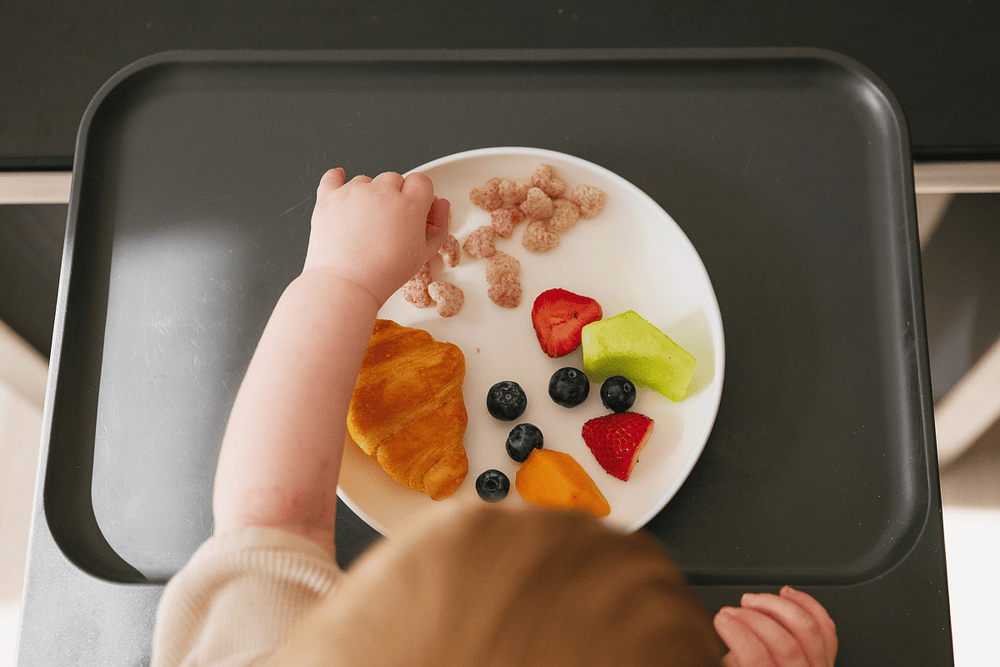




Comment donner des protéines à votre bébé
Lorsque les bébés commencent les solides, de nombreux parents se demandent comment fournir suffisamment de protéines en toute sécurité — surtout s’ils essaient le sevrage mené par bébé ou préparent la nourriture à la maison. La bonne nouvelle ? Les bébés n’ont pas besoin de repas compliqués pour obtenir les protéines dont ils ont besoin. Avec les bons aliments et les bonnes textures, il est facile de soutenir une croissance saine tout en rendant les repas moins stressants.
Ce guide détaille les aliments riches en protéines pour bébé, comment les préparer en toute sécurité, et des conseils pratiques pour les servir pendant la première année de solides.
Qu’est-ce que le sevrage mené par bébé (BLW) ?
Le sevrage mené par bébé (Baby-Led Weaning ou BLW) est une approche d’alimentation où les bébés se nourrissent eux-mêmes d’aliments mous et faciles à saisir au lieu d’être nourris à la cuillère avec des purées. Il encourage :
- Le développement des habiletés motrices
- L’exposition à une variété de textures
- Les repas en famille avec des aliments partagés
Que vous suiviez strictement le BLW ou un mélange de morceaux et de purées, les aliments riches en protéines peuvent être introduits en toute sécurité une fois que votre bébé montre qu’il est prêt pour les solides (généralement vers 6 mois).
Pourquoi les protéines sont-elles importantes pour les bébés ?
Les protéines jouent un rôle essentiel dans :
- La croissance et le développement musculaire
- La réparation tissulaire
- Le soutien du système immunitaire
De nombreux aliments protéinés fournissent également des nutriments importants comme le fer, le zinc et les graisses saines, qui sont particulièrement cruciaux au cours de la première année, lorsque les réserves de fer des bébés commencent à diminuer.
Meilleurs aliments riches en protéines pour les bébés (6-18 mois)
Voici des options de protéines nutritives et adaptées aux bébés, avec des conseils pour une préparation sûre.
Viande et volaille (protéines riches en fer)
Exemples :
- Poulet
- Dinde
- Bœuf
- Agneau
Comment servir en toute sécurité :
- Cuire jusqu’à ce que la viande soit très tendre
- Déchiqueter, hacher finement, ou servir en grandes lanières tendres
- Mélanger avec des légumes ou réduire en purée pour l’humidité
Ces aliments sont particulièrement précieux car ils contiennent du fer héminique, qui est facilement absorbé.
Poisson (options à faible teneur en mercure)
Exemples :
- Saumon
- Cabillaud
- Aiglefin
Comment servir en toute sécurité :
- Retirer toutes les arêtes
- Cuire jusqu’à ce que le poisson soit feuilleté et tendre
- Servir en gros flocons ou mélangé à des légumes en purée
Le poisson fournit des protéines et des acides gras oméga-3 qui soutiennent le développement cérébral.
Œufs
Les œufs sont une protéine complète et faciles à préparer.
Idées de service en toute sécurité :
- Œufs brouillés bien cuits
- Lanières d’omelette
- Œuf dur écrasé avec de l’avocat
Les œufs peuvent généralement être introduits tôt, à condition qu’ils soient bien cuits.
Produits laitiers (après 6 mois, en petites quantités)
Exemples :
- Yaourt nature entier
- Fromages à pâte molle (faibles en sodium)
Les produits laitiers apportent des protéines, du calcium et des graisses. Évitez les sucres ajoutés et les fromages très salés.
Haricots, lentilles et pois chiches (protéines végétales)
Exemples :
- Lentilles
- Haricots noirs
- Pois chiches
Comment servir :
- Cuire jusqu’à ce qu’ils soient très tendres
- Écraser, mixer ou former en galettes
- Combiner avec des légumes pour des repas équilibrés
Ce sont des sources de protéines abordables et riches en fibres.
Tofu et produits à base de soja
Le tofu est mou et facile à manipuler pour les bébés.
Conseils :
- Choisir du tofu ferme nature
- Couper en lanières ou en cubes
- Faire revenir à la poêle ou cuire à la vapeur pour une meilleure prise
Beurres de noix et de graines (tartinés finement)
Les beurres de noix fournissent des protéines et des graisses saines.
Introduction en toute sécurité :
- Diluer avec de l’eau, du lait maternel ou du yaourt
- Étaler finement sur des bâtonnets de pain grillé ou mélanger à des purées
Ne jamais offrir de grosses boules en raison du risque d’étouffement.
Idées de repas riches en protéines faciles pour les bébés
Voici des combinaisons simples que les parents adorent :
- Poulet effiloché + purée de patate douce
- Lentilles + carottes tendres
- Œuf brouillé + tranches d’avocat
- Flocons de saumon + purée de petits pois
- Yaourt + beurre de noix + purée de fruits
Ces repas peuvent être servis comme aliments à manger avec les doigts, à la cuillère, ou les deux.
Faciliter la préparation des aliments protéinés à la maison
Préparer des aliments riches en protéines pour bébé ne doit pas prendre beaucoup de temps. De nombreux parents préfèrent cuisiner à la maison pour contrôler la texture, les ingrédients et les niveaux de sel — surtout lorsqu’ils introduisent des viandes, des légumineuses ou des repas composés.
L’utilisation d’un robot culinaire multifonction pour bébé peut simplifier le processus en cuisant à la vapeur et en mixant au même endroit. Par exemple, le Quook Baby Food Maker permet aux parents de :
- Cuire à la vapeur les viandes et les légumes jusqu’à ce qu’ils soient tendres
- Mixer les aliments pour obtenir différentes textures à mesure que les bébés grandissent
- Préparer plusieurs repas à la fois avec un minimum de nettoyage
C’est une option utile pour les familles qui souhaitent des aliments faits maison sans ajouter de complexité à leur routine.
Tailles des portions et texture par âge
6–8 mois
- Textures molles, écrasables
- Grosses pièces que bébé peut saisir
- Petites quantités de protéines offertes quotidiennement
9–12 mois
- Aliments coupés ou effilochés
- Repas mélangés avec des protéines + des légumes
- Augmentation progressive de la variété
12+ mois
- Aliments familiaux avec une modification minimale
- Repas équilibrés avec des protéines à chaque repas principal
Supervisez toujours les repas et suivez les directives d’alimentation en toute sécurité.
Erreurs courantes à éviter lors de l’alimentation en protéines
- Ajouter du sel ou des assaisonnements
- Offrir des textures dures, sèches ou collantes
- Servir de gros morceaux qui ne sont pas tendres
- Se fier aux poudres ou aux suppléments protéinés
Les aliments entiers sont les meilleurs pour les bébés.
Questions fréquemment posées
Les bébés peuvent-ils avoir trop de protéines ?
Pas habituellement. Les bébés régulent leur apport lorsqu’on leur propose des aliments entiers. Concentrez-vous sur la variété plutôt que sur de grandes portions.
À quelle fréquence dois-je offrir des aliments protéinés ?
Une ou deux fois par jour. Une fois que les solides commencent, offrir une source de protéines 1 à 2 fois par jour est généralement suffisant.
Cet article est fourni à titre d’information générale et ne constitue pas un avis médical. Consultez toujours votre pédiatre au sujet de la santé de votre bébé.
Examiné médicalement par Dr. Yang · Dernière révision : 6 août 2026




Laisser un commentaire
Tous les commentaires sont modérés avant d'être publiés.
Ce site est protégé par hCaptcha, et la Politique de confidentialité et les Conditions de service de hCaptcha s’appliquent.