

Ça commence souvent par un menton tout mouillé et un poing qui ne quitte plus la bouche. Puis vient une nuit où rien ne l'apaise, et vous voilà à chercher « remèdes poussée dentaire » à 2 h du matin.
Nous avons comparé les conseils de l'American Academy of Pediatrics (AAP), du NHS, de la FDA et de la Société canadienne de pédiatrie (CPS), et notre conclusion est simple : le froid, une pression douce et le réconfort font l'essentiel du travail. Tout ce qui se frotte sur les gencives, fond sous la langue ou se porte autour du cou, on évite. Et une fièvre de 38 °C (100,4 °F) ou plus n'est pas due aux dents.
Est-ce une poussée dentaire ? Les signes et l'âge
Les écarts sont grands d'un bébé à l'autre. Selon l'AAP, les premières dents apparaissent généralement entre 6 et 10 mois, et l'inconfort peut commencer des semaines ou des mois plus tôt, peut-être dès 3 mois. Le NHS précise que certains bébés commencent avant 4 mois, d'autres après 12 mois, et que quelques-uns naissent avec une dent. Les deux dents du bas, à l'avant, sortent habituellement en premier, et la plupart des enfants ont leurs 20 dents de lait à l'âge de 3 ans.
Les signes que citent à la fois l'AAP et le NHS :
- Plus de bave que d'habitude, parfois avec des rougeurs autour de la bouche ou sur le visage à cause de la salive
- Le besoin de mordiller et de mâchouiller ses poings, ses jouets et tout ce qui passe à sa portée
- Une gencive rouge et douloureuse à l'endroit où la dent perce
- Un bébé plus grognon que d'habitude, qui dort moins bien
- Une joue rouge, ou une main qui frotte l'oreille (NHS)
Le NHS ajoute que certaines dents percent sans aucune gêne, ou avec des symptômes légers qui ne durent que quelques jours. Notre guide du développement de la première année montre où se situe habituellement la poussée dentaire parmi les autres changements.
Poussée dentaire ou autre chose ?
L'AAP est catégorique : les dents ne causent ni fièvre, ni diarrhée, ni pleurs excessifs. Si vous observez ces signes, appelez le médecin de votre enfant.
| Ce que vous remarquez | Dû aux dents ? | Source |
|---|---|---|
| Bave, mâchouillage, gencives douloureuses | Oui | AAP, NHS |
| Rougeurs autour de la bouche dues à la bave | Possible | AAP, NHS |
| Température légèrement élevée, sous 38 °C (100,4 °F) | Possible | NHS |
| Fièvre de 38 °C (100,4 °F) ou plus | Non : signe de maladie | AAP |
| Diarrhée | Non | AAP, NHS |
| Érythème fessier | Non | AAP |
| Pleurs beaucoup plus fréquents que d'habitude | En général, non | AAP |
Ce repère sur la fièvre vient de la page de l'AAP sur ce qu'il faut savoir sur la première dent, qui cite une étude de 2016 publiée dans Pediatrics. Si votre bébé a moins de 6 mois et fait de la fièvre, quelle qu'elle soit, la CPS recommande d'appeler un médecin.
Soulager la poussée dentaire de bébé : les remèdes qui aident
Pour soulager la poussée dentaire, si vous ne deviez essayer que deux choses : un jouet de dentition ferme refroidi au réfrigérateur, et votre doigt propre sur la zone douloureuse. Les deux reviennent dans les recommandations que nous avons lues, coûtent peu et conviennent à tout âge.
| Remède | À partir de quel âge | Ce que disent les recommandations | Source |
|---|---|---|---|
| Massage des gencives avec un doigt propre | Tout âge | Se laver les mains, frotter doucement la zone douloureuse | AAP, NHS, FDA |
| Jouet de dentition ferme, refroidi au réfrigérateur | Tout âge | Plein, sans liquide à l'intérieur ; pas congelé ; sous surveillance | NHS, FDA |
| Débarbouillette froide et humide | Tout âge | Tissu tordu et refroidi, à mordiller | AAP, CPS |
| Aliments froids et tendres | Dès 6 mois, s'il mange déjà des solides | Fruits tendres comme le melon ; restez avec votre bébé | NHS, AAP |
| Eau froide dans un gobelet | Plus de 6 mois | Proposer un gobelet à bec rempli d'eau froide | AAP |
| Câlins et distraction | Tout âge | Le réconfort ou le jeu pour détourner son attention des gencives | NHS |
| Analgésique | Demandez à votre pédiatre | Acétaminophène selon le poids ; ibuprofène seulement après 6 mois | AAP |
1. Masser la gencive
L'AAP conseille de vous laver les mains, puis de masser doucement les zones douloureuses du bout du doigt ou avec une jointure. Mordiller votre doigt peut aussi le réconforter à la sieste et lors des réveils de nuit (AAP).

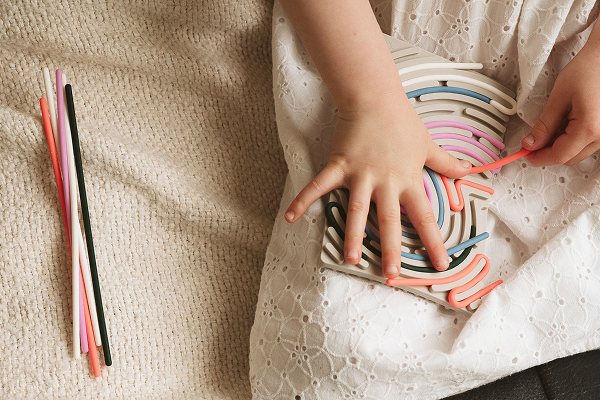
Des boucles fermes que bébé peut amener lui-même sur la zone douloureuse.
2. Un jouet de dentition ferme, refroidi mais pas congelé
La FDA recommande un jouet de dentition ferme (et non rempli de liquide) et de vérifier qu'il n'est pas congelé, car un objet dur peut blesser des gencives douloureuses. Le NHS dit de ne jamais mettre un anneau de dentition au congélateur : refroidissez-le plutôt au réfrigérateur. Restez à proximité pendant que votre bébé mâchouille.
Notre jouet de dentition Thiingy se compose de boucles en silicone souple polymérisé au platine, autour d'un centre en polypropylène de qualité alimentaire, sans aucun liquide à l'intérieur : il n'y a donc rien qui puisse fuir. Il est conçu pour que de petites mains puissent le saisir facilement sous différents angles. Pour l'histoire du produit, lisez notre article sur le lancement de Thiingy.
3. Essayer une débarbouillette froide
Une débarbouillette propre et humide, tordue et refroidie, avec un nœud à une extrémité (AAP).
4. Proposer des aliments froids (dès 6 mois)
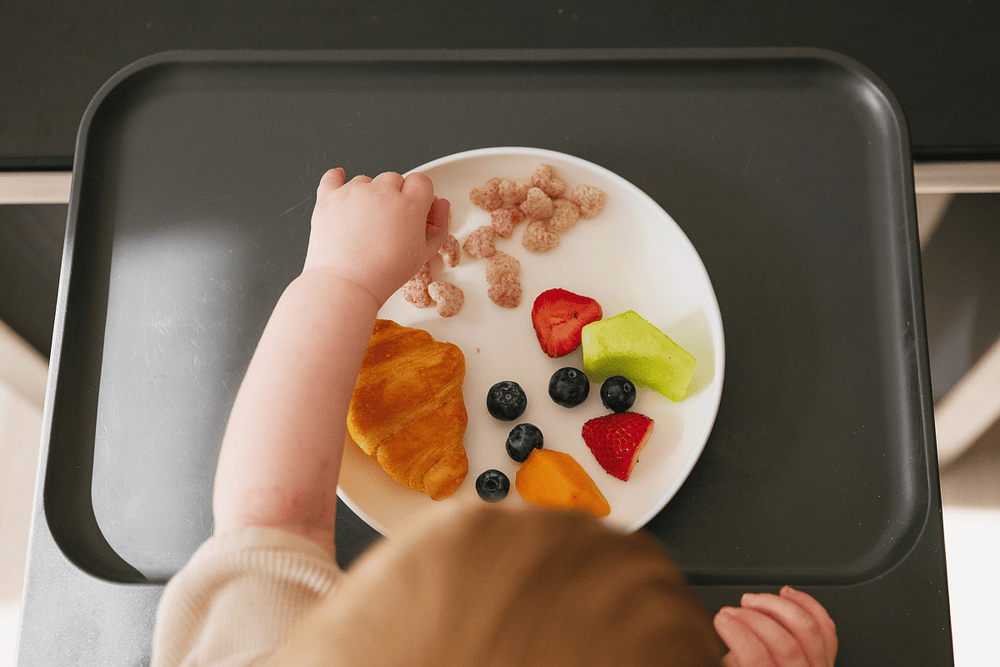
Une fois que votre bébé mange des solides, le NHS suggère de lui donner des aliments sains à mâchouiller, par exemple des fruits tendres comme le melon, en le surveillant toujours pendant qu'il mange. L'AAP décrit des accessoires de dentition qui permettent à bébé de sucer un morceau de fruit congelé, avec une mise en garde : ne laissez pas votre bébé mâcher directement un aliment congelé dur. Une grignoteuse en silicone est justement ce type d'accessoire. Si vous débutez, commencez par les meilleurs aliments à mettre dans une grignoteuse et notre comparatif silicone ou filet.

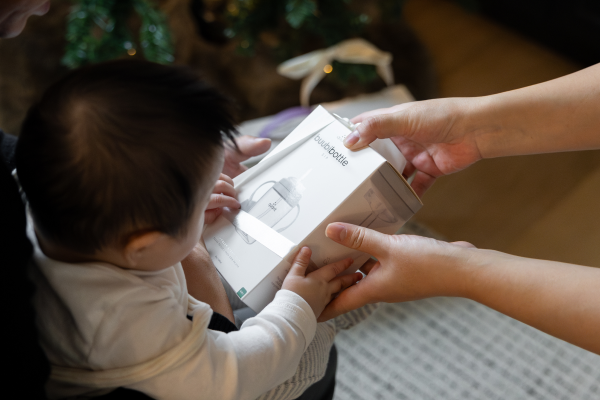
De la purée froide à travers un embout en silicone, et un parent qui garde la main sur le manche.
Ce qu'un laboratoire indépendant a mesuré : Dongguan NTEK Testing Technology a testé notre grignoteuse Fruuti (modèles QK-6331-3 et QK-6331-4) en décembre 2022, rapport DGT221116031BE01. Ces échantillons ont réussi les essais mécaniques de la CPSC américaine, dont un test de morsure. Sur l'embout en silicone, huit métaux lourds solubles, dont le plomb, n'ont pas été détectés (sous la limite de détection de 5 mg/kg). Ces résultats ne valent que pour les échantillons et la pièce testés, à cette date. Aucune grignoteuse ne prévient l'étouffement, alors restez avec votre bébé. Conseils de remplissage : utiliser Fruuti sans en mettre partout.
5. De l'eau froide dans un gobelet (après 6 mois)
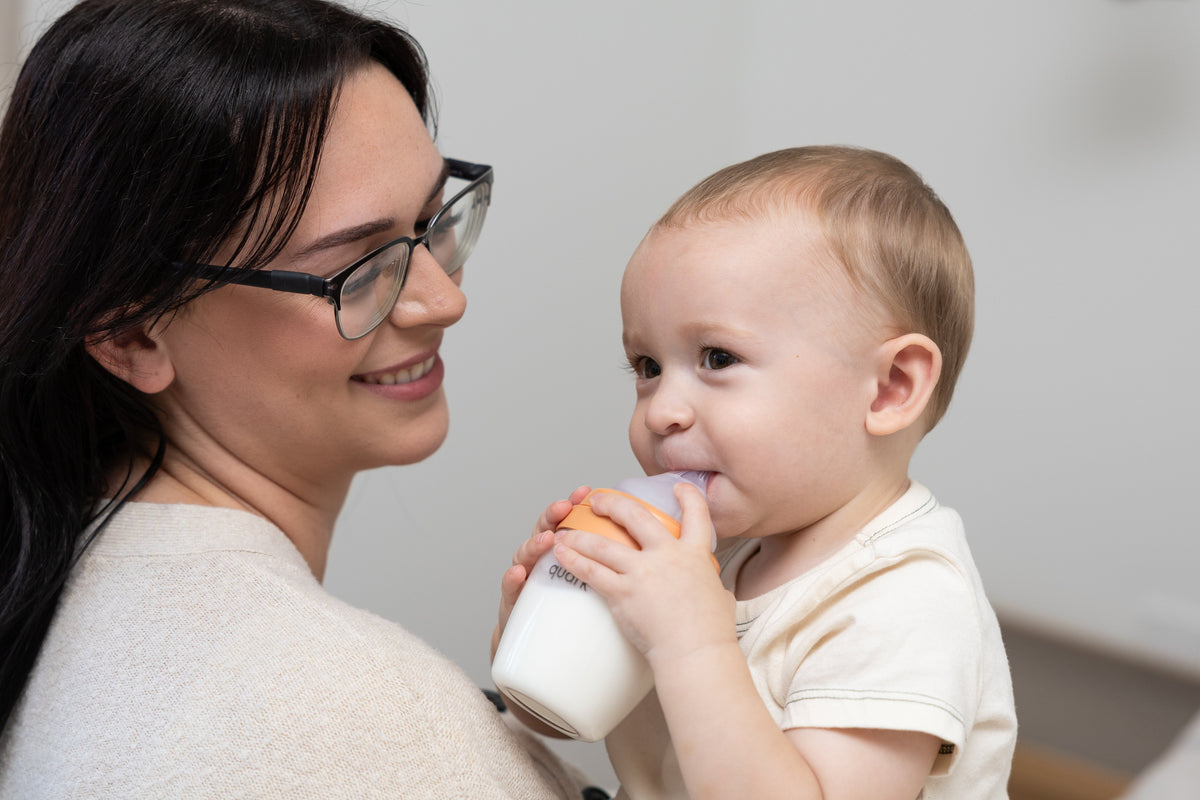
Après 6 mois : un gobelet à bec rempli d'eau froide (AAP).
6. Réconfort et distraction
Consoler votre bébé ou jouer avec lui peut lui faire oublier ses gencives (NHS) ; notre guide des jouets d'éveil vous donnera des idées. Si les pleurs vous semblent disproportionnés, notre article sur les raisons des pleurs et les façons d'apaiser bébé peut vous aider à envisager d'autres causes.

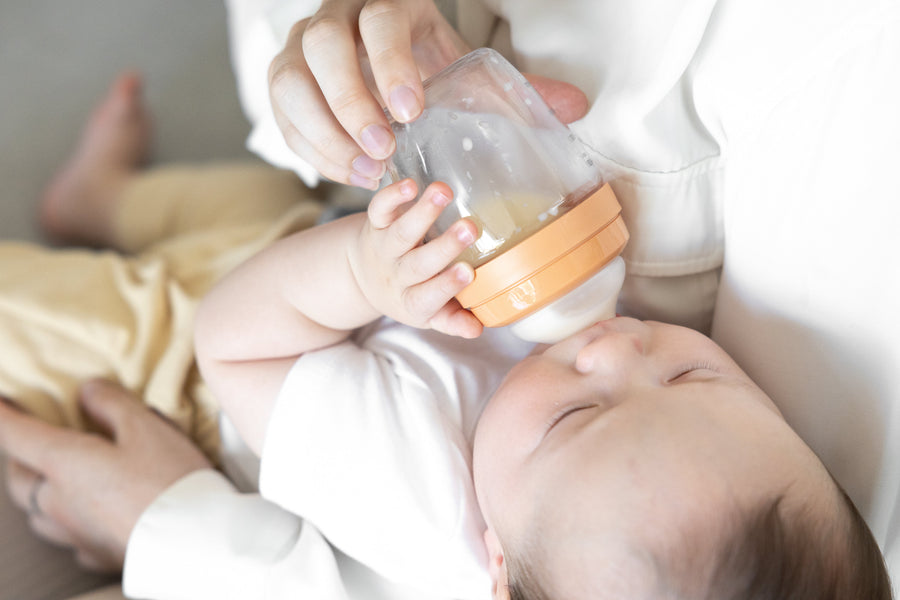
Des genoux accueillants et quelque chose à tenir.
7. Un analgésique, après avoir demandé conseil
Si votre bébé semble très inconfortable, l'AAP suggère de demander à votre pédiatre s'il peut prendre de l'acétaminophène (comme Tylenol), dosé selon son poids, ou de l'ibuprofène (comme Advil ou Motrin) s'il a plus de 6 mois. Demandez la dose en millilitres selon l'âge et le poids de votre bébé. Une dose occasionnelle la nuit peut aider un bébé agité à se calmer (AAP). L'aspirine ne convient pas aux enfants : selon le NHS, pas d'aspirine avant 16 ans.
7 remèdes contre la poussée dentaire à éviter
L'AAP, la FDA et la CPS les déconseillent. La mention « naturel » sur l'étiquette ne dit rien de la sécurité d'un produit.
- Les gels anesthésiants à la benzocaïne ou à la lidocaïne. Selon la FDA, les produits à appliquer sur les gencives qui contiennent de la benzocaïne ou de la lidocaïne n'apportent que peu ou pas de bénéfice et comportent des risques graves pour les enfants qui font leurs dents. La benzocaïne a été associée à la méthémoglobinémie, une affection grave, parfois mortelle, qui réduit fortement la quantité d'oxygène transportée par le sang. En plus, la bave emporte les gels (AAP).
- Les comprimés et gels homéopathiques pour les dents. La FDA classe les comprimés homéopathiques de dentition parmi les produits qui présentent des risques graves. L'AAP cite la belladone et le coffea cruda comme des ingrédients qui peuvent être dangereux pour les bébés.
- Les colliers d'ambre et les bijoux de dentition. Selon l'AAP, les colliers de dentition en ambre, en bois, en marbre ou en silicone présentent de graves risques d'étouffement et de strangulation, et la FDA met en garde contre les bijoux de dentition. Rien ne doit être placé autour du cou de votre bébé.
- Les jouets de dentition remplis de liquide. L'AAP prévient qu'ils peuvent se déchirer ou fuir en laissant des bords coupants, et que le liquide peut contenir des bactéries.
- Les jouets de dentition congelés durs. Trop durs pour des gencives sensibles (FDA, NHS). Refroidissez-les plutôt au réfrigérateur.
- Les biscuits de dentition et les biscottes. L'AAP prévient que des morceaux peuvent se détacher et provoquer un étouffement, et que la plupart contiennent du sucre et du sel ; le NHS et la CPS conseillent de les éviter à cause du sucre.
- L'alcool sur les gencives. Un vieux remède que l'AAP écarte : ni l'alcool à friction ni une boisson alcoolisée ne sont sans danger pour les bébés.
Une version précédente de cet article déconseillait les « aliments durs » et affirmait que la poussée dentaire fait faire plus de siestes aux bébés. Nous n'avons trouvé de source pour aucune de ces deux affirmations, nous les avons donc retirées.
Poussée dentaire et sommeil
Les dents peuvent perturber le sommeil : le NHS cite le fait de « mal dormir » parmi les signes. Pour les réveils de nuit, l'AAP suggère une pression ferme sur les gencives ou un massage doux, et une débarbouillette de dentition froide. L'AAP suggère aussi un bain apaisant et un léger bruit blanc au coucher, et recommande de ne jamais laisser votre bébé s'endormir avec un biberon, ni à la sieste ni la nuit, pour éviter que le lait ne stagne autour des nouvelles dents et ne provoque des caries.
Notre guide réaliste du sommeil de bébé et notre article sur l'alimentation de nuit donnent une vue d'ensemble. Votre bébé prend une suce ? Consultez notre guide sur la sécurité des suces.
Quand appeler votre pédiatre
- Une fièvre de 38 °C (100,4 °F) ou plus, ou toute fièvre si votre bébé a moins de 6 mois (AAP, CPS)
- Une diarrhée qui dure plus d'une journée (AAP)
- Des pleurs plus intenses et plus fréquents que d'habitude (AAP)
- Tout symptôme qui vous inquiète : le NHS rappelle aux parents que ce sont eux qui connaissent le mieux leur bébé
Obtenez immédiatement de l'aide médicale si votre bébé a la peau, les lèvres ou le lit des ongles pâles, gris ou bleutés, ou s'il a du mal à respirer après l'utilisation d'un produit anesthésiant. La FDA cite ces signes parmi ceux de la méthémoglobinémie, qui peuvent apparaître en l'espace de quelques minutes à une ou deux heures.
Autre conseil de l'AAP : consultez un dentiste dans les 6 mois qui suivent l'apparition de la première dent, et au plus tard à 12 mois.
Questions fréquentes
Sources
- American Academy of Pediatrics (HealthyChildren.org) : Teething Pain Relief (mis à jour le 9 juillet 2025)
- American Academy of Pediatrics (HealthyChildren.org) : Baby's First Tooth: 7 Facts Parents Should Know
- American Academy of Pediatrics (HealthyChildren.org) : When Does Teething Start?
- NHS : Baby teething symptoms et Tips for helping your teething baby
- US Food and Drug Administration : Safely Soothing Teething Pain and Sore Gums
- US Food and Drug Administration : Drug Safety Communication on oral benzocaine products (23 mai 2018, copie archivée)
- Canadian Paediatric Society (Caring for Kids) : Healthy teeth for children
- Dongguan NTEK Testing Technology Co., Ltd. : rapport d'essai DGT221116031BE01, Fruuti Baby Fruit Feeder, modèles QK-6331-3 et QK-6331-4 (14 décembre 2022)
Révision médicale par Dr Yang. Dernière révision : 16 octobre 2026.
Avertissement : cet article est fourni à des fins éducatives uniquement et ne remplace pas un avis, un diagnostic ou un traitement médical professionnel. Consultez toujours votre pédiatre ou un autre professionnel de la santé qualifié pour toute question sur la santé de votre bébé.


Laisser un commentaire
Tous les commentaires sont modérés avant d'être publiés.
Ce site est protégé par hCaptcha, et la Politique de confidentialité et les Conditions de service de hCaptcha s’appliquent.