

Parents can warm baby bottles in the car when the routine is planned, supervised, and tied to a near-term feed. The safety problem is not the car itself; it is timing, storage temperature, cleanliness, bottle fit, and caregiver distraction. A parked car, a road-trip stop, or a daycare pickup can all work differently, so the buying decision should focus on repeatable steps rather than improvisation.
Quick answer: use a portable warmer only as part of a safe feeding loop. Prepare and store breast milk or formula correctly, warm only when feeding is close, keep clean and used parts separate, and never treat warmth as a way to extend safe holding time.
Car bottle warming decision matrix
| Scenario | Main risk | What to check | Decision rule |
|---|---|---|---|
| Parked-car feed | Caregiver can stop, check, swirl, and feed soon. | Use temperature visibility, bottle fit, and a clean surface plan. | Strong fit for a portable warmer. |
| Moving car | Driver attention and spill control are the risk. | Do not warm or test while driving. | Stop first; feeding should be supervised. |
| Long road trip | Timing and storage change during delays. | Pack portions, charger, used-parts bag, and discard plan. | Plan the feed before the baby is hungry. |
| Emergency hungry stop | Pressure can create shortcuts. | Use a simple written routine. | Choose the most controlled available option, not the fastest. |

Product/spec evidence from Quark Baby
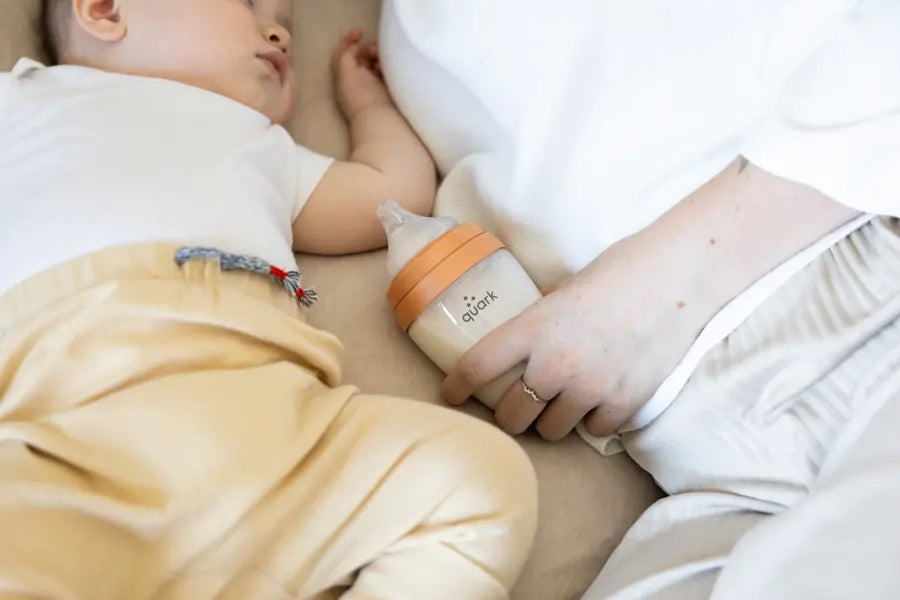
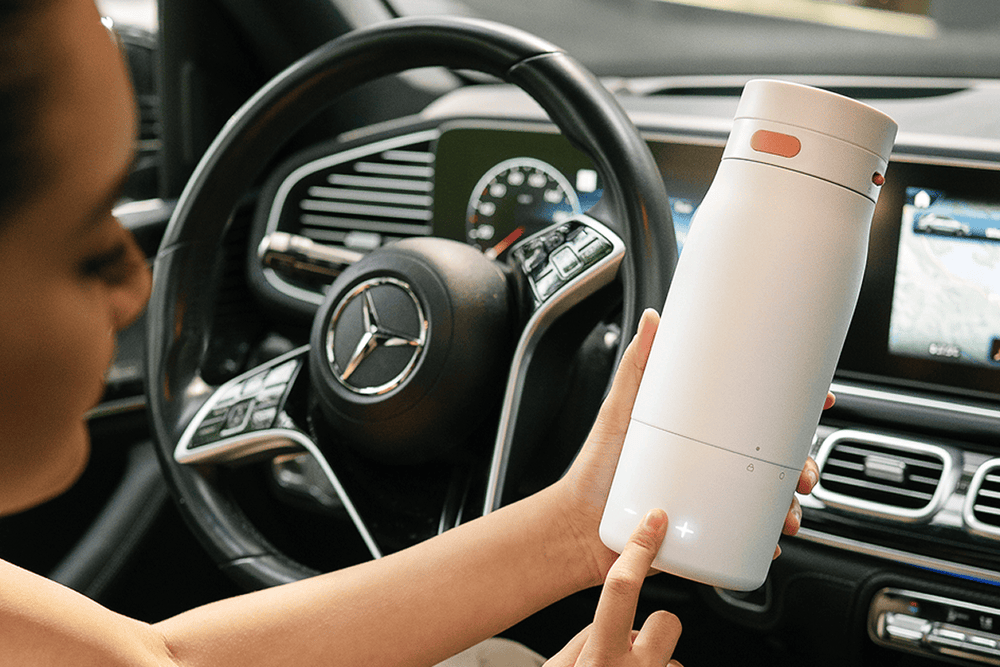
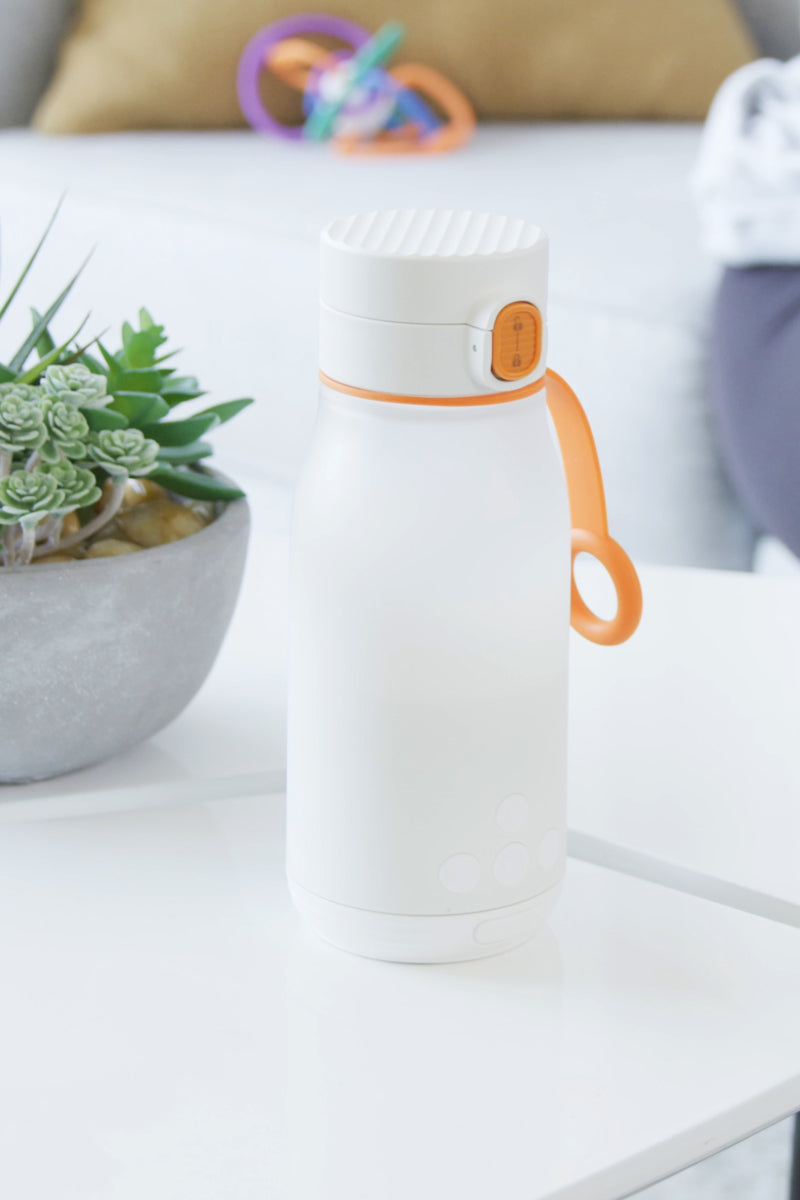
Quark Baby lists BuubiBottle with 300 ml / 10 oz capacity, USB Type-C charging, a real-time temperature display, Tritan construction, travel-safe carry-on positioning, and a 37ºC to 50ºC / 98ºF to 122ºF warming range. Those public specs help parents compare car routines by bottle volume, charging plan, display visibility, and controlled warming range.
The spec does not replace feeding guidance. It helps answer buyer questions: will the bottle fit, can a passenger see the temperature, is the cable packed, and is the routine simple enough to repeat at a rest stop? For temperature detail, compare the portable bottle warmer temperature guide before relying on a car routine.
Safety rules for car use
A practical car routine starts before the engine starts. Parents should decide which bottles are prepared, which milk or formula is still stored correctly, which parts are clean, and where used parts go after the feed. A warmer should be used by a stopped caregiver or passenger who can monitor the bottle, not by a driver trying to multitask.
Car heat is also a separate issue. A hot vehicle is not a controlled bottle warmer. Do not leave milk, formula, bottles, or feeding parts in a hot car and assume they are still safe. Follow CDC handling guidance, and discard feeds that have crossed the family’s safe-use boundary.
Common mistakes to avoid
The first mistake is warming too early. If the baby may not feed soon, warming creates a timing problem. The second mistake is using an unknown water source, cup, or container because the parent forgot the warmer cable. The third mistake is assuming a visible temperature means storage rules no longer matter.
A better plan is simple: pack clean bottles, pack the charger, keep milk or formula stored correctly, stop the car, warm for a near-term feed, swirl and check, feed, then separate used parts. For broader trip planning, use the bottle warmer for car rides and flights guide and the travel bottle warmer vs hotel hot water guide.

What to pack for a safer car warming routine
Pack a charging cable, clean cap or lid plan, used-parts bag, burp cloth, stable surface, and a backup feeding option. If more than one caregiver may feed the baby, write the steps in a note: where milk is stored, when to warm, how to check, and when to discard. The goal is to reduce judgment calls during a noisy travel moment.
Caregiver handoff plan
A car bottle routine often fails when a second caregiver has to guess. Before leaving, decide who handles the bottle, where the clean bottle is stored, where used parts go, and what the stop-and-check rule is. The driver should stay out of the warming process. A passenger or parked caregiver can manage the warmer, check the bottle, and feed without rushing.
Families should also separate comfort from safety. A baby may prefer a warm bottle, but that preference does not justify holding milk or formula warm for later. If a trip has uncertain timing, pack smaller portions, keep the feeding plan flexible, and choose the option that keeps preparation and discard rules easiest to follow.
Final buying check
Before choosing, parents should walk through one real day rather than one ideal use case. Think about who prepares the bottle or food, where clean parts sit, what happens when the baby is already upset, and whether the cleaning routine still feels realistic at night or away from home. A product fits when it reduces decisions during those normal moments, not only when it looks useful in a product photo.
Parents should also review the routine after the first few uses and simplify anything that causes rushing, spills, or unclear timing.
Next step
Review the BuubiBottle Smart Portable Milk Warmer and match its temperature range, capacity, display, and USB Type-C charging to the car routine your family will actually use.
FAQ
Can you warm baby bottles in the car?
Can I warm a bottle while driving?
Does a car warmer make old formula safe?
Is a hot car a safe way to warm a bottle?
Should I test the setup before a road trip?
Is BuubiBottle useful for car rides?
After-feed reset
After a car feed, reset the system before the next stop. Put used parts in a separate bag, note whether any milk or formula must be discarded, recharge the warmer if needed, and keep the next clean bottle away from wet caps or spilled milk. This small reset is what keeps the second feed from becoming rushed or confusing.
One more check helps: if the routine only works when everything goes perfectly, simplify it. Parents need a setup that still feels clear with limited time, limited counter space, and a tired caregiver. That final reality check is often more useful than another feature claim.
References
- CDC: Infant formula preparation and storage
- CDC: Breast milk storage and preparation
- CDC: Foods and drinks for 6 to 24 months
- Health Canada: Infant nutrition
- Health Canada: Safe food handling tips
- FDA: Bisphenol A use in food contact applications
- Quark Baby public product and collection pages for referenced product specifications


Leave a comment
All comments are moderated before being published.
This site is protected by hCaptcha and the hCaptcha Privacy Policy and Terms of Service apply.