

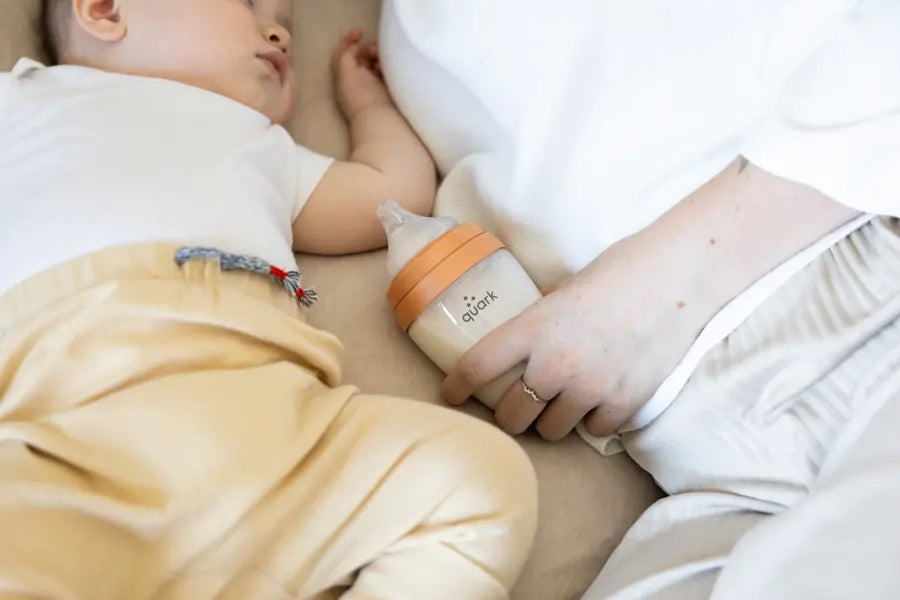

It usually starts with a wet chin and a fist that never leaves the mouth. Then a night where nothing settles them, and you are searching "teething remedies" at 2 a.m.
We read the American Academy of Pediatrics (AAP), the NHS, the FDA and the Canadian Paediatric Society (CPS) side by side, and our view is simple: cold, gentle pressure and comfort do most of the work. Anything you rub on the gums, dissolve under the tongue or hang around the neck, skip. And a fever of 38°C (100.4°F) or higher is not teething.
Is it teething? Signs and timing
The range is wide. The AAP says first teeth typically appear between 6 and 10 months, and that discomfort can begin weeks or months earlier, possibly as early as 3 months. The NHS notes some babies start before 4 months, some after 12 months, and a few are born with a tooth. The bottom front two usually come first, and most children have all 20 baby teeth by age 3.
Signs the AAP and NHS both list:
- More drooling than usual, sometimes with a rash around the mouth or on the face from the drool
- Gnawing and chewing on fists, toys and anything in reach
- A sore, red gum where the tooth is coming through
- Being more fretful than usual, and not sleeping as well
- One flushed cheek, or rubbing an ear (NHS)
The NHS adds that some teeth come through with no discomfort at all, or only mild symptoms that last a few days. Our first-year development guide shows where teething usually falls among the other changes.
Teething or something else?
The AAP is direct: teething does not cause fever, diarrhea or excess crying, and if you see those, call your child's doctor.
| What you notice | Caused by teething? | Source |
|---|---|---|
| Drooling, chewing, sore gums | Yes | AAP, NHS |
| Rash around the mouth from drool | Can be | AAP, NHS |
| Temperature slightly raised, below 38°C (100.4°F) | Can be | NHS |
| Fever of 38°C (100.4°F) or higher | No: a sign of illness | AAP |
| Diarrhea | No | AAP, NHS |
| Diaper rash | No | AAP |
| Crying much more than usual | Not usually | AAP |
The fever line comes from the AAP's first tooth facts page, citing a 2016 study in Pediatrics. If your baby is under 6 months and has any fever, the CPS says to call a doctor.
Baby teething relief: the remedies that help
For teething relief, if you only try two things: a firm teether chilled in the fridge, and your own clean finger on the sore spot. Both come up across the guidance we read, cost little, and suit any age.
| Remedy | From what age | What the guidance says | Source |
|---|---|---|---|
| Gum massage with a clean finger | Any age | Wash hands, rub the sore spot gently | AAP, NHS, FDA |
| Firm teether, chilled in the fridge | Any age | Solid, not liquid-filled; not frozen; supervise | NHS, FDA |
| Cold, damp washcloth | Any age | Twisted, chilled cloth to gnaw on | AAP, CPS |
| Cold soft food | 6 months+, eating solids | Soft fruit such as melon; stay with your baby | NHS, AAP |
| Cold water in a cup | Over 6 months | Offer a sippy cup of cold water | AAP |
| Cuddles and distraction | Any age | Comfort or play to take the focus off the gums | NHS |
| Pain reliever | Ask your pediatrician | Acetaminophen by weight; ibuprofen only over 6 months | AAP |
1. Rub the gum
The AAP suggests washing your hands, then gently massaging the sore spots with a fingertip or knuckle. Gnawing on your finger can comfort at naps and night wakings too (AAP).

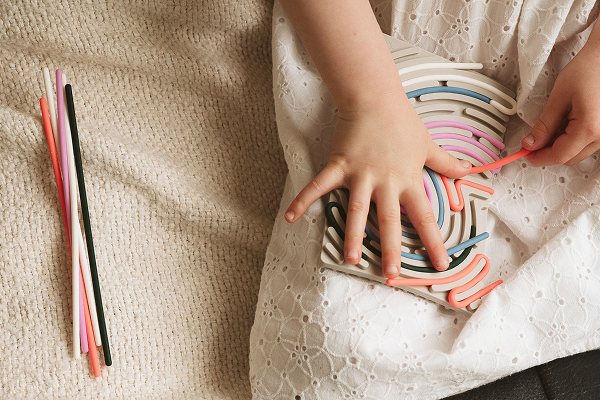
Firm loops a baby can steer to the sore spot.
2. Give a firm teether, chilled, not frozen
The FDA advises a firm (not liquid-filled) teether and says to make sure it is not frozen, because a hard object can hurt sore gums. The NHS says never to put a teething ring in the freezer; cool it in the fridge instead. Stay nearby while your baby chews.
Our Thiingy teether has soft platinum-cured silicone loops around a food-grade polypropylene hub, with nothing liquid inside, so there is no filling to leak. It is designed to be easy for little hands to hold from different angles. Background in our Thiingy launch story.
3. Try a cold washcloth
A clean, damp washcloth, twisted and chilled, with a knot tied in one end (AAP).
4. Offer cold food (6 months+)
Once your baby is eating solids, the NHS suggests healthy things to chew on, such as soft fruit like melon, and always watching while they eat. The AAP describes teething devices that let a baby suck on a piece of frozen fruit, with one warning: do not let your baby chew directly on anything frozen solid. A silicone feeder is that kind of device. If you are new to them, start with the best foods to put in a fruit feeder and our silicone vs mesh comparison.

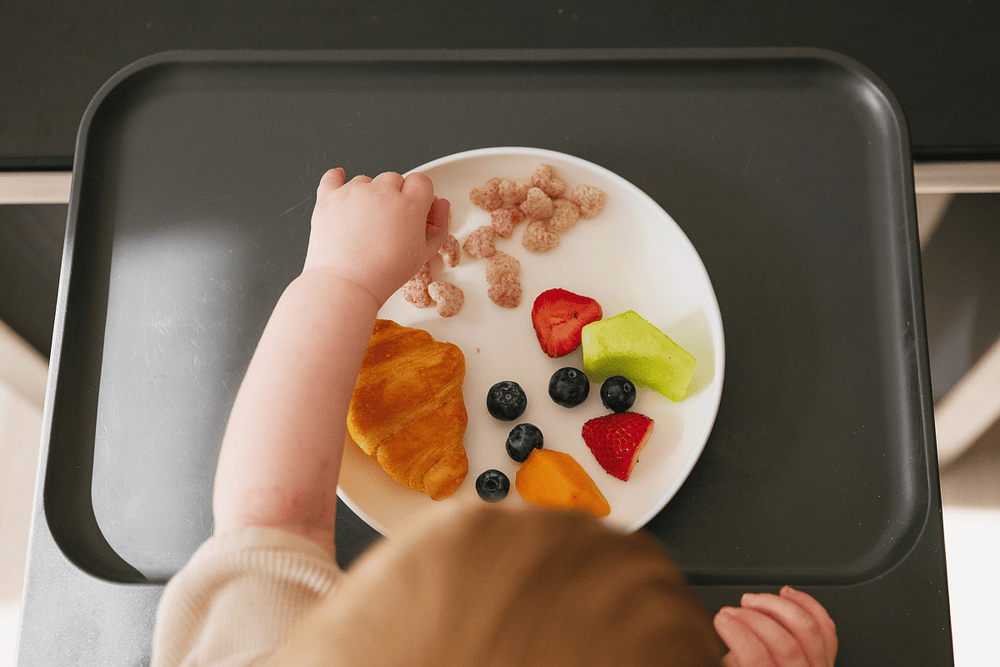
Cold purée through a silicone tip, with a parent holding on.
What an independent lab measured: Dongguan NTEK Testing Technology tested our Fruuti feeder (models QK-6331-3 and QK-6331-4) in December 2022, report DGT221116031BE01. Those samples passed the US CPSC mechanical tests, including a bite test. On the silicone tip, eight soluble heavy metals, lead among them, were not detected (below the 5 mg/kg detection limit). That covers only the samples and part tested, at that date. No feeder prevents choking, so stay with your baby. Filling tips: using Fruuti without the mess.
5. Cold water in a cup (over 6 months)
Over 6 months: a sippy cup of cold water (AAP).
6. Comfort and distraction
Comforting or playing with your baby can take their mind off their gums (NHS); our developmental toys guide has ideas. If the crying feels out of proportion, see our article on why babies cry and how to soothe them may help you think through other causes.

A lap and something to hold.
7. A pain reliever, after you ask
If your baby seems very uncomfortable, the AAP suggests asking your pediatrician about acetaminophen (such as Tylenol), dosed by weight, or ibuprofen (such as Advil or Motrin) if your baby is over 6 months. Ask for the dose in millilitres for your baby's age and weight. An occasional nighttime dose may help a fussy baby settle (AAP). Aspirin is not for children: the NHS says no aspirin under 16.
7 teething remedies to skip
The AAP, the FDA and the CPS warn against these. "Natural" on the label says nothing about safety.
- Numbing gels with benzocaine or lidocaine. The FDA says topical products with benzocaine or lidocaine offer little to no benefit and carry serious risks for teething children. Benzocaine has been linked to methemoglobinemia, a serious, sometimes fatal condition that greatly reduces the oxygen carried in the blood. Gels also wash away in drool (AAP).
- Homeopathic teething tablets and gels. The FDA lists homeopathic teething tablets among the products with serious risks. The AAP names belladonna and coffea cruda as ingredients that may be dangerous for babies.
- Amber necklaces and teething jewelry. The AAP says teething necklaces made of amber, wood, marble or silicone pose serious choking and strangulation risks, and the FDA warns against teething jewelry. Nothing should go around your baby's neck.
- Liquid-filled teethers. The AAP warns they can tear or leak, leaving sharp edges, and the liquid may carry bacteria.
- Teethers frozen solid. Too hard for tender gums (FDA, NHS). Chill in the fridge instead.
- Teething biscuits and rusks. The AAP warns chunks can break off and cause choking, and most contain sugar and salt; the NHS and CPS advise avoiding them because of the sugar.
- Alcohol on the gums. An old remedy the AAP rules out: neither rubbing alcohol nor an alcoholic drink is safe for babies.
An earlier version of this article warned against "hard foods" and said teething makes babies nap more. We could not source either, so both are gone.
Teething and sleep
Teething can disrupt sleep: the NHS lists "not sleeping very well" among the signs. For night wakings the AAP suggests firm pressure on the gums or a gentle gum massage, and a cold teething cloth. The AAP also suggests a comforting bath and a little white noise at bedtime, and says never to let your baby fall asleep with a bottle, at naps or at night, so milk does not pool around the new teeth and cause decay.
Our realistic guide to baby sleep and our article on night feeding cover the bigger picture. Using a soother? See our pacifier safety guide.
When to call your pediatrician
- A fever of 38°C (100.4°F) or higher, or any fever if your baby is under 6 months (AAP, CPS)
- Diarrhea lasting more than a day (AAP)
- Crying more, and more often, than usual (AAP)
- Any symptom that worries you: the NHS reminds parents that you know your baby best
Get medical help immediately if your baby has pale, grey or blue skin, lips or nail beds, or trouble breathing after a numbing product was used. The FDA lists these among the signs of methemoglobinemia, which can appear within minutes to a couple of hours.
Also from the AAP: see a dentist within 6 months of the first tooth, and by 12 months at the latest.
Frequently asked questions
Sources
- American Academy of Pediatrics (HealthyChildren.org): Teething Pain Relief (updated 9 July 2025)
- American Academy of Pediatrics (HealthyChildren.org): Baby's First Tooth: 7 Facts Parents Should Know
- American Academy of Pediatrics (HealthyChildren.org): When Does Teething Start?
- NHS: Baby teething symptoms and Tips for helping your teething baby
- US Food and Drug Administration: Safely Soothing Teething Pain and Sore Gums
- US Food and Drug Administration: Drug Safety Communication on oral benzocaine products (23 May 2018, archived copy)
- Canadian Paediatric Society (Caring for Kids): Healthy teeth for children
- Dongguan NTEK Testing Technology Co., Ltd.: test report DGT221116031BE01, Fruuti Baby Fruit Feeder models QK-6331-3 and QK-6331-4 (14 December 2022)
Medically reviewed by Dr. Yang. Last reviewed October 16, 2026.
Disclaimer: This article is for educational purposes only and is not a substitute for professional medical advice, diagnosis, or treatment. Always seek the advice of your pediatrician or other qualified health provider with any questions about your baby's health.


Leave a comment
All comments are moderated before being published.
This site is protected by hCaptcha and the hCaptcha Privacy Policy and Terms of Service apply.