

Maybe it is the return-to-work date on the calendar. Maybe your midwife mentioned a top-up, or you want someone else to take the 11 p.m. feed. Either way, you are now working out how breast milk and formula fit into one day.
We read the American Academy of Pediatrics (AAP), the CDC and the NHS side by side. Our view: add formula slowly, one feed at a time, after breastfeeding feels settled, and protect your supply for every breastfeed you replace. Below: amounts by age, four ways to split feeds, an example day, and the signs it is working.
How much formula does a newborn need?
These amounts are for babies who get only formula: an upper guide for a combo-fed baby, not a target.
| Age | Per feed (formula only) | How often | Source |
|---|---|---|---|
| First days | 1 to 2 oz (30 to 60 ml) | Every 2 to 3 hours, 8 to 12 feeds in 24 hours | CDC |
| First week | No more than about 1 to 2 oz (30 to 60 ml) | On demand | AAP |
| End of first month | 3 to 4 oz (90 to 120 ml) | About every 3 to 4 hours | AAP |
| By 6 months | 6 to 8 oz (180 to 240 ml) | 4 or 5 feeds in 24 hours | AAP |
| Any age, daily ceiling | No more than about 32 oz (960 ml) a day on average | Total across the day | AAP |
The AAP also gives a weight rule: about 2½ oz (75 ml) of formula a day for every pound of body weight. Breastfed babies, it notes, usually take smaller, more frequent feeds than formula-fed babies.
For a top-up after a breastfeed, no health authority publishes a set amount. Start small. The AAP: "It's better to offer less, since you can always give more if your baby wants it." If your baby turns away, slows down or gets distracted, they are probably done.
How much expressed breast milk should a newborn get?
The CDC's starting point for any bottle, breast milk or formula: offer a small amount, and more if your baby still shows signs of hunger. The AAP gives the numbers. A bottle-fed newborn may take only half an ounce (15 ml) per feed for the first day or two, then usually 1 to 2 oz (30 to 60 ml) per feed. For breastfed babies it says "most breastfed infants take 1 oz in the first few weeks, an amount that slowly increases over time."
So for a newborn, 1 to 2 oz (30 to 60 ml) of expressed milk is a sensible first bottle; watch for fullness rather than an empty bottle. Store it in 2 to 4 oz portions to cut waste (AAP). Leftovers in a bottle your baby drank from: the AAP says use within 2 hours, the NHS says 1 hour. We follow the stricter hour. Fridge and freezer times are in our breast milk storage guide.
When to start: why the first weeks matter
The CDC says most babies who are getting breast milk should not be fed infant formula in the first few days, and that a lactation consultant, nurse or doctor can help if you are worried your baby is not getting enough. The NHS says it can take several weeks for you and your baby to feel confident with breastfeeding, and once you have both "got the hang of it" it's usually possible to add bottles of expressed milk or formula.
If you need to combo feed from birth, follow a plan from your midwife, pediatrician or lactation consultant, and keep breastfeeding or expressing so your supply builds. See our guide to hand expression and our newborn's first two weeks.
Four ways to split breast and bottle
| Pattern | What it looks like | Breast milk removed that feed |
|---|---|---|
| Top-up | Breastfeed first, then offer a small bottle | Yes, at every feed |
| One replaced feed | The same feed each day is a bottle (often late evening) | Only if you express at that time |
| Split day | Breastfeed mornings and evenings, bottles while you are apart | Only if you express while apart |
| Expressed milk in the bottle | Bottle feeds use your pumped milk, formula only as backup | Yes, by pump or hand |

Our pick for most families: start with one replaced feed. It is easy to keep consistent, gives a partner a regular feed, and shifts supply one feed at a time. The NHS advises introducing formula gradually so your body can adjust the milk it makes, which lowers the chance of swollen breasts or mastitis. If you are going back to work, it suggests starting a few weeks beforehand. Working? See our pumping schedule for working parents.
An example day (one replaced feed)
An illustration, not a prescription: feed times follow your baby's cues, not the clock.
- Overnight and daytime: breastfeed on cue, typically 8 to 12 times in 24 hours in the early weeks (CDC).
- Around 10 or 11 p.m.: a partner gives one bottle of formula or expressed milk.
- At the same time: express if you want to keep supply, or sleep and let it adjust.
- Later: once your breasts no longer feel full and uncomfortable at that time, you can replace a second feed the same way.
Bottles, labels and washing up: see our combination feeding logistics guide.
Protecting your milk supply
Milk supply follows milk removal. The NHS says introducing formula feeds can affect the amount of breast milk you produce, so a bottle that replaces a breastfeed is one less signal to make milk, unless you express then.
To swing back toward breastfeeding, the NHS suggests skin-to-skin contact, expressing about 8 times a day (once at night) and cutting bottles gradually. More in our guide to combo feeding without losing supply.
Giving the first bottle, and every bottle after
The NHS tips for a breastfed baby's first bottles: offer it when your baby is happy and relaxed, not very hungry; let someone else give it so your baby is not near you and smelling your milk; and try a different position from the one you use for breastfeeding. Stuck? Our bottle introduction guide and bottle refusal steps help.

Then feed the way the NHS describes, often called paced feeding. Hold your baby semi-upright with their head supported. Brush the nipple against their lips and let them draw it in when they open wide. Keep the bottle horizontal, just slightly tipped. Follow their lead, let them pause, and do not worry if they do not finish. Never prop a bottle or leave a baby alone with one, because they may choke. More detail in our paced bottle feeding guide, with flow sizes in our nipple flow guide.
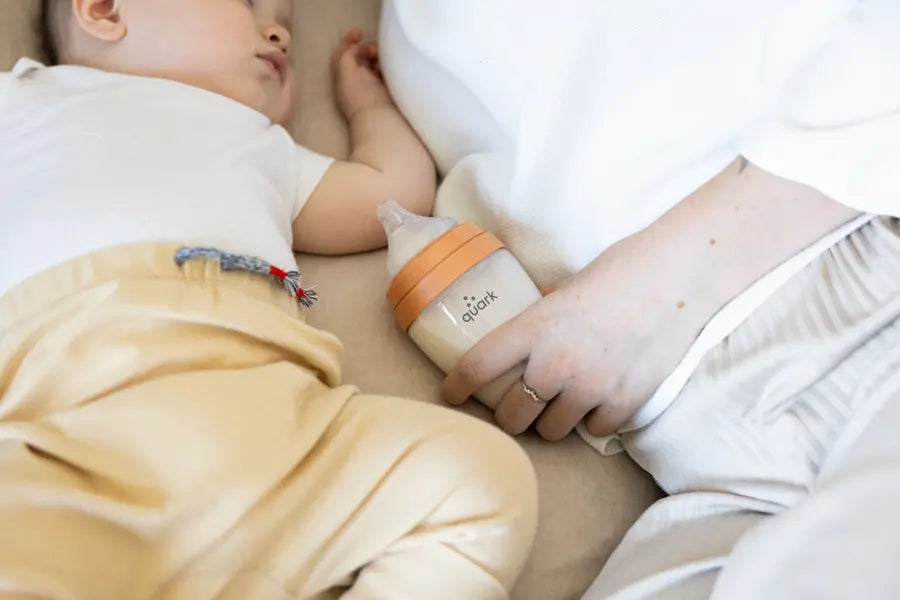
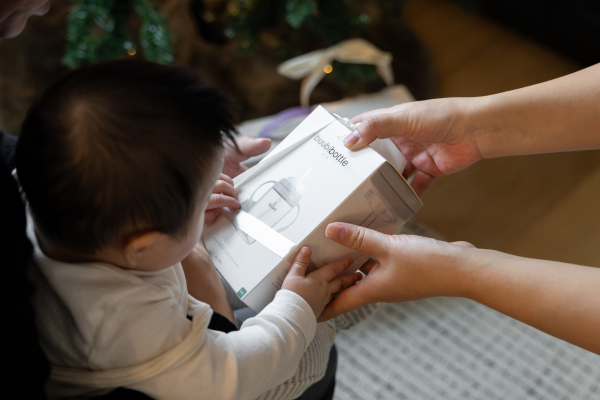
About bottles: the NHS says there is no evidence that one type of teat or bottle is better than any other. Ours is the BuubiBottle Mini, a 5 oz bottle sized for a newborn's first feeds and top-ups. The BuubiBottle Starter Set adds the 8 oz Max and eight RealFeel nipples in Slow, Medium, Fast and Flex flows, so you can change flow without changing bottles. No bottle guarantees that every baby will accept it. Sizes: Mini vs Max.
Making formula safely

- Water first, then powder, in exactly the amounts on the tin. Do not add extra powder or extra water (NHS, CDC).
- Water temperature depends on where you live. In the UK, the NHS says the water should be at least 70°C (158°F) when it meets the powder. In the US, the CDC says safe tap water mixed as the label directs is usually fine, with extra steps for babies under 2 months, born before 37 weeks, or with a weakened immune system: boil the water, wait about five minutes, mix, then cool before feeding.
- Cool it and test it on your wrist: warm, not hot. Never warm formula in a microwave (NHS, CDC).
- Use it quickly. The CDC says use prepared formula within 2 hours of making it and within 1 hour of starting the feed, and throw out what is left in the bottle.
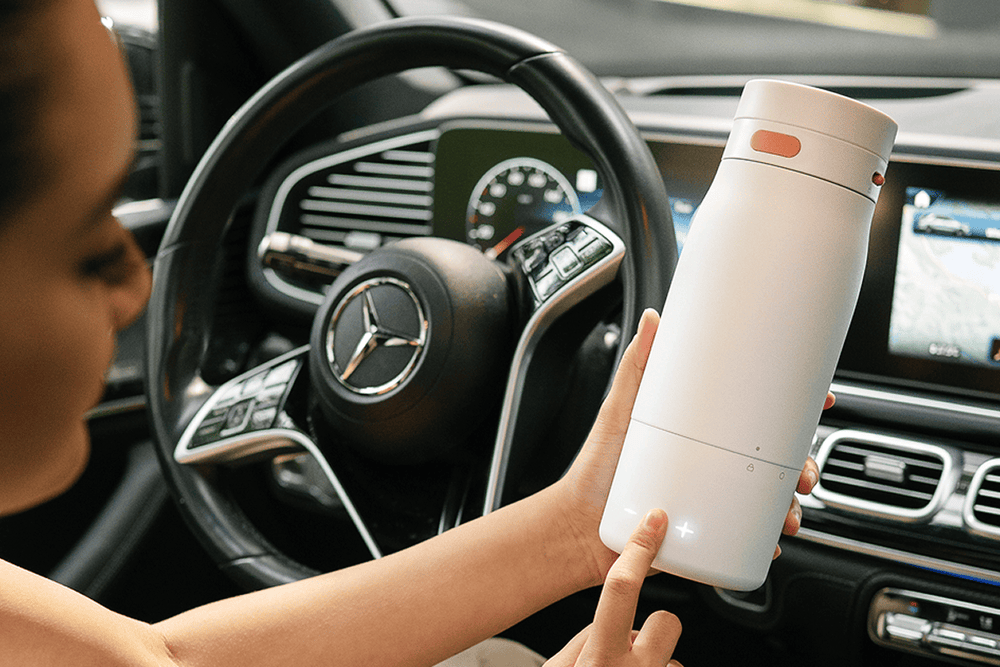
The BuubiBottle Portable Milk Warmer PRO has a Formula Preparation Mode that heats water to 158°F (70°C), and it also warms expressed milk to the temperature you set. If you follow the NHS method, check any machine's water with a food thermometer, ours included. Background in warming breast milk vs formula.
How to tell combo feeding is working
- Wet nappies: the NHS says around 6 a day from a few days after birth, clear or pale yellow.
- Steady weight gain at your baby's checks.
- Content after feeds: the CDC says babies should seem content and drowsy when they have had enough.
- Early hunger cues answered early. Crying is a late sign of hunger (NHS, CDC). See early hunger cues.
One thing combo-feeding families often miss: vitamin D. The CDC says babies fed breast milk exclusively or getting less than 32 oz of formula a day need extra vitamin D, starting shortly after birth. Most combo-fed babies fall in that group, so ask your pediatrician about drops.
Talk to your pediatrician, midwife or health visitor if you are worried about weight gain, nappies, sleeping or eating. The NHS adds: a baby under 8 weeks with no poo for 2 to 3 days needs a call.
Frequently asked questions
Sources
- American Academy of Pediatrics (HealthyChildren.org): Amount and Schedule of Baby Formula Feedings (updated 16 May 2022)
- American Academy of Pediatrics (HealthyChildren.org): How Often and How Much Should Your Baby Eat? (updated 2 April 2024)
- American Academy of Pediatrics (HealthyChildren.org): Storing and Preparing Expressed Breast Milk (updated 7 July 2025)
- CDC: How Much and How Often to Feed Infant Formula (21 April 2026) and How Much and How Often to Breastfeed (16 April 2026)
- CDC: Infant Formula Preparation and Storage (14 May 2026) and About Feeding From a Bottle (11 March 2026)
- NHS: How to combine breast and bottle feeding, Bottle feeding advice, How to make up baby formula, Formula milk: common questions, Expressing and storing breast milk
Medically reviewed by Dr. Yang. Last reviewed October 16, 2026.
Disclaimer: This article is for educational purposes only and is not a substitute for professional medical advice, diagnosis, or treatment. Always seek the advice of your pediatrician or other qualified health provider with any questions about your baby's health.



Leave a comment
All comments are moderated before being published.
This site is protected by hCaptcha and the hCaptcha Privacy Policy and Terms of Service apply.