

The honest answer: same method, different handling
Parents who switch between breast milk and formula, or run both at once, often ask whether the two need to be warmed differently. The reassuring answer is that the warming method is the same. Bring the bottle gently to around body temperature using warm water, never high heat, and check it on your wrist. Where breast milk and formula genuinely diverge is everything that surrounds the warm-up: how you mix the bottle, how much heat each can tolerate, and how long the milk stays safe to use. Getting those differences right matters more than the heating step itself.

Does the warming method itself differ?
No. For both breast milk and formula, U.S. CDC and pediatric guidance point to the same gentle approach: stand the sealed bottle in a bowl of warm (not hot) water, or hold it under warm running water for a few minutes. The aim is lukewarm, close to body temperature (about 37 °C / 98.6 °F), which is simply how breast milk arrives from the breast. A controlled warmer does the same job without a kettle or stovetop. Whatever you use, the rule that protects your baby is identical for both milks: gentle and even, never hot, with a wrist test at the end. If you want the deeper reasoning behind that temperature, see our companion guide on bottle feeding for breastfed babies.
Where breast milk and formula really differ
The meaningful differences are not in the heat source. They are in how each milk behaves and how long it lasts. Here is the side-by-side:
| Factor | Breast milk | Formula |
|---|---|---|
| Warming method | Warm-water bath or warm running water; never microwave | Warm-water bath or warm running water; never microwave |
| Mixing after warming | Swirl gently to recombine separated fat; don't shake hard | Swirl gently to avoid foaming and trapped air bubbles |
| Heat sensitivity | Higher; heat can degrade some of its beneficial components | Lower, but overheating still risks scalding and is unnecessary |
| Room-temperature window (CDC) | Up to 4 hours fresh | Up to 2 hours prepared |
| Once feeding begins | Use within 2 hours of being warmed/at room temp | Use within 1 hour from when feeding begins |
| Leftovers after a feed | Discard; saliva introduces bacteria | Discard; saliva introduces bacteria |
Mixing: swirl, don't shake
This is the difference parents most often miss. Breast milk naturally separates, with the fatty cream rising to the top, so after warming you'll want to gently swirl the bottle to blend it back together. The CDC specifically advises swirling "to mix the fat, which may have separated," rather than shaking, which can stress the milk and whip in air. Formula doesn't separate the same way, but a gentle swirl is still better than vigorous shaking, which fills the bottle with bubbles that can add to a baby's gas. For combination feeders juggling both, our guide to combination feeding covers the daily rhythm in more detail.
Heat sensitivity
Breast milk is a living fluid. It carries antibodies and enzymes that excessive heat can break down, which is one more reason gentle warming matters for it specifically. Formula is more heat-stable, but that is not a license to warm it hotter: overheating any bottle creates a scald risk and serves no purpose, since the target for both is the same comfortable, body-temperature range. In other words, breast milk gives you an extra reason to keep things gentle, while the safe ceiling stays the same for both.
The storage and timing rules that go with warming
Warming interacts with storage, and this is where the numbers genuinely differ. The figures below come directly from the U.S. Centers for Disease Control and Prevention. See the CDC pages on breast milk storage and preparation and infant formula preparation and storage. Canadian families: Canadian public-health guidance is closely aligned, but always defer to your own provider and the instructions on your formula.
Breast milk (freshly expressed)
| Where | How long (CDC) |
|---|---|
| Room temperature (≤25 °C / 77 °F) | Up to 4 hours |
| Refrigerator | Up to 4 days |
| Freezer | 6 months is best; up to 12 months acceptable |
| Thawed in the fridge | Use within 24 hours |
| Once warmed or at room temp | Use within 2 hours |
Two hard rules from the CDC for breast milk: never refreeze it once it has thawed, and don't store it in the fridge or freezer door, where temperatures swing. Our complete breast milk storage guide and exclusive pumping guide go through the full thawing and labelling routine.
Prepared formula
| Situation | How long (CDC) |
|---|---|
| Prepared, left at room temperature | Use within 2 hours |
| Prepared, refrigerated right away | Use within 24 hours |
| Once your baby starts drinking | Use within 1 hour |
| Leftover in the bottle after a feed | Throw it out; saliva introduces bacteria |
The leftover rule is the one place the two milks agree completely: once a baby has fed from a bottle, don't save what's left for either milk. If you're new to bottles, our step-by-step guide to bottle-feeding a newborn walks through a full feed.
Warming both safely, step by step
The same gentle routine works for breast milk and formula:
- Warm-water bath: Stand the sealed bottle or bag in a bowl of warm (not boiling) water for a few minutes.
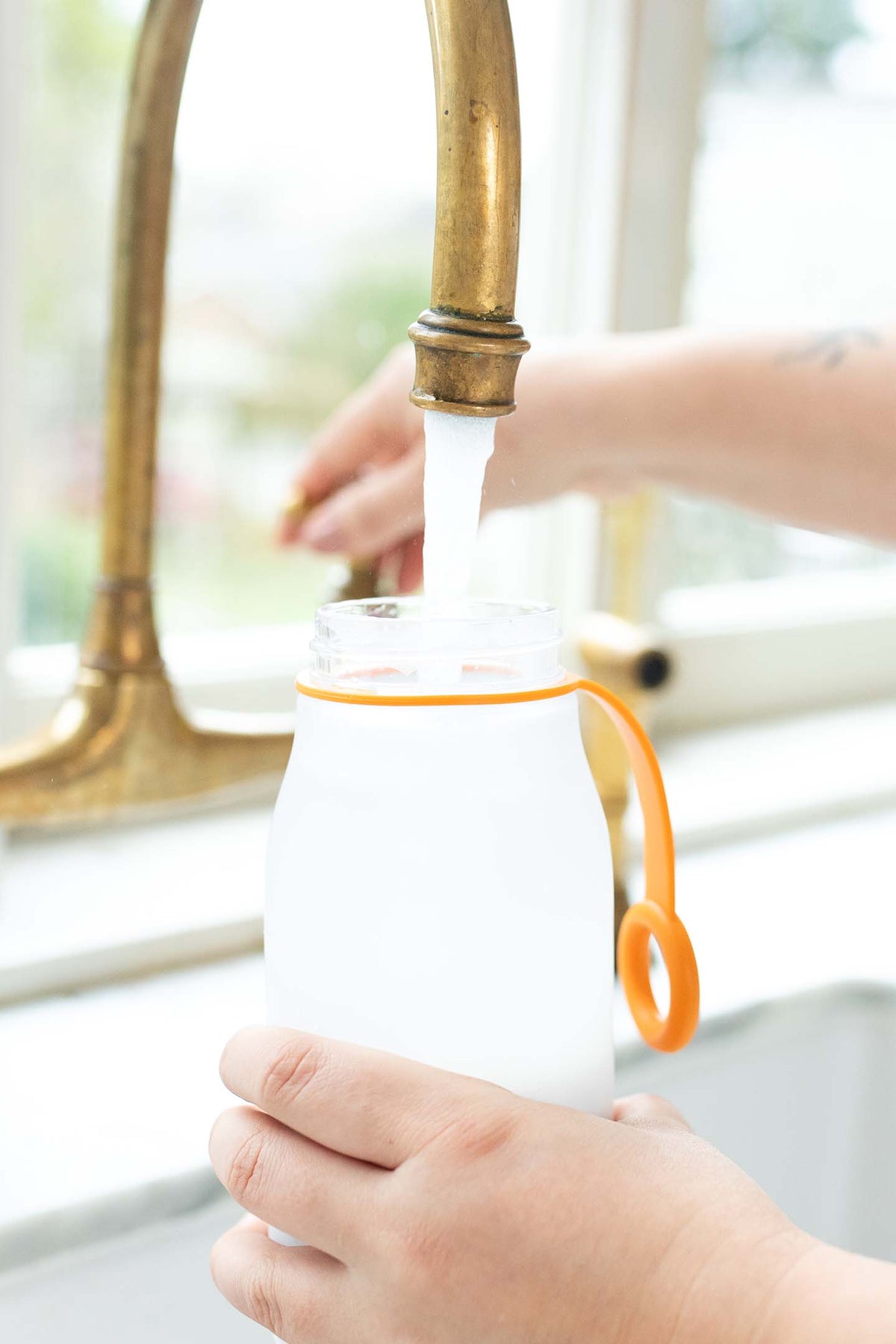
- Warm running water: Hold the sealed bottle under warm running tap water, turning it to heat evenly; keep water off the nipple.
- A dedicated warmer: Brings milk to a gentle temperature in a controlled way, which helps when you want to stop guessing.
- Swirl, then test: Gently swirl to even out warm and cool pockets (and to recombine breast-milk fat), then test a few drops on the inside of your wrist. It should feel comfortably warm or neutral, never hot. The American Academy of Pediatrics recommends this same wrist test.
Why not the microwave?
For both milks, skip the microwave. Microwaves heat unevenly and create hot spots: pockets of scalding liquid hidden inside a bottle that feels fine on the outside. The CDC is explicit that this can burn a baby's mouth and throat, and for breast milk it adds the further problem of degrading beneficial components. A controlled warming method sidesteps the whole risk. And gentle warming is not the same as sterilizing, which most healthy full-term babies probably don't need to do daily. For switching contexts where you also worry about nipple preference, see balancing breast and bottle.
Warming on the go
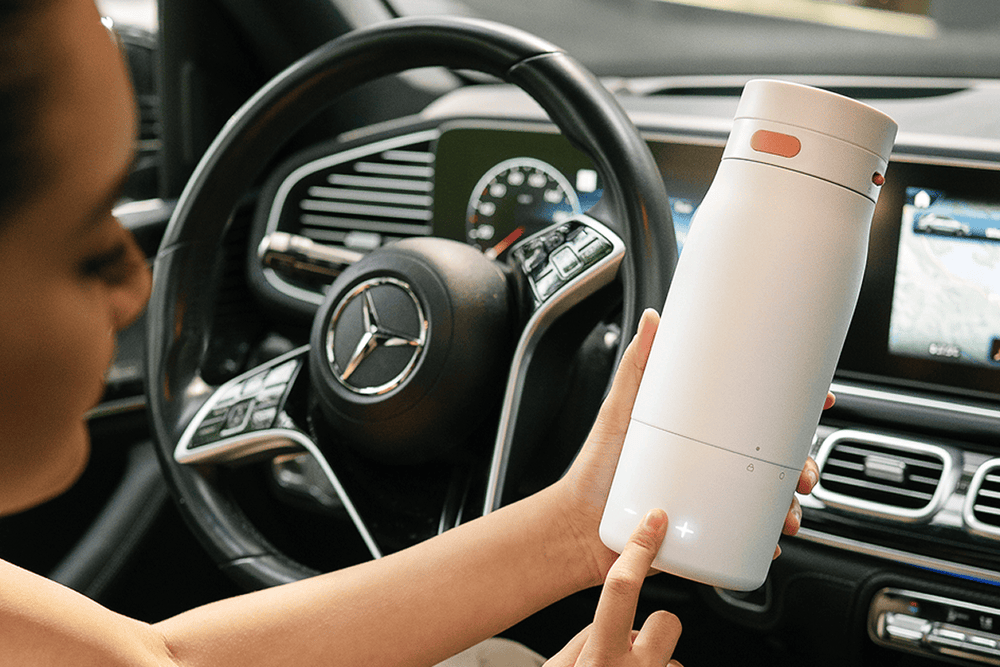
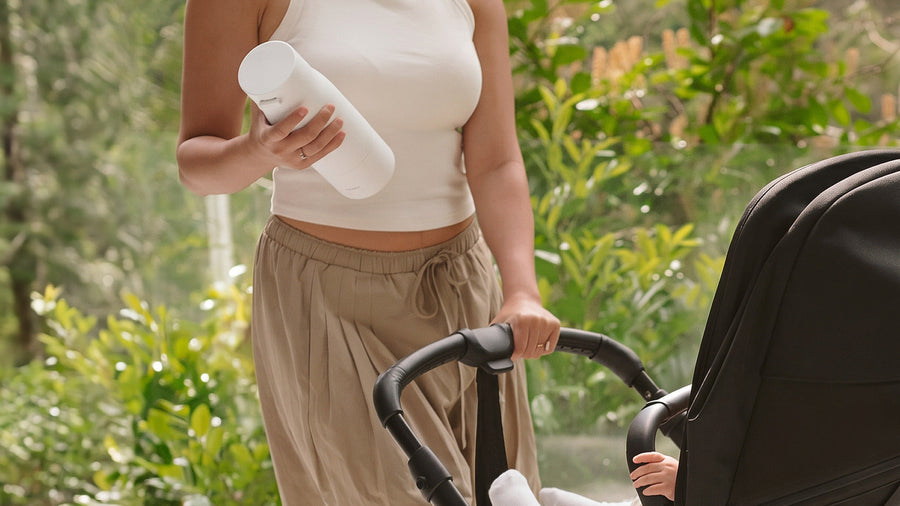
At home, a warm-water bath handles either milk. The harder problem is everywhere else: the car, a flight, a park, a relative's house, where there's no kettle and no outlet. That's the gap a cordless warmer fills, and because the gentle target is identical for breast milk and formula, one controlled warmer covers both. The BuubiBottle Smart Portable Milk Warmer charges over USB-C, holds 300 ml/10 oz, and warms within a controlled 37–50 °C (98–122 °F) range with a real-time display, so you can hit that gentle, body-temperature target away from home for either milk, then finish with the wrist test. A calm, paced bottle-feeding approach pairs naturally with that gentle, unhurried warm-up. For the broader picture of running two feeding methods together, our perspective on balancing breastfeeding and bottle feeding is a good companion read.

Common questions
Do I warm breast milk and formula differently?
No, the warming method is the same for both: gentle warm water (a bath or running water), aiming for body temperature, never a microwave, with a wrist test before feeding. The differences are in mixing, heat sensitivity, and how long each is safe to use, not in the heating itself.
Why do I swirl breast milk instead of shaking it?
Breast milk separates, with the fatty layer rising to the top, so the CDC advises gently swirling to mix the fat back in. Shaking hard whips in air. Formula doesn't separate the same way, but a gentle swirl still beats vigorous shaking, which adds bubbles.
Is breast milk really more heat-sensitive than formula?
Yes, breast milk contains beneficial components that excessive heat can break down, so gentle warming matters especially for it. Formula is more heat-stable, but overheating it still risks scalding and serves no purpose, since the safe target is the same lukewarm range for both.
How long can warmed milk sit out?
Per the CDC, once breast milk is warmed or at room temperature, use it within 2 hours. Prepared formula left at room temperature should be used within 2 hours, and within 1 hour once your baby starts drinking.
Can I reuse milk my baby didn't finish?
No, this rule is the same for both. Once your baby has fed from the bottle, discard what's left, because saliva introduces bacteria that can grow. Don't repeatedly re-warm a bottle either.
What temperature should the bottle be?
Aim for lukewarm, around body temperature (about 37 °C / 98.6 °F), the temperature of breast milk. It should feel comfortably warm or neutral on the inside of your wrist, never hot. This target is identical for breast milk and formula.
Can I refreeze breast milk after thawing?
No, the CDC advises never refreezing breast milk once it has thawed. Thawed breast milk kept in the fridge should be used within 24 hours. (Formula is generally prepared fresh rather than frozen.)
Can one warmer handle both breast milk and formula?
Yes, because the gentle, body-temperature target is identical for both. A controlled warmer like the BuubiBottle Smart Portable Milk Warmer holds a 37–50 °C (98–122 °F) range with a live readout, so the same device gives you a repeatable gentle warm-up for either milk at home or away. Always finish with the wrist test.
Sources
- U.S. Centers for Disease Control and Prevention — Handling, Storing, and Preparing Breast Milk
- U.S. Centers for Disease Control and Prevention — Infant Formula Preparation and Storage
- American Academy of Pediatrics (HealthyChildren.org) — How to Sterilize and Warm Baby Bottles Safely
- American Academy of Pediatrics (HealthyChildren.org) — Storing and Preparing Expressed Breast Milk
Medical disclaimer: This article is for general informational purposes and is not a substitute for medical advice. Storage and feeding guidance reflects U.S. CDC and AAP recommendations current at the time of writing; always follow the instructions on your formula or breast-milk storage and the advice of your own pediatrician or healthcare provider. Medically reviewed by Dr. Yang.


Leave a comment
All comments are moderated before being published.
This site is protected by hCaptcha and the hCaptcha Privacy Policy and Terms of Service apply.