

Your baby is fussing, the milk is cold from the fridge, and the question on your mind is a simple one: how long is this going to take? You want a number. The trouble is that the honest answer is a few minutes, and that range hides a lot — which is exactly why one feed flies by and the next one feels like forever.
So instead of a number that's wrong half the time, here's the thing worth knowing: warming time is driven by five factors, and once you can name them, you'll know before you start whether this feed is a 90-second job or a five-minute one. That's more useful than any single figure on a box.

The five things that decide warming time
Every method — a bowl of warm water, a countertop steam warmer, or a portable contact warmer — obeys the same physics. These five inputs explain almost the entire gap between a quick feed and a slow one. Here's the take to hold onto: four of them are about the milk and the bottle, not the warmer.
If you only skim one thing: a cold, full bottle is slow; a small, room-temperature top-up is fast. Everything else is in between.
| Factor | Why it moves the clock | Direction |
|---|---|---|
| Starting temperature | Fridge-cold milk (around 4 °C) has much further to travel than milk left at room temperature. | Colder start → longer |
| Volume of milk | More liquid is more mass to heat. A full 8 oz bottle takes noticeably longer than a 3 oz top-up. | More milk → longer |
| Bottle material & wall thickness | Heat passes through the bottle first. Thick glass and insulated walls warm slower than thin, conductive walls. | Thicker → longer |
| Warming method | A circulating warm-water bath or direct-contact warmer transfers heat efficiently; a still bowl of cooling water is slower and less even. | Efficient → shorter |
| Target temperature | Aiming for gentle, body-temperature warmth is quicker and safer than reaching for anything hotter. | Lower target → shorter |
A quick scan of what's in play — the verdict's in the paragraph above.
That's why two parents with the same device report different times. One is warming a brimming glass bottle straight from the back of the fridge; the other a half-full plastic bottle that's been sitting out. The milk is what varies, not the device. For a method-by-method look, our take on a portable milk warmer vs. a traditional bottle warmer walks through speed and control side by side.
Cold, room-temperature, and frozen are three different jobs
The biggest single lever is where the milk starts, and these three cases behave nothing alike.
- Room temperature: the fastest case. The milk needs only a gentle nudge toward body-temperature warmth, so it's quick.
- Refrigerated: the everyday case, and the one most “how long” questions are really about. Expect a few minutes, scaling up with volume.
- Frozen: not a warming job at all until it's thawed. Frozen breast milk should be thawed first — in the fridge or under cool-then-warm running water — and only then brought to feeding temperature. Trying to “warm” a frozen block fast leaves you with scalding edges and an icy core.
Because thawing and storage carry real safety rules, follow current public-health and clinician guidance for those windows rather than rushing the clock. When you're preparing ahead for someone else to feed, our daycare bottle prep, labeling and storage guide covers handling milk safely between fridge and feed.
A warmer can speed up the feed. It can't bend the safety rules — and the goal was never “hot,” it was “ready.”
Faster should never mean hotter
It's tempting to chase speed, but speed and safety only pull against each other if you let them. The goal is gentle, even warmth close to body temperature, not heat. The American Academy of Pediatrics advises against warming bottles in the microwave, because it heats unevenly and can create hot spots that scald a baby's mouth even when the bottle feels fine on the outside. A method that's a minute “faster” but uneven isn't really faster once you factor in swirling, testing, and re-checking. Whatever you use, swirl gently and test a few drops on the inside of your wrist before every feed.
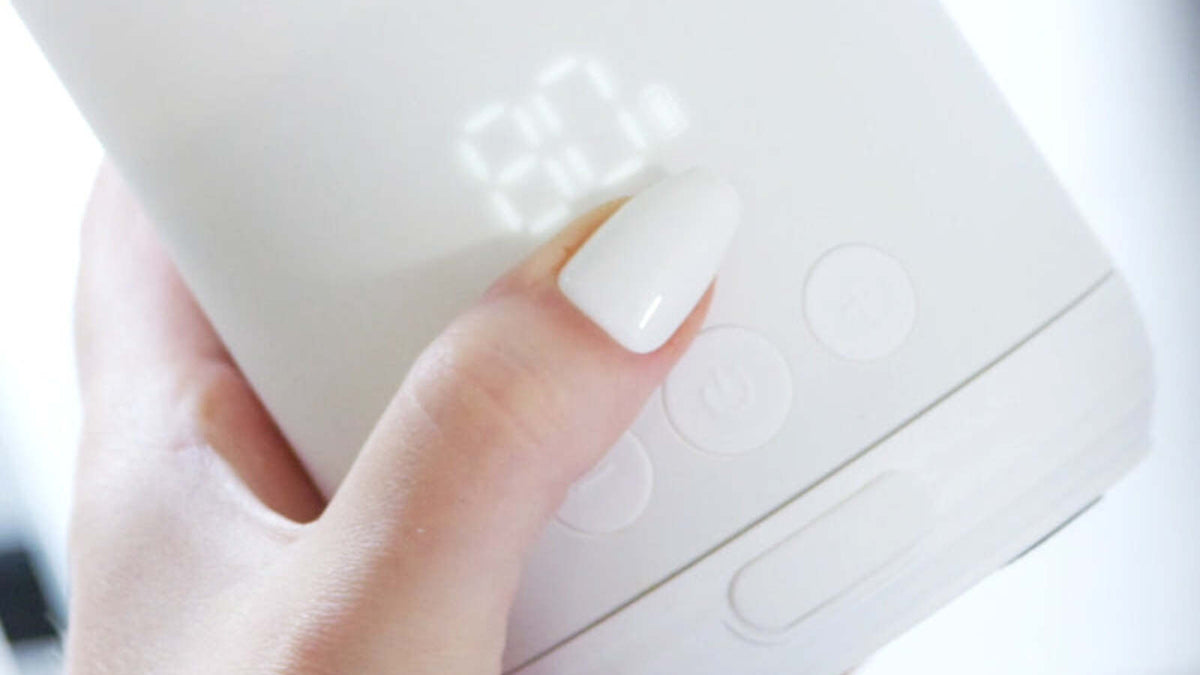
This is where a temperature you can read genuinely helps. Instead of guessing when “a few minutes” is up, you watch the number climb and stop it where you want it. For the why-behind-the-temperature, see our guide to warming baby milk and the right temperature.

Where a portable warmer changes the math
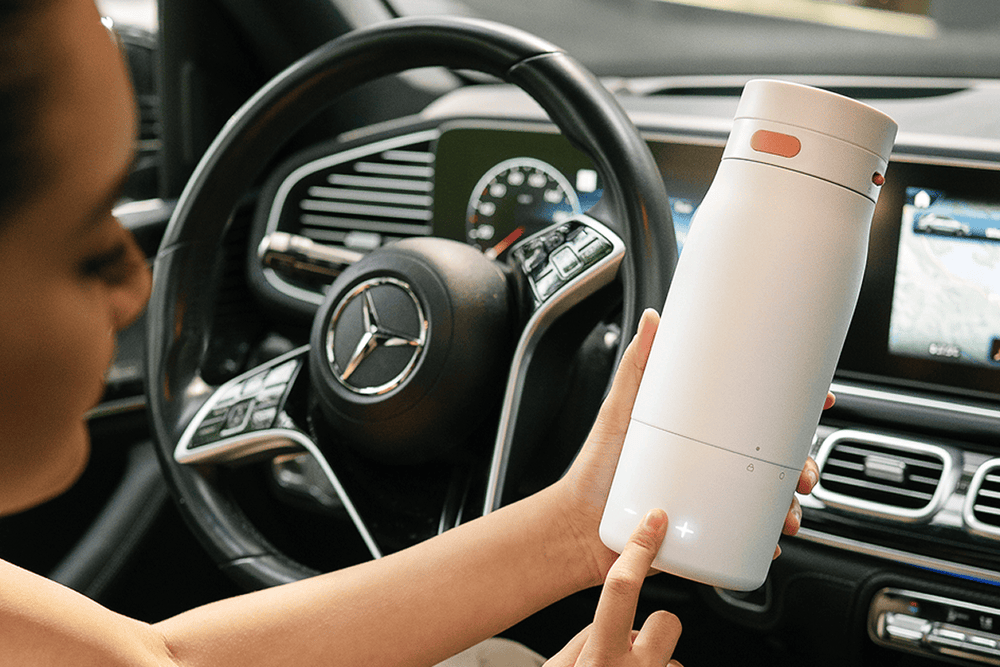
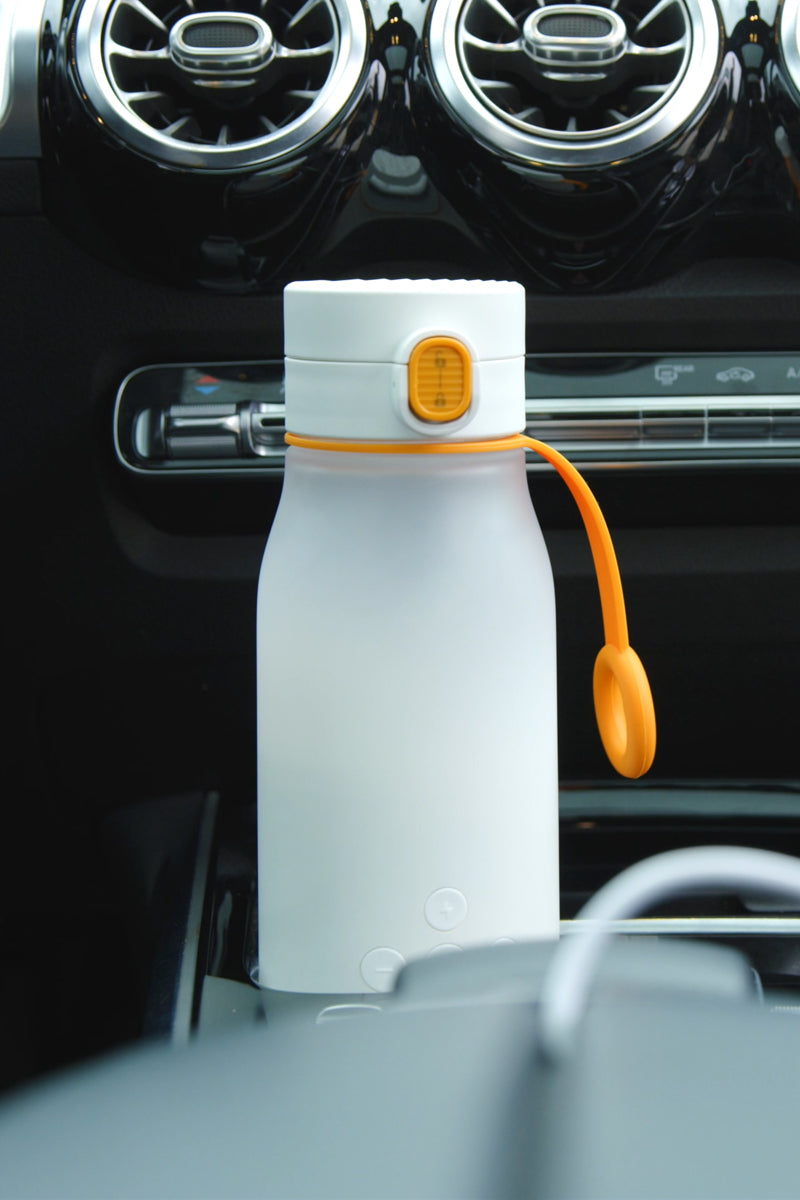
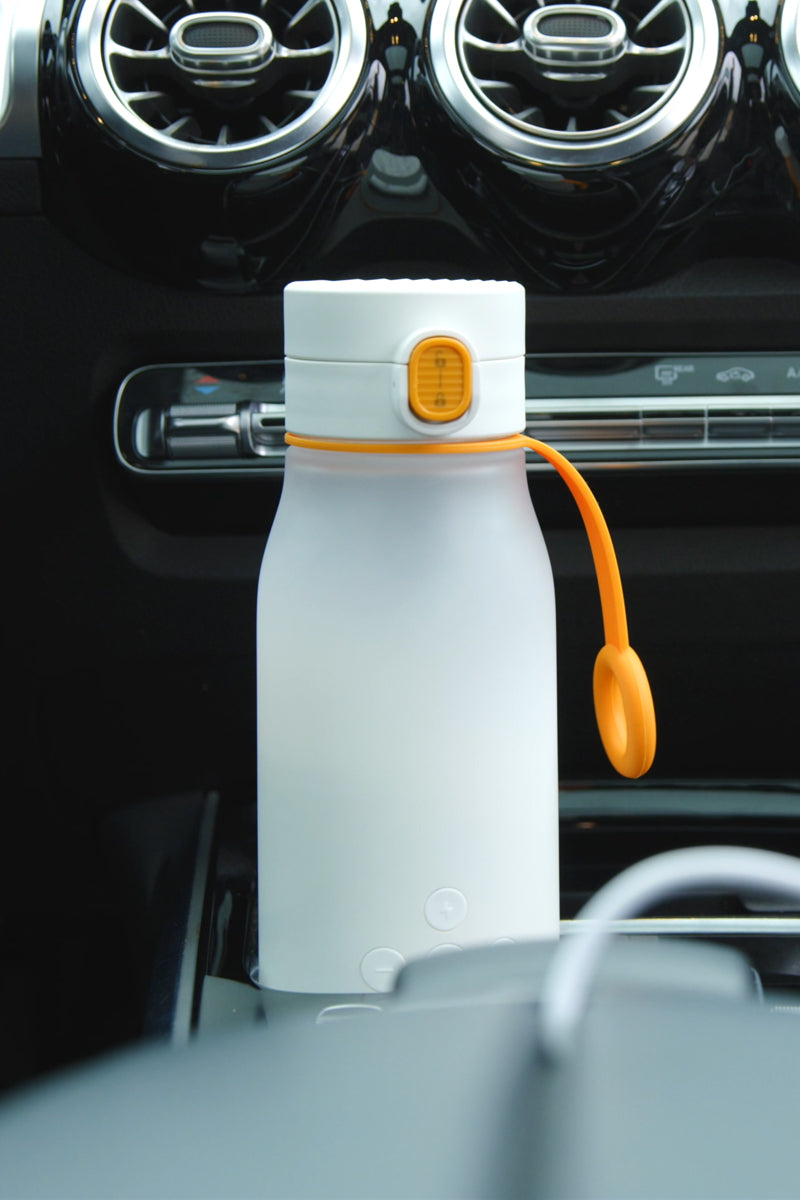
A countertop warmer is quick at home and useless the moment you leave the kitchen — which is when warming time gets stressful instead of routine. This is the part we make, so weigh it accordingly: the honest case for the BuubiBottle Portable Milk Warmer PRO is narrow but real. It's cordless and charges over USB-C, the vessel is vacuum-insulated stainless steel, and it shows the temperature in real time and holds the setting you choose to a single degree.
It won't break the laws of physics — a bigger, colder bottle still takes longer. What it removes are the two slowest parts of warming away from home: finding a heat source, and second-guessing the result. It holds 17 oz, so it covers a typical feed rather than a marathon one. When you do leave the house with it, our notes on how to clean and care for a portable bottle warmer keep it ready for the next feed.
Practical ways to shave time off a feed
Quick wins
- Warm only what your baby will take — less milk warms faster and wastes less.
- Take the chill off ahead of time: move milk from freezer to fridge, within safe storage windows.
- Pick an even method, not just a fast one — even warming means less swirling and re-testing.
- Use a target you can see. A thermometer or built-in display beats heating until it “seems right.”
- Keep your kit consistent. The same bottle and warmer give you a repeatable feel for timing.
You can't make a cold bottle warm instantly, but you can stop being surprised by the clock. Name the five factors, keep your method even, aim for body-temperature warmth, and the “how long” question mostly answers itself — feed by feed, you'll just know.
Common questions
The quick answers parents ask us most.
How long does a bottle warmer take for a refrigerated bottle?
Usually a few minutes, increasing with volume. A small top-up warms quickly; a full bottle from the back of the fridge takes longer. Starting temperature and amount of milk are the two biggest factors.
Why does my bottle warmer seem slower than my friend's?
Almost always the bottle and milk, not the device. A colder start, more milk, or a thicker glass or insulated bottle all add time. Match those variables and most warmers land in a similar range.
Can I warm frozen breast milk directly in a warmer?
Thaw it first. Frozen milk should be thawed in the fridge or under cool-then-warm running water, then brought to feeding temperature. Heating a frozen block quickly creates scalding edges and a cold center. Follow current storage and thawing guidance for the safe windows.
Does warming milk faster make it less safe?
It can, if “faster” means hotter or more uneven. Aim for gentle, body-temperature warmth, not heat. Overheating risks scalding and hot spots. Always swirl and test a few drops on your wrist before feeding.
Is the microwave a faster option?
It's not a safe one. The American Academy of Pediatrics advises against microwaving bottles because it heats unevenly and creates hot spots that can burn a baby's mouth, even when the bottle feels fine outside.
How does the BuubiBottle Portable Milk Warmer PRO affect timing?
It doesn't beat physics — a bigger, colder bottle still takes longer — but the temperature you set and its real-time display remove the guesswork, and USB-C power means you're not hunting for a heat source away from home.
Reviewed for accuracy by Dr. Yang · Last updated June 2026 · General product education, not a substitute for advice from your own healthcare provider. Always follow current milk-preparation, storage, and thawing guidance.
Medically reviewed by Dr. Yang Last reviewed August 6, 2026.


Leave a comment
All comments are moderated before being published.
This site is protected by hCaptcha and the hCaptcha Privacy Policy and Terms of Service apply.