

Warming & products
A five-minute checklist for the night your portable warmer stops warming, and the one shortcut worth refusing while you work through it.
It is 4 a.m. The bottle is out of the fridge, your baby is winding up, and the warmer sits there doing nothing useful. Before you decide it has died: most portable warmers that "won't heat" have a battery too low to run the heating element, a fill level outside their working range, or a target temperature they already reached and are now quietly holding. A unit that holds a set point — the BuubiBottle PRO holds yours to a single degree — spends most of a cycle holding rather than heating, and holding looks like nothing at all. You can check all three causes in about five minutes.
This is written by the team that builds the BuubiBottle, so the order below is the one we would actually work through: the checks that cost nothing first, then the maintenance step people forget, then the point where you should stop poking at it and talk to a human. A 17 oz unit rated for all-day runtime per USB-C charge fails in fairly predictable ways, and almost none of them start with the electronics. If this is happening on the night shift specifically, our guide to warming a bottle at 3 a.m. without fully waking up is the calmer companion to this page.

Is it broken, or has it already done its job?
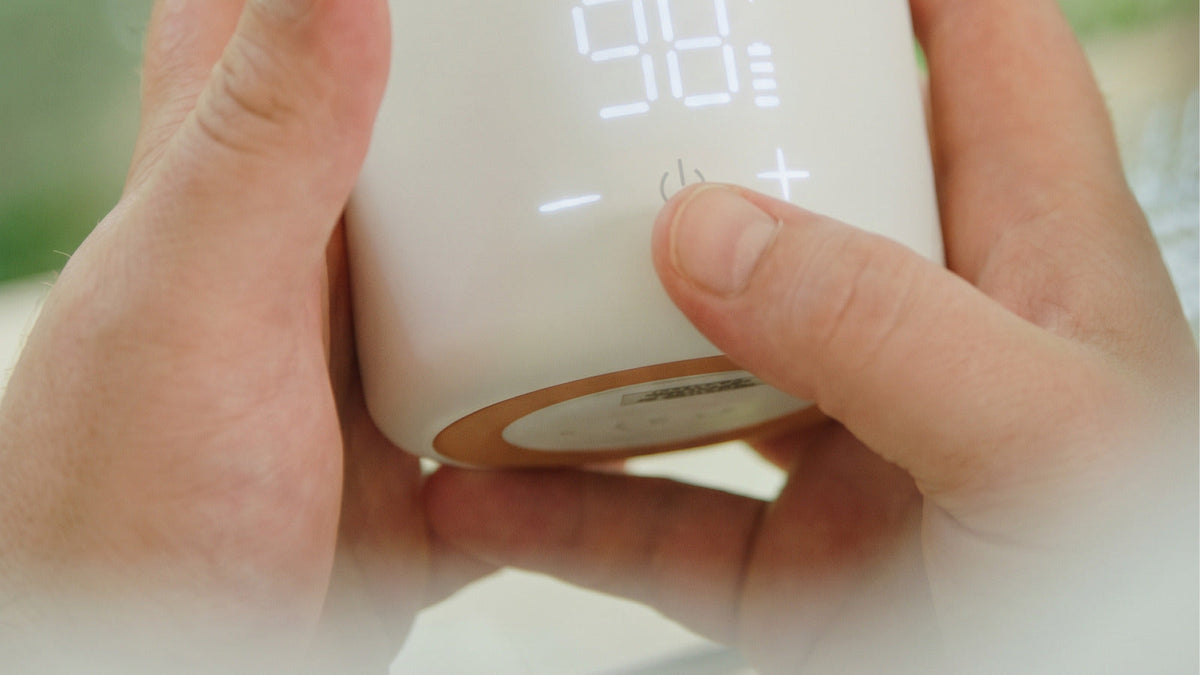
The most common false alarm is a warmer that has hit the temperature you asked for and switched to holding it. Nothing hums, nothing feels hot to the touch, and it reads as a dead unit. On a warmer with a real-time display like the BuubiBottle Portable Milk Warmer PRO, which shows the temperature it is holding, this is easy to confirm: look at the number. If it is sitting at or near your set point, the device is working exactly as designed and the milk is ready.
A warmer that stops at your set temperature is not a broken warmer. It is a thermostat doing its job.
The second false alarm is expectations about speed. Milk straight from the back of the fridge starts far colder than milk that has been on the counter for ten minutes, and it takes correspondingly longer. We break down what actually moves that number in how long a bottle warmer takes, but the short of it is that starting temperature, volume, and bottle material matter more than the warmer's wattage.
The five-minute checklist
Work top to bottom. The first two rows resolve most cases, and the highlighted row is the one people skip most often.
| Check | What you are looking for | Fix |
|---|---|---|
| Display reading | Already at set point | Nothing. Feed. |
| Battery level | Too low to run the heater | Charge fully, retest |
| Charge source | Weak USB port, damaged cable | Wall adapter, known-good USB-C cable |
| Fill level | Above or below working range | Refill to the marked range |
| Bottle fit | Bottle sitting proud, cap not seated | Reseat, or use a standard-neck bottle |
| Vessel surface | Chalky white film, scale | Descale, dry, retest |
| Ambient temperature | Cold car, cold room | Allow longer, or warm indoors |
Check the power before you blame the device
Heating draws far more current than a display does, so a warmer can light up, show a temperature, respond to buttons, and still lack the reserve to actually heat. A unit that looks alive is not proof of a healthy battery.
Charge it fully from a wall adapter rather than a laptop port or an unpowered hub, both of which can trickle in less than the device expects. Swap in a USB-C cable you know works, since a frayed cable is a common and invisible culprit. If you are unsure what your warmer should accept, USB-C bottle warmers explained covers what standard charging does and does not guarantee. The BuubiBottle PRO runs all day on a single charge, though Quark notes battery life varies with use, and a day of repeated warms in a cold stroller will not stretch as far as a quiet day at home. If you are routinely running out mid-outing, what one charge actually covers is worth reading before you conclude the battery is faulty.
Then look at what is inside
Fill level is the quiet failure. Too little and there is not enough contact between the milk and the heated surface for the reading to mean anything; too much and you are asking the unit to heat past what it was sized for. The BuubiBottle PRO holds 17 oz and its wide opening fits most bottles and milk bags, so a wide-neck bottle sitting proud of the vessel, or a cap that has not locked down, changes how heat actually reaches the milk.

Hard water leaves a film, and the film slows everything
If your warmer has quietly become slower over months rather than failing overnight, suspect mineral scale before you suspect the electronics. Scale is an insulator. A layer you can barely see sits between the heating surface and the water, and every cycle takes a little longer until one night it reads as broken. Vancouver water is soft, but plenty of North American tap water is not, and travel means whatever comes out of the hotel tap.
Descaling is a fifteen-minute job with white vinegar and it is the single highest-value maintenance habit for a portable warmer. Our step-by-step descaling and odour guide covers the ratios and the drying step people skip. Dry it completely before the next use.
Cold car, cold room, cold everything
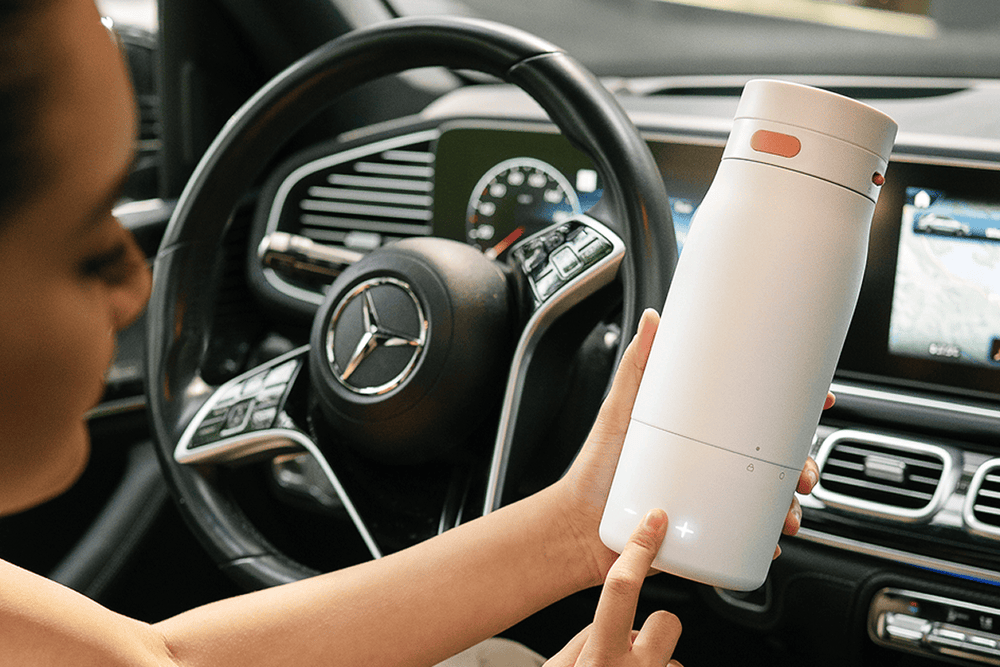
Ambient temperature is a real variable, not an excuse. A warmer working in a 5 °C car is fighting the whole cabin, and a battery is less willing to deliver current when it is cold. If your warming times balloon only in the car, that is physics rather than a fault. Choosing a warmer for car rides and flights goes into what to expect on the road, and what to pack for feeding away from home covers the backup that makes a slow warm a non-event.
What to do with the milk while you troubleshoot
Here is the part worth being firm about. The obvious shortcut at 4 a.m. is the microwave, and it is the one to refuse. The CDC is unambiguous: "never use a microwave. Microwaves heat milk and food unevenly, resulting in hot spots that can burn your baby's mouth and throat." For human milk the guidance is the same, with an added reason: "Microwaving can destroy nutrients in breast milk and create hot spots."
The CDC's own fallback is low-tech and available in any kitchen or hotel bathroom: place the bottle under running warm water, keeping water away from the nipple, then test a few drops on your wrist before feeding. It is slower than your warmer and it works.
Worth remembering too: warming is a preference, not a requirement. The CDC states plainly that infant formula "does not need to be warmed before feeding" and that breast milk "can be served room temperature or cold." Plenty of babies accept a cool bottle, especially if they were not raised on warm ones. If yours will, your broken warmer is an inconvenience rather than an emergency. It is also the argument for keeping the whole routine in the nursery rather than the kitchen, where a failure costs you a walk down the hall as well. Our guide to why we warm milk at all covers where the preference comes from.
While you are working through the checklist, do not leave milk sitting in the warmer. Quark's own product guidance is to consume formula and human milk immediately after warming and not to store either in the device before or after warming. For how long milk can safely sit out once warmed, follow the CDC guidance linked below and our breast milk storage guide rather than guessing at the counter.
When to stop troubleshooting
Stop when the checks are done and the behaviour has not changed. If the unit is fully charged from a wall adapter, filled correctly, descaled, at room temperature, and still will not raise the reading, that is a warranty conversation rather than a home repair. Do not open the housing, do not submerge the electronics, and do not keep cycling it in the hope it recovers, because a device that fails intermittently is worse at 3 a.m. than one that fails honestly.
Contact the retailer or manufacturer with the purchase date, what the display shows, and which of the checks above you already ran. That last detail moves a support ticket along faster than any amount of describing the noise it makes.
Most nights this ends anticlimactically: a flat battery, a bad cable, or a warmer that had already finished. Charge it properly, descale it every few weeks, and keep a plan B in the bag, and you will rarely meet the version of this problem that needs a support ticket at all. If you are still choosing between models, what to check before buying a portable bottle warmer and the portable milk warmer buying guide cover the specs that decide how often you end up on a page like this one.
Common questions
My warmer turns on but never heats. Is the battery the problem?
Usually, yes. The display and buttons need very little power, while the heating element needs a lot, so a warmer can look alive and still be too flat to heat. Charge it fully from a wall adapter with a known-good USB-C cable, then retest before assuming a fault.
Can I microwave the bottle while I sort the warmer out?
No. The CDC advises never using a microwave for formula or human milk, because uneven heating creates hot spots that can burn your baby's mouth and throat. Use warm running water instead, then test a few drops on your wrist.
Why has my portable warmer got slower over the past few months?
Usually mineral scale. Hard water leaves a thin insulating film on the heating surface that adds time to every cycle. Descaling with white vinegar restores it, and doing it every few weeks prevents the slow decline in the first place.
Does it matter which bottle I put in the warmer?
Yes. The BuubiBottle Portable Milk Warmer PRO holds 17 oz and has a wide opening that fits most bottles and milk bags; the original BuubiBottle Portable Milk Warmer PRO holds 300 ml / 10 oz. A bottle that sits proud of the vessel, or a cap that has not seated, changes how heat reaches the milk and can look like a heating fault.
Is it safe to leave milk in the warmer while I troubleshoot?
No. Quark's product guidance is to feed formula or human milk immediately after warming and not to store either in the device. Take the bottle out while you work through the checklist and follow CDC storage guidance for anything already warmed.
How cold is too cold for a portable warmer to work properly?
It depends on the gap it has to close. There is no hard cutoff, but a cold car both slows heating and reduces what a cold battery will deliver. If cycles balloon only in the car and are normal indoors, the warmer is fine.
Sources
- U.S. Centers for Disease Control and Prevention — Infant Formula Preparation and Storage
- U.S. Centers for Disease Control and Prevention — Breast Milk Storage and Preparation
- Quark — BuubiBottle Portable Milk Warmer PRO product specifications and use guidance
General product information, not medical advice. Follow CDC guidance for preparing and storing infant formula and human milk, and your pediatrician, lactation consultant, or healthcare provider for anything specific to your baby. Written by the Quark editorial team. Portions of this content draw on AI assistance and are reviewed by a qualified medical reviewer before publication. Medically reviewed by Dr. Yang. Last reviewed August 13, 2026.


Leave a comment
All comments are moderated before being published.
This site is protected by hCaptcha and the hCaptcha Privacy Policy and Terms of Service apply.