

A good portable warmer is not defined by gadget extras. It is defined by repeatable temperature control, realistic capacity, cleaning design, and whether it fits the way your family actually feeds.

A portable milk warmer sounds like a simple product category.
It is not.
Some parents need a way to warm expressed milk during a stroller day. Some need a better hotel night-feed setup. Some need a formula-prep workflow. Some only need a bottle once in a while and would be fine with a simpler method.
That is why the best buying question is not "Which warmer has the most features?"
The better question is: "Which warmer removes friction from my real feeding routine?"
1. Stable temperature control
Temperature control matters most when warming becomes a repeated routine.
If a baby accepts room-temperature milk and warming is rare, precision may not matter much. But if the parent warms bottles often, especially at night or while traveling, guessing becomes the problem.
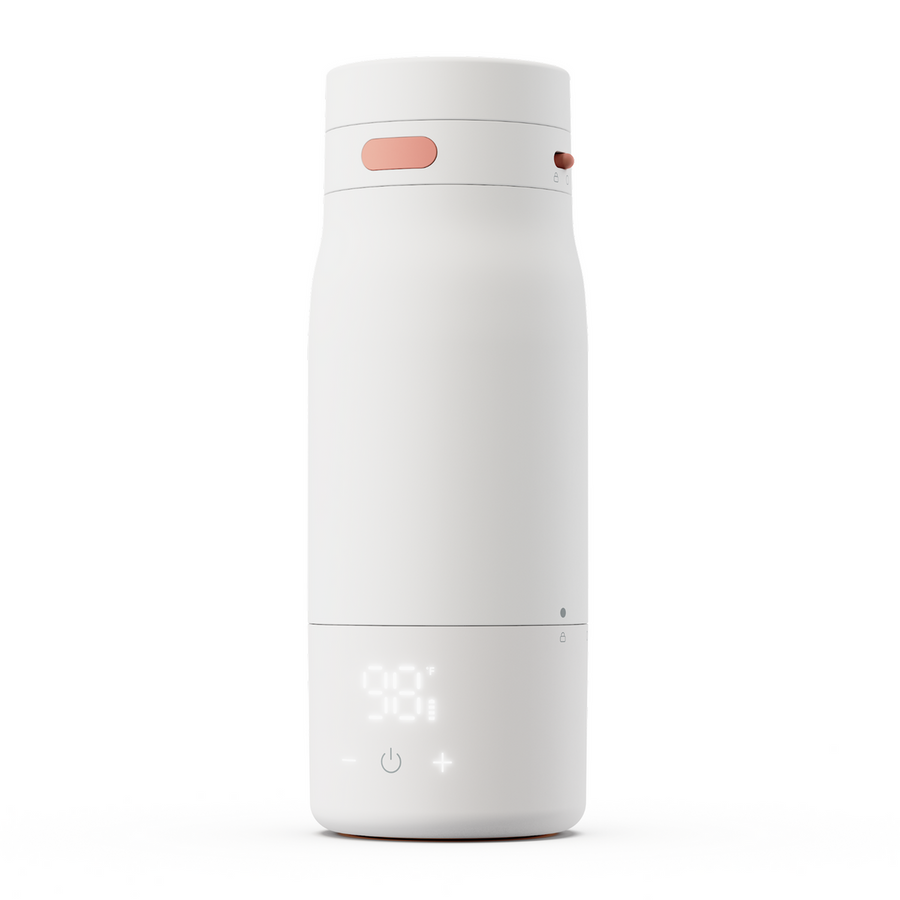
Warmer Pro is built around single-degree temperature control in Fahrenheit or Celsius, with setting memory. That matters because it turns warming from a fresh decision into a repeatable step.
Parents should still test before feeding.
2. Capacity that matches the day
Capacity changes the use case.
A compact warmer can be enough for one smaller bottle. A larger vessel gives more room for water, larger bottle formats, or immersion warming when the bottle or milk bag fits.
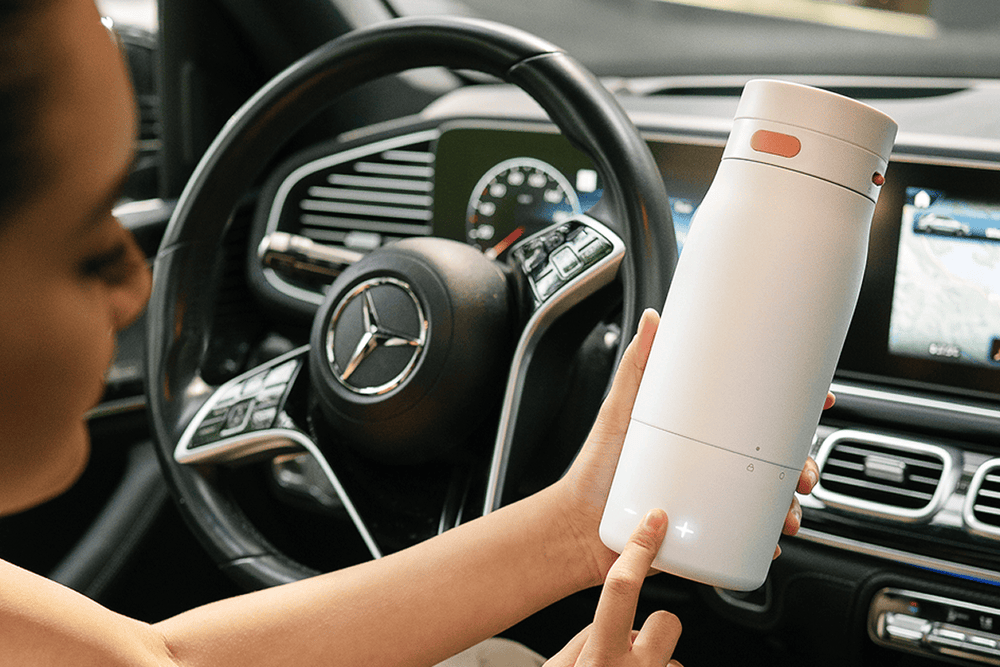
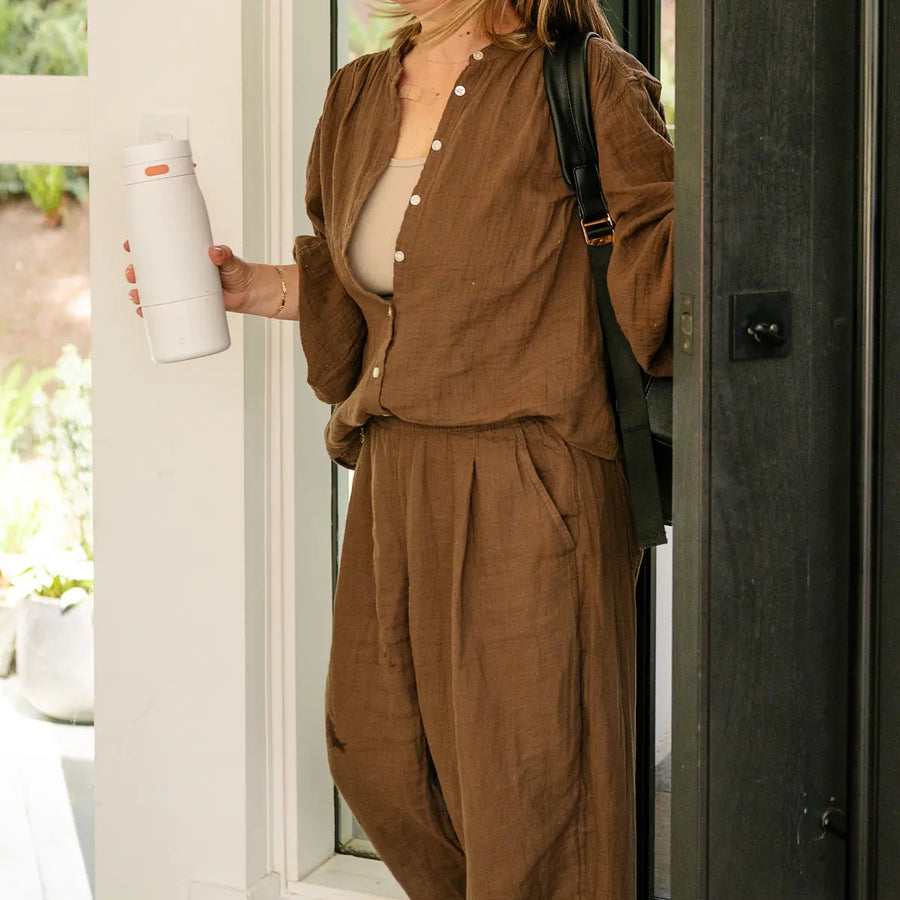
Warmer Pro uses a 17 oz / 500 ml vacuum-insulated stainless steel vessel. That positions it for families who want a more complete away-from-home warming station, not only a tiny emergency warmer.
3. Bottle and milk-bag fit
Fit is one of the most practical buying criteria because parents do not always feed from the same container.
Some days it is a bottle. Some days it may be a breast milk bag. Some families move between home, daycare, grandparents, and travel.
Warmer Pro's wide vessel opening is designed to fit most baby bottles and breast milk bags for immersion warming. Before buying, parents should still check the container they actually use.
4. Cleaning design
Cleaning is the feature parents notice after week one.
A portable warmer can look useful on day one and become annoying if the cleaning routine is awkward. The vessel, lid, seams, and electronics all matter.
Warmer Pro separates the vessel from the electronic base with a twist-lock design. The description doc also lists a high-temperature steam self-clean cycle. That makes cleaning a real product angle, not a footnote.
5. Formula workflow support
Formula prep is not the same as warming a bottle.
For powdered formula, parents should follow the formula label and pediatric guidance. CDC and AAP / HealthyChildren guidance discuss hot-water preparation steps, especially for higher-risk infants.
Warmer Pro includes Formula Mode at 158 F / 70 C. That makes it relevant to formula-prep workflows, but it should not be described as sterilizing formula or eliminating risk.
The buying question is whether the warmer supports your routine, not whether it replaces safe preparation.
6. Battery and charging reality
Portable products have to survive the day.
The useful questions are:
- How long is the outing?
- Is USB-C charging available?
- Does the parent need the warmer once, or several times?
- Is the warmer part of a travel day or just a short errand?
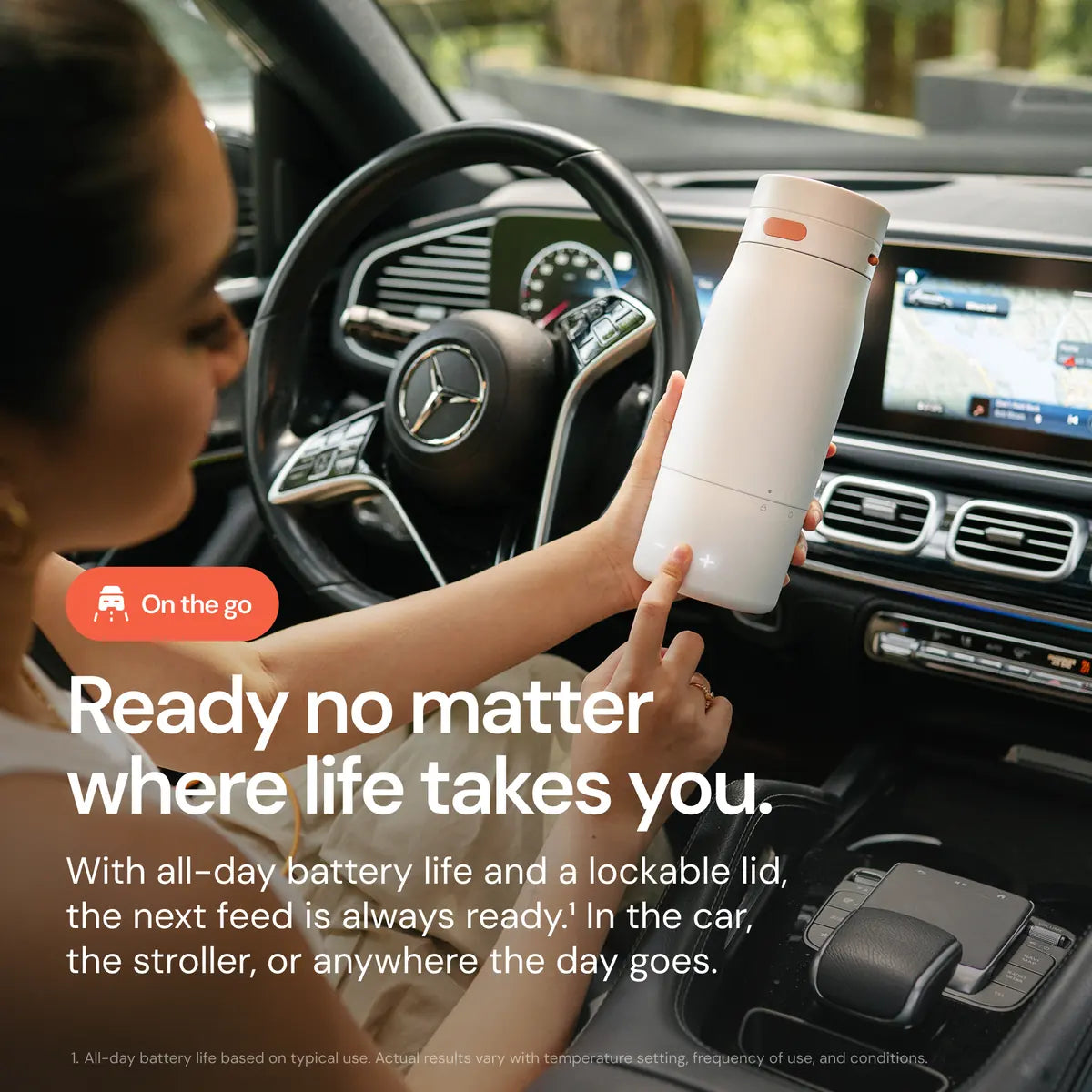
Warmer Pro is described as running all day on a single charge and recharging to 80% in about 1.5 hours over 30W USB-C Power Delivery.
Before publishing or buying, current PDP details should be checked because battery and charging claims can be updated.
7. Quiet feedback
Night feeds and shared rooms make sound matter.
Lights and beeps can wake everyone up. A quieter product can help keep the routine calm without promising better sleep.
Warmer Pro uses silent operation with haptic feedback. That is a strong hotel and night-feed use case.
When a portable warmer is not the first purchase
Do not buy a warmer just because it is new.
A portable warmer may be less important if:
- most feeds happen at home,
- the baby accepts milk at room temperature,
- the family rarely travels with bottles,
- the parent already has a safe repeatable warming method,
- the main need is storage, not warming.
That honest boundary makes the product recommendation stronger.
Where Warmer Pro fits
Warmer Pro fits best for parents who want a more controlled travel-to-night-feed setup:
- larger vessel,
- single-degree control,
- bottle and milk-bag compatibility,
- Formula Mode,
- cleaning design,
- USB-C fast charging,
- silent haptic feedback,
- travel-ready lid and vessel design.
It is a stronger fit when the feed happens away from the kitchen often enough that improvising becomes the friction.
Common questions
What should I look for in a portable milk warmer?
Yes, start with your feeding routine. Then look at temperature control, capacity, bottle or milk-bag fit, cleaning design, battery workflow, and safe formula or breast milk handling boundaries.
Is bigger capacity always better?
No. Bigger capacity is useful when it matches the routine. For occasional smaller feeds, a simpler warmer may be enough.
Can one warmer handle breast milk and formula?
Yes, if the product supports the routine you need. Breast milk warming and powdered formula preparation follow different guidance, so check product instructions and trusted feeding sources.
Does Formula Mode make formula safe by itself?
No. Formula Mode can support the hot-water step in a formula-prep workflow, but parents still follow formula labels, clean prep, and pediatric guidance.
Is Warmer Pro worth it over a basic warmer?
Yes, if your routine needs those upgrades. It is worth considering when larger capacity, single-degree control, easier cleaning, Formula Mode, and quieter travel or night-feed use solve a real problem.
Sources
- Quark Baby: BuubiBottle Portable Milk Warmer PRO product page
- CDC: Breast Milk Storage and Preparation
- CDC: Cronobacter prevention and powdered infant formula guidance
- American Academy of Pediatrics / HealthyChildren.org: How to Safely Prepare Formula with Water
This article provides general product education and feeding context. It is not medical advice.
This article is general parenting guidance and is not a substitute for advice from your own pediatric provider.
Medically reviewed by Dr. Yang Last reviewed August 6, 2026.


Leave a comment
All comments are moderated before being published.
This site is protected by hCaptcha and the hCaptcha Privacy Policy and Terms of Service apply.