


Why Warm the Milk? The Temperature Babies Prefer (and How to Do It Safely)
Here’s the part nobody tells new parents: warming a bottle is usually about what your baby likes, not what they medically need. Knowing the difference takes a lot of pressure off the next feed.
It’s late, the bottle’s ready, and your baby is winding up to cry — and you’re standing there wondering if the milk is warm enough, too warm, or whether it even has to be warm at all. Almost every parent runs that little anxiety loop, often for months. So let’s settle the question, because the answer is calmer than you’d expect.
For most healthy babies, warming is a comfort thing, not a safety rule. Once you know that, the job stops being “hit a perfect number” and becomes something much simpler: get the milk to a gentle, familiar warmth, and never let it get hot. That’s the whole skill, and you’ll have it by the end of this.

Do babies actually need warm milk?
For most healthy, full-term babies, no — and that surprises a lot of new parents. Plenty of babies take cool or room-temperature milk happily, and warming is generally about preference and comfort rather than a safety requirement. (Feeding for premature, newborn, or medically complex babies is its own conversation — follow your own clinician’s guidance there.)
So why do so many babies hold out for a warm bottle? Because warmth is what they’re wired to expect. Milk straight from the breast arrives at roughly body temperature, around 37 °C (98 °F), so a bottle in that same range simply feels familiar. That familiarity can make feeds calmer — especially for newborns and for breastfed babies learning to take a bottle. (If you’re weighing how to warm at home versus on the go, our portable versus traditional bottle warmer comparison lays out the trade-offs.) If your baby is content with cool milk, you genuinely don’t have to warm anything. If they prefer it warm, the goal is just to reach that gentle range safely and the same way each time.
“Warm” means body temperature, not hot
This is the distinction that matters most, so it’s worth saying plainly: the aim is lukewarm, close to body temperature — not heated like a cup of tea. Hot milk is the real hazard here, because it can scald a baby’s mouth, and that risk is exactly what you’re steering around every time you warm a bottle. Aiming for body-warm keeps you in the comfortable, familiar zone without drifting toward danger.
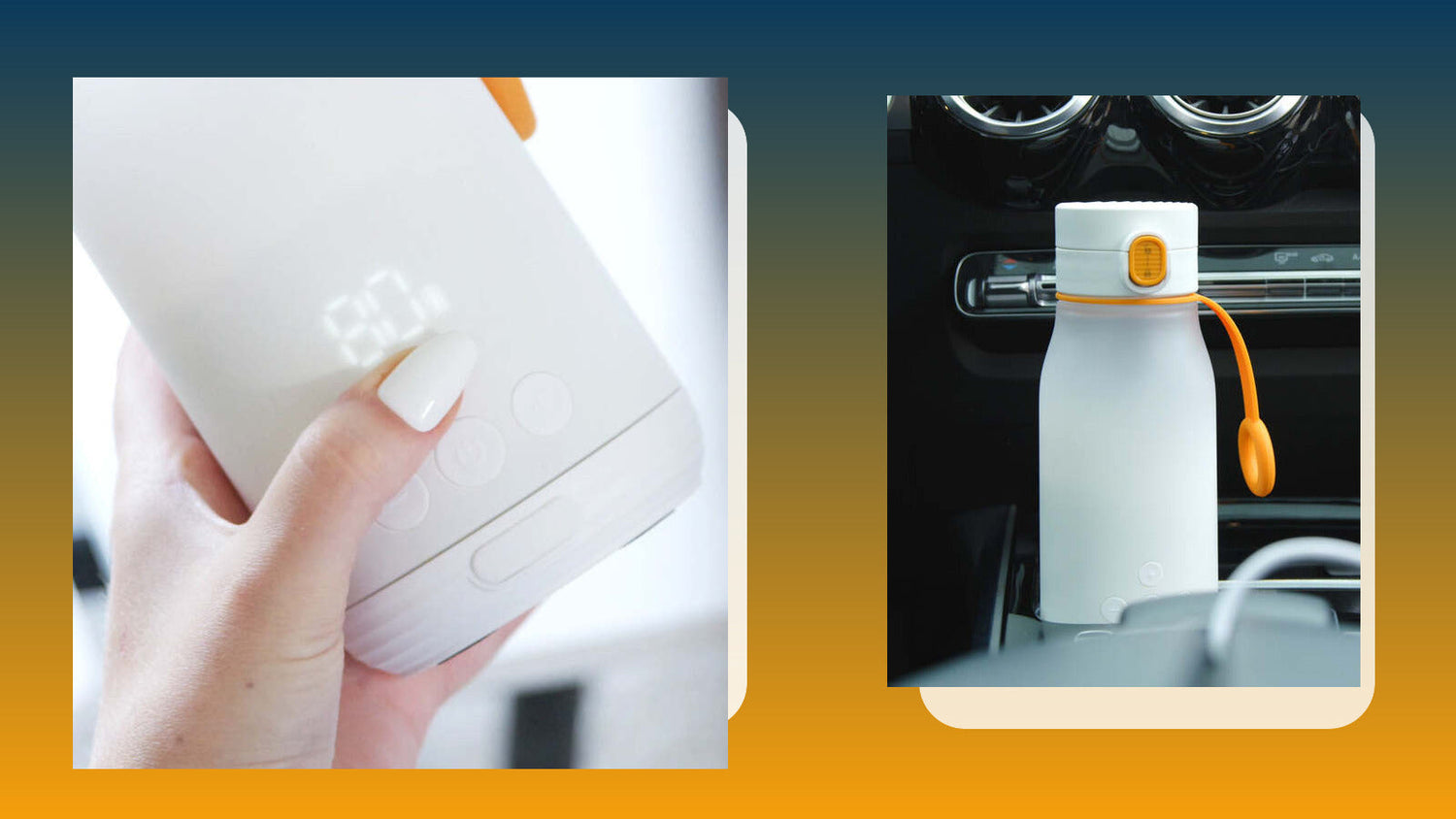
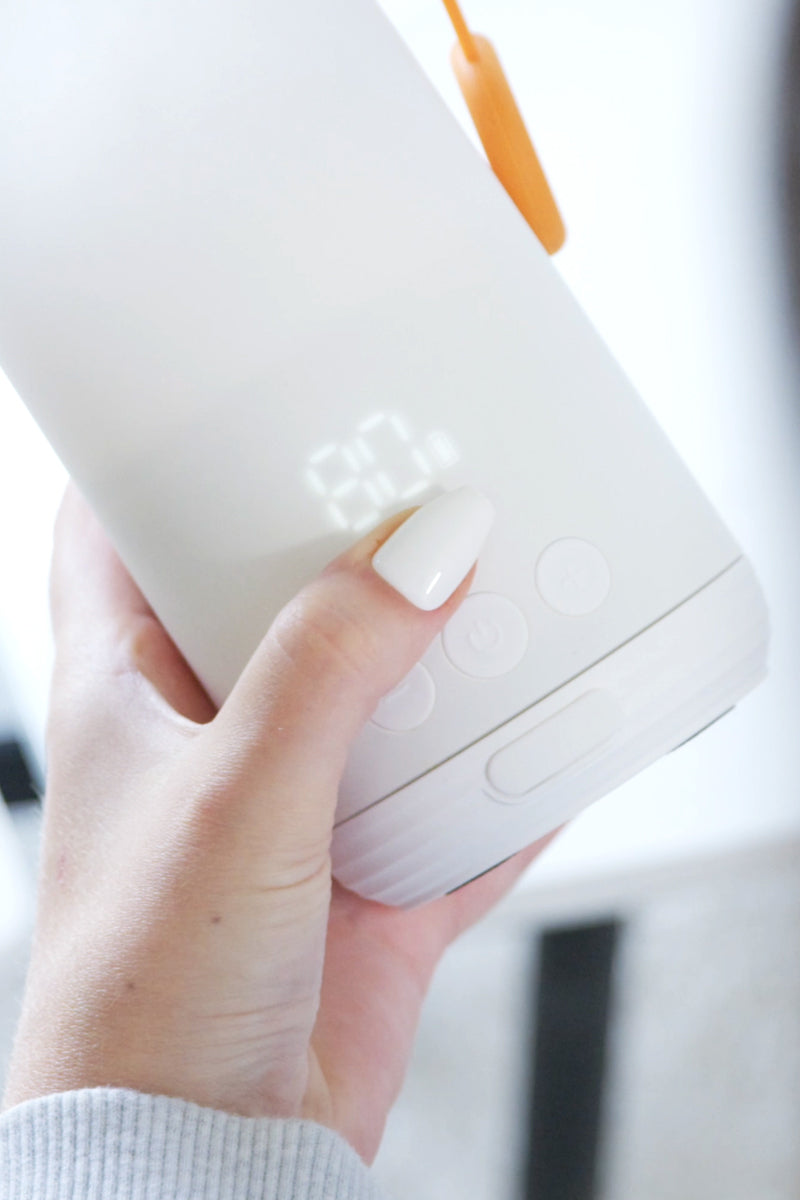
This is also where a warmer with a defined range and a live readout is worth it. The BuubiBottle Smart Portable Milk Warmer works in a 37–50 °C (98–122 °F) window and shows the temperature in real time as it heats, so “warm enough” stops being a guess in a dark room. Whatever method you use, the principle is identical: gentle and even, never hot.
The goal isn’t a perfect number on a screen. It’s warm, even, and familiar — and never hot.
How to warm a bottle gently
A few simple methods get you to that body-temperature target without overshooting:
- A warm-water bath. Stand the bottle or bag in a bowl of warm — not boiling — water for a few minutes. Slow, but it works and costs nothing — and it’s usually a little slower than a dedicated warmer.
- Warm running water. Hold the sealed bottle under warm tap water, turning it so it heats evenly.
- A dedicated bottle or milk warmer. Built to bring milk to a gentle temperature in a controlled way. A cordless one like the portable warmer does this away from a kitchen, with no kettle or stovetop.
After warming, gently swirl the bottle — don’t shake breast milk hard — to even out any warm and cool pockets, then test it before it goes anywhere near your baby.
The one method to skip: the microwave
If you take one thing from this page, take this one. Microwaves heat unevenly and can create hot spots — pockets of much hotter liquid hiding inside milk that feels perfectly fine on the outside of the bottle. The “just stir it” advice that works for adult leftovers isn’t reliable enough for an infant’s bottle, which is why a controlled, even-warming method is the safer default. When in doubt, warm gently and test — and follow your own feeding and safety guidance.

Test the temperature — every single feed
Before each feed, shake a few drops onto the inside of your wrist. It should feel comfortably warm or even neutral — never hot. The inside of your wrist is sensitive enough to catch milk that’s too warm before it reaches your baby, and the whole check takes about two seconds. A temperature display gets you close, but the wrist test is still the final word, especially in low light during a night feed when a readout alone can lull you into skipping it.
Warming on the go
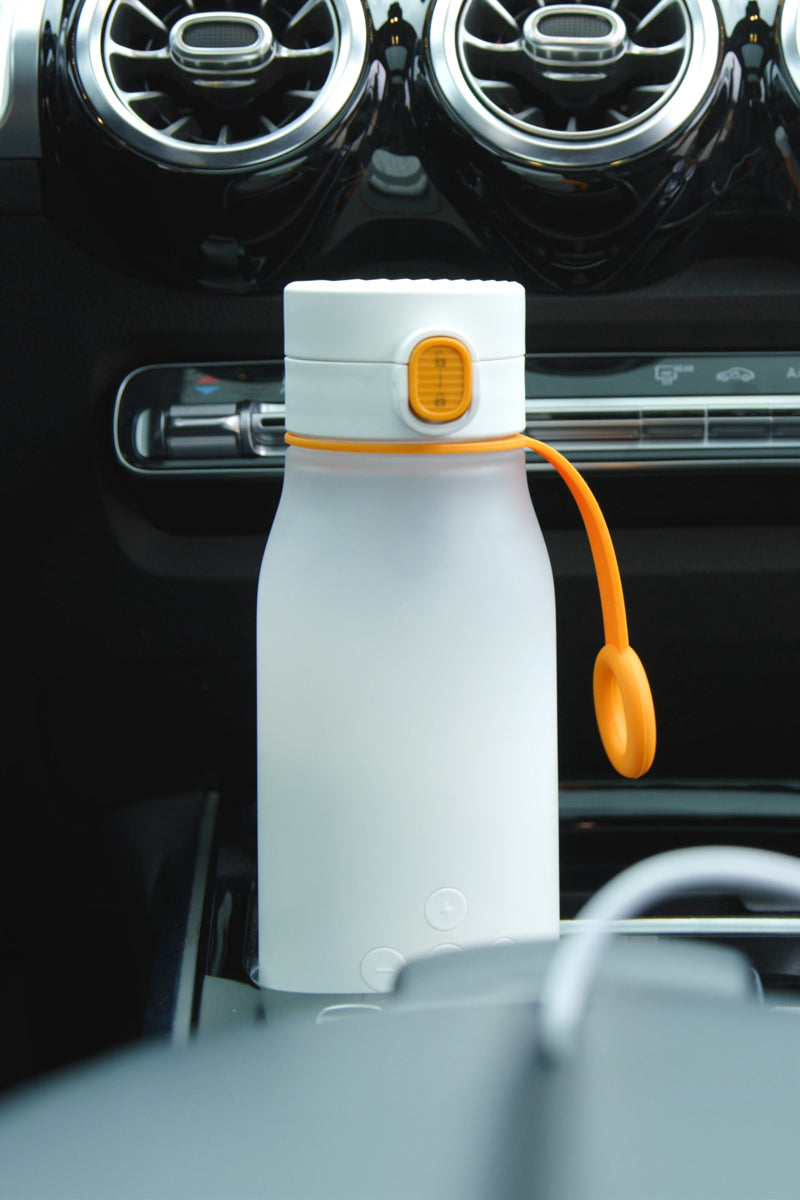
At home, a warm-water bath is fine. The harder problem is everywhere else — the car, a flight, a park, a relative’s spare room — where there’s no kettle and no outlet. That’s the gap a cordless warmer fills, and honestly it’s the main reason to own one. The BuubiBottle Smart Portable Milk Warmer charges over USB-C, holds 300 ml / 10 oz, and warms within that controlled 37–50 °C range with a real-time display — so you can reach the gentle, body-temperature target away from home and still finish with the wrist test. Keeping it clean between trips is the small habit that keeps it travel-ready.
Warming a bottle feels like a test when you’re new to it, and then one day you realize it isn’t. Gentle warmth, never hot, a quick swirl, a drop on the wrist — that’s the routine, and your baby will tell you soon enough what they prefer. Trust that more than any number.
Common questions
The questions tired parents ask us most about warming a bottle.
Is it safe to give my baby cold or room-temperature milk?
For most healthy babies, warming a bottle is about preference rather than safety, and many take cool milk happily. Feeding for premature, newborn, or medically complex babies should follow your own clinician’s guidance.
What temperature should a baby’s bottle be?
Most babies prefer milk near body temperature, around 37 °C / 98 °F — the temperature of breast milk. Warm, not hot: it should feel comfortably warm or neutral on your wrist.
Why shouldn’t I microwave a bottle?
Microwaves heat unevenly and can create hot spots — pockets of much hotter liquid hidden in milk that feels fine on the outside. Gentle, even warming avoids that scald risk.
How do I test the temperature?
Swirl the bottle, then shake a few drops onto the inside of your wrist. It should feel comfortably warm or neutral. If it feels hot, let it cool and test again.
Should I warm a bottle ahead and keep it ready?
A warmer is for warming, not storing. Warm just before the feed and use it right away. For storage times, leftovers, and refreezing, follow current public-health guidance and your own clinician.
Reviewed for accuracy by Dr. Yang · Last updated June 2026 · General guidance, not a substitute for advice from your own pediatrician or healthcare provider. Warming is described for most healthy, full-term babies; always follow current milk-preparation and storage guidance and your clinician’s advice for your child.


Leave a comment
All comments are moderated before being published.
This site is protected by hCaptcha and the hCaptcha Privacy Policy and Terms of Service apply.