

Quick answer: A bottle warmer is usually better when you warm often, feed at night, or share feeding with other caregivers, because it makes the temperature step repeatable. A warm water bowl is enough when you warm occasionally, have a stable kitchen setup, and can watch the bottle closely. The safest method is the one you can use correctly every time.
A bottle warmer and a warm water bowl can both be part of a safe feeding routine. The difference is repeatability. A bowl is simple and low-cost, but it relies on the caregiver judging water temperature, timing, bottle fit, and cleanup. A warmer is a dedicated tool, but it still needs safe milk or formula handling.
Safety note: Never microwave breast milk or formula — microwaves heat unevenly and create hot spots that can scald a baby’s mouth (CDC). Warm gently, swirl to distribute heat, and always test a few drops on your wrist before feeding. Do not overheat, which can degrade nutrients in breast milk. Do not repeatedly reheat a bottle, and discard any leftover milk or formula after a feed per CDC guidance. Warming never extends safe storage windows.
Is warm water in a bowl safe for warming bottles?
Yes, when handled carefully. Keep the bottle sealed and upright in warm — not boiling — water, warm briefly, swirl, and wrist-test before feeding. The risk is not the bowl itself but the variables around it: water that is too hot, a warming step that drifts into long holding time, or a container that has not been cleaned for infant feeding. The table compares the full routine on the dimensions that matter.
| Dimension | Bottle warmer | Warm water bowl |
|---|---|---|
| Speed | Predictable once you know the routine. | Can be quick, but slows as the water cools. |
| Temperature control / safety | More repeatable with settings or a display; still requires wrist-testing. | Depends on water temperature, bowl size, and time. |
| Even heating | Surrounding gentle heat when used as directed. | Uneven if water is too hot or the bottle is not swirled. |
| Portability | Travel-friendly; needs charging. | Tied to a kitchen, clean bowl, and hot-water source. |
| Cleanup | Device and bottle parts need cleaning. | Bowl, counter, bottle exterior, and towel may need cleanup. |
| Cost | Higher upfront; pays off with repeated use. | Near-zero if you already own a bowl. |
When is a warm water bowl enough?
For occasional, calm, at-home warming. A bowl is reasonable for families who warm one occasional bottle at home, have clean warm water nearby, and can monitor the bottle. It is inexpensive, easy to understand, and works as a backup if a device is not charged. The weak point is environment: a bowl is harder in a hotel bathroom, a parked car, an airport lounge, or a night feed where spills wake everyone up, and it adds more surfaces to dry and clean.
When does a bottle warmer earn its place?
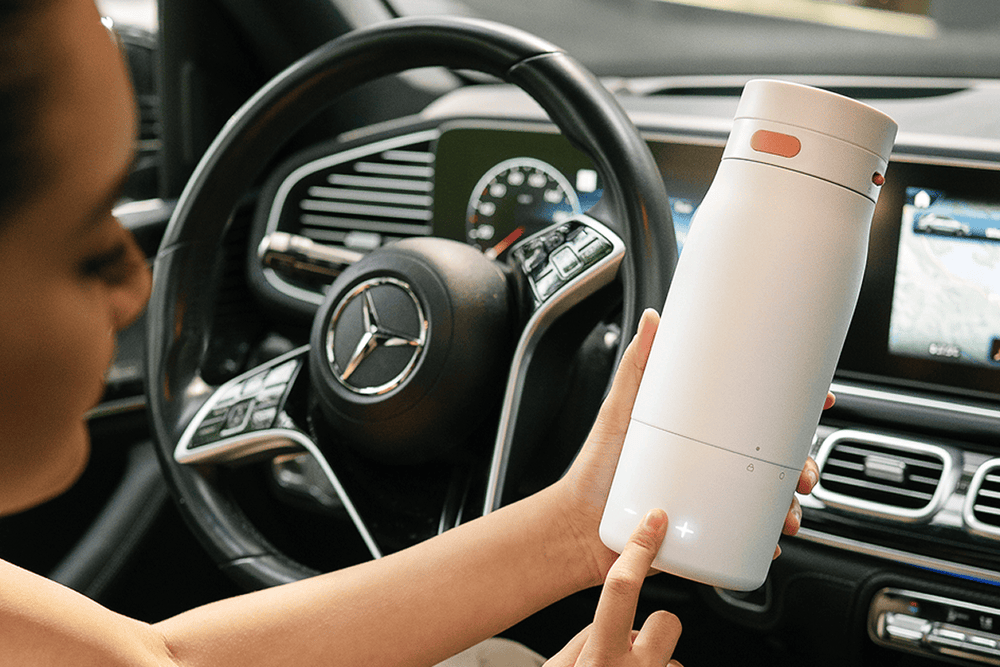
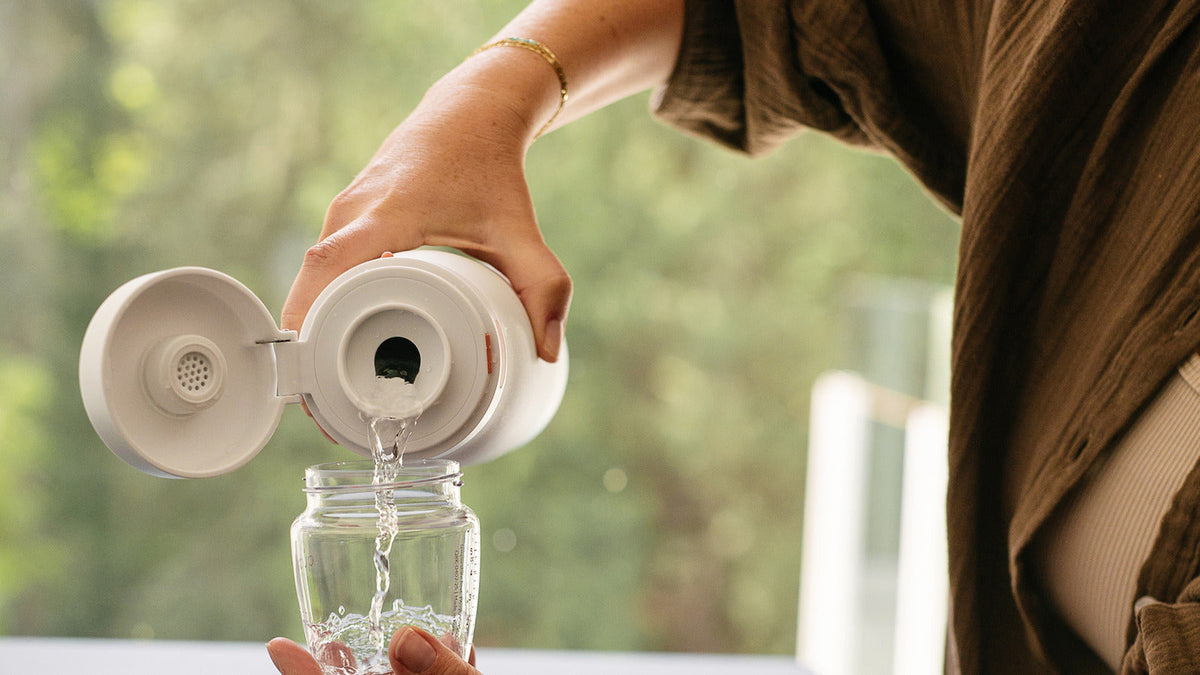
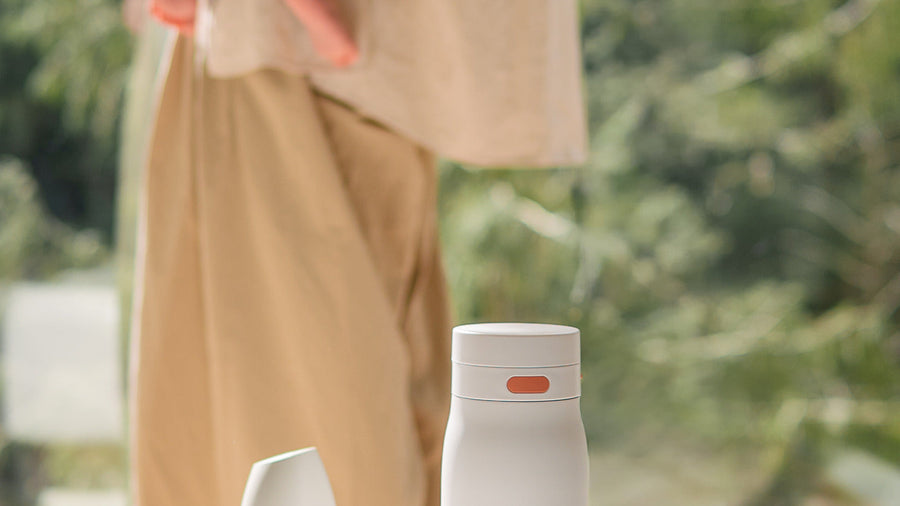
When the routine repeats. Quark Baby’s BuubiBottle Portable Milk Warmer PRO lists a 17 oz vacuum-insulated stainless steel vessel, 360° heating, a temperature you set that it holds to a single degree, and a Formula Preparation Mode that brings water to 158°F / 70°C for powdered formula. For families who warm away from a kitchen, those specs reduce improvisation. That does not make a warmer automatically safer in every situation — the caregiver still prepares, stores, warms, tests, and feeds according to guidance. The value is consistency: fewer bowls, fewer spills, clearer temperature information, and a routine another caregiver can repeat.

How do I make either method safer and less messy?
Same boundaries apply to both.
- Keep the bottle sealed while warming. Water sits outside the bottle, never mixing with the feed.
- Use gentle heat and short timing. Warm only until room or body temperature; do not let warming become long holding time.
- Swirl and wrist-test. Check warmth before feeding no matter the method; a display does not replace the final check.
- Clean what touched the routine. With a bowl that may be the bowl, counter, towel, and bottle exterior; with a warmer, follow the cleaning instructions and wash bottle parts after use.
Which should I choose for a shared caregiver routine?
Usually the warmer, because it is easier to document. A grandparent, nanny, or second parent may not repeat a homegrown hot-water routine exactly. A warmer with visible controls makes the instructions easier to repeat: fill to the intended amount, choose the target temperature, warm, swirl, wrist-test, and feed within the safe window. Write the feed plan, not just the product name — how much was prepared, when, whether it was refrigerated, how to warm it, and when to discard leftovers.
If a dedicated warmer fits, compare the BuubiBottle Portable Milk Warmer PRO specs (or the lighter 300 ml original BuubiBottle) against your real feed size and travel needs before buying so you match capacity and temperature range to your actual routine.
Frequently asked questions
Is warm water in a bowl safe for warming bottles?
Yes, when done carefully. Keep the bottle sealed and standing in warm — not boiling — water, warm only briefly, swirl, and wrist-test before feeding. Never microwave, and do not let the bowl method turn into long holding time; discard leftovers after a feed.
Is a bottle warmer safer than a warm water bowl?
Either can be safe or unsafe depending on timing, temperature, and handling. A warmer with a display tends to be more repeatable and easier to hand off to another caregiver, while a bowl relies on the caregiver judging water temperature each time.
Is a warm water bowl good enough for occasional bottles?
Usually, yes. If you have clean warm water, a stable bowl, and time to monitor the bottle, a bowl is fine for occasional home use. A dedicated warmer earns its place mainly when the routine repeats, especially at night or during travel.
How long should a warmed bottle sit out?
Use it promptly. Prepared formula should be used within 2 hours of preparation and within 1 hour from when feeding begins, and warmed breast milk within 2 hours. Do not hold warmed feeds for later, and discard leftovers per CDC guidance.
Sources
- CDC. Breast Milk Storage and Preparation.
- CDC. Infant Formula Preparation and Storage.
- AAP / HealthyChildren.org. Feeding & Nutrition guidance.
- Quark Baby. BuubiBottle Portable Milk Warmer PRO product specifications.
- Quark Baby. BuubiBottle Smart Portable Milk Warmer product specifications.


Leave a comment
All comments are moderated before being published.
This site is protected by hCaptcha and the hCaptcha Privacy Policy and Terms of Service apply.