

The cleanest first-foods setup is not spotless. It is controlled: one soft food, one seat, one tool, one wipe-down path, and a feeder or spoon that gets rinsed before pulp dries.

Starting solids is supposed to be messy. Babies learn by touching, mouthing, dropping, and testing textures. The goal is not to remove every smear. The goal is to keep the mess from taking over the whole kitchen.
That starts before the first bite. A calmer setup gives the baby room to learn and gives the adult a clear reset path after the session.
A contained feeding tool can help when the job is supervised soft-food exploration. The product does not remove the need for readiness, supervision, or safe food prep. It simply gives the routine a clearer reset path.
Start with one food and one job
First-food cleanup gets harder when the session tries to do too much. One new food, one bowl, one feeder or spoon, and one seated baby is enough.
Most babies begin solids around 6 months, but the AAP stresses developmental readiness: head control, sitting with support, interest in food, and the ability to move food back to swallow. HealthyChildren.org gives the readiness signs.
Health Canada also uses the 6-month frame for complementary foods while breast milk or formula remains central. Health Canada explains infant nutrition in that stage.
Keep the menu narrow
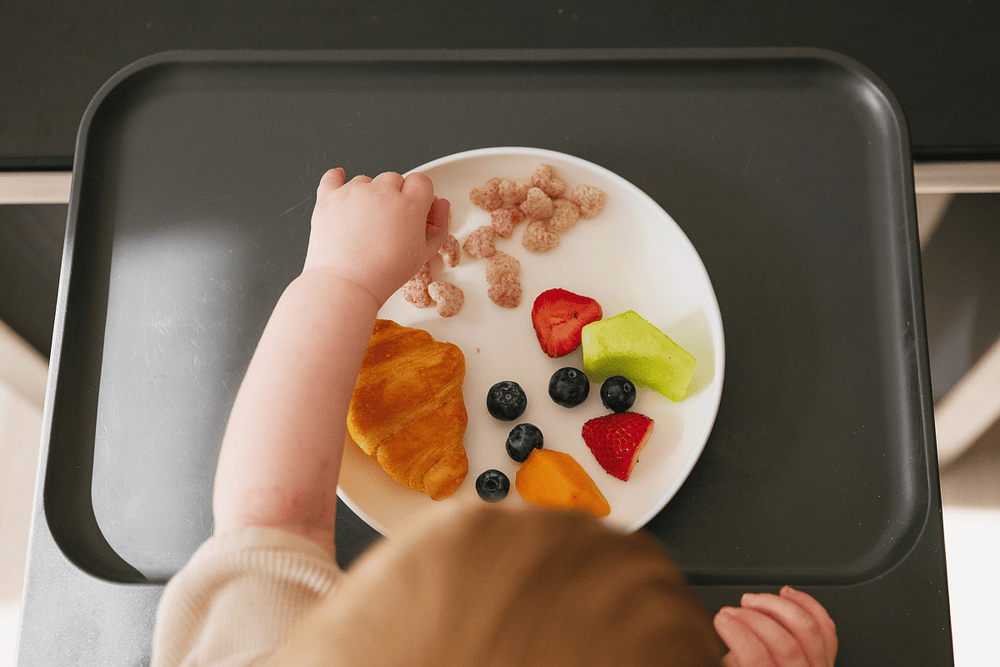
Ripe banana, ripe avocado, steamed pear, steamed apple, and soft-cooked sweet potato are easier to manage than fibrous, seedy, sticky, or firm foods.
Use less food
A small amount is easier for baby to handle and easier for you to clean. You can always reload.
Stop early
A short successful session beats a long sticky one. Stop when baby turns away, tires, cries, or seems uncomfortable.
Build the cleanup path first
Before baby sits down, decide where the dirty parts go.
| Setup step | What to prepare | Cleanup benefit |
|---|---|---|
| Seat | Highchair or feeding seat | Keeps food in one zone |
| Food | Small portion of one soft food | Less waste and fewer spills |
| Tool | Spoon or Fruuti | One item to wash |
| Wipe zone | Cloth, bib, and small bowl nearby | No kitchen search mid-session |
| Rinse plan | Sink or rinse container ready | Pulp does not dry into parts |
If you use Fruuti, the most important cleanup habit is immediate rinsing. Take the feeder apart and rinse before fruit or vegetable pulp dries inside the silicone tip or handle area. Then wash according to the care instructions.
Where Fruuti fits
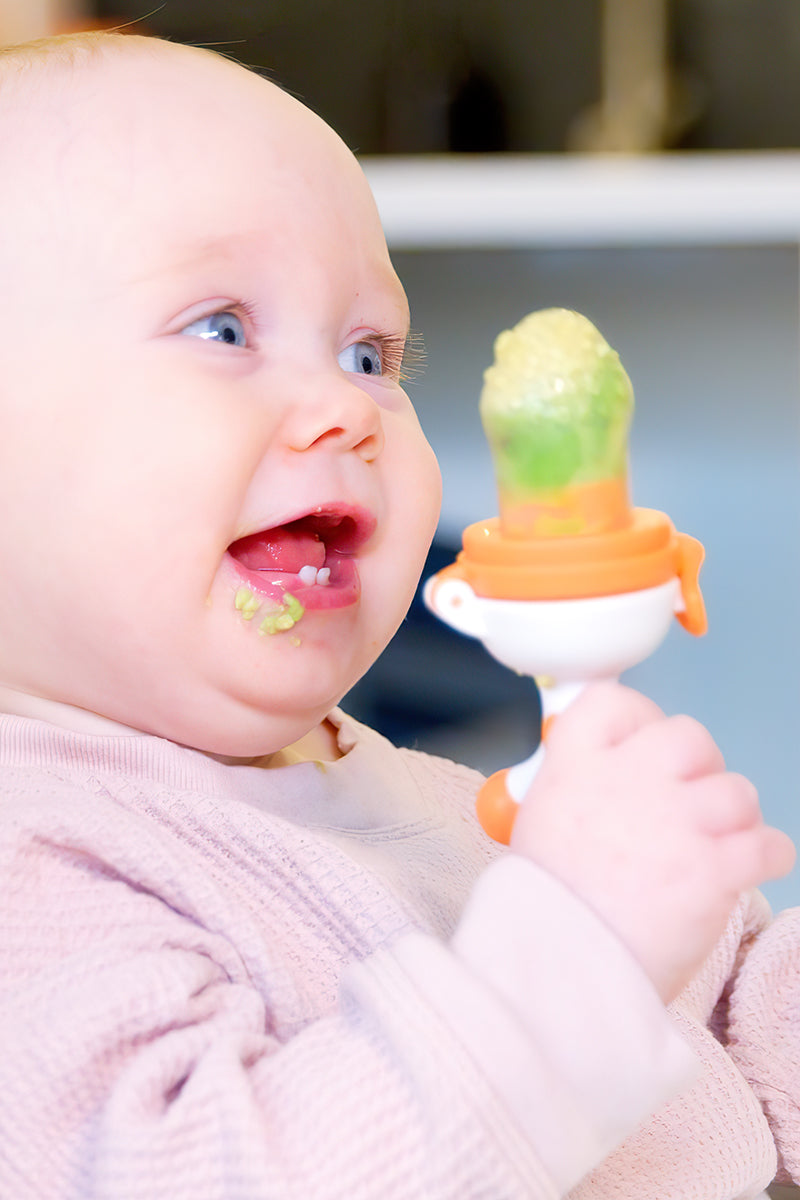
Fruuti is useful when you want to offer a soft food with more containment than a loose piece of fruit. The twist-to-eject base helps move food forward through the silicone tip, which can reduce the common feeder problem of food getting trapped at the back.
It is also a good reminder to keep the session small. Fruuti works best when lightly loaded. Overfilling makes the feeder harder to close, harder to control, and slower to clean.
Use it for soft food exploration
Think ripe, steamed, or soft-cooked foods that mash easily. Do not use a feeder as a workaround for hard, round, sticky, or choking-hazard foods.
Keep baby upright and watched
No first-food tool should be used in a crib, car seat, stroller, or while an adult steps away. Baby should be seated upright and supervised.
Wash before the next session
Do not let yesterday's dried fruit become today's cleaning problem. If cleanup cannot happen, choose a spoon or skip the feeder that day.
What still makes a mess
Some mess is useful. Babies need sensory practice. What creates unnecessary cleanup is usually adult setup: too much food, too many tools, no rinse plan, or a session that continues after baby is done.
Keep the highchair area simple. Skip extra bowls if baby is not ready to handle them. Put a small amount of food in the feeder or on the spoon, then reload only if the session is still calm.
A five-minute reset routine
1. Move baby away from the food zone. 2. Put leftover food into the right container or discard it. 3. Take Fruuti apart if used. 4. Rinse parts before pulp dries. 5. Wash by hand or dishwasher according to care instructions. 6. Wipe tray, hands, and floor zone. 7. Note what food worked and what to adjust next time.
That last step matters. Cleanup gets easier when you learn the pattern: which foods smear most, which portion size is realistic, and when your baby is usually done.
Common questions
What is the easiest first-food cleanup setup?
Yes. Use one seat, one food, one tool, and one rinse plan. Keep the session small enough that cleanup starts before food dries.
Does Fruuti make solids mess-free?
No. It can make soft-food exploration more contained, but babies still smear, chew, drop, and learn by touching.
What foods are easiest to clean from a feeder?
Yes. Choose soft foods that rinse before drying. Ripe banana, ripe avocado, steamed pear, steamed apple, and soft-cooked sweet potato are practical starting points.
Should I use Fruuti or a spoon for less cleanup?
Yes, use the tool that matches the job. A spoon is simpler for puree. Fruuti is useful for contained soft-food exploration.
How soon should I rinse Fruuti?
Right after feeding. Rinsing before pulp dries is the cleanup habit that matters most.
Can I put hard frozen fruit in Fruuti to reduce mess?
No. Avoid hard frozen chunks and other choking-hazard foods. Keep food soft and age-appropriate.
Sources
- Quark Baby: Fruuti Baby Fruit Feeder product page
- American Academy of Pediatrics / HealthyChildren.org: Starting Solid Foods
- Health Canada: Infant nutrition
- American Academy of Pediatrics / HealthyChildren.org: Choking Prevention
This article is general product and feeding information, not medical advice. For feeding readiness, choking risk, allergies, swallowing, or feeding development, ask your pediatrician or qualified health professional.


Leave a comment
All comments are moderated before being published.
This site is protected by hCaptcha and the hCaptcha Privacy Policy and Terms of Service apply.