

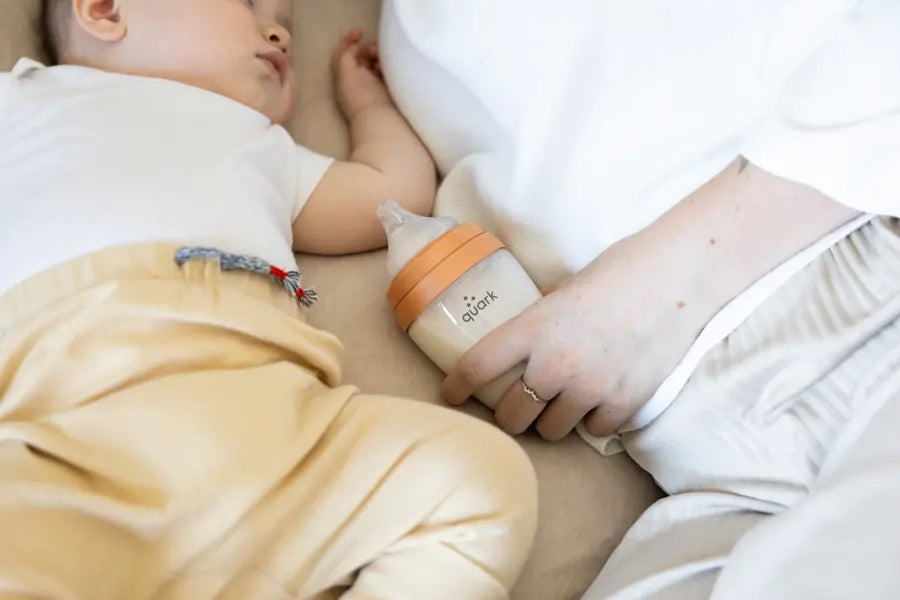
A fridge-cold bottle is not hard because warming is complicated. It is hard because the routine has too many loose steps: find the bottle, choose the method, wait, test, feed, clean, and reset before the next one.
The bottle comes out of the fridge. The baby is already hungry. The counter has yesterday's parts, a clean nipple somewhere in the drawer, and a burp cloth that is not where it should be.
That is the real problem. A warmer helps, but the better upgrade is a routine that reduces searching, spilling, waiting, and second-guessing.
For a fridge-to-feed routine, the value is not a dramatic claim. It is having the warming step live in the same place as prep, cleanup, and the reset before the next bottle.
Start with the bottle, not the timer
A fridge-cold bottle has farther to warm than a room-temperature bottle. A fuller bottle takes longer than a smaller one. A different bottle shape may warm differently. That is why a single promised minute count is not the right anchor.
The better anchor is a repeatable sequence.
| Step | What to do | Why it matters |
|---|---|---|
| 1 | Confirm what is in the bottle | Formula and breast milk have different handling rules |
| 2 | Check starting temperature and volume | Cold and full bottles take more warming time |
| 3 | Use the warmer as directed | Mode, water level, and fit affect results |
| 4 | Swirl gently after warming | Helps even out temperature |
| 5 | Test before feeding | Comfort check before the bottle reaches baby |
| 6 | Follow leftover rules | Warming does not reset the clock |
| 7 | Reset the station | The next feed gets easier |
Build a cleaner station
A cleaner routine is mostly about reducing movement. Keep the bottle, warmer, clean nipple or cap, burp cloth, and a small drying area close together.

Keep the station boring
The station should be obvious enough to use when you are tired. If you have to open four drawers, the system is too spread out.
Separate clean and used parts
Do not let used parts drift back into the clean area. A small used-parts zone keeps the next feed from starting with a question.
Reset immediately after the feed
The best time to prepare the next feed is after the current one, before the kitchen disappears into the rest of the day.
Respect formula and breast milk rules
Bottle warming is not food-safety control by itself. It is only one step in the feeding process.
The American Academy of Pediatrics says prepared formula that has been fed from should be discarded within 1 hour and prepared formula that has not been fed may be refrigerated for 24 hours. It also recommends testing warmed formula before feeding. HealthyChildren.org explains the formula preparation guidance.
For breast milk, the CDC recommends using or discarding leftover milk within 2 hours after the baby is finished feeding, and following storage guidance based on whether milk is freshly expressed, refrigerated, thawed, or leftover. CDC breast milk handling guidance gives the full table.
Label when needed
If several caregivers share the routine, labels can help: date, time, formula or breast milk, and whether the bottle has been fed from.
Do not re-warm casually
If a bottle has already been offered to the baby, follow leftover rules. Do not treat the warmer as a reset button.
Where Quook fits
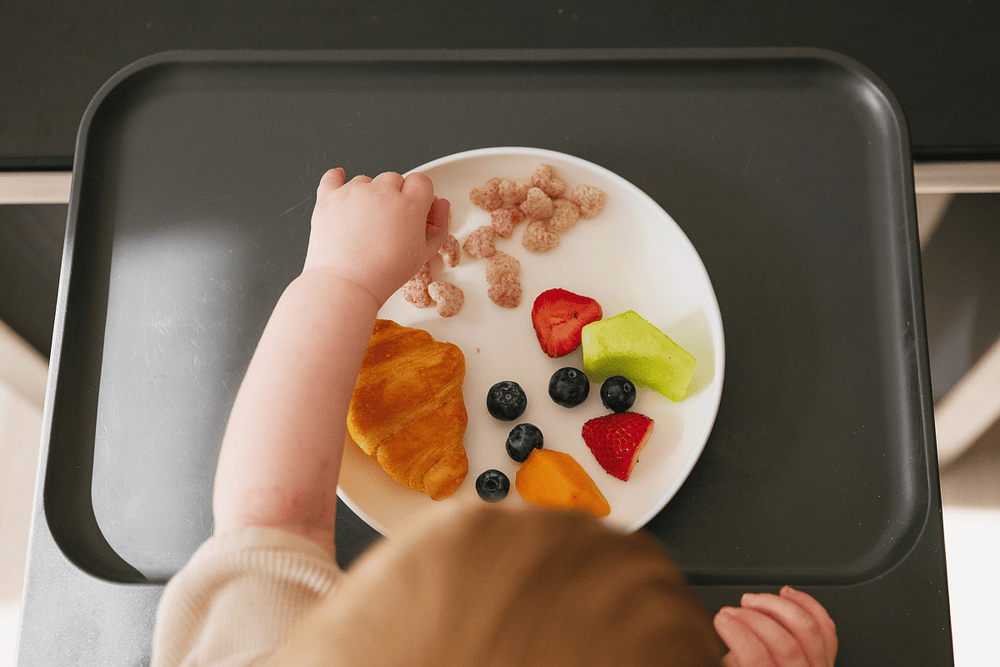
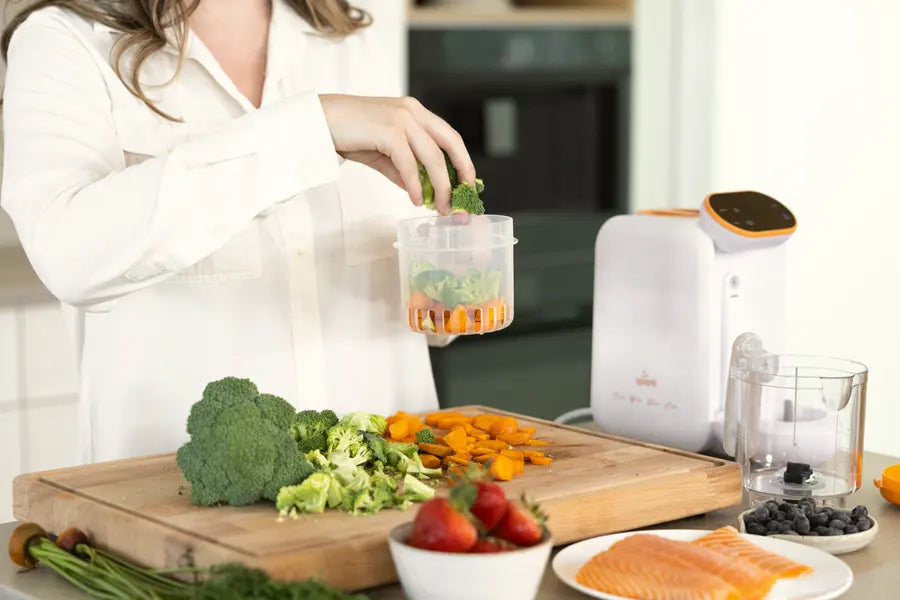
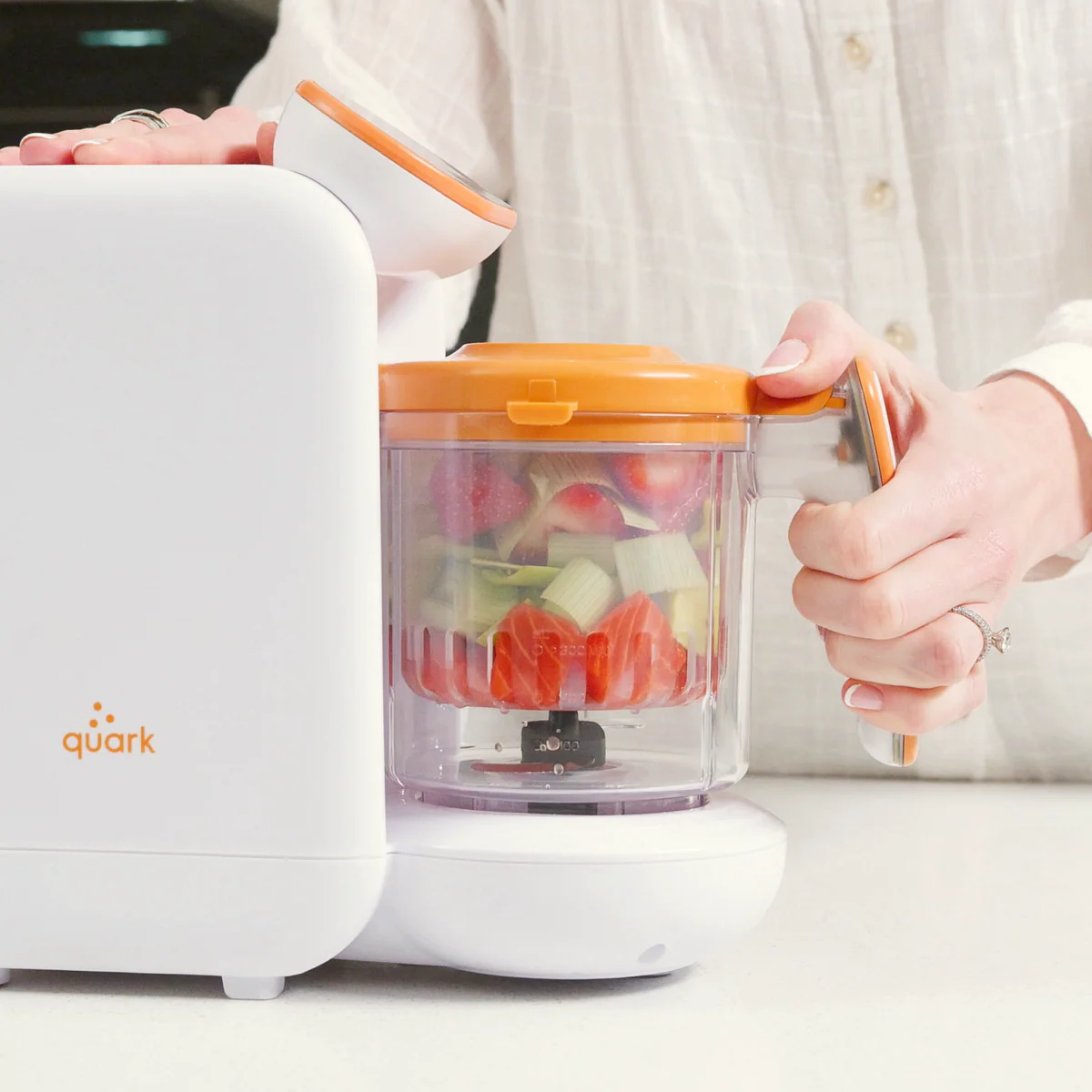
Quook is most useful when the fridge-to-feed routine is part of a larger home workflow. The same counter area may handle bottle warming now, then steaming and blending when solids start.
The product page describes Quook with integrated bottle warming, steam sterilization mode, auto and manual blending, digital controls, a Tritan blending cup, a 316 stainless steel blade and water reservoir, and platinum-cured silicone seals. Keep those claims as product-source claims, not medical claims.
Best fit
Kitchen-based routines with repeated bottle warming and a near-future solids stage.
Less ideal
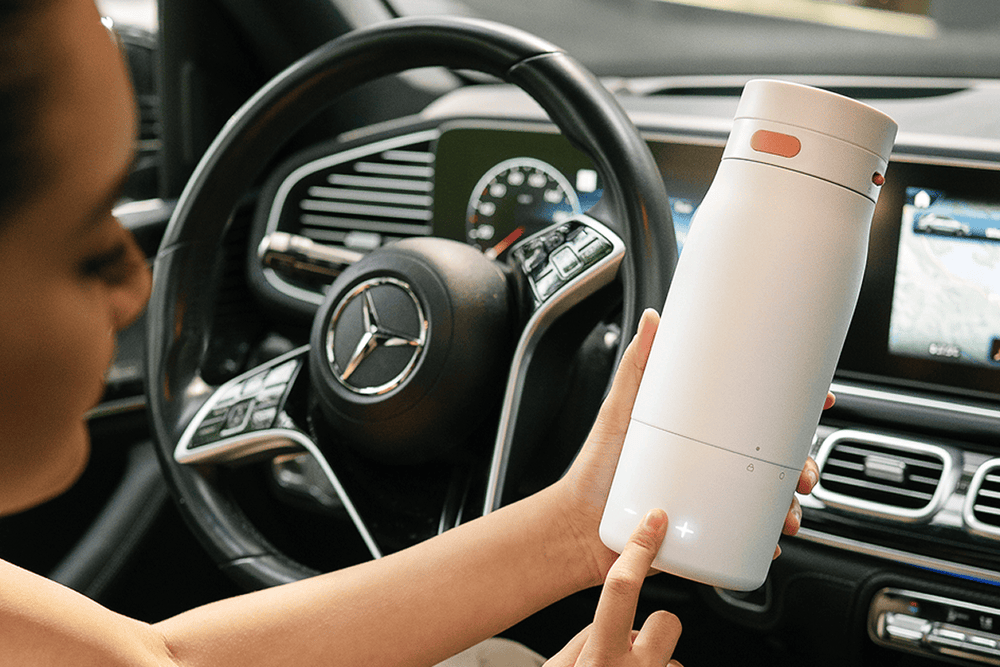
Families looking mainly for a cordless car or stroller warmer.
Practical reason to choose it
One compact station is easier to teach to a partner, grandparent, or babysitter than a routine scattered across the kitchen.
Product/spec evidence
Quark Baby lists Quook as a 5-in-1 baby food maker with integrated bottle warming, steam sterilization mode, auto and manual blending, digital touch controls, and a compact design. The local product source also lists a Tritan blending cup, a 316 stainless steel blade and water reservoir, and platinum-cured silicone seals. The BuubiBottle Mini and Max link is included as the related bottle-family path, without adding unverified claims about bottle compatibility or warming time.
Common questions
Can I warm a bottle straight from the fridge?
Yes. If the bottle has been stored safely and is still within the correct window. Expect it to take longer than a room-temperature bottle, then test before feeding.
How do I know the bottle is warm enough?
Yes. Test before feeding. Follow your product instructions, swirl gently, and check the temperature before giving the bottle to the baby.
Does Quook replace formula or breast milk handling rules?
No. Quook can support the warming step, but storage, leftover, and temperature-check rules still apply.
What makes the routine cleaner?
Yes. Fewer loose steps. Keep clean parts, the warmer, burp cloths, and a used-parts zone in one place so the next feed starts clearly.
Should I buy Quook just for one occasional fridge bottle?
Usually, no. Quook makes more sense when bottle warming, sterilizing support, and early food prep are part of the same home routine.
References
- Quark Baby: Quook Baby Food Maker / Bottle Warmer product page
- Quark Baby: BuubiBottle Mini product page
- American Academy of Pediatrics / HealthyChildren.org: How to Safely Prepare Formula with Water
- CDC: Breast Milk Storage and Preparation
This article provides general product and feeding information. It is not medical advice.


Leave a comment
All comments are moderated before being published.
This site is protected by hCaptcha and the hCaptcha Privacy Policy and Terms of Service apply.