

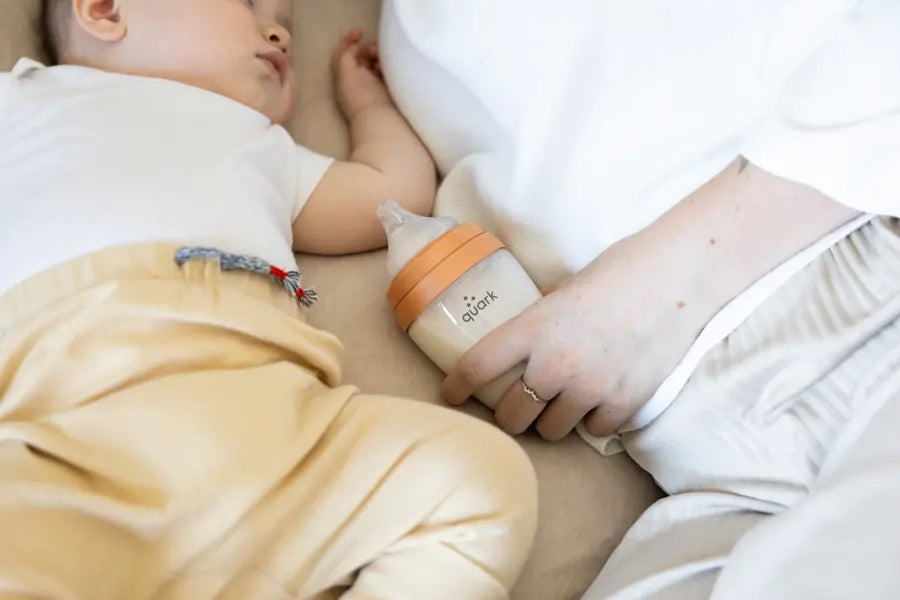

Choosing a bottle feels like it should be a materials question, and most guides treat it that way. For a breastfed baby it usually is not. The nipple — its flow rate and its shape — is what decides whether your baby takes the bottle without fighting it and goes back to the breast afterwards. Material, size, and brand matter, but they matter after that. Narrow on flow first, and the rest of the decision gets much smaller.

Start with flow rate, not material
A bottle nipple that flows fast does the work for your baby. Milk arrives whether or not they suck efficiently, which is easier than the breast — and that ease is what leads some babies to start refusing the breast. This is usually called bottle preference, and flow rate is the single biggest lever you have over it.
For a breastfed baby, use the slowest flow that works, and stay there. There is no developmental schedule that requires moving up. Many breastfed babies stay on a slow-flow nipple for their whole bottle-feeding life. Move up only if your baby is visibly working hard, taking very long feeds, and still hungry afterwards — not because the box says a size is "for 3 months+".
There are specific signs that a flow is too fast or too slow, and getting them right matters more than the number printed on the packet — we set them out in our baby bottle nipple flow rate guide.
If your baby has already started refusing the breast, that is a specific problem with its own fixes — we cover it in nipple confusion and bottle preference.
Then the nipple shape
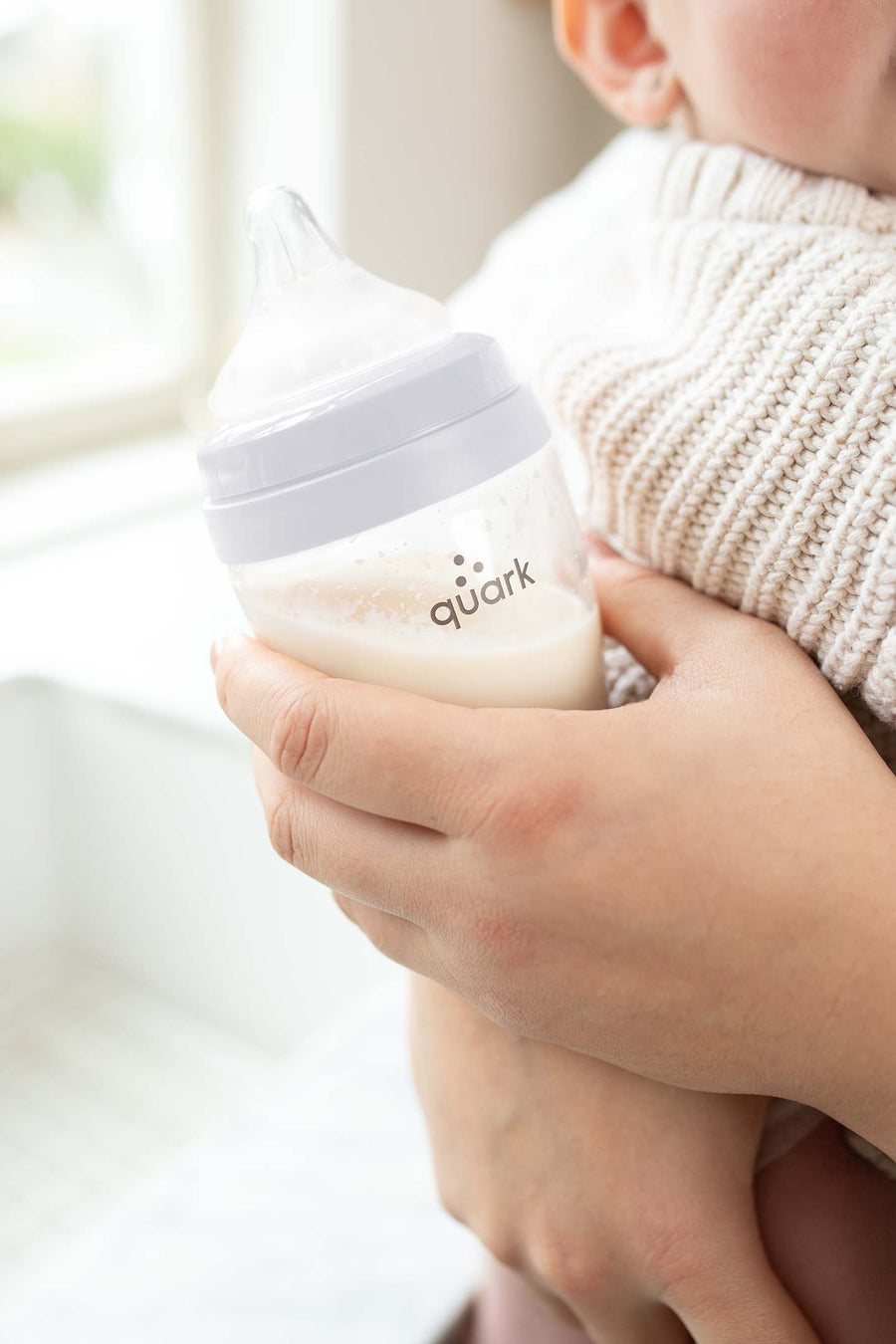
Look for a wide base with a gradual slope rather than a narrow nipple on a wide collar. The shape encourages your baby to open wide and latch onto the base, closer to how they latch at the breast, instead of pursing their lips near the tip. A nipple that flexes under pressure rather than staying rigid also helps.
What matters less than the marketing suggests: exact colour, texture, and whether it is described as "natural" or "breast-like". Those words are not regulated. The measurable things are flow rate, base width, and how much the silicone gives.

Materials, honestly compared
All four common materials are safe when they are undamaged and made to current standards. The real differences are weight, durability, and how they age.
| Material | Good for | Trade-off |
|---|---|---|
| Glass | No leaching concern at all, does not stain or hold odour, lasts indefinitely | Heavy, breaks, awkward once your baby holds their own bottle |
| Polypropylene (PP) | Cheapest, lightest, widely available | Clouds and scratches with repeated hot washing; scratches are where residue sits |
| Polyamide (e.g. Grilamid TR-90) | Glass-like clarity, light, shatterproof, holds up to repeated dishwasher cycles | More expensive than PP; fewer brands use it |
| Silicone | Soft, squeezable, unbreakable, pleasant to hold | Opaque or tinted so volume is harder to read; can pick up odours over time |
Whatever you buy, check it is labelled free of BPA, BPS, PVC and phthalates, and replace any bottle that is cracked, cloudy, or deeply scratched. Damage matters more than the original material choice: a scratched bottle is harder to get properly clean, and worn plastic is where degradation actually happens.
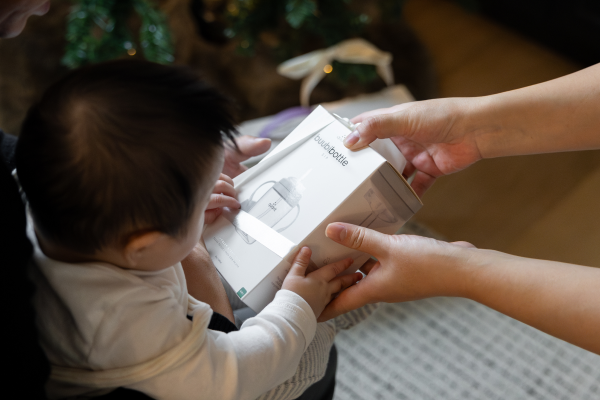
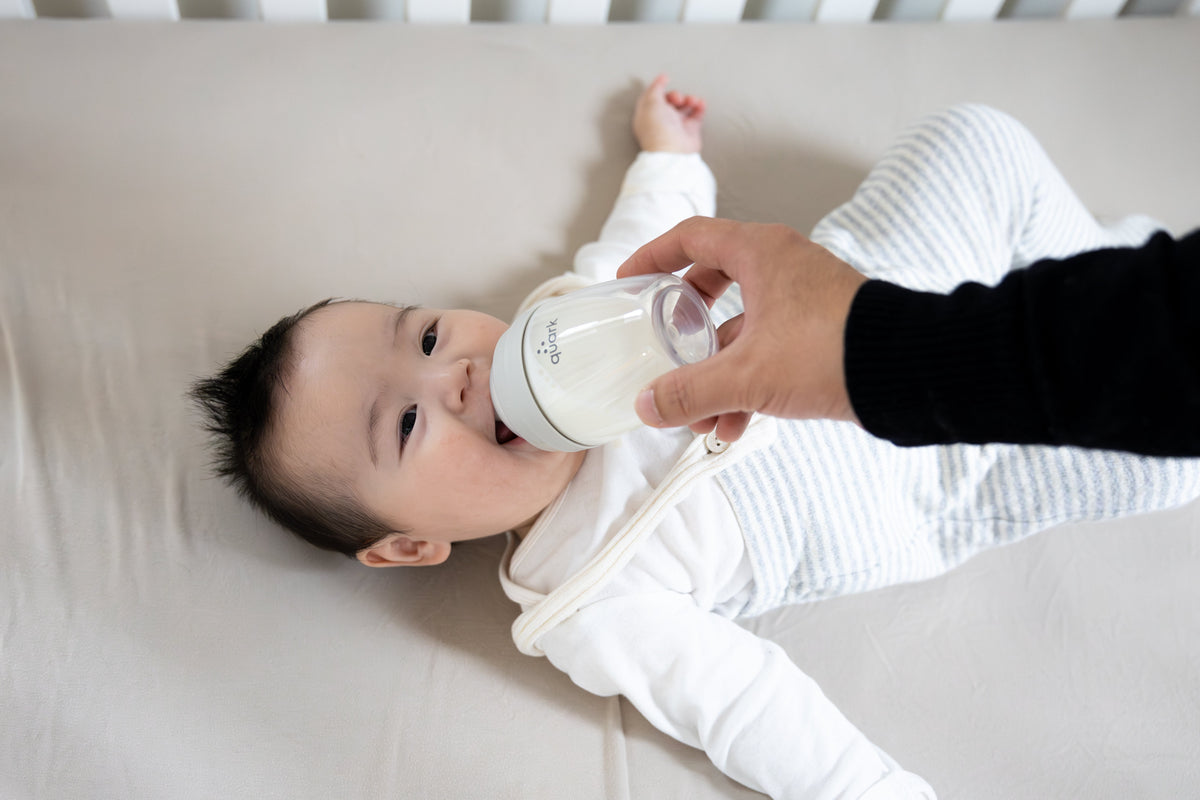
The BuubiBottle Mini uses Grilamid® TR-90, a BPA-free polyamide that is clear as glass but does not shatter on a kitchen floor, and it is dishwasher-safe. That combination is the reason we chose it: the honest weakness of glass is that people stop using it once the baby starts grabbing.
Size: buy small first
Newborns take very little at a time. A 4–5 oz bottle is right for the first months; an 8 oz bottle full of milk is mostly empty space and harder to angle correctly. Move up when your baby is regularly finishing the smaller size, which for many families is somewhere around four months.
If you would rather not buy twice, look for a system where nipples and collars fit both sizes, so upgrading means buying a body rather than starting over.
How many bottles do you actually need
- Occasional bottles, one feed a day or less: two or three bottles. You will wash between uses anyway.
- Regular combination feeding: four to six, so a full day fits between washes.
- Exclusive bottle feeding: six to eight, which is roughly one per feed plus spares.
Buy one bottle first and test it before buying the set. Babies have opinions, and a rejected six-pack is an expensive way to learn that. Buy spare nipples freely, though — they wear out long before bottles do, and a worn nipple flows faster than a new one of the same size, which quietly undoes your flow-rate decision.

Anti-colic vents, and what to expect from them
Vented bottles let air into the bottle instead of into your baby, which for some babies means less swallowed air and less gassiness. It is worth having, and it is not a cure. No bottle prevents colic or reflux for every baby, and any product that claims otherwise is overreaching.
The practical trade-off is parts. More vent components means more pieces to disassemble and wash after every feed. Fewer parts is a real feature at 3am. If you are choosing between two bottles that are otherwise equal, count the pieces.
What matters less than you would think
- Brand-specific "breast-like" claims. Unregulated language. Judge base width, slope, and flex.
- Colour and pattern. No effect on feeding.
- Temperature-change indicators. Pleasant, not decisive. Test on your wrist regardless.
- Buying the same bottle your friend loved. Bottle acceptance is individual. Their success is one data point, not a recommendation.
A short version
If you are pregnant or your baby has not had a bottle yet: buy one slow-flow, wide-base bottle in a 4–5 oz size, in whichever material suits your household. Try it. If your baby takes it, buy more of the same. If not, change the nipple before you change the bottle — that is the variable that usually matters. When it is time for the first bottle, our guide to introducing a bottle to a breastfed baby covers the timing and the technique.
Common questions
What is the best bottle for a breastfed newborn?
The one with the slowest flow and the widest, most flexible nipple base that your particular baby will accept. There is no single winner. Start with a 4–5 oz slow-flow bottle and treat the first one as a test rather than a commitment.
When should I move up a nipple flow size?
Only when your baby is clearly working too hard: long feeds, obvious effort, still hungry at the end. Age on the packaging is a guideline for formula-fed babies and is often too fast for breastfed ones. Many breastfed babies never move up.
Do I need to buy anti-colic bottles?
Not necessarily. They help some babies and do nothing for others, and they add parts to wash. If your baby is unusually gassy or windy after feeds it is worth trying one.
Are plastic bottles safe?
Modern bottles sold as BPA-, BPS-, PVC- and phthalate-free are considered safe by regulators. The bigger practical risk is damage: replace bottles that are cracked, cloudy, or deeply scratched, and avoid boiling or microwaving plastic bottles unless the manufacturer says it is fine.
How often should I replace bottles and nipples?
Nipples wear fastest — replace at the first sign of thinning, stickiness, discolouration, or a flow that has obviously sped up. Bottles last much longer, but replace any that are damaged.
Sources
- Centers for Disease Control and Prevention: About Feeding From a Bottle.
- Centers for Disease Control and Prevention: How to Clean, Sanitize, and Store Infant Feeding Items.
- US Food and Drug Administration: Bisphenol A (BPA) use in food contact application.
- Health Canada: Infant feeding and safe preparation of powdered infant formula.
This article is general parenting guidance and is not a substitute for advice from your own paediatric provider.
Medically reviewed by Dr. Yang Last reviewed August 6, 2026.


Leave a comment
All comments are moderated before being published.
This site is protected by hCaptcha and the hCaptcha Privacy Policy and Terms of Service apply.