

You have a car seat to load, a diaper bag already bulging, and a baby who will get hungry on their own schedule, whether you are at the park, at grandma's or stuck in a checkout line. On r/FormulaFeeders the question comes up again and again, and the top reply in one of the busiest threads sums up what most parents do: "Add the right amount of water to your bottles and bring the formula separately."
The simplest safe way to take formula on the go is to carry clean water and pre-measured powder separately and mix them only when your baby is ready to eat. A healthy, full-term baby older than 2 months can have that bottle at room temperature; the AAP says a bottle made with room-temperature water just before a feed needs no warming or refrigeration. For a baby under 2 months, born early, or with a weakened immune system, pack ready-to-feed liquid formula or bring water hot enough to prepare powder safely (around 158°F / 70°C). Once a bottle is mixed, the clock starts.
Below: the four ways parents actually carry formula, which water to use, whether warming matters, and a step-by-step plan for a full day out.
The four ways parents carry formula
Read the threads and you see four camps. Each one works. They differ in what you carry, how fast you can feed, and how long a bottle stays usable.
| Method | What you carry | When the clock starts | Best for |
|---|---|---|---|
| Water + pre-measured powder (our pick) | Bottles of water, powder in a dispenser or bags | At mixing, right before the feed | Healthy babies over 2 months, any length of outing |
| Ready-to-feed bottles | Sealed liquid formula, nipples | When opened | Newborns, high-risk babies, emergency backup |
| Pre-mixed bottles in a cooler | Fridge-cold bottles, cool bag, ice packs | At mixing at home; cool bag buys up to 2 hours | Short trips with a fridge at the other end |
| Powder + hot water | Powder, hot water in a flask or warmer, empty bottles | At mixing, then cool before feeding | Babies under 2 months on powder, or a baby who wants it warm |
| What most guides leave out | Which water for which baby | 2 h from mixing, 1 h from the first sip | Covered in the next two sections |
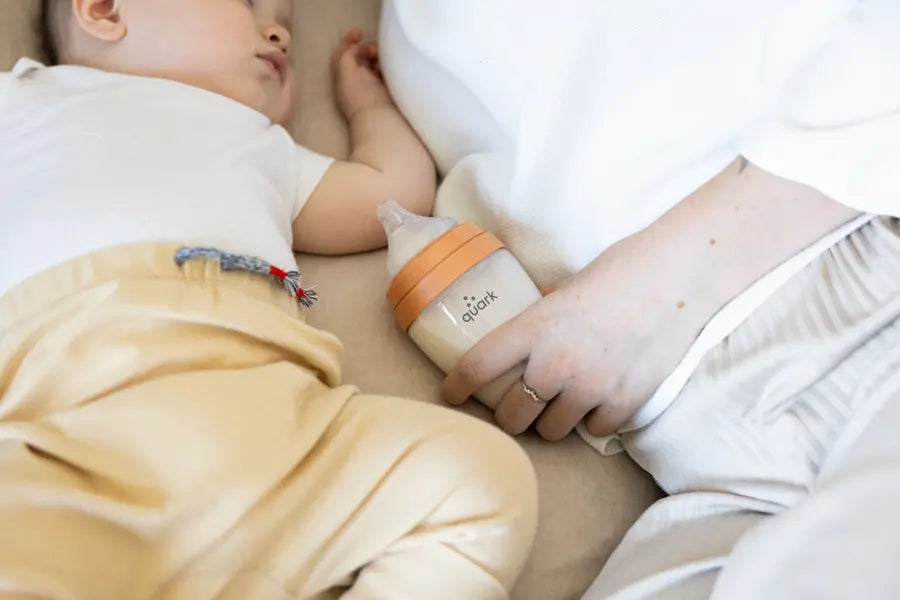
Our pick is water plus pre-measured powder, because nothing is mixed until the baby is hungry, so the clock never runs while you are driving. One parent described the setup that gets them "through most of a day": prefilled water bottles and a travel container holding three or four scoops per slot. Rotating stack dispensers, small screw-top tubs and even spare breast milk storage bags all work for the powder. Measure at home, where you can level each scoop properly.
Ready-to-feed formula is the easiest of all and the safest for the youngest babies, since Health Canada notes it is "heat-treated by the manufacturer to produce a formula that is sterile." The trade-off is cost; one parent called the bottles "pricey but worth it if it's not out of budget". Several parents in the threads who use powder at home still keep one sealed bottle in the diaper bag for the day a dispenser spills.
Pre-mixed bottles are where people get caught out. WHO guidance on transporting prepared feeds says to chill them in the fridge first, carry them in a cool bag with ice packs, and use them within two hours, "as cool bags do not always keep foods adequately chilled." That suits a 30-minute drive to daycare more than a full day at the zoo.
Which water: room temperature or hot?
This is the part most packing lists skip, and the official sources do not all agree.
For most babies, the AAP says a bottle "can be prepared by adding powdered formula and room temperature water from the tap just before feeding," as long as your local water is safe. Health Canada says the same for healthy full-term babies, using boiled water cooled to room temperature. So a bottle of safe water at room temperature, mixed at the bench or in the car, is fine for a healthy older baby.
The picture changes for babies who are younger than 2 months, were born before 37 weeks, or have a weakened immune system. Powdered formula is not sterile, and the CDC explains that "very hot water (around 158°F/70°C) is needed to kill these germs." For those babies, Health Canada goes further and recommends sterile liquid formula. On a day out that leaves two real choices: ready-to-feed, or water you can keep at 158°F / 70°C or hotter until you mix.
The WHO guidelines apply the hot-water rule to every baby and are the only source we found that spells out a day out: if you are going out for the day, carry individual portions of powder in clean containers, and "at the destination, hot water no less than 70 °C can be used to prepare the feed." Our take: follow the CDC, AAP and Health Canada split for a healthy older baby, and use the WHO method (or ready-to-feed) for a young or medically fragile one. If you are unsure which group your baby is in, ask your pediatrician before the trip, not at the picnic table.
Two cautions with hot water. First, a bottle mixed at 158°F is far too hot to drink, so you must cool it, capped, under cool running water or in a container of cold water, and test a few drops on your wrist: the CDC says it "should feel warm, not hot." Second, never microwave a bottle, at home or in a café.
Does the bottle need to be warm?
No, not for safety. The CDC states plainly that "infant formula does not need to be warmed before feeding." The AAP's parent guidance leans the other way for small babies, saying it is "best to warm formula for infants under 6 months old", while adding that older babies often "take room temperature formula just fine."
Real babies split the same way. One parent wrote, "We purposefully never warmed a single drop anywhere." Another said their daughter "needed perfectly warm formula". If yours drinks room-temperature bottles at home, do not start warming on outings; you will just add a step. If yours refuses anything cool, plan for warmth before you leave, because a screaming baby in a parking lot is a bad time to discover it.
The one thing warming never does is extend the clock. The CDC says to use prepared formula within 2 hours of preparation and within 1 hour of the first sip, and to throw out what is left. The WHO guidelines note that holding feeds in bottle warmers for long periods was reported as a probable cause of an infection outbreak, so warm the bottle you are about to give, not one for later. Our guide on how long a warmed bottle lasts covers the leftovers question in more detail.
Thermos or portable warmer: what each one is good for
The thermos is the classic answer, and it is a good one. One parent's whole method was "pre-measure the formula and take a thermos of warm water with you." A good vacuum flask is cheap, needs no charging and has no buttons. If a café will give you a mug of hot water, you can stand a sealed bottle in it, and as one parent put it, "hot water in a mug works soooo much faster" than many warmers.
The weakness of a flask is that you cannot see what is inside it. Water that left home hot slowly cools, and by mid-afternoon you have no way to tell whether it is still at 158°F for powder, merely warm, or close to scalding if you filled it fresh. We compared the two in more depth in portable bottle warmer vs thermos.
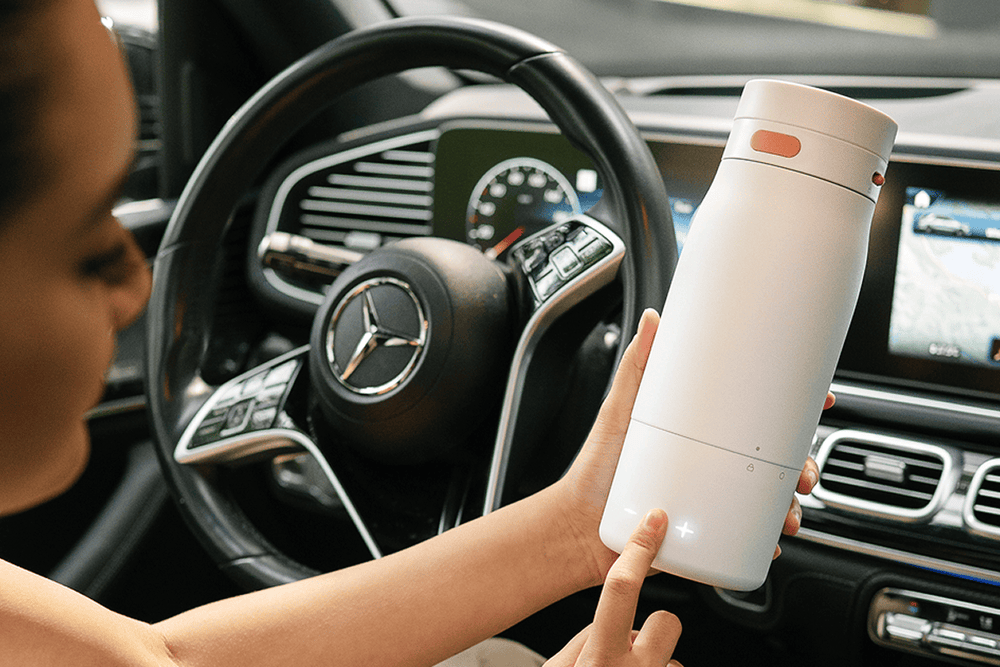
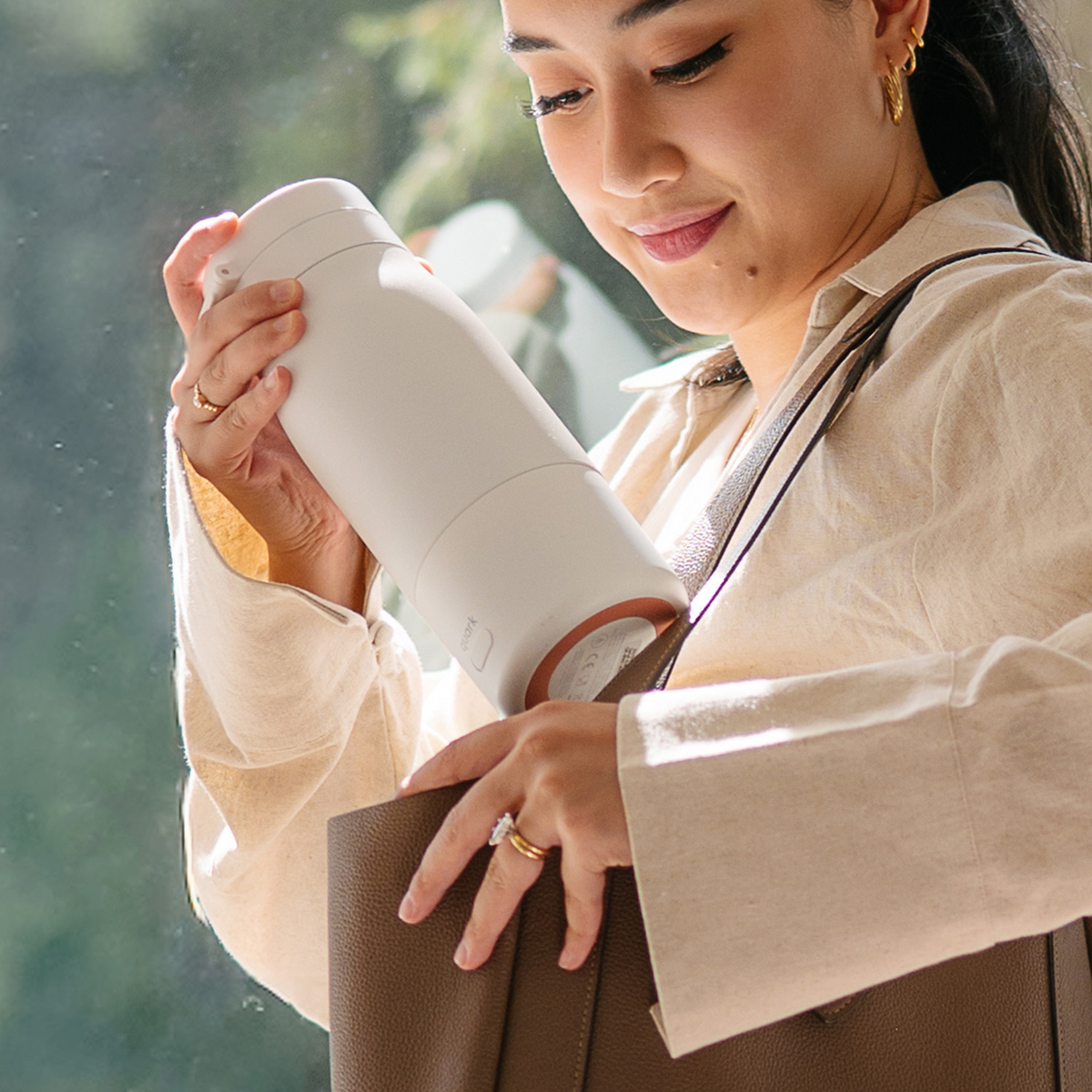
A portable warmer solves the guessing. The BuubiBottle Portable Milk Warmer PRO has a Formula Preparation Mode that heats water to 158°F (70°C), the temperature in the CDC and WHO guidance, and an illuminated display that shows the real temperature. For a baby who simply likes a warm bottle, you set your own temperature and it holds it to a single degree in °F or °C, remembering the setting next time. The wide opening fits most bottles, so you can stand a mixed, sealed bottle in warm water inside the vessel. It holds 17 oz in a vacuum-insulated stainless steel vessel, runs all day on a charge and recharges to 80% in about 90 minutes over 30W USB-C.
Be honest with yourself about the downsides. A warmer costs much more than a basic flask, it is one more thing to charge the night before, and it has one vessel: if you use it to make 158°F water for powder, you then cool the bottle the usual way rather than warming another one in it at the same time. For a healthy older baby who takes room-temperature bottles, you may not need either. Where the PRO pays off is the family that does this every week with a baby who wants it warm, or a newborn on powder whose water has to be hot enough.

BuubiBottle Portable Milk Warmer PRO
Formula Preparation Mode heats water to 158°F (70°C), and the display shows the real temperature, so you are not guessing at the park.
Shop BuubiBottle PROIf you only ever warm bottles and never need 158°F water, the original BuubiBottle Smart Portable Milk Warmer is the entry option: a 10 oz warmer that runs from 98°F to 122°F (37°C to 50°C) on a 10-hour USB-C battery. It tops out at 122°F, so it cannot make 158°F water for powder.
A day-out plan, step by step

The night before. Count the feeds you expect while you are out and add one. If your baby eats about every three hours and you will be gone for seven, that is two or three feeds, so pack four portions and four bottles of water. Wash the bottles and nipples and let them dry. Measure each feed's powder into its own compartment or bag and label the number of scoops. If you use a warmer, charge it. If your baby needs hot water, decide now whether you are packing ready-to-feed or the hot-water kit.
On the way out. Fill each bottle with the exact amount of safe water for one feed (or carry one large bottle of water and pour as you go). Put one sealed ready-to-feed bottle in the bag as a spare. Keep powder, water and bottles together in one pouch. The CDC says to store formula containers "not in vehicles," so do not leave the tub in a hot car for the week.
At the feed. Clean your hands, with soap and water if you can. Water goes in first, then the powder, as the WHO describes; cap and shake. If you used hot water, cool the capped bottle and check the temperature on your wrist. If your baby likes it warm, warm the mixed bottle now and test again.
After the feed. Note the time of the first sip. Whatever is left an hour later goes in the trash, not back in the bag. Put the used bottle in a zip bag and rinse it when you can.

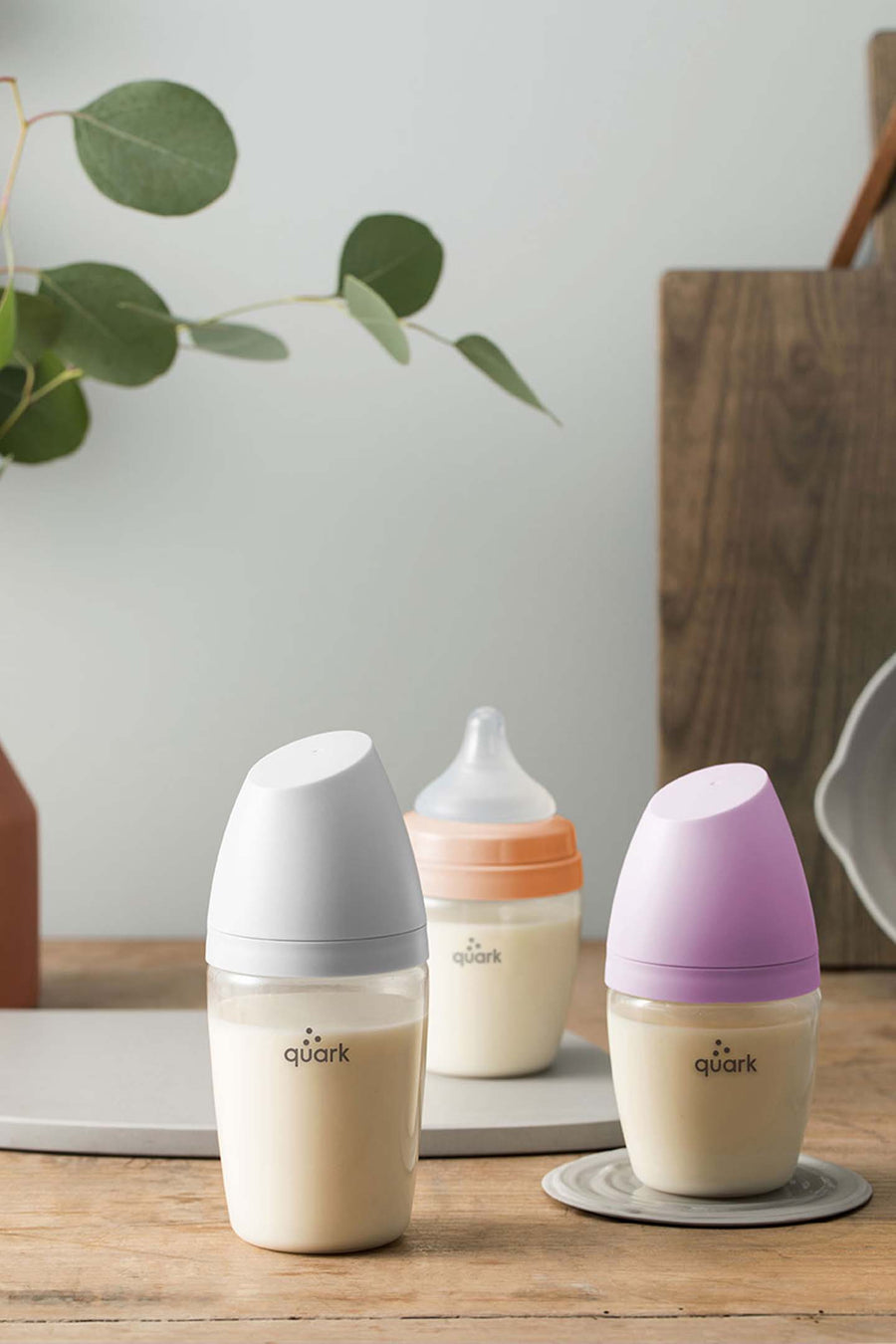
The bottle matters more than you would think on the go. A wide neck makes it easier to pour powder in without spilling half of it down the side, and a shatterproof body is one less worry if the bottle gets dropped. Our BuubiBottle Max is an 8 oz bottle with a wide neck and a lightweight, shatterproof body, sized for babies around 4 months and older. For the rest of the bag, our travel feeding kit checklist and diaper bag bottle kit cover the non-formula items.

BuubiBottle Max 8 oz
Wide neck for pouring powder in on the go, and a shatterproof body for the diaper bag.
Shop BuubiBottle MaxCommon questions
Should I pre-mix formula before leaving home?
No, not for a long outing. Carry water and powder separately and mix at the feed. If you do pre-mix, the WHO says to chill the bottles in the fridge first, carry them in a cool bag with ice packs and use them within two hours.
Can I use room-temperature water to make formula on the go?
Yes, for a healthy full-term baby, if the water is safe to drink. The AAP and Health Canada both allow it when the bottle is made just before the feed. For babies under 2 months, premature babies or babies with a weakened immune system, use ready-to-feed formula or water at 158°F / 70°C, as the CDC describes.
How long is a mixed bottle good for when we are out?
Up to 2 hours from mixing, and no more than 1 hour from your baby's first sip, per the CDC. The AAP also says to discard prepared formula within 1 hour after feeding. Throw out leftovers rather than saving them for the next feed.
Do I need a bottle warmer for days out?
It depends on your baby. If they drink room-temperature formula, no. If they insist on warm bottles, or you are making powder with 158°F water for a young baby, a warmer with a temperature display, like the BuubiBottle PRO, takes the guessing out of it.
Can I keep hot water in a thermos all day for formula?
It depends on the flask. Water slowly cools, and most flasks cannot tell you the temperature. If your baby needs 158°F water, you need a way to know the water is still that hot when you mix; otherwise ready-to-feed is the simpler choice.
What is the best formula dispenser for travel?
Any clean, dry container that holds one feed per compartment works. Parents in the threads use rotating stack dispensers, small screw-top tubs and spare breast milk storage bags. Choose one that pours cleanly into your bottle's neck; a wide-neck bottle makes this easier.
Sources
- Centers for Disease Control and Prevention: Infant Formula Preparation and Storage (page dated May 14, 2026).
- American Academy of Pediatrics, HealthyChildren.org: How to Safely Prepare Baby Formula With Water (last updated February 25, 2026).
- American Academy of Pediatrics, HealthyChildren.org: How Do I Mix and Serve Infant Formula for My Baby? (last updated March 23, 2018).
- Health Canada: Preparing and handling powdered infant formula (modified June 27, 2025).
- World Health Organization and FAO: Safe preparation, storage and handling of powdered infant formula: guidelines (2007), Part 3, sections 3.1.5 and 3.2.5.
- Parent discussions, r/FormulaFeeders: How are you taking formula on the go?, How should I pack formula for on the go?, Warming formula on the go.
Medical disclaimer: This article is for general informational purposes and is not a substitute for medical advice. Guidance reflects CDC, AAP, Health Canada and WHO publications as dated above. If your baby was born prematurely, is under 2 months old, has a weakened immune system or a medical condition, ask your pediatrician which formula preparation method is right for your baby. Portions of this content draw on AI assistance and are reviewed by a qualified medical reviewer before publication.
Medically reviewed by Dr. Yang. Last reviewed November 15, 2026.


Leave a comment
All comments are moderated before being published.
This site is protected by hCaptcha and the hCaptcha Privacy Policy and Terms of Service apply.