

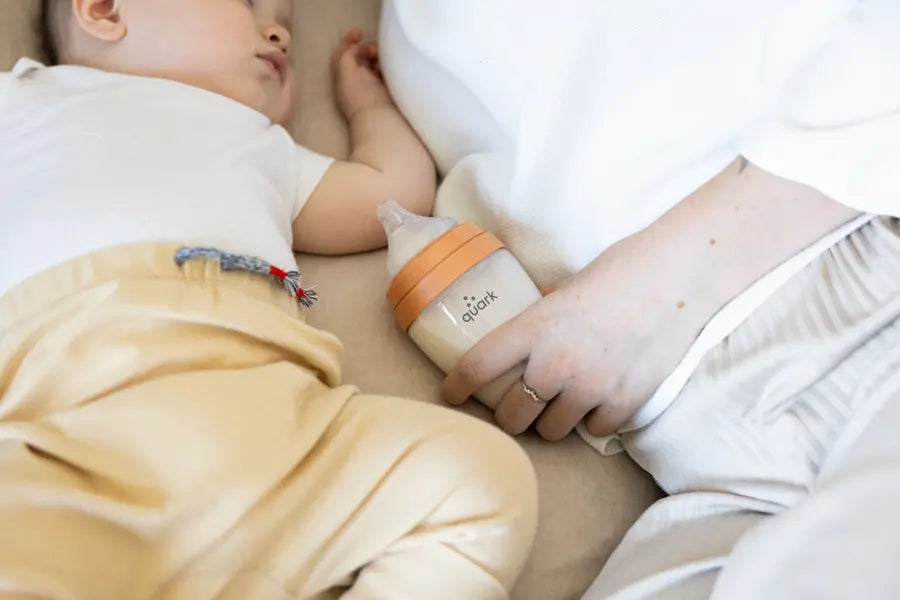
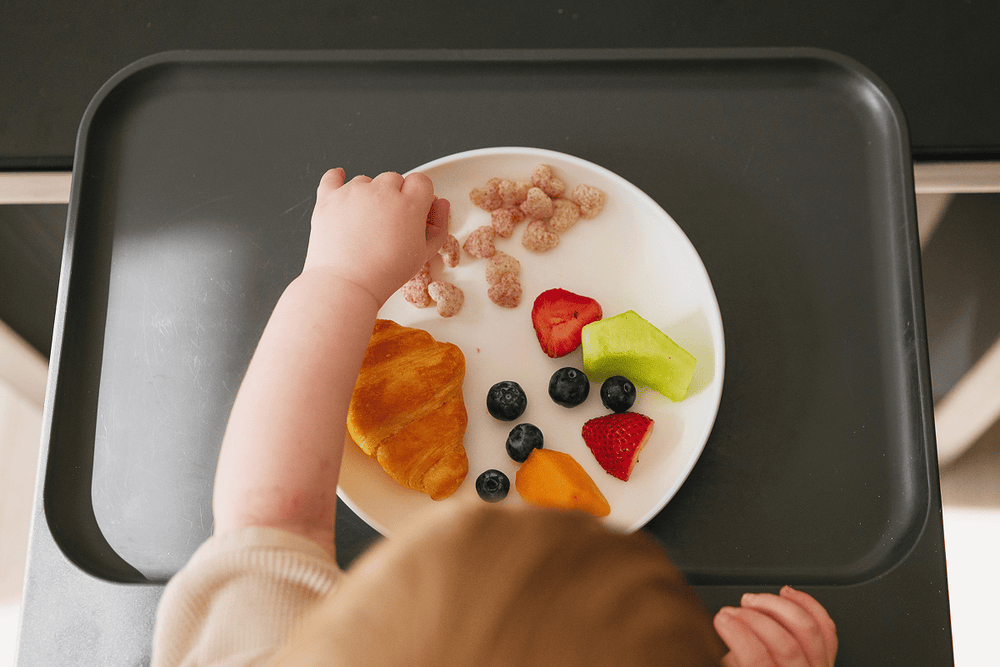
On r/BabyLedWeaning a parent asked a question that sounds simple: "When did you start decreasing bottles to increase solids?" The replies went everywhere. One parent said "Don't decrease bottles at all before 1 year old." Another, in the UK, was told food before 1 is "just for fun." A third dropped bottles at 10 months and wished they had started earlier. They cannot all be following the same advice, and it turns out they are not.
Keep milk feeds the same for the first weeks of solids, then let them shrink as your baby eats more, and most babies drop a first bottle somewhere between 8 and 12 months. UK guidance expects about 3 milk feeds a day by 10 months; the AAP's US sample menu still has about 24 ounces a day until the first birthday. Offer a cup from the first solid meal, drop a between-meal bottle before the bedtime one, switch formula to whole milk at 12 months, and finish with bottles between 12 and 18 months, as the AAP suggests.

The plan by age: milk feeds, amounts and the cup
The table puts the US numbers (AAP and CDC) next to the UK numbers (NHS) for a formula-fed baby. They are guides, not targets: a baby who is growing well can sit above or below them. Daily amounts include milk given in a cup. Breastfed babies adjust their own intake, as the NHS notes, so count feeds rather than ounces.
| Age | Solids | Milk: US (AAP) | Milk: UK (NHS) | Cup step |
|---|---|---|---|---|
| Around 6 months | Tastes, a teaspoon or two | 6 to 8 oz at each of 4 or 5 feeds | Usual milk feeds | Offer a cup at meals |
| 7 to 9 months | Moving toward 3 meals | From 8 months, about 24 oz a day | Around 4 feeds, about 600 ml (20 oz) | Milk or water in a cup at meals |
| 10 to 12 months | 3 meals, plus snacks | About 24 oz, over 4 to 5 servings | About 3 feeds, about 400 ml (13.5 oz) | Lidless cup practice from 9 months (CDC) |
| 12 months | Family meals, 2 snacks | Whole milk, about 16 oz a day | Formula not needed; cows' milk as main drink | Milk in a cup, not a bottle |
| 12 to 18 months | Family meals | Bottles finished by 18 months | Bottles discouraged from 1 year | Open cup by about 2 years |
The highlighted row is where most families in the thread dropped their first bottle, and it is where the two countries differ most. The AAP's sample menu for 8 to 12 months still has roughly 24 ounces of formula a day, served as 4 to 6 ounces at breakfast, a snack, lunch and dinner, plus a bedtime feed. The NHS expects about 600 ml (20 oz) from 7 months and about 400 ml (13.5 oz) from 10 months, over about 3 feeds. If your baby is drinking somewhere between the two, you are inside the range that two national health services consider normal. The NHS adds that babies having less than 500 ml (about 17 oz) of formula a day should take vitamin A, C and D supplements, so if your baby's milk drops that low before 12 months, ask your pediatrician whether that applies to you.
Why the advice you hear is so different
Three things split the replies in that thread, and once you see them the conflicting advice makes sense.
- Country. The UK parent who heard "food before 1 is just for fun" was not wrong about the spirit: the NHS says babies still get most of their energy from milk in the first months of solids. But the same NHS page has milk feeds coming down from 7 months. "Just for fun" describes the start of solids, not the whole year.
- Feeding style. One parent put it plainly: baby-led weaning "takes a lot more time and practice before actually weaning" than spoon-feeding purées, where babies "eat more and faster." A baby feeding themselves soft finger foods may eat very little for weeks, so milk stays higher for longer. That is expected. Our guide to baby-led weaning vs spoon-feeding compares the two.
- Schedule or cues. A parent who dropped bottles at 10 months realised "we were on a schedule instead of following his hunger cues." A fixed bottle schedule can hold milk up after your baby is ready to take less.
"Don't decrease bottles at all before 1" goes further than either the AAP or the NHS. Neither asks you to cut milk on purpose in the early months, but both expect it to fall as food rises. The CDC says it in one line: "As your baby gradually eats more solid foods, they will gradually need less infant formula."
In the early weeks, a seated, supervised baby working a soft food through a feeder like Fruuti is learning to eat, not replacing a bottle. Our page on starting solids with a fruit feeder covers what to put in it, and the readiness signs come first.
Milk first or food first, and when to switch
This is the question that confuses parents most, because the answer changes over a few months.
At the very start, a little milk first is fine. The AAP suggests giving "a little breast milk, formula or both first," then small half-spoonfuls of food, then more milk, so your baby is not frustrated by hunger. One parent explained why it helps: a bottle "an hour or so before a mealtime" can take the edge off, because a baby who is starving and does not yet know how to eat will not explore.
Then food moves in front. The NHS advises offering food before the usual milk feed, but not waiting until your baby is too hungry. The top-voted reply in the thread said the same: "Just offer her solids before the bottle when she's hungry. She'll eat what she eats. Then offer the bottle." Parents in the thread made that switch anywhere from about 9 to 12 months, usually once their baby was eating at two or three meals.
Our view: switch to food first once your baby is eating real amounts at two meals a day, and keep offering milk straight after those meals. You are not taking milk away. You are changing the order so your baby comes to the table hungry.
Which bottle to drop first
The AAP's bottle-to-cup advice is to keep bottles at mealtimes at first and drop the others, "especially naps or bedtime," over time. The NHS's 10-month pattern shows the same shape: about 3 milk feeds, for instance after breakfast, after lunch and before bed. Put together, this is the order that works for most families:
- A mid-morning or afternoon bottle between meals. Swap it for a snack plus water in a cup. One parent dropped the post-nap feed at about 10 months and replaced it with a mid-afternoon snack.
- The lunchtime bottle. Move the milk into a cup at the table. The parent who dropped bottles at 10 months found they could drop the lunch bottle "if we put formula in a cup for lunch."
- The morning bottle. Often the biggest one. Serve it in a cup with breakfast once the cup is going well.
- The bedtime bottle, last. It is the comfort feed, so it goes last. The AAP says not to put your baby to bed with a bottle. Our guide to night feeds by age covers the night bottle step by step.
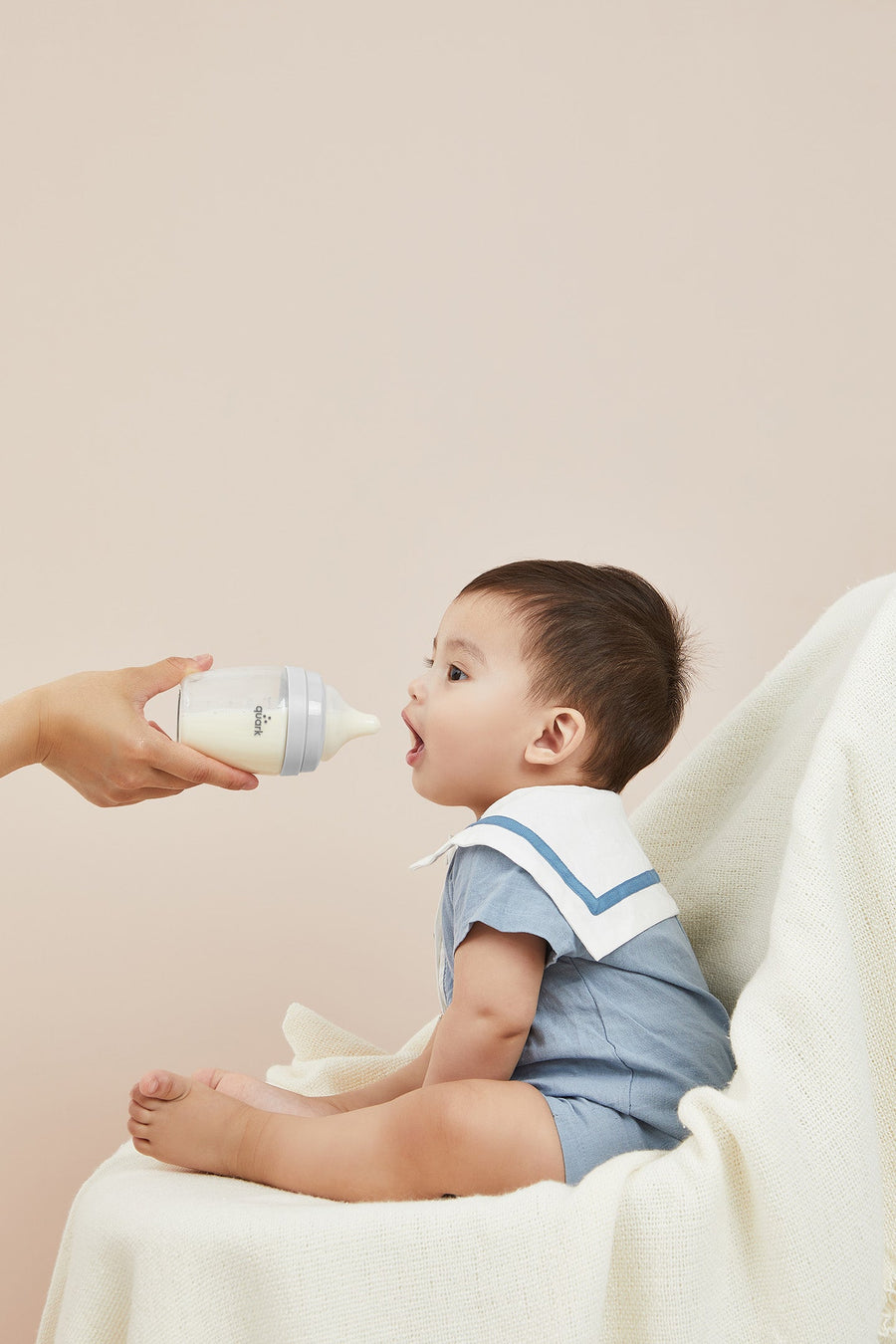
Go one bottle at a time and give each change several days before the next. If your baby's feeds have already shrunk to 4 or 5 ounces, a smaller bottle like the 5 oz BuubiBottle Mini means less milk poured away; at 6 ounces or more it is too small. Our Mini vs Max size guide shows which size fits which feed.
Moving milk into a cup
The AAP recommends offering a cup when solids start, usually around 6 months, and suggests filling it with whatever your baby already drinks, breast milk or formula, because that feels more natural than starting with water. The CDC says babies can start learning a cup without a lid at 9 months and can drink from one you hold at about 12 months. Water is a small add: 4 to 8 ounces a day between 6 and 12 months, and the AAP notes it is "unlikely to replace much breast milk or formula." No juice before 12 months.

Expect protest. The AAP calls it "totally normal." Two things help, both from parents who got through it. One offered milk "as a drink with his meals so he gets used to the milk not being the main thing." Another, with an 8-month-old who "doesn't want to sit and drink," started putting milk in a straw cup with meals to get a bit more in.
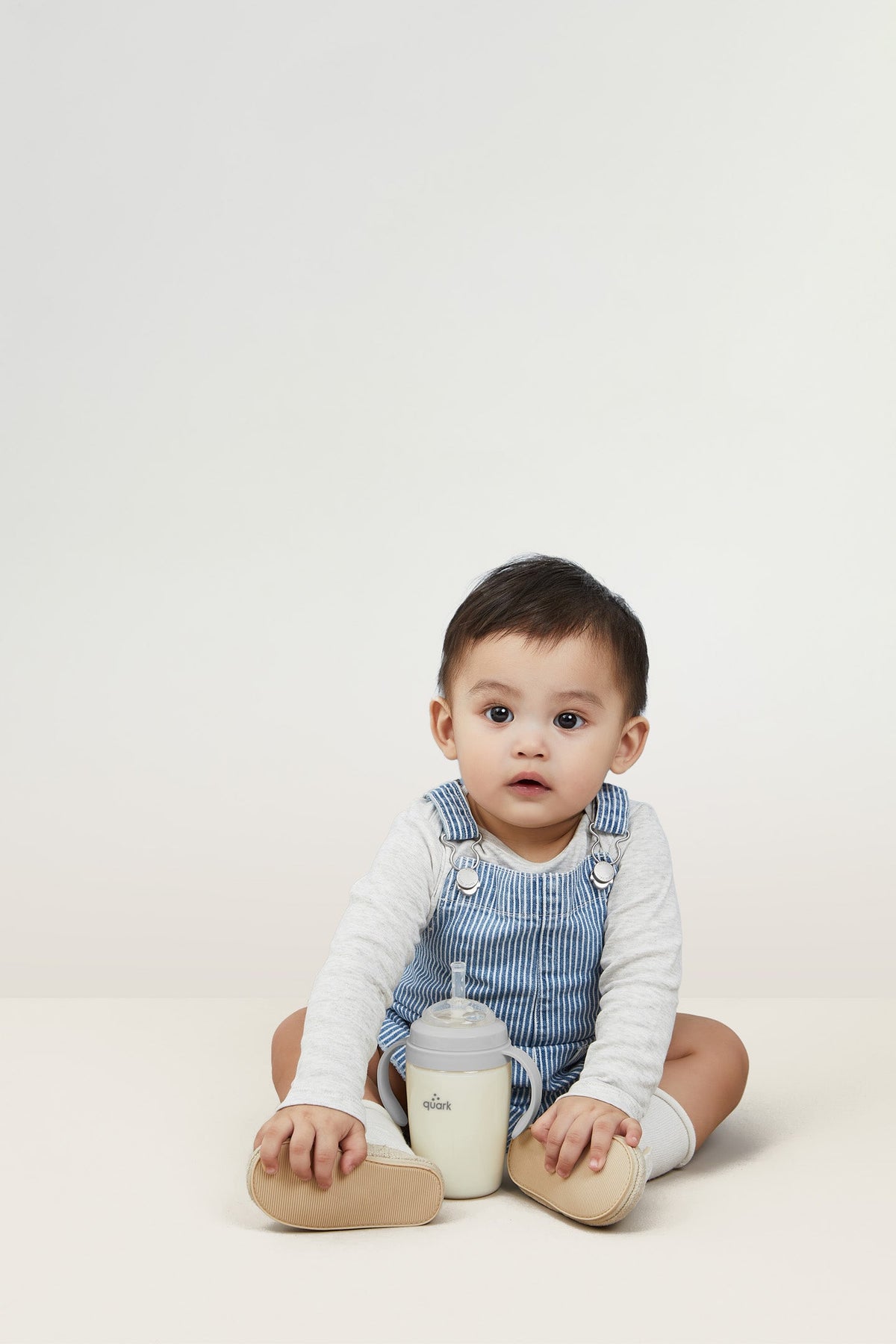
Which cup? The AAP lists a spouted sippy cup, a cup and straw, or an open cup, and wants children drinking from an open cup by about 2 years. The NHS prefers an open cup or a free-flow cup without a valve, so your baby learns to sip rather than suck. We make a straw cup, the BuubiBottle Sip, and to be straight about it: it is a leak-proof straw cup, not an open cup. It works best as the cup that travels in the bag and the car, with an open cup at the table for practice. If you already use BuubiBottle Mini or Max, the Sip shares parts with them, so the cup feels familiar. Our sippy, straw and open cup guide shows how to teach each one, and our straw cup comparison names the other options.

BuubiBottle Sip
Toddler straw cup made for the bottle-to-cup move: soft straw, easy-grip silicone collar, leak-proof lid, shatterproof Grilamid TR-90 body, dishwasher-safe.
Shop BuubiBottle SipSigns it is going well, and when to call
Many parents in the thread worried when their baby started taking less milk. One messaged their pediatrician and was told "this just happens as they eat more solids." Signs the change is on track:
- Your baby comes to meals interested and eats more over the weeks.
- They leave milk in the bottle after a good meal, or get distracted partway through (the AAP reads fidgeting as being finished).
- Growth at checkups stays on its usual curve.
Talk to your pediatrician if your baby is refusing both food and milk, has fewer wet diapers than usual, seems unwell, or if growth checks raise a question. If your baby was born early or has a medical condition, ask before you change feeds. When a toddler is sick and turning down drinks, our sick toddler guide covers fluids and when to call.
At 12 months: from formula to whole milk
The CDC says that at 12 months you can switch from infant formula to plain whole cow's milk, gradually, starting by replacing one formula feed with milk. The AAP's drinks chart lists about 16 ounces (2 cups) of milk a day for 12 to 24 months. More is not better: the CDC warns that a child who drinks too much cow's milk may not be hungry for other foods, and its milk page adds that too much may make it harder to absorb iron from food. This is a good moment to serve that milk in a cup: the NHS says feeding from a bottle should be discouraged once your baby is 1. You do not need a toddler milk or "next stage" formula either; the AAP calls them unnecessary for most children.
Common questions
Should I cut bottles as soon as my baby starts solids?
No. In the first weeks your baby still gets most of their nutrition from milk, as both the AAP and NHS say. Keep milk feeds as they were and let them fall on their own as your baby eats more. Most changes in the thread came between 8 and 12 months.
Should I give the bottle before or after solids?
It depends on how far into solids you are. At the start, a little milk first stops hungry frustration, as the AAP suggests. Once your baby is eating at two meals or more, offer food first and milk straight after, as the NHS advises.
How many bottles should a 9-month-old have?
It depends on whose guide you follow. The NHS describes around 4 milk feeds a day from about 7 months, falling to about 3 from about 10 months. The AAP's sample menu for 8 to 12 months spreads about 24 ounces over 4 to 5 servings, some of which can be in a cup. The CDC counts meals and milk together: formula or solid food about 5 to 6 times in 24 hours.
Is it normal for my baby to drink less milk when eating more food?
Yes. The CDC says babies gradually need less formula as they eat more solid food. If growth is on track and your baby is otherwise well, falling milk intake is what is supposed to happen. If milk drops below about 17 ounces (500 ml) a day before 12 months, ask your pediatrician about vitamins, which the NHS recommends at that level.
Can I put formula in a sippy or straw cup?
Yes. The AAP suggests starting cups with the formula or breast milk your baby already drinks. Keep it to mealtimes so the cup does not become an all-day sipper.
When should my baby stop using bottles completely?
The AAP says to finish the move from bottle to cup sometime between 12 and 18 months. The NHS discourages bottles once your baby is 1. The bedtime bottle usually goes last.
Our picks for the bottle-to-cup year: a straw cup for milk and water on the go, a smaller bottle for shrinking feeds, and a feeder for early solids practice.
BuubiBottle Sip
Our pick for milk and water on the go: a leak-proof straw cup for the bottle-to-cup year.
Shop Sip

Fruuti Fruit Feeder
Silicone twist-to-feed feeder for seated, supervised first-food practice.
Shop FruutiSources
- American Academy of Pediatrics, HealthyChildren.org: From Bottle to Cup: Helping Your Child Make a Healthy Transition (last updated July 3, 2023).
- American Academy of Pediatrics, HealthyChildren.org: When Can Babies Start Solid Foods? (last updated June 23, 2026).
- American Academy of Pediatrics, HealthyChildren.org: Sample Menu for a Baby 8 to 12 Months Old (last updated June 18, 2025).
- American Academy of Pediatrics, HealthyChildren.org: Amount and Schedule of Baby Formula Feedings (last updated May 16, 2022).
- American Academy of Pediatrics, HealthyChildren.org: Recommended Drinks for Children Age 5 and Younger (last updated October 3, 2023).
- Centers for Disease Control and Prevention: How Much and How Often to Feed Infant Formula (April 21, 2026).
- Centers for Disease Control and Prevention: Fingers, Spoons, Forks, and Cups (March 11, 2026).
- Centers for Disease Control and Prevention: Foods and Drinks to Encourage (April 1, 2026) and Cow's Milk and Milk Alternatives (April 16, 2026).
- NHS: Your baby's first solid foods (page last reviewed February 19, 2026).
- NHS: Drinks and cups for babies and young children (page last reviewed October 5, 2022).
- Parent discussions: r/BabyLedWeaning When did you start decreasing bottles to increase solids? and r/FormulaFeeders When to start solids?
Medical disclaimer: This article is for general informational purposes and is not a substitute for medical advice. Feeding amounts reflect AAP, CDC and NHS publications as dated above; they are guides, and healthy babies vary. If your baby was born prematurely, has a medical condition, is not growing as expected, or if you have questions about milk amounts, vitamins or allergies, ask your pediatrician. Parent quotes come from a public forum and describe their own experience, not medical advice. Portions of this content draw on AI assistance and are reviewed by a qualified medical reviewer before publication.
Medically reviewed by Dr. Yang. Last reviewed November 22, 2026.


Leave a comment
All comments are moderated before being published.
This site is protected by hCaptcha and the hCaptcha Privacy Policy and Terms of Service apply.