

Quick answer: Baby-led weaning means your baby self-feeds soft, graspable finger foods from around 6 months, while spoon-feeding means a parent offers smooth purées. Neither is medically superior — both grow healthy eaters when meals are iron-rich and supervised. Many families combine the two. Choose based on your baby’s readiness signs and what feels right for your family.
By Katie Gaston, Parenting & Feeding Writer, Quark Baby. Information reviewed against AAP guidance.
Choosing how to introduce solids can feel overwhelming, with conflicting advice from relatives and endless online debate. This guide walks you through baby-led weaning (BLW) and spoon-fed weaning so you can decide with confidence. The honest answer: the right method is the one that works for your family.
Baby-led weaning vs. spoon-feeding at a glance
| Dimension | Baby-led weaning (BLW) | Spoon-feeding (purées) |
|---|---|---|
| Readiness age | ~6 months, once baby sits upright with head control | ~6 months (occasionally slightly earlier with a pediatrician’s advice; never before 4 months) |
| Who leads | Baby leads — picks up and self-feeds finger foods | Parent leads — offers food on a spoon |
| Choking risk & management | Safe when foods are soft and finger-length; gagging is common and protective; supervise upright | Lower perceived risk early on; still avoid lumps too soon and always supervise |
| Mess | High — expect more cleanup | Lower — more contained |
| Iron intake | Requires intentional iron-rich finger foods (meat, lentils, fortified options) | Easy to track; iron-fortified cereals and purées are simple to measure |
| Self-regulation | Strong — baby controls pace and quantity | Parent controls pace; watch for overfeeding cues |
| Convenience | Baby eats a soft version of the family meal; less separate prep | Requires puréeing or buying purées; tidier on the go |
Is baby-led weaning better than spoon-feeding?
No. Neither method is medically “better.” Babies thrive on both when meals are nutrient-dense and iron-rich, and both the AAP endorse responsive feeding — following your baby’s hunger and fullness cues — regardless of texture. BLW supports hand-eye coordination, chewing skills, and self-regulation by letting baby control how much they eat. Spoon-feeding makes it easier to track exact intake of iron and calories and reassures parents anxious about choking. Most families land somewhere in between.
What baby-led weaning looks like
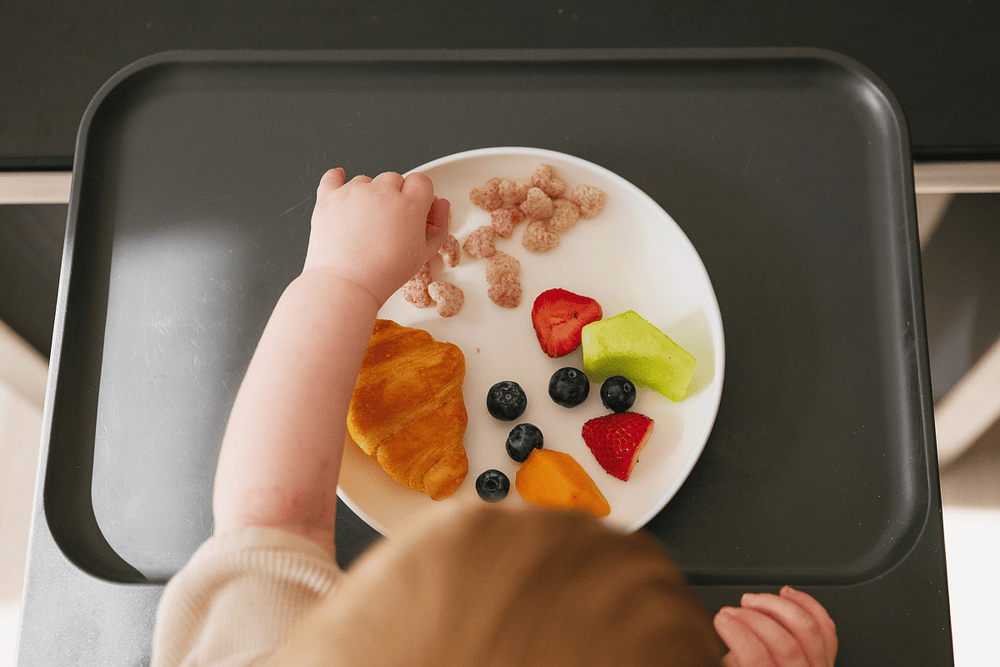
- Baby self-feeds soft, graspable foods instead of purées from day one
- Encourages motor coordination, chewing, and independence
- Baby joins family meals, supporting social learning
- Trusts your baby’s ability to self-regulate intake
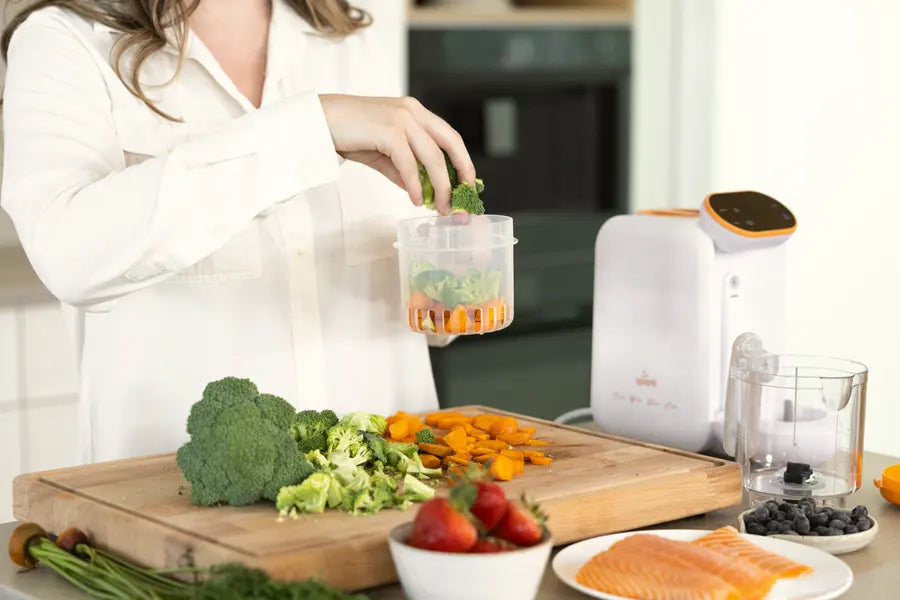
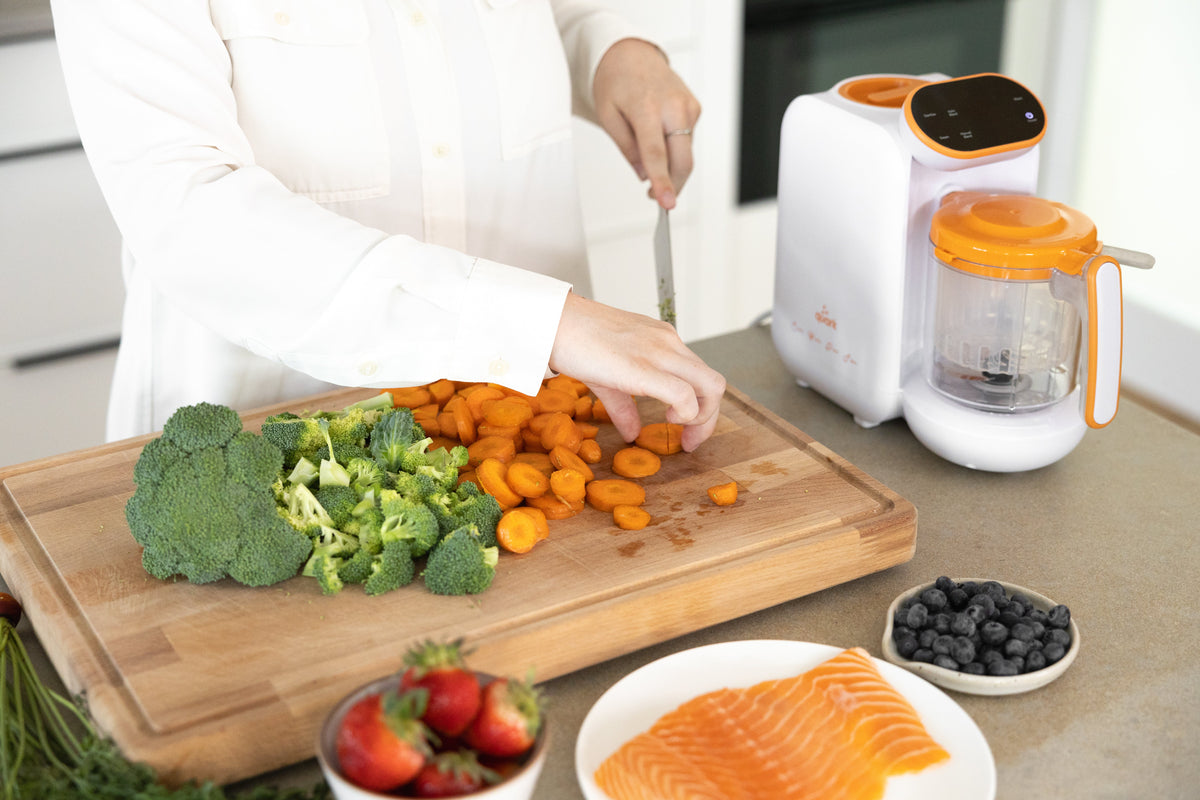
Great early BLW foods: steamed carrot or sweet-potato sticks (soft enough to mash with light pressure), ripe avocado spears, soft-cooked broccoli florets, banana spears, scrambled-egg strips, and soft lentil patties.
What spoon-feeding looks like
- Parent-led feeding using a spoon, typically starting with smooth purées
- Easier to measure nutrient and calorie intake
- A gradual, traditional texture progression
- Often feels lower-stress for first-time parents worried about gagging
Common spoon-fed first foods: iron-fortified infant cereal, sweet-potato purée, pear or apple mash, butternut-squash purée, and blended lentils or peas. With either method, progress toward lumpier textures by 9–10 months to keep developing oral-motor skills.
A suction-grip dining set keeps the bowl or plate anchored whether your baby is grabbing finger foods or you are spooning purées — our Feedi silicone dining set is built for this stage, with a strong suction base that resists tipping and gum-friendly utensils for early self-feeding.
Is baby-led weaning safe, or a choking risk?
Yes, when you follow safe-food rules. Research does not show BLW causes more choking than spoon-feeding. The most important skill is telling two things apart:
- Gagging is normal and protective. It is loud, can look dramatic, and moves food forward. Stay calm and let your baby work it out.
- Choking is rare but serious. It is silent — the baby can’t cough, cry, or breathe — and needs immediate intervention. Learn infant first aid before starting solids.
Readiness signs before any solids (~6 months)
- Sits upright with steady head and neck control
- Has lost the tongue-thrust reflex that pushes food back out
- Brings hands and objects to the mouth and shows interest in your food
The AAP advise starting solids around 6 months and never before 4 months.
Golden safety rules
- Always supervise — never leave your baby alone while eating
- Seat your baby fully upright, never reclined
- Serve soft, finger-length pieces; cut round foods so they can’t lodge in the airway
- Offer one new food at a time and watch for allergic reactions
Foods to avoid (choking hazards)
- Whole or round grapes and cherry tomatoes (quarter them lengthwise)
- Whole nuts and large globs of nut butter
- Hard, raw vegetables like raw carrot or apple
- Popcorn, hard candy, and chunks of hot dog
Soft, controlled-texture foods make early solids safer. A twist-to-eject feeder like Fruuti lets your baby gum soft fruit or steamed veg through a silicone tip — a reassuring way to introduce new flavors while you build confidence around gagging vs. choking.
Iron, texture, and timing
Between 6 and 12 months your baby’s iron stores start running low, so every meal is a chance to boost iron — whichever method you use. Iron-rich first foods include well-cooked beef or dark poultry, lentils, tofu, eggs, and iron-fortified infant cereal. Pair plant-based iron with vitamin-C foods to improve absorption, and aim to progress to more complex textures by 9–10 months.
Can you combine baby-led weaning and purées?
Yes. And many families do. Combination feeding is safe and gives you the best of both: spoon-feed iron-rich purées for guaranteed nutrients while offering soft finger foods on the side; let baby self-feed when they show interest; use purées for nutrients you’re concerned about and finger foods for exploration. Adapt as your baby grows — this is not a permanent decision.
Which weaning method is best for your baby?
The best method fits your situation. Weigh your baby’s personality (eager explorer vs. gradual starter), your own comfort level (your anxiety affects mealtimes), practical factors like schedule and support, and any medical needs your pediatrician has flagged. You can always adjust as your baby develops.
Frequently asked questions
Is baby-led weaning better than spoon-feeding?
No. Neither method is medically “better.” Babies who self-feed and babies who are spoon-fed both grow well when meals are nutrient-dense and iron-rich, and the AAP endorse responsive feeding either way. The right choice fits your baby’s readiness and your family’s comfort, and many parents combine both.
At what age can a baby start baby-led weaning?
Around 6 months, and only when your baby shows readiness signs: sitting upright with steady head control, bringing objects to the mouth, and showing interest in food. The AAP advise waiting until close to 6 months and never starting solids before 4 months.
Is baby-led weaning a choking risk?
No, not when you follow safe-food guidelines. Studies do not show baby-led weaning causes more choking than spoon-feeding. The key is distinguishing gagging (loud, normal, protective) from choking (silent, no air movement), serving soft finger-length pieces, and always supervising an upright baby. Avoid hard, round, or sticky foods.
Can you combine baby-led weaning and purées?
Yes. Combination feeding is common and safe. Many parents spoon-feed iron-rich purées for guaranteed nutrient intake while offering soft finger foods for self-feeding practice. The AAP supports a flexible, responsive approach with either texture.
Sources
- American Academy of Pediatrics (HealthyChildren.org), Starting Solid Foods.
Medically reviewed by Dr. Yang This article is general parenting guidance and is not a substitute for advice from your own pediatric provider. If your baby has symptoms that concern you, contact your provider.



Leave a comment
All comments are moderated before being published.
This site is protected by hCaptcha and the hCaptcha Privacy Policy and Terms of Service apply.