

A parent on r/FormulaFeeders posted "i want to formula feed my second." They had breastfed their first son for two years, and when they tried adding bottles he preferred the breast and gagged at the bottle. So for baby number two: "this time i would js prefer formula feeding from the start it was exhausting." Their worries were practical ones: cleaning bottles, sterilising, packing for outings. Most of the replies answered those, not the choice itself.
If you are formula feeding your second baby from day one, decide four things before the birth: which formula you will use in week one, how you will prepare it, how you will clean bottles, and who takes which night feeds. Ready-to-feed liquid is the simplest start because it needs no water and is made sterile. If you use powder while your baby is under 2 months, the CDC asks for very hot water. Expect 1 to 2 ounces per feed in the first days, fed on hunger cues.

What is different when it is your second baby
You have done the newborn weeks before, so the sleep loss and the cluster feeds are not news. Three things change this time, and they shape the plan more than the formula brand does.
- Your hands are not free. A toddler wants you at feed times too, so every step has to work one-handed and fast: bottles you can pour, not mix, in the first days, and a night setup that does not mean leaving the bedroom.
- The kit is new even if the baby stuff is not. If you breastfed your first, you may own no bottles at all, or a few from pumping. If bottles from your first child are in the cupboard, look them over before reusing them, and bin anything cracked or any nipple that is torn or sticky.
- You need a plan for your own body. After breastfeeding a first child, choosing formula this time means asking your midwife or doctor ahead of time what to expect when your milk comes in.
Our formula feeding guide covers the formula types in general. This page is the week-one plan.
Which formula to use in week one: ready-to-feed, concentrate or powder
Formula comes in three forms, and they are not equally easy at 3 a.m. with a newborn. The difference that matters most in week one is the extra step public health agencies ask for when a baby is under 2 months old, was born before 37 weeks, or has a weakened immune system. Powdered formula is not sterile and can carry germs such as Cronobacter. The CDC notes that these infections are rare but can be life-threatening in newborns, and that they usually happen in the first days or weeks of life.
| Format | What you do at a night feed | Sterile? | Extra step under 2 months | Once opened or mixed |
|---|---|---|---|---|
| Ready-to-feed liquid (our week-one pick) | Pour into a clean bottle; add no water | Made sterile | None | Opened container: covered, in the fridge, out after 48 hours |
| Liquid concentrate | Mix with water exactly as the label says | Liquid is; the water you add is not | Use a safe water source | Opened container: 48 hours in the fridge |
| Powder with very hot water | Boil, wait about 5 minutes, mix, cool before feeding | Powder is not; hot water kills the germs | This is the extra step | Use within 2 hours, or fridge and use within 24 |
| Powder with room-temperature water | Scoop into measured water just before the feed | No | Not advised under 2 months | Use within 2 hours, or fridge and use within 24 |
For week one we pick ready-to-feed. It has no water to boil and no powder to measure, and the CDC suggests considering liquid ready-to-feed formula when possible, especially for babies at higher risk. The trade-off is cost, so look at the price per ounce on the shelf before you stock up. Plenty of parents do what one in the thread did: "I did RTF (ready to feed) in the hospital and for the first few weeks. Then switched to powder."
If you go with powder from the start, the CDC's method for young babies is to heat water to around 158°F (70°C) by boiling it and waiting about five minutes (its Cronobacter page says no longer than 5) before mixing. Measure the water first, add the powder, and let the bottle cool before feeding. Use the amount of water the label gives; the AAP warns that watering formula down is dangerous. Once your baby is past 2 months and healthy, the AAP says a bottle can be made with room-temperature tap water and powder just before a feed, with no warming needed.
How much formula a newborn drinks in the first week
Less than most people expect. For a baby getting only formula, the CDC suggests starting with 1 to 2 ounces every 2 to 3 hours in the first days, and says most formula-fed newborns feed 8 to 12 times in 24 hours. The AAP puts the first week at no more than about 1 to 2 ounces per feed, building to 3 to 4 ounces per feed over the first month.
Those numbers are a starting point, not a target to hit at every feed. The top reply in a thread about how much formula a 5-week-old needs put it bluntly: "feed her until she’s satisfied and calibrate from there. She’s telling you what she needs." That matches the CDC, which says babies generally take what they need and stop when full, and to give more if they show signs of hunger. The AAP's signs: a baby who gets fidgety or distracted is probably finished; one who drains the bottle and keeps smacking their lips may still be hungry. Our guide to hunger cues has the full list.
The other side matters too. Some newborns are sleepy. The AAP says that if your baby sleeps longer than 4 to 5 hours in the first few weeks and starts missing feeds, wake them and offer a bottle. One parent's advice was to ask your provider about "3 hours (or maybe a bit longer for the first stretch at night) as a *maximum* time between feeds". Feeding slowly, with the baby upright and pauses built in, helps you see when they have had enough. Paced bottle feeding walks through it.
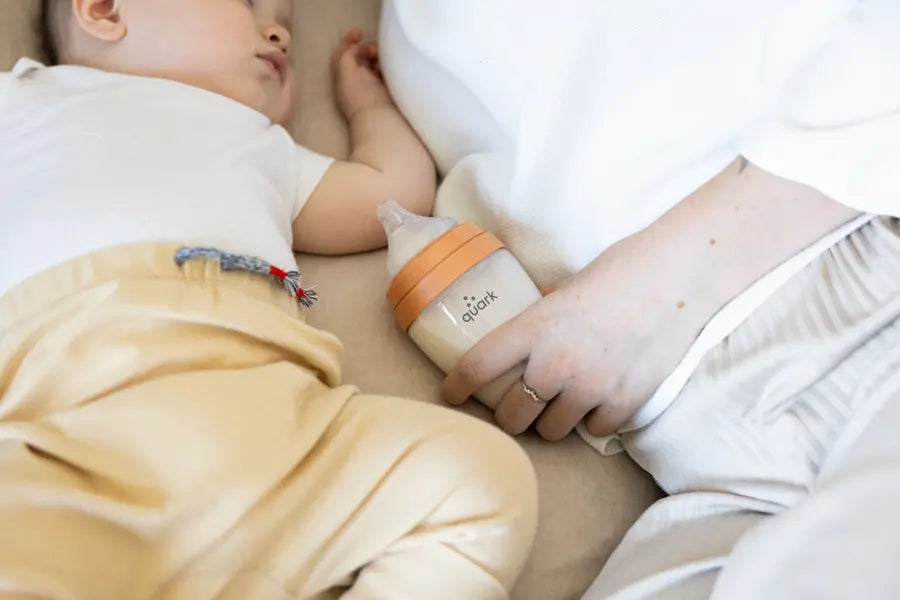
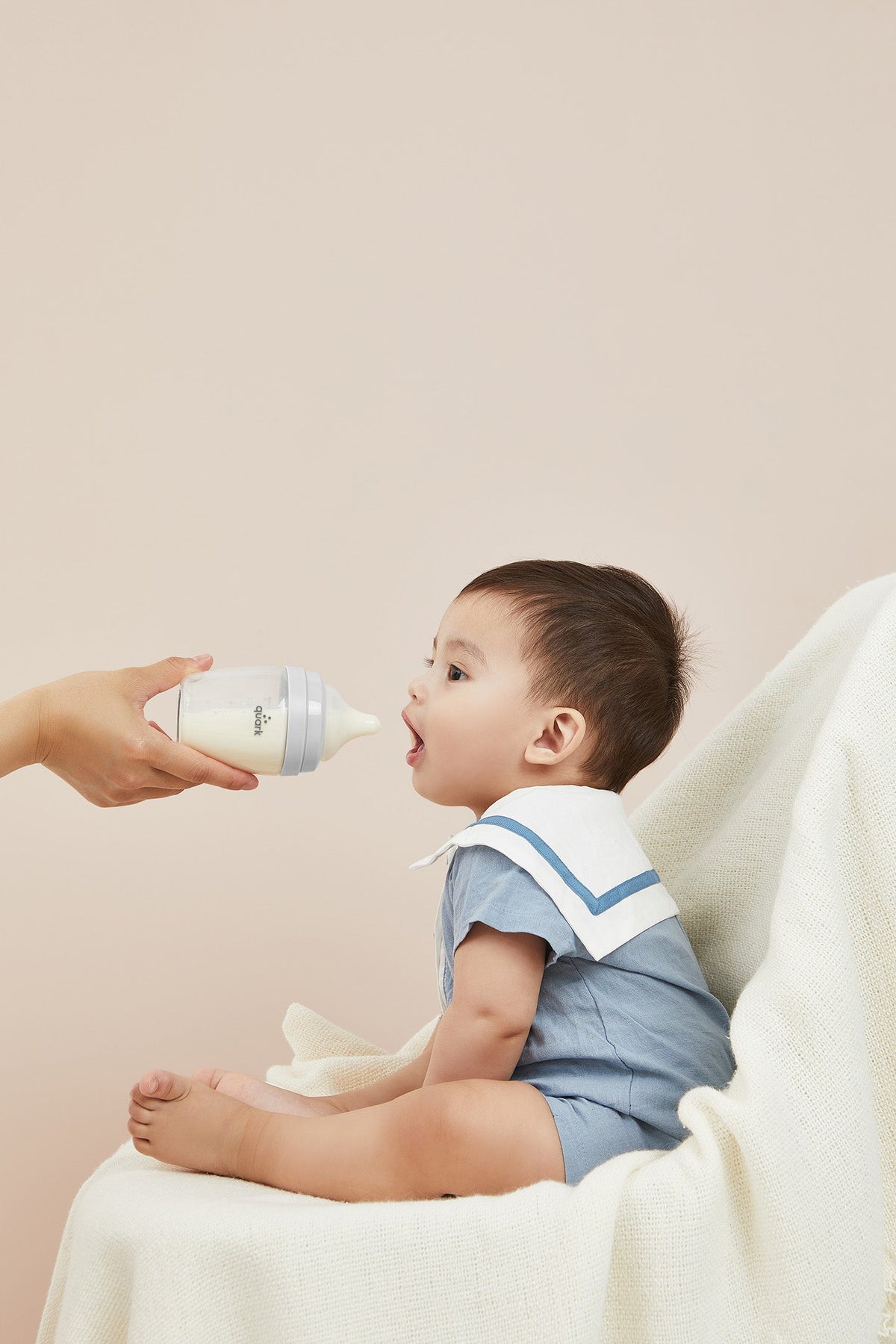
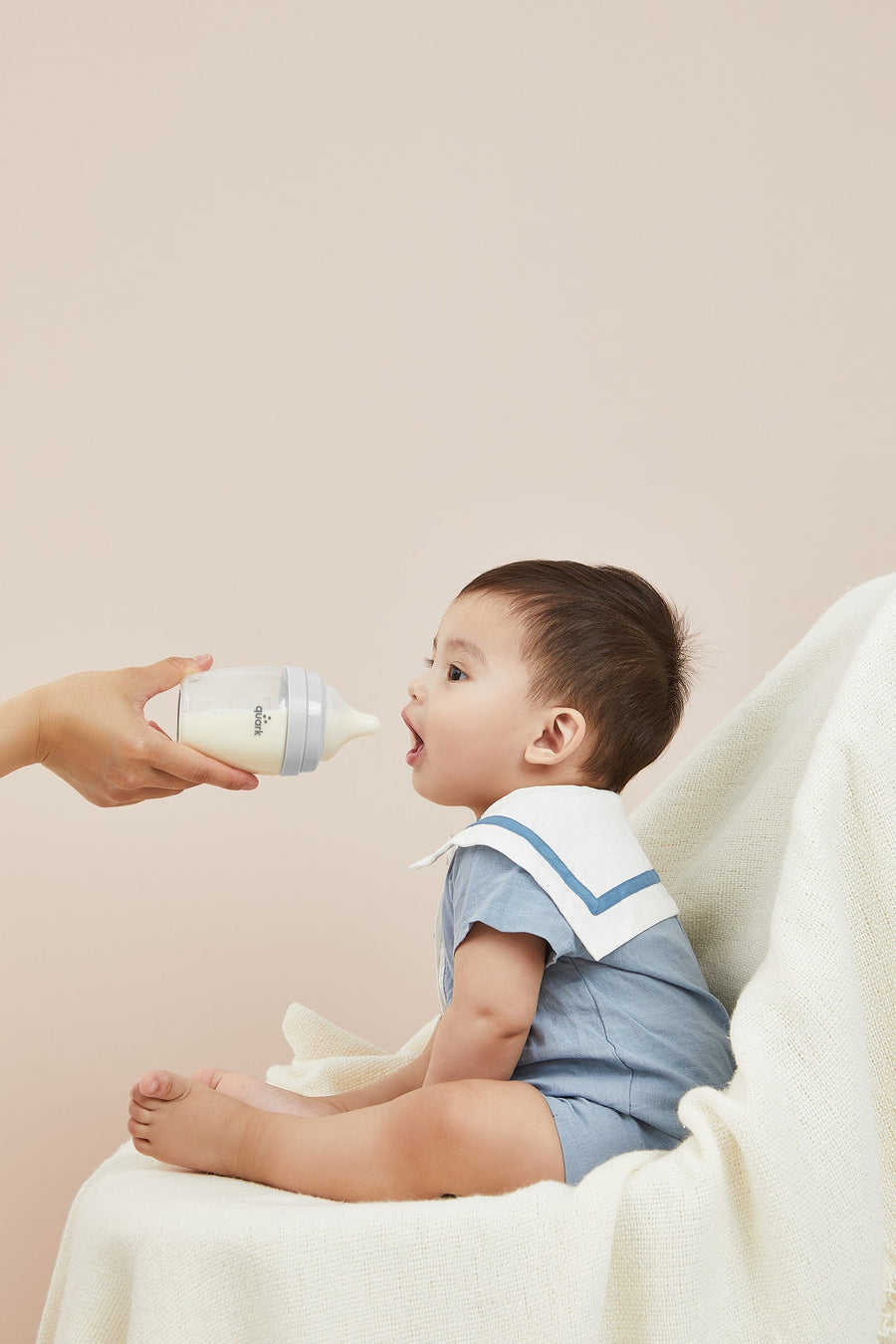
A small bottle suits these first weeks. When a feed is 1 to 3 ounces, a 5 oz bottle holds what you need without much left over to throw out, and the CDC says any formula left in the bottle after a feed goes in the bin. The BuubiBottle Mini is a 5 oz bottle that comes with a slow-flow RealFeel nipple, which suits these small, unhurried feeds.

BuubiBottle Mini
5 oz starter bottle sized for a newborn's first feeds, with the breast-shaped RealFeel nipple for a slow, paced flow; shatterproof and dishwasher-safe.
Shop BuubiBottle MiniHow many bottles you need, and how to clean them
Bottle washing is the chore people warn you about. In the thread, most parents said it was smaller than they expected. "With a bottle washer it’s not really too bad. Or rather it’s worth it for the extra sleep I get!!!!" wrote one. How many bottles you need depends on how often you wash: enough to cover the feeds between washes, plus one or two spare. Our newborn feeding kit checklist goes through the numbers.
Cleaning rules differ by country, which surprises people. A UK parent in the thread "was stunned when my American relatives said that they never sterilised bottles". Here is the CDC's version:
- Clean bottles after every feeding.
- A dishwasher run with hot water and a heated drying cycle (or a sanitizing setting) kills more germs, and then a separate sanitizing step is not needed.
- Sanitize feeding items at least once a day if your baby is under 2 months, was born prematurely or has a weakened immune system. Boiling for 5 minutes or a steam sanitizer used as the maker directs both work. For older, healthy babies, daily sanitizing may not be necessary.
- Let everything air-dry. Do not rub or pat items dry with a dish towel.

If you are deciding between a bottle washer, the dishwasher and the sink, our bottle washer comparison runs the time and counter-space numbers, and this piece on sterilizing explains when it helps and when it is habit.
Who feeds at night, and how to set it up
Sharing night feeds was the reason most parents in the thread gave for choosing formula. One wrote: "We can split night care and feeds so i get atleast 6 hours of sleep." The split only works if it is set up before the night starts. A few things help:
- Agree on shifts, not turns. One adult covers the feeds before a set time and the other covers after, so each gets an unbroken stretch. How partners can take the night feeds covers the details.
- Make bottles ahead if you use powder. Some parents mix a pitcher in the evening and pour bottles from it. The CDC's clock is the same either way: formula not used within 2 hours of mixing goes straight into the fridge and is used within 24 hours. For the pitcher method versus a formula maker, see our comparison.
- Keep the night bottles close. One parent "kept bottles in a lunch bag with an ice pack next to our bed at night in the early days"; another bought a small fridge for upstairs.
- Warm only if your baby wants it. The AAP and CDC treat warming as optional. If you do warm, never use a microwave, and check a few drops on your wrist: warm, not hot. Our milk temperature guide has more.
Feeding a newborn with a toddler around
This is the part a first-time parent does not have to plan for. Bottles help here: one mother of three said it "helps me so much that others can feed her while I take care of my two other toddlers too!!!" Another pointed out that someone else can feed the baby, "Including their sibling!" An older child can hold the bottle with you while you support the baby, which gives them a real job instead of a wait. Keep a bottle and a sealed ready-to-feed container in the bag for school runs, and see our guides to juggling a newborn and an older child and packing formula for a day out.
Your milk, and changing your mind
Choosing formula from birth does not switch off what your body does after delivery. Before the birth, ask your midwife or doctor what to expect when your milk comes in and how they suggest you handle it if you are not nursing. Our guides to breast engorgement and drying up your milk supply cover comfort steps and when to call.
Plans also change, in both directions. One parent was set on formula for her second "and here i sit" nursing, because it went easily that time, while still giving a regular bottle of formula. Another suggested a middle road: "it’s nice that someone else can feed the baby while you rest or just do something else." If you think you might want to breastfeed at all, talk to a lactation consultant before the birth so you know your options for the first days. Combo feeding basics covers the mixed route.
Week one, from hospital to home
- In hospital (days 1 to 2). Tell the team your plan as soon as you arrive. Note the formula and the amounts your baby is taking, and how often, so you can carry on at home. If anything about feeding worries you, ask before discharge.
- The first nights home. Use ready-to-feed bottles. Set up the night station before bed: clean bottles, the opened container in the fridge, and whoever has the first shift knows it. Small feeds every 2 to 3 hours, on cue, are normal.
- Days 3 to 7. Amounts creep up as your baby wants more. Keep a simple feeding and diaper log to take to the first checkup, where your pediatrician will look at weight and feeding. Call sooner if your baby is too sleepy to feed, keeps refusing bottles, or you are worried.
- End of week one. Decide whether to stay on ready-to-feed or switch to powder. If you switch while your baby is under 2 months, use the very-hot-water method above.
Before the birth: your week-one checklist
- Tell your birth team you plan to formula feed, and ask what formula the hospital provides.
- Stock a few days of ready-to-feed formula, and buy the powder you plan to switch to later.
- Small bottles for the first weeks, plus slow-flow newborn nipples. Have enough to cover the feeds between washes.
- A cleaning setup: dishwasher with a heated dry, a bottle washer, or a sink, brush and drying rack, plus a way to sanitize daily while your baby is under 2 months.
- A kettle and a timer if you will use powder in the first 2 months.
- A night plan: who covers which hours, where the bottles live, and a cooler or small fridge by the bed if you make bottles ahead.
- A question for your midwife or doctor about your milk coming in.
- A job for your older child at feed time.
Common questions
Can I formula feed from birth in the hospital?
Yes. Tell your birth team your plan before or on arrival. One parent in the thread used ready-to-feed in hospital and for the first few weeks. Ask which formula they use so you can match it or plan a switch at home.
Do I need to boil water for formula?
It depends on your baby's age. For babies under 2 months, born prematurely or with a weakened immune system, the CDC and AAP advise boiled water (the CDC says around 158°F/70°C) mixed with powder, then cooled before feeding. For healthy babies past 2 months, the AAP says safe room-temperature tap water is fine. Ready-to-feed formula needs no water at all.
Do bottles have to be sterilized every time?
No. The CDC asks you to clean bottles after every feed and to sanitize at least once a day while your baby is under 2 months, premature or has a weakened immune system. If you run bottles through a dishwasher with hot water and a heated drying cycle, the CDC says a separate sanitizing step is not needed.
Does formula need to be warm?
No. Warming is a preference, not a safety step. If your baby likes it warm, never use a microwave, and test a few drops on your wrist first: the CDC says it should feel warm, not hot.
How long can a made-up bottle sit out?
The CDC says to use prepared formula within 2 hours of mixing and within 1 hour of starting the feed, and to throw out whatever is left. A bottle you will not use within 2 hours goes into the fridge straight away and should be used within 24 hours.
How much should my newborn drink in a day?
In the first days, 1 to 2 ounces per feed, 8 to 12 feeds in 24 hours, rising over the first month. The AAP gives a rough guide of about 2½ ounces per pound of body weight per day and says most babies should drink no more than about 32 ounces in 24 hours. If your baby keeps wanting a lot more or a lot less, ask your pediatrician.
Our picks for a formula start: small bottles for week one, the set that grows with your baby, and spare slow-flow nipples.

BuubiBottle Starter Set
Mini and Max bottles with RealFeel nipples in one box, for week one and the months after.
Shop Starter Set
RealFeel Bottle Nipples
Spare nipples in flows from Slow (0M+) up, so a clean one is always ready.
Shop RealFeelSources
- Centers for Disease Control and Prevention: How Much and How Often to Feed Infant Formula (April 21, 2026).
- Centers for Disease Control and Prevention: Infant Formula Preparation and Storage (May 14, 2026).
- Centers for Disease Control and Prevention: Preventing Cronobacter Infection (September 29, 2025).
- Centers for Disease Control and Prevention: How to Clean, Sanitize, and Store Infant Feeding Items: Frequently Asked Questions (April 16, 2024).
- American Academy of Pediatrics, HealthyChildren.org: Amount and Schedule of Baby Formula Feedings (last updated May 16, 2022).
- American Academy of Pediatrics, HealthyChildren.org: How to Safely Prepare Baby Formula With Water (last updated February 25, 2026).
- Parent discussions, r/FormulaFeeders: i want to formula feed my second. and How much formula to feed a baby?
Medical disclaimer: This article is for general informational purposes and is not a substitute for medical advice. Preparation, feeding and cleaning guidance reflects CDC and AAP publications as dated above. If your baby was born prematurely, is under 2 months old, has a weakened immune system or a medical condition, or if you have questions about feeding amounts or your own recovery after birth, ask your pediatrician, midwife or doctor. Parent quotes come from a public forum and describe their own experience, not medical advice. Portions of this content draw on AI assistance and are reviewed by a qualified medical reviewer before publication.
Medically reviewed by Dr. Yang. Last reviewed November 21, 2026.


Leave a comment
All comments are moderated before being published.
This site is protected by hCaptcha and the hCaptcha Privacy Policy and Terms of Service apply.