


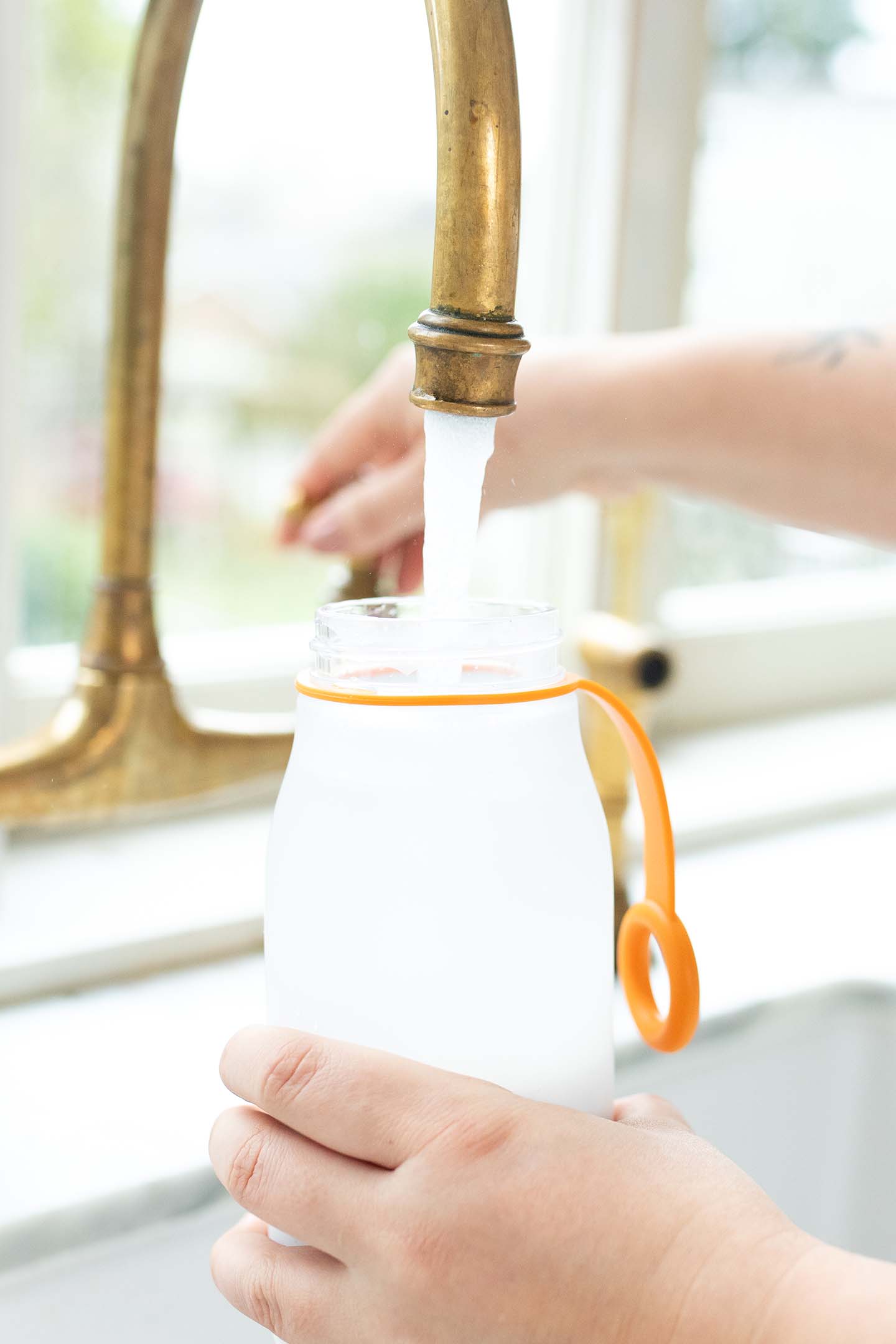
Two things kill these little devices early: water in the wrong place and milk left to dry. Avoid both and yours will last for years.
You finish a feed in the car or on a walk around the block, the bottle’s empty, and the warmer goes straight back in the bag with a film of milk still inside. We’ve all done it. The trouble is that a portable warmer isn’t a thermos or a mug — it’s a small electronic that happens to touch milk. There’s a heating element, a temperature display, and a charging port tucked inside the housing, and none of them want to meet water or dried-on milk.
So the care is genuinely simple, but it’s not quite the same as washing a bottle. Treat the warmer like a phone you can’t drop in the sink, and the rest follows. Here’s the routine that keeps it clean, keeps the smell out, and keeps it working — without you thinking hard about it at 3 a.m.

Can you put a portable bottle warmer in the dishwasher?
No — not the warmer itself. Any portable warmer with an internal heating element and a temperature display, including the BuubiBottle Smart Portable Milk Warmer, is an electronic device. A dishwasher combines water, heat, and pressure, which is exactly the mix you keep away from circuitry and a USB-C port, and the heat can warp seals and damage the display over time.
What trips people up is the material. The BuubiBottle warmer’s body is built from Tritan, a heat-tolerant copolyester, so the plastic on its own can take a lot. But “the plastic survives heat” and “the assembled electronic device is dishwasher-safe” are two different statements. The housing is there to protect a heating element and wiring that water must never reach. The rule that follows is short: detachable, non-electronic food-contact parts may be hand- or dishwasher-washable if your care instructions confirm it; the powered body never goes in.
The after-every-feed routine
This takes under a minute, and doing it every time matters more than doing it perfectly. Milk is the whole problem — even a thin film left behind dries, starts to smell, and gives bacteria somewhere to settle. Clean it while it’s still fresh and a little warm and it wipes away with almost no effort.
After each feed
- Unplug first. Disconnect the USB-C cable before you clean anything; never wipe a device that’s plugged in.
- Empty it. Pour out any leftover milk or water rather than saving a warmed bottle for later.
- Wipe the housing. Use a soft cloth dampened with warm water (a drop of mild dish soap is fine), inside surfaces and the rim first, then the outside.
- Wash detachable parts on their own. Hand-wash removable food-contact parts, or dishwash them only if the care card confirms it.
- Dry completely. Wipe everything and leave it open to air-dry before you store or charge it. Trapped moisture is the enemy.
One small thing makes the biggest difference here: keep liquid away from the USB-C port at all times. If the port ever gets damp, let it air-dry fully before you plug in. If you’re mapping out a feed away from home, our guide to how long a bottle warmer takes to heat helps you time the clean-up around the next feed instead of scrambling for it.
A quick wipe every single time beats an occasional deep scrub — and it’s the wiping you skip that ruins these devices.
What to use, and what to never use
Reach for the gentlest thing that works. Harsh chemicals and abrasive tools do far more damage to a portable warmer than milk ever will, and once you’ve scratched a seal or flooded a port, there’s no coming back from it. The verdict is simple: damp-and-soft wins, wet-and-rough loses. Here’s the side-by-side so you can screenshot it.
If you only skim one thing: soft cloth, warm water, a drop of soap, full dry — and nothing ever goes near the port or into the dishwasher.
| Step | Do this | Not this |
|---|---|---|
| Tool | Soft cloth or microfiber, lightly damp | Steel wool, scouring pads |
| Cleaner | Warm water + a drop of mild dish soap | Bleach, alcohol floods, solvents on the housing |
| The body | Wipe only | Submerge, soak, dishwasher, microwave |
| The USB-C port | Keep dry; air-dry if damp | Run water over or into it |
| Detachable parts | Soft brush, warm soapy water | Abrasive scrubbers |
The factual side-by-side — the why is in the paragraph above; this is just the quick scan.
Stubborn milk residue and smells
If milk has dried on, or a faint smell lingers, don’t scrub harder — soften it instead. For the inside and the rim, lay a warm, damp cloth over the spot for a minute to loosen the residue, then wipe it away. For detachable washable parts, a soak in warm soapy water followed by a soft bottle brush handles almost everything.
Smells come from two places: residue you can’t see, and moisture that got stored in. Clean a little more thoroughly, then make sure the part is bone-dry and put away with some airflow. If a part has a removable silicone seal that’s washable, clean under and around it, because that’s exactly where the film hides. What you should never do is chase a smell with stronger and stronger chemicals — that wrecks the surfaces and seals. A persistent odor on a part you’ve cleaned and dried properly is usually just telling you it’s time to swap that part out.
Storing and traveling with it
Store it clean, dry, and loosely assembled so air can move through it — not sealed up damp in a diaper bag. That one habit prevents most odor and mildew before it starts. Coil the USB-C cable loosely rather than kinking it tight at the connector, which is the part most likely to fail under stress.
- Empty before you pack. Never transport it with milk or water inside; leaks and residue both begin here.
- Protect the port. Pack it so nothing jams into the USB-C connector, and keep it clear of open liquids in the bag.
- Carry a power plan. Bring the cable and a power bank that can actually drive it.
A clean warmer is one piece of a clean travel setup — our travel feeding kit packing list covers the rest, and if you’re weighing a cordless warmer against a plug-in one for upkeep, the portable vs traditional warmer comparison walks through the trade-offs. For families splitting feeds between home and daycare, the labeling and storage habits in our daycare bottle prep guide keep the whole kit straight.
How often to deep-clean, and when parts need replacing
Wipe after every use; give all detachable parts a more thorough wash once a day; do a careful once-over of seals and crevices about weekly. Past that, let the condition of the parts guide you rather than a date on the calendar.
Replace food-contact parts when you see cracks, cloudiness that won’t clean off, warping, or a smell that survives proper cleaning and drying. That’s normal wear, not a defect. The warmer body itself should keep going for years as long as it stays dry and gets wiped regularly. When it’s finally time to retire it, check your local e-waste rules, since it’s an electronic. And whatever the warmer holds, getting the milk to the right warmth still matters: our guide to warming baby milk and the right temperature covers that side.
Caring for a portable warmer comes down to two reflexes: keep water away from the electronics, and never let milk sit and dry. Do those, defer to the care card in the box for your specific unit, and you’ll get years out of a device that fits in a diaper-bag pocket. Which feed are you cleaning up after right now?
Common questions
Can you put a portable bottle warmer in the dishwasher?
Not the warmer body — it’s an electronic device with a heating element and a port, so it gets wiped, never submerged or run through a cycle. Detachable food-contact parts can be washed separately if your care instructions confirm it.
How do you clean it after each use?
Unplug, empty it, wipe the inside and rim with a soft damp cloth and a drop of mild dish soap, wash any detachable parts on their own, then dry everything and air-dry before storing or charging. Keep liquid away from the USB-C port.
How do you get rid of a milk smell?
Loosen dried milk with a warm damp cloth, soak and soft-brush washable parts, clean under removable seals, then dry fully and store with airflow. Skip harsh chemicals; if the smell survives a proper clean, replace that part.
Can I steam-sterilize it?
Not the electronic body. For most healthy, full-term babies regular washing and drying is enough — ask your pediatrician if yours is an exception. Keep the powered warmer out of steam sterilizers and boiling water unless the maker says it’s safe.
How often should I deep-clean it?
Wipe after every feed, wash detachable parts daily, check seals weekly. Replace parts that crack, cloud, warp, or hold a smell after a proper clean.
Reviewed for accuracy by Dr. Yang · Last updated June 2026 · General guidance on cleaning and care, not a substitute for advice from your own healthcare provider or your warmer’s manufacturer instructions. Always follow current milk-preparation and storage guidance.


Leave a comment
All comments are moderated before being published.
This site is protected by hCaptcha and the hCaptcha Privacy Policy and Terms of Service apply.