




How to Choose a Baby Food Maker: the 3 things that actually matter
Most baby food makers are sold on how many things they do. The ones you keep using are decided by three duller questions — and the answers are in the spec sheet, not the marketing.
You stand in the kitchen at six in the evening, baby on one hip, a half-steamed sweet potato going cold on the counter, and you count the parts: the cup, the blade, the basket, the lid, two seals. Five things to wash for four spoonfuls of puree. That is the moment a baby food maker either earns its spot on the counter or starts living in the cupboard.
That counter moment is the real test, and it is almost never the thing the box brags about. A machine can make a flawless puree and still lose, week after week, because washing it is a chore you start skipping. So before you compare button counts and preset programs, judge a baby food maker on the three things that decide whether you actually keep using it: what it is made of, how many parts you wash, and whether the batch size fits how you cook.
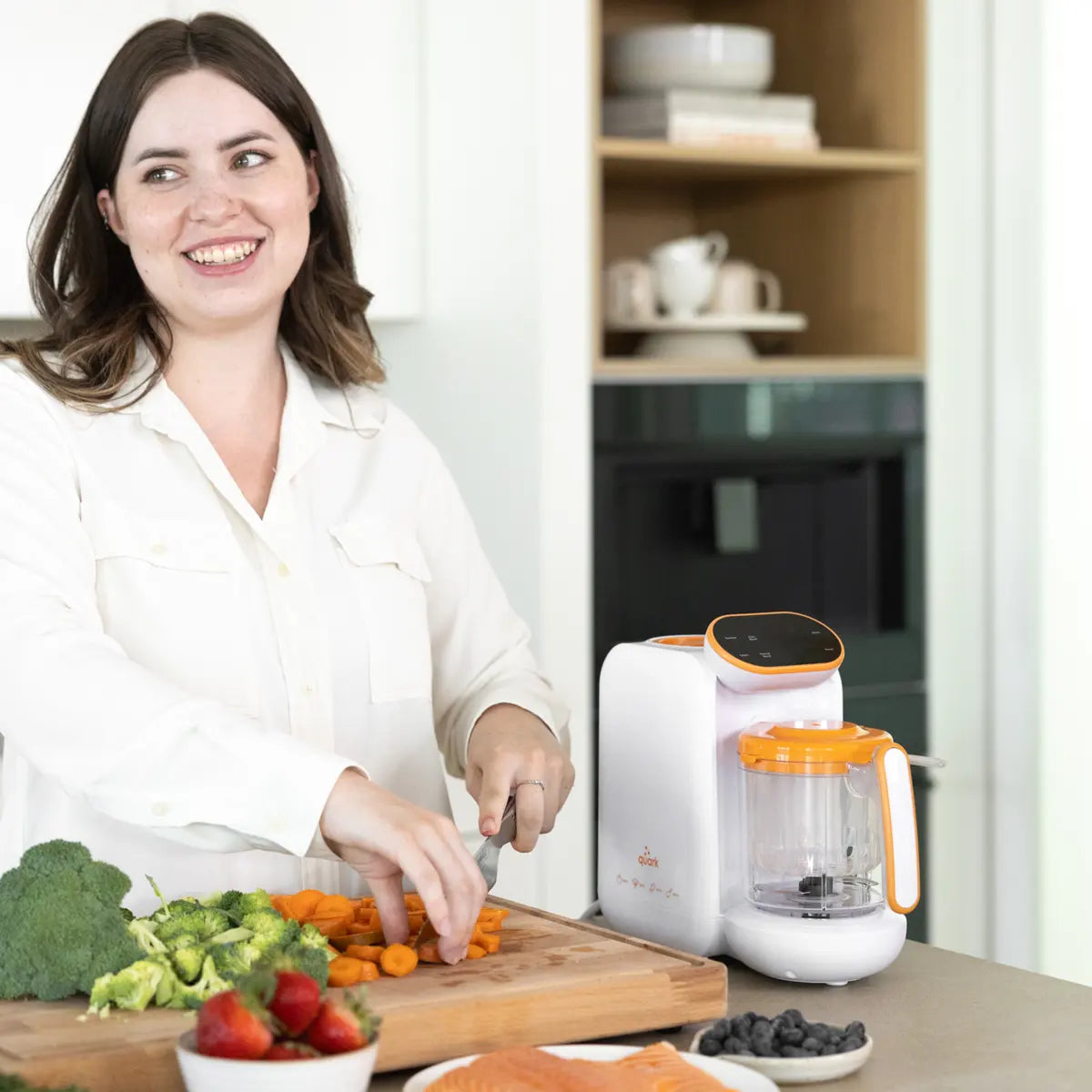
Quark Baby’s Quook is the one we make, so weigh our take accordingly — but it’s a useful reference because it puts named materials and a removable blade against these exact questions. We’ll use it as the worked example.

1. Materials: read the named claim, then read the use case
Here is the line I’d hold: trust a specific material name over the word “safe.” A maker that tells you the blending cup is Tritan and the blade is 316 stainless steel is giving you something you can look up and verify. A maker that only says “food-safe materials” is asking you to take its word for it. Both might be fine, but only one is showing its work.
The Quook is built with a Tritan blending cup, a 316 stainless steel blade and water reservoir, and platinum-cured silicone seals. Those are the three surfaces that meet your baby’s food: the cup that holds hot puree, the blade that cuts through it, and the seals that touch it at the edges. When you compare makers, find those same three parts on every spec sheet and see whether they’re named or hand-waved.
One thing no spec sheet replaces: the care instructions. A named, food-grade material still has limits — which parts are dishwasher-friendly, what heat each one tolerates, how often a seal should be checked for wear. If a maker won’t tell you how to clean and heat its parts, treat that silence as a strike against it, not a detail you can fill in later.
Trust a material you can look up over an adjective you have to believe.
2. Cleaning: count the parts before you count the features
This is where most baby food makers quietly fail, and it’s the easiest thing to test in a store or a product photo: count the pieces you’d hand-wash after one batch. Blade, basket, lid, cup, seals — every separate part is one more thing to rinse, dry, and find a home for on a crowded drying rack. The puree quality is rarely the problem. The pile of parts is.
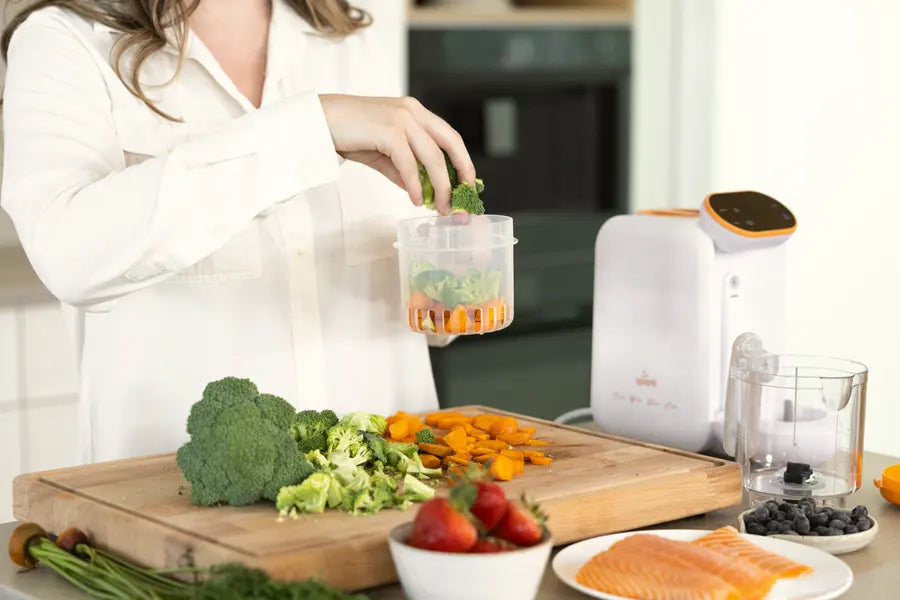
What tips the balance is a blade that lifts out cleanly and a cup with no narrow traps where sticky food — sweet potato, peas, rice, meat blends — gets stuck. The Quook lists a removable blade assembly and a self-cleaning rinse, which target exactly this friction: the parts that are usually the worst to clean are the ones designed to come apart or rinse themselves. A self-clean cycle doesn’t end your washing-up, but it shrinks the daily version of it.
3. Capacity: buy for the batch you’ll really make
Bigger is the easy mistake. A large bowl looks like value on the shelf and then becomes the thing that’s annoying to store, slow to fill for a few spoonfuls, and over-built for a baby still testing whether they like pear. The right size is the one that matches how you cook now.
So pick a side honestly. If you batch-prep — a Sunday session that fills a week of freezer portions — you want enough room to steam and blend a full tray in one run, then portion it straight into storage. If you make small fresh servings most days, a smaller bowl wins: faster to fill, faster to clean, easier to leave out and reach for. Buy for the stage you’re entering, not the one you just left, because feeding stages move fast and the batch you make at six months isn’t the one you make at ten.
Capacity also doesn’t end at the bowl. A big steam-and-blend session only saves time if the puree has somewhere to go — cleanly portioned, labeled, and out of the way. That’s why we’d weigh capacity and storage together, not separately. A maker that can produce a full tray pairs naturally with a silicone freezer tray that pops out single servings without a fight.

Where an all-in-one wins, and where it doesn’t
The Quook is a 5-in-1: steamer, blender, bottle warmer, and steam sterilizer, with auto and manual blending on a digital touch panel. That sounds like a lot, and the honest case for it is narrower than the feature list suggests. An all-in-one is worth it for one specific reason: it takes food from steam straight to blend in the same bowl, so the puree never gets poured between containers. Fewer transfers means fewer parts, and fewer parts is the whole game.
If you already own a steamer and a blender you like, and the dishes don’t bother you, you don’t need a combined machine. The reason to buy one isn’t to own the most functions — it’s to delete the steps that quietly stop homemade baby food from happening on a tired weeknight. Judge the all-in-one on the steps it removes, not the modes it adds.
Controls: keep manual blending on the list
Auto programs take the guesswork out of the first purees, and that’s genuinely helpful. But keep manual blending on your must-have list anyway, because babies climb through textures: thin puree, then thicker, then soft lumps they can manage themselves. A control panel pulls its weight when it lets you hit the same texture twice and nudge it chunkier as your baby grows — not when it buries that under presets you have to fight.
The three-question scorecard, side by side
If you only skim one thing: an all-in-one wins when its parts come apart easily and its capacity matches your batch — that’s what makes the Quook’s steam-to-blend-in-one-bowl design count.
| Separate steamer + blender | Basic combo maker | Quook (5-in-1) | |
|---|---|---|---|
| Best for | Already own gear you like | One job, low budget | Steam-to-blend in one bowl |
| Named food-contact materials | Varies by brand | Often vague | Tritan cup, 316 steel blade |
| Transfers between bowls | Yes, every batch | Sometimes | No |
| Removable blade | Usually | Varies | Yes |
| Self-cleaning rinse | No | Rare | Yes |
| Also warms / sterilizes | No | No | Yes |
The verdict’s in the paragraphs above; this is the quick scan. Confirm current specs on the product page before you buy.
What to skip
- Vague safety language. “Premium materials” tells you nothing — look for named, food-grade parts and clear heat and cleaning guidance.
- Designs that hide the cleanup. If you can’t see how the blade and seals come out, assume cleaning takes longer than the photo suggests.
- Oversized “just in case” bowls. Match the batch to your baby’s stage and your storage plan, not to the biggest number.
- Feeding claims a machine can’t make. A food maker preps food; it doesn’t replace your pediatrician’s guidance on what and when your baby eats.
Where to go next
If you want to see how these three questions play out on a real spec sheet, the Quook Baby Food Maker, Bottle Warmer & Sterilizer is the worked example above. From there, the natural next reads are how to use a baby food maker across vegetables, fruit, meat and grains once it’s on your counter, and the step-by-step on cleaning the blades, basket and cup for the part this guide says matters most.
Still deciding whether to buy a maker at all? Weigh it against the alternatives in baby food maker vs store-bought purees and baby food maker vs a separate steamer and blender before you spend.
A baby food maker isn’t a verdict on whether you’re a good cook or a good parent — it’s a tool for getting fresh food into a small person without it eating your evening. Get the materials you can verify, the smallest pile of parts you’ll tolerate, and the batch size that fits your week, and the rest of the feature list is just noise you paid for.
Common questions
The questions parents ask us most before buying.
What should I look for first in a baby food maker?
The food-contact materials, the number of parts you wash, and the batch size — before the feature count. A simple maker you keep using beats a twelve-function one in the cupboard. Favor named, food-grade materials over the word “safe.”
Which baby food maker materials matter for food contact?
The cup, the blade, and the seals — the parts that meet hot food and puree. Prefer specific claims you can verify, like a Tritan cup and a 316 stainless steel blade, plus clear cleaning and heat guidance for each part.
Is a baby food maker easier to clean than a blender?
It can be, when the blade lifts out cleanly and the cup has no narrow traps for puree. Count the pieces you wash after one batch — a removable blade plus a self-clean rinse usually beats a blender, a steamer, and the bowls in between.
How much capacity does a baby food maker need?
Match it to how you cook. Batch-prep a week of freezer portions and you want room for a full tray in one run; make a few fresh spoonfuls and a smaller bowl is faster. Buy for the stage you’re entering, not the one you just left.
Do I need steam and blend in one machine, or separate tools?
An all-in-one is worth it when cleanup and transfers are your real problem — it goes from steam to blend in one bowl. If you already own a steamer and blender you like, separate tools are fine. Judge it on steps removed, not modes added.
Is homemade baby food safer than store-bought?
Not automatically. Safety comes from the ingredients, preparation, cooling, storage, reheating, hygiene, and age-appropriate texture — not from being homemade. Follow current food-safety guidance and your pediatrician’s advice on your baby’s stage.
Reviewed for accuracy by Dr. Yang · Last updated June 2026 · General guidance, not a substitute for advice from your own healthcare provider. Always follow current food-preparation and storage guidance, and your product’s own instructions.



Leave a comment
All comments are moderated before being published.
This site is protected by hCaptcha and the hCaptcha Privacy Policy and Terms of Service apply.