

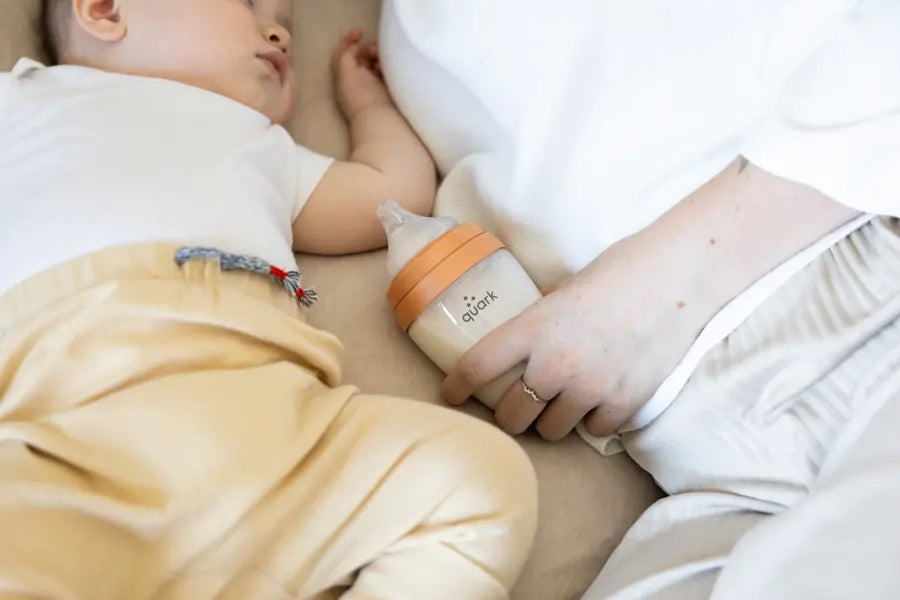
Le biberon du matin, c'est la partie facile. L'étiqueter, le doser et le garder suffisamment froid pour que votre éducatrice puisse vraiment le servir — ça, personne ne vous en parle.
Quark Baby · Révisé médicalement par Dr. Yang · 6 min de lecture
Il est 7:40, le sac est à moitié fait, et vous êtes devant le réfrigérateur à essayer de vous rappeler si le biberon d'hier a été daté, si le bloc réfrigérant est encore congelé, et si vous avez un marqueur qui résiste vraiment à la condensation. Le dépôt lui-même prend trente secondes. C'est la préparation derrière, faite à moitié endormi contre la montre, qui transforme une matinée de garderie en course effrénée.
Voici la bonne nouvelle : presque toute cette friction se règle la veille au soir, et une fois que vous savez exactement ce dont votre éducatrice a besoin, la routine devient vite monotone. Voici le système : quoi étiqueter, comment doser, comment garder le lait au froid en chemin, et pourquoi la garderie gère les biberons comme elle le fait — écrit pour le parent qui fonctionne en pilote automatique à l'aube.

Pourquoi les garderies sont si pointilleuses avec les biberons
Si votre éducatrice semble exigeante sur les étiquettes et les délais, c'est le système qui fonctionne, pas de la bureaucratie. Les garderies agréées conservent le lait de plusieurs familles dans des réfrigérateurs communs, et la plupart opèrent selon des règles locales de sécurité alimentaire et de permis de garde d'enfants. Un biberon mal étiqueté ou mal géré n'est pas juste un inconvénient; dans le pire des cas, c'est ainsi qu'un mauvais bébé reçoit le mauvais lait. Traitez donc leurs règles comme la norme, non comme une suggestion. Envoyez les biberons comme votre garderie en a besoin et vous devenez le parent dont les dépôts ne se font jamais retourner.
Étiquetez tout : nom et date
L'étiquetage est la seule chose ici que vous contrôlez entièrement, et c'est celle qui compte le plus. Mettez le nom complet de votre bébé et la date à laquelle le lait a été tiré ou préparé sur chaque biberon. Les recommandations de santé publique préconisent expressément de dater le lait maternel exprimé pour que le plus ancien soit utilisé en premier et que les délais de conservation puissent être suivis — la même logique que suit votre éducatrice.
- Étiquetez le biberon et le couvercle, car les couvercles se séparent pendant le lavage et doivent retrouver leur chemin.
- Utilisez des étiquettes imperméables ou un marqueur permanent sur du ruban adhésif. Le stylo à bille bave dès que la condensation l'atteint.
- Ajoutez le nom de votre bébé sur le sac isotherme lui-même, pas seulement sur les biberons.
- Si votre garderie utilise son propre système d'étiquetage ou d'inscription, suivez-le à la lettre, car il prévaut sur tout conseil générique ici.
Connaissez l'horloge de conservation
Votre éducatrice conserve les biberons dans un réfrigérateur commun et les sert dans des délais précis, donc la quantité que vous envoyez et la façon dont vous les datez comptent vraiment. Les chiffres ci-dessous reflètent les lignes directrices actuelles du CDC américain. Considérez-les comme un repère général. Les règles de votre garderie et votre pédiatre peuvent fixer des limites plus strictes, et ce sont celles-là qui s'appliquent.
Lait maternel
| Où il est conservé | Recommandation générale |
|---|---|
| Réfrigérateur | Jusqu'à environ 4 jours |
| Température ambiante | Jusqu'à environ 4 heures |
| Décongelé (depuis congelé), au réfrigérateur | Dans les environ 24 heures |
| Une fois réchauffé ou laissé à température ambiante | Utiliser rapidement, dans les environ 2 heures |
Préparation lactée
| Situation | Recommandation générale |
|---|---|
| Préparée, conservée au réfrigérateur | Dans les environ 24 heures |
| Préparée, à température ambiante | Dans les environ 2 heures |
| Une fois que votre bébé commence à boire | Dans l'environ 1 heure |
Repères généraux tirés des recommandations actuelles de santé publique; confirmez toujours auprès de la politique de votre garderie et de votre pédiatre.
Pour un portrait complet de chacun, consultez notre guide sur le réchauffage du lait et la lecture de la température, et demandez à votre éducatrice où se situent ses limites par rapport à ceux-ci.
Gardez-le froid en chemin
Cette horloge de conservation suppose que le lait est resté correctement froid. Un biberon qui voyage dans un sac chaud a déjà entamé une partie de sa fenêtre de sécurité avant d'atteindre le réfrigérateur, et votre éducatrice n'a aucun moyen de savoir combien. Alors emballez-le comme si maintenir la chaîne du froid était tout le travail — parce que c'est le cas :
- Utilisez un sac isotherme avec un bloc réfrigérant congelé, et gardez les biberons en contact avec le bloc, pas juste dans le même sac.
- Envoyez le lait froid du réfrigérateur, jamais préchauffé. Le réchauffage appartient au moment du boire, pas au début du trajet.
- Pour le lait maternel congelé, demandez si votre garderie préfère le recevoir congelé ou décongelé, et ne recongelez rien qui ait déjà été décongelé.
- Remettez les biberons directement au personnel pour qu'ils aillent directement au réfrigérateur plutôt que de rester dans un casier.
Un biberon étiqueté, froid et bien emballé est un biberon que votre éducatrice peut conserver et servir sans avoir à deviner — et deviner est la dernière chose que vous voulez qu'elle fasse.
Le réchauffage se fait à la garderie, au moment du boire
Les éducatrices réchauffent un biberon quand le bébé est prêt à manger, pas à l'avance, et elles le réchauffent doucement, avec un bain d'eau chaude ou un chauffe-biberon, jamais un micro-ondes, parce que les micro-ondes créent des points chauds brûlants contre lesquels les recommandations de santé publique mettent expressément en garde. Vous n'avez généralement pas besoin d'envoyer un chauffe-biberon à la garderie, mais il est utile de connaître la routine : le lait est amené doucement à la température corporelle et testé avant d'atteindre votre bébé.
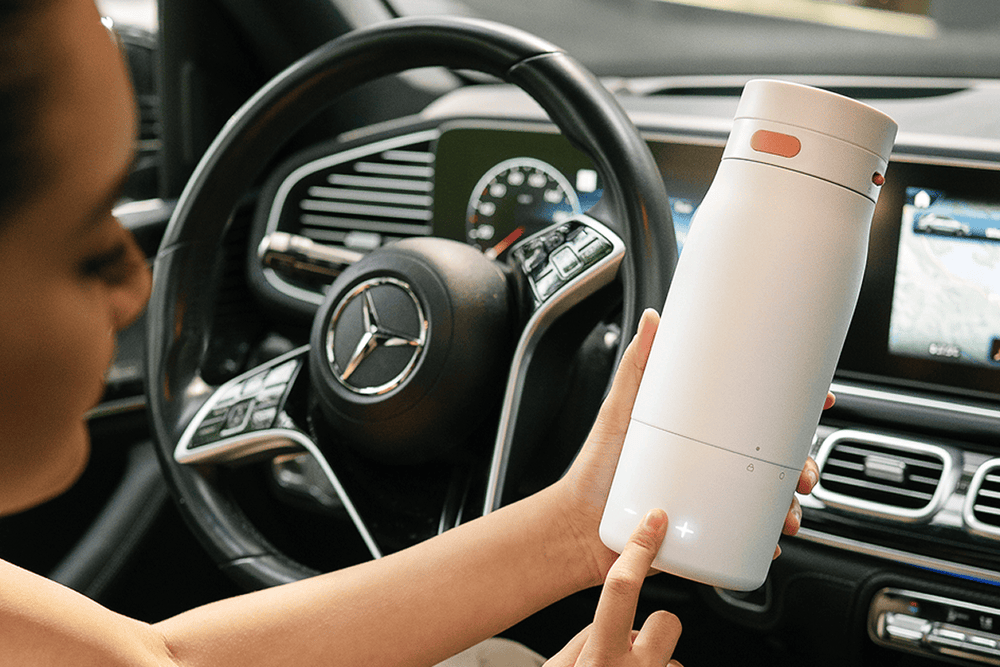
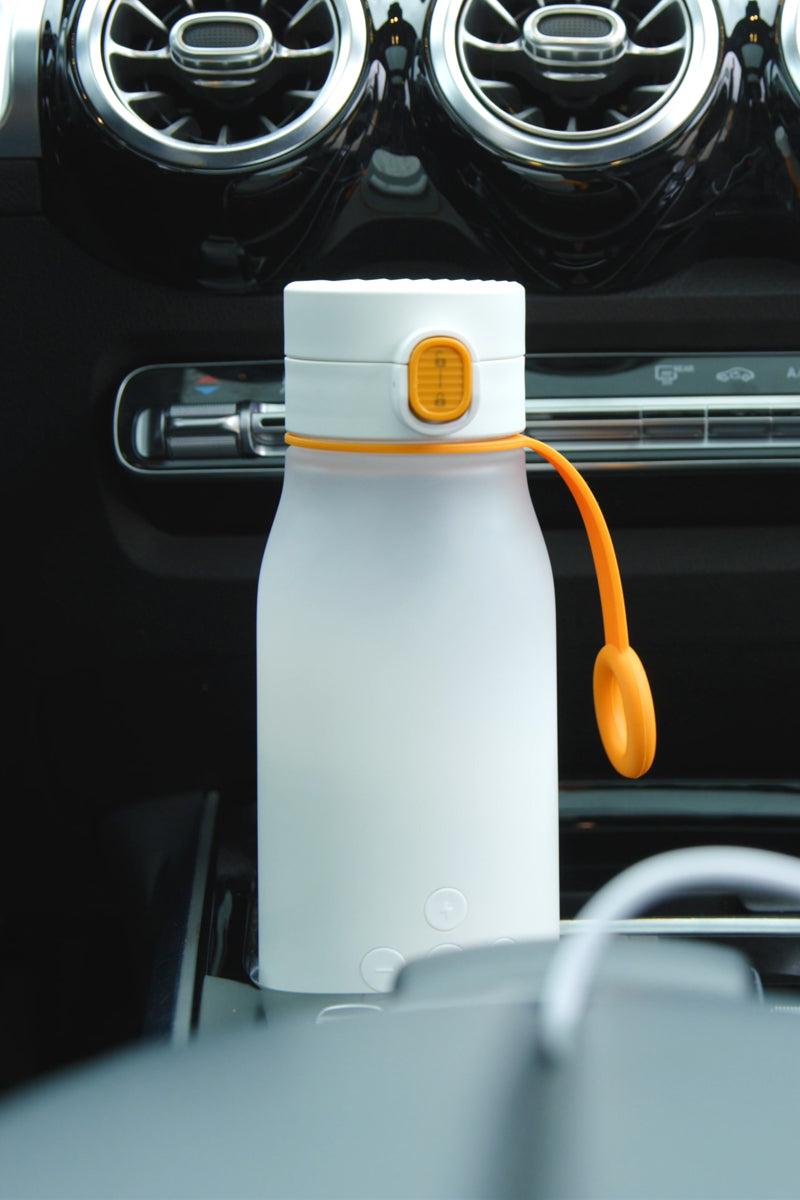
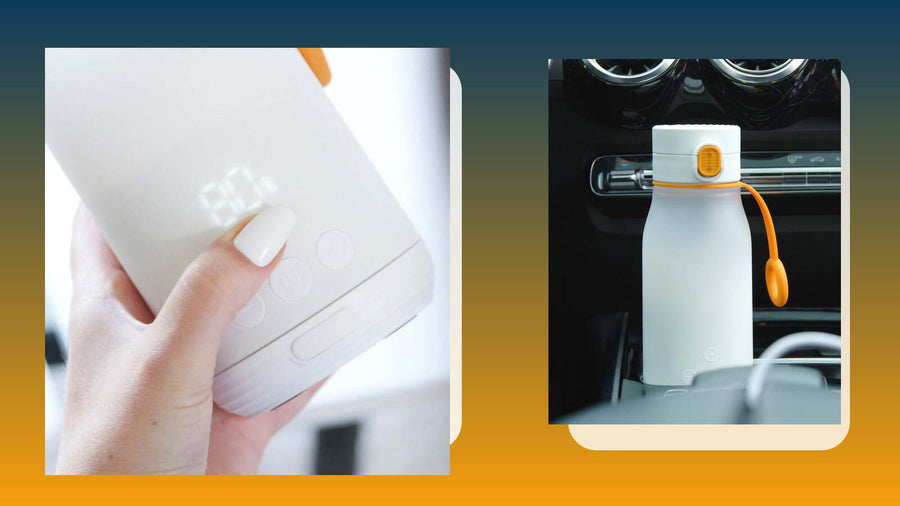
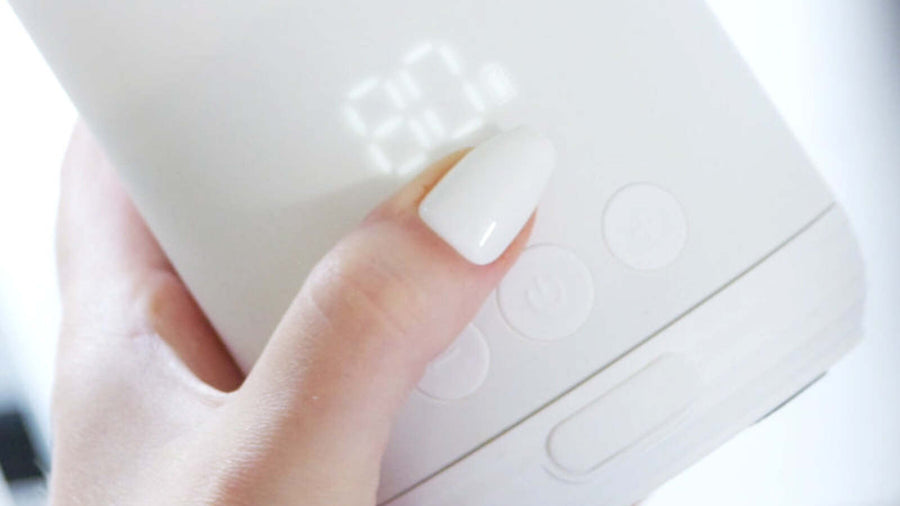
Là où un chauffe-biberon est vraiment utile, c'est partout où la garderie n'est pas : la récupération, le trajet de retour en voiture, la course qui s'éternise. Pour ces boires à la volée, une option sans fil comme le BuubiBottle Smart Portable Milk Warmer chauffe le lait ou l'eau dans une plage de 37–50 °C (98–122 °F) adaptée à la température corporelle, affiche la température en temps réel sur le côté et se recharge par USB-C — vous n'avez donc pas à chercher une bouilloire dans un stationnement. Il contient 300 ml / 10 oz et le couvercle se verrouille, il se glisse donc dans le sac à couches sans couler. Si vous le comparez à un modèle à brancher, notre comparaison chauffe-biberon portable vs traditionnel couvre les compromis, et le temps que prend vraiment un chauffe-biberon vous donnera des repères réalistes.
La règle des restes — celle que personne n'aime
Une fois que votre bébé a commencé à boire dans un biberon, ce qui reste est jeté plutôt que conservé pour le prochain boire. La raison est simple et non négociable : le mélange de lait et de salive permet aux bactéries de se multiplier. Les éducatrices appliquent cette règle strictement, c'est pourquoi un biberon à moitié fini que vous auriez gardé à la maison revient vide. La solution n'est pas de contester la règle; c'est d'envoyer des portions réalistes pour avoir moins à perdre.
Envoyez la bonne quantité, dosez intelligemment
Demandez à votre éducatrice combien de boires votre bébé prend dans la journée et environ quelle quantité par boire, puis envoyez un peu plus que ce que vous prévoyez, réparti dans plusieurs petits biberons plutôt qu'un grand. Les petites portions signifient qu'un biberon entamé gaspille moins quand l'horloge du boire entamé expire, et ils s'intègrent plus facilement dans un réfrigérateur commun. Datez-les pour que le lait le plus ancien soit utilisé en premier.
Votre liste de vérification pour les biberons de garderie
- ✓ Étiquetez chaque biberon et couvercle avec le nom complet + la date
- ✓ Dosez en plusieurs petits biberons; envoyez un peu plus
- ✓ Gardez-le froid : envoyez-le froid du réfrigérateur, jamais préchauffé
- ✓ Emballez dans un sac isotherme avec un bloc réfrigérant congelé, les biberons en contact avec le bloc
- ✓ Remettez les biberons directement au personnel au dépôt
- ✓ Suivez le système d'étiquetage et d'inscription de la garderie
- ✓ Attendez-vous à ce que les restes d'un biberon entamé soient jetés; c'est correct, pas du gaspillage
- ✓ Remettez tout en ordre et remplissez la veille au soir, pas à 7:40 a.m.
Vous ne pouvez pas ralentir les matins de garderie, mais vous pouvez enlever les incertitudes liées au biberon. Étiquetez-le, dosez-le, gardez-le froid, et laissez votre éducatrice faire le reste comme ses règles l'exigent. Faites-le de la même façon chaque jour et en une semaine, ça cesse d'être une décision et devient un réflexe. C'est tout l'objectif : une chose de moins à laquelle penser avant 8 a.m.
Questions fréquentes
Que dois-je écrire sur un biberon pour la garderie?
Le nom complet de votre bébé et la date à laquelle le lait a été tiré ou préparé, sur le biberon et le couvercle. Si votre garderie a son propre système d'étiquetage, suivez-le.
Combien de temps votre éducatrice peut-elle conserver le lait maternel ou la préparation au réfrigérateur?
Comme repère général, les lignes directrices actuelles du CDC indiquent jusqu'à environ 4 jours pour le lait maternel réfrigéré et jusqu'à environ 24 heures pour la préparation réfrigérée. Les règles de votre garderie et votre pédiatre peuvent être plus stricts, alors référez-vous à eux.
Dois-je réchauffer les biberons avant de les envoyer à la garderie?
Non, envoyez le lait froid du réfrigérateur dans un sac isotherme avec un bloc réfrigérant. Le réchauffage se fait à la garderie au moment du boire.
Puis-je envoyer du lait maternel congelé à la garderie?
Oui, de nombreuses garderies l'acceptent. Demandez si votre garderie préfère le recevoir congelé ou décongelé. Le lait décongelé ne doit pas être recongelé et doit être utilisé dans le délai indiqué par votre éducatrice.
Dois-je envoyer un chauffe-biberon à la garderie?
Non, les garderies réchauffent doucement les biberons au moment du boire, vous n'avez donc généralement pas besoin d'en envoyer un. Un chauffe-biberon portable comme le BuubiBottle Smart Portable Milk Warmer est plus utile lors de la récupération et du trajet de retour en voiture, là où il n'y a pas de cuisine.
Pourquoi la garderie jette-t-elle le lait que mon bébé n'a pas fini?
Dès qu'un bébé boit dans un biberon, la salive introduit des bactéries qui peuvent se multiplier, alors les restes d'un biberon entamé sont jetés. C'est une pratique de sécurité standard. Les petites portions gaspillent moins.
Quelle quantité de lait dois-je envoyer à la garderie?
Demandez combien de boires et quelle quantité par boire, puis envoyez un peu plus réparti dans plusieurs petits biberons, ce qui est plus facile à conserver et gaspille moins sous la règle du boire entamé.
Sources
- U.S. Centers for Disease Control and Prevention — Handling, Storing, and Preparing Breast Milk
- U.S. Centers for Disease Control and Prevention — Infant Formula Preparation and Storage
- American Academy of Pediatrics (HealthyChildren.org) — Storing and Preparing Expressed Breast Milk
Révisé pour l'exactitude par Dr Yang (pédiatrie) · Dernière révision juin 2026 · Renseignements généraux à titre informatif, ne remplace pas les conseils de votre propre professionnel de la santé ni les règles d'exploitation de votre garderie. Les chiffres de conservation reflètent les recommandations actuelles de santé publique (CDC/AAP) au moment de la rédaction; confirmez toujours auprès de la politique de votre garderie et de votre pédiatre.


Laisser un commentaire
Tous les commentaires sont modérés avant d'être publiés.
Ce site est protégé par hCaptcha, et la Politique de confidentialité et les Conditions de service de hCaptcha s’appliquent.