





Comment gérer l'engorgement mammaire
Lorsque votre lait maternel « monte » deux à cinq jours après l'accouchement, votre corps passe de la production de colostrum au lait mature. Pendant cette période, de nombreux nouveaux parents connaissent un engorgement mammaire, lorsque les seins deviennent trop pleins à mesure que votre corps s'adapte aux besoins de votre bébé. Comprendre comment gérer l'engorgement mammaire est essentiel pour une expérience d'allaitement confortable. Ce guide couvre les stratégies de prévention, les méthodes de traitement pour différents niveaux de gravité, et quand demander l'aide d'un professionnel pour vous assurer que vous et votre bébé prospérez pendant cette transition importante.
Qu'est-ce que l'engorgement mammaire ?
L'engorgement mammaire survient lorsque votre lait passe du colostrum (premier lait) au lait mature, généralement deux à cinq jours après l'accouchement. Pendant cette transition, votre corps peut produire plus de lait que votre bébé n'en a besoin, ce qui fait que vos seins deviennent trop pleins. Cette plénitude peut varier d'un inconfort modéré à une douleur intense, selon la gravité de l'engorgement.
Comment prévenir l'engorgement mammaire
La meilleure approche de l'engorgement est la prévention. Voici les stratégies clés pour aider votre corps à réguler naturellement la production de lait :
Commencer tôt et allaiter fréquemment Commencez à allaiter peu après l'accouchement et allaitez en fonction des signaux de votre bébé, au moins 8 fois ou plus par jour, 24 heures sur 24. Un allaitement fréquent aide votre corps à calibrer la production de lait pour qu'elle corresponde aux besoins réels de votre bébé.
Assurer une bonne prise du sein Assurez-vous que votre bébé tète bien pour « vider » efficacement vos seins. Une bonne prise permet à votre bébé de retirer le lait efficacement, signalant à votre corps de produire la bonne quantité.
Garder bébé actif pendant la tétée Pendant chaque tétée, gardez votre bébé actif et surveillez la déglutition après quelques succions. Cela garantit qu'il reçoit suffisamment de lait et que vos seins sont correctement drainés.
Éviter de sauter des tétées Ne sautez pas de tétées et ne donnez pas de lait artificiel pendant les premières semaines. La régularité aide à établir votre production de lait et empêche l'accumulation qui conduit à l'engorgement.
Gérer l'engorgement modéré
Si vos seins sont aussi fermes que le bout de votre nez, vous souffrez d'engorgement modéré. Voici comment trouver un soulagement :
Appliquer de la chaleur avant les tétées Utilisez la chaleur pour adoucir le sein et favoriser le réflexe d'éjection. Tenez-vous sous la douche et laissez couler de l'eau chaude sur vos seins ; cela procure un effet apaisant et encourage l'écoulement.
Essayer un massage doux des seins Avec le bout de vos doigts, massez doucement votre sein de sous le mamelon jusqu'à votre aisselle. Puis massez du côté extérieur du sein vers le mamelon. Cela aide à déplacer le lait et à réduire la plénitude.
Utiliser l'expression manuelle L'expression manuelle peut être incroyablement efficace pour soulager l'engorgement modéré. Cette technique vous permet de retirer juste assez de lait pour procurer un confort tout en maintenant votre production.
Appliquer du froid après les tétées Après l'allaitement, appliquez des compresses froides ou des sacs de légumes congelés enveloppés dans une serviette légère pour réduire l'enflure et procurer un confort. Appliquez pendant 10 à 20 minutes.
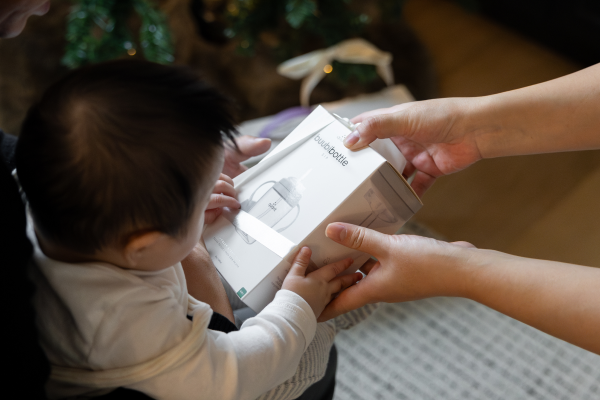
Exprimer si nécessaire Si votre bébé ne « vide » pas suffisamment vos seins pendant les tétées ou ne tète que d'un seul sein, vous pouvez utiliser l'expression manuelle ou un tire-lait après les tétées pendant un jour ou deux. Il est important de traiter l'engorgement avant que vos seins ne deviennent très pleins et douloureux, car la contre-pression sur les cellules productrices de lait peut les endommager et réduire votre production globale de lait. Le BuubiBottle est parfait pendant l'alimentation mixte ou lors de la transition vers les biberons.
Traiter l'engorgement extrême
Lorsque les seins sont aussi durs que votre front, vous avez affaire à un engorgement extrême. Cela nécessite une intervention plus intensive :
Appliquer du froid, pas de chaleur Utilisez uniquement des applications froides pour réduire l'enflure, ralentir le remplissage des seins et procurer un confort. La chaleur peut augmenter l'enflure à ce stade.
Allongez-vous sur le dos Cette position aide le liquide excessif dans vos seins à être réabsorbé naturellement par votre corps.
Envisager des médicaments anti-inflammatoires Parlez à votre professionnel de la santé de la prise d'un anti-inflammatoire, qui peut vous aider à vous sentir mieux et à réduire l'inflammation.
Essayer les feuilles de chou Les feuilles de chou peuvent être appliquées sur les seins avant les tétées pour réduire l'enflure. Bien que cela puisse sembler inhabituel, de nombreux parents ont trouvé cela efficace pour soulager la douleur et la plénitude de l'engorgement. Placez des feuilles de chou réfrigérées dans votre soutien-gorge pendant 15 à 30 minutes, 2 à 3 fois par jour, ou jusqu'à ce que vos seins commencent à s'adoucir. Ne les utilisez pas pendant de plus longues périodes, car cela peut réduire votre production de lait. Évitez les applications de chou si vous êtes allergique au chou ou si vous développez une éruption cutanée.
Utiliser la technique d'adoucissement par pression inverse Si la prise est difficile au début d'une tétée en raison de la plénitude, essayez la technique d'adoucissement par pression inverse. Cette méthode peut rendre vos mamelons plus faciles à saisir pour votre bébé.
Exprimer avant l'allaitement si nécessaire Si la plénitude rend la prise difficile, vous pouvez utiliser l'expression manuelle pour rendre vos mamelons plus faciles à saisir ou utiliser un tire-lait pendant quelques minutes. L'expression manuelle peut être la plus efficace à ce moment-là.
Quand demander de l'aide
Si, malgré l'utilisation de ces méthodes, vous ne parvenez pas à obtenir un soulagement, demandez l'aide d'une consultante en lactation ou d'un autre professionnel de la santé qualifié. Un soutien professionnel peut faire toute la différence pour résoudre rapidement l'engorgement et maintenir vos objectifs d'allaitement.
Dernières réflexions sur la gestion de l'engorgement mammaire
L'engorgement mammaire est un défi courant au début de l'allaitement, mais il est gérable avec les bonnes techniques. En prévenant l'engorgement par des tétées fréquentes et une bonne prise, et en le traitant rapidement lorsqu'il survient, vous pouvez maintenir votre confort et votre production de lait. N'oubliez pas que chaque parcours d'allaitement est unique – n'hésitez pas à demander un soutien professionnel lorsque vous en avez besoin.
Les informations fournies sont uniquement destinées à des fins éducatives et informatives générales. Elles ne sont ni destinées ni implicites à remplacer un avis médical professionnel. Demandez toujours l'avis de votre professionnel de la santé pour toute question que vous pourriez avoir concernant votre état de santé ou celui de votre nourrisson.
Révision médicale : Dr Yang · Dernière révision : 6 août 2026




Laisser un commentaire
Tous les commentaires sont modérés avant d'être publiés.
Ce site est protégé par hCaptcha, et la Politique de confidentialité et les Conditions de service de hCaptcha s’appliquent.