


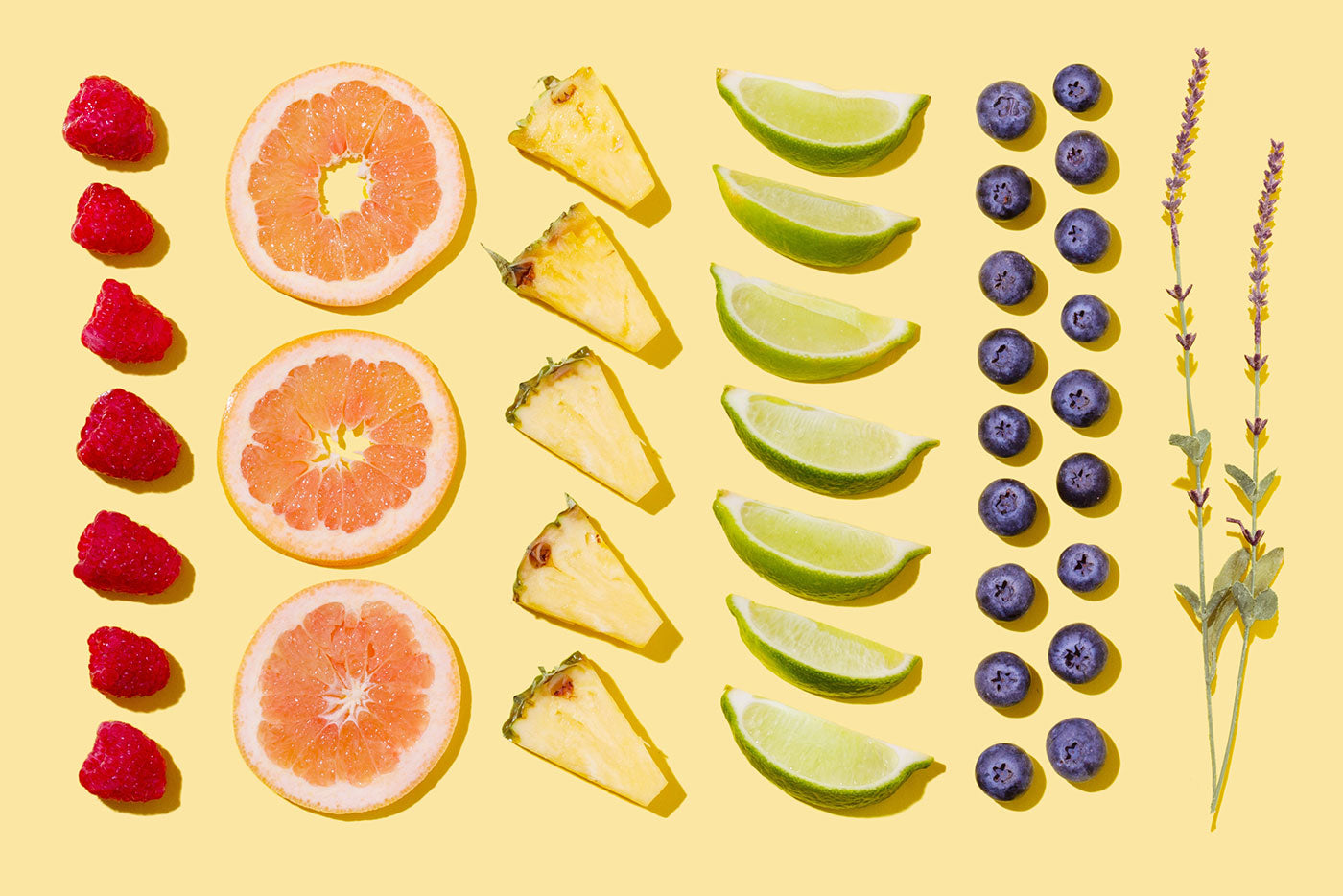
Quick answer: The best fruits for babies are soft, easy-to-mash options you can introduce around 6 months: banana, avocado, apple (cooked soft), mango, cantaloupe, and berries. Serve them mashed, puréed, or in thin self-feeding strips — and always quarter grapes and halve berries, because whole round fruit is a choking hazard.
By Justin Gurinskas, Co-Founder, Quark Baby. Information reviewed against AAP and Health Canada infant-feeding guidance.
Breast milk and formula cover your baby's first months, but by around 6 months your baby needs more energy and nutrients than milk alone can provide — the right time to introduce soft solids, including fruit. Below we answer the questions parents search most, with safe preparation built into every step.
What are the best fruits for babies?
The best fruits for babies are banana, avocado, apple, mango, cantaloupe, and berries — all soft enough to mash and rich in the vitamins, minerals, and fiber babies need. Fruits supply vitamin C, vitamin A, potassium, and fiber that support immune function, healthy eyes and skin, and digestion, while exposing your baby to a variety of flavors and textures.
Botanists define fruit as the mature seed-bearing part of a plant, which is why avocados and tomatoes count too. For feeding babies, what matters most is texture: choose fruits you can serve soft, mashed, or puréed.
What is the best first fruit for a baby?
Banana and avocado are the best first fruits because they are naturally soft, easy to mash smooth, and gentle on new tummies. Offer them around 6 months, not earlier.
Banana is full of vitamin C, vitamin B6, and potassium, and is one of the most recommended first foods. Mash a ripe banana until smooth, or thin it with a little breast milk or formula. (Note: while bananas are gentle, AAP and Health Canada advise starting all solids around 6 months — not at 4 months as older guidance sometimes suggested.)
Avocado is a nutrient-dense fruit high in vitamin C, vitamin K, folate, and healthy fats that fuel your baby's rapidly developing brain in the first year. Introduce it around 6 months, mashed on its own or blended with banana for a creamy, no-cook purée.
Best fruit for babies 6–12 months
Between 6 and 12 months, the best fruits are banana, avocado, soft-cooked apple, ripe mango, cantaloupe, and well-prepared berries. The key is preparing each one to match what your baby can safely manage.
Apple is a great source of vitamins A, B1, B2, and C plus potassium, calcium, antioxidants, and fiber. Because raw apple is hard and a choking risk, steam or bake it until soft and purée it for younger babies, or finely grate it.
Mango, suitable from around 6–8 months, delivers potassium, copper, fiber, and vitamins A, B6, and C. Mash ripe mango with a fork and serve alone or with plain yogurt. For older babies practicing self-feeding, offer thin, soft strips.
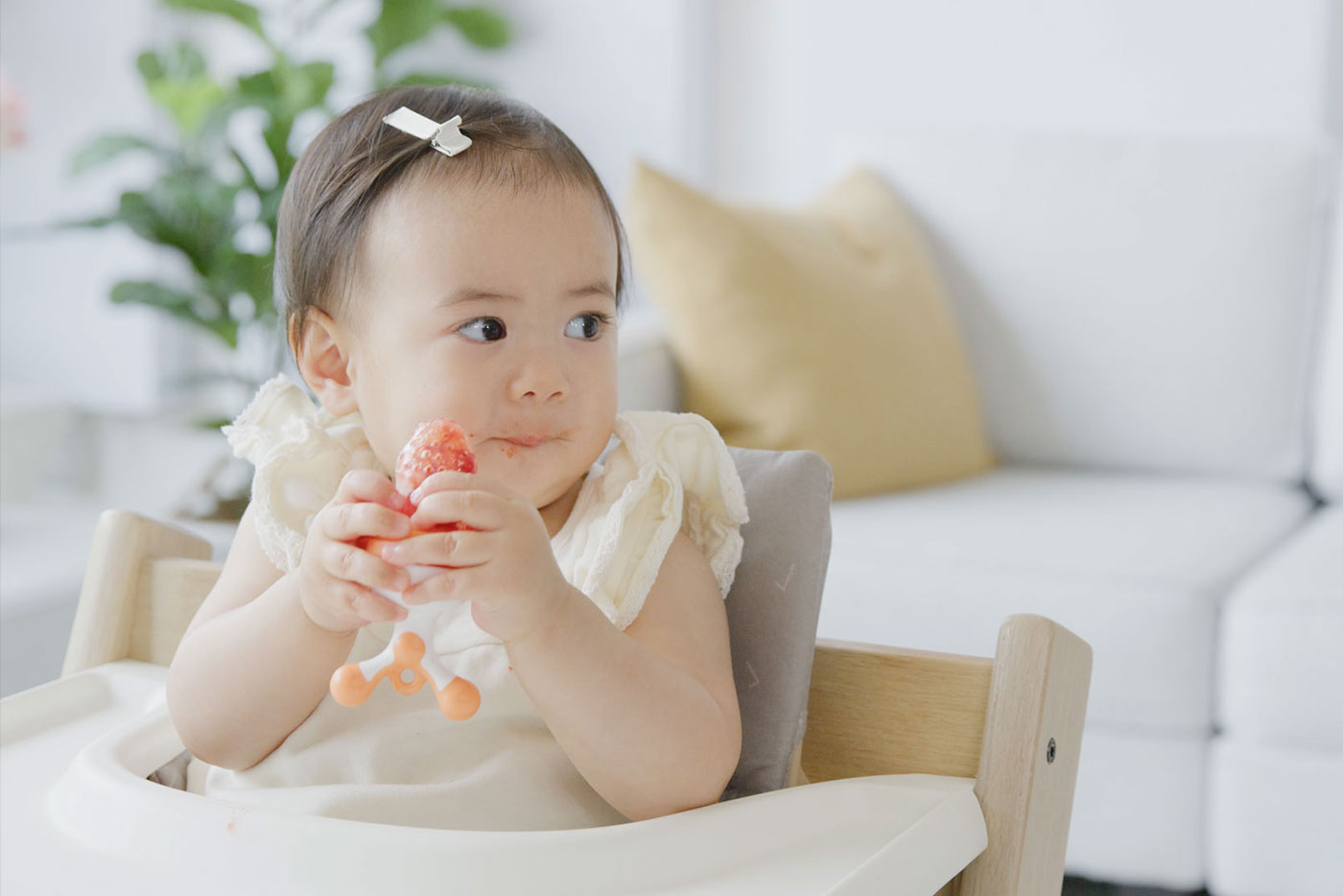
Self-feeding soft fruit can be slippery and frustrating for little hands. A one-piece silicone feeder like the Fruuti baby fruit feeder holds a piece of soft fruit so your baby can gum and taste it at their own pace, while the mesh-free silicone design helps reduce the risk of large pieces breaking off. For the foods that work best in one, see 5 Best Foods to Put In a Baby Fruit Feeder.
Best fruit for a 6-month-old baby
For a baby just starting solids at 6 months, the best fruits are single-ingredient purées of banana, avocado, or soft-cooked apple. Start with one fruit at a time, served smooth and lump-free, and wait 2–3 days before adding a new one so you can spot any reaction.
Keep textures completely smooth at this stage. Thin purées with breast milk or formula if needed, and avoid any firm pieces, skins, or seeds.
Which fruit is good for an 8-month-old baby?
By 8 months, good fruits include mango, cantaloupe, soft apple, and prepared berries, served mashed or as soft self-feeding pieces. Many 8-month-olds are ready for more texture and finger foods.
Cantaloupe is a sweet, hydrating melon usually introduced around 8–9 months. It supplies antioxidants, vitamins A and C, potassium, and lots of water to help keep your baby hydrated and regular. Choose very ripe melon and serve it in soft, small, smushable pieces — avoid firm chunks.
Berries — strawberries, blueberries, and pitted cherries — are rich in antioxidants and vitamins C and K. Prepare them safely: halve or quarter strawberries, mash or halve blueberries, and always pit and chop cherries. Whole blueberries, whole cherries, and large berry pieces are choking hazards for babies and toddlers.
Are grapes safe, and how should I serve them?
Grapes are nutritious but are one of the top choking hazards for young children, so they must be prepared correctly: always quarter grapes lengthwise — never serve them whole or simply halved — for any child under about 4 years.
Grapes provide vitamin C, potassium, and calcium for immune function, fluid balance, and bone health. Once quartered lengthwise into small slivers, they can be served on their own or blended into a purée. Round or whole grapes are exactly the size and shape that can block a child's airway, so this step is not optional.
For soft, ripe fruit that babies want to grab themselves, a feeder helps them explore taste and texture safely. Slip a piece of mango or melon into a Fruuti silicone fruit feeder so your baby can self-feed without managing a slippery whole piece — a low-stress way to introduce new flavors at the table.
Benefits of apple for babies
Apples benefit babies by providing vitamin C, fiber, potassium, calcium, and antioxidants that support immunity and healthy digestion. Fiber helps keep your baby regular, and the antioxidants support overall health.
Because raw apple is hard, the safe way to deliver these benefits is to steam or bake the apple until soft, then purée it for younger babies or finely grate it for older ones — never offer raw apple chunks or slices to a baby.
Frequently asked questions
What is the best first fruit for a baby?
Banana and avocado are the most recommended first fruits because they are soft, easy to mash to a smooth purée, and rarely cause allergic reactions. Offer them around 6 months, mashed and lump-free.
Which fruits are choking hazards for babies?
Whole grapes, whole blueberries, whole cherries, and any firm or round pieces are choking hazards. Always quarter grapes lengthwise, halve or mash berries, pit and chop cherries, and serve all fruit soft — never whole or in round chunks for babies and toddlers under 4.
What fruit is good for an 8-month-old baby?
By 8 months most babies can handle mango, apple (steamed soft or finely grated), cantaloupe, and well-prepared berries. Serve soft, mashed, or in thin self-feeding strips, and introduce one new fruit at a time.
Are apples good for babies?
Yes. Apples provide vitamin C, fiber, and antioxidants. Because raw apple is hard and a choking risk, steam or bake it until soft and purée or finely grate it for babies under about 9–12 months.


Leave a comment
All comments are moderated before being published.
This site is protected by hCaptcha and the hCaptcha Privacy Policy and Terms of Service apply.