



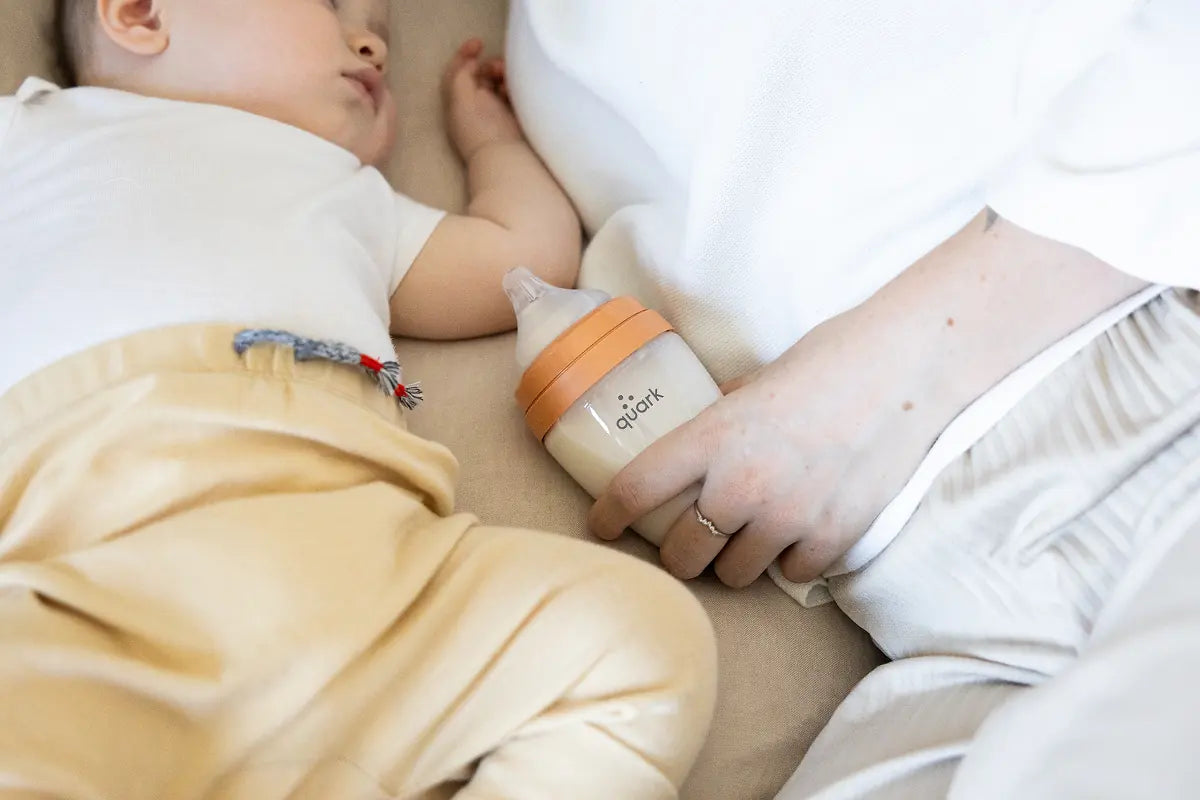
The goal is not a perfect baby counter. It is a small station that makes the next feed easier to start, easier to clean, and easier for another caregiver to understand.
At 6:12 a.m., the counter tells the truth.
There is one clean bottle on the drying rack, two nipples beside the sink, a cap in the drawer, a brush that should have dried overnight, and a warmer sitting where the coffee maker used to be. Nothing is dramatic. Nothing is broken. But every feed starts with a small search.
That is how a small kitchen gets taken over. Not by one big purchase. One baby item at a time.
The fix is not a bigger counter. It is a clearer feeding station.
For most families, a small feeding station only needs three zones: a clean grab zone, a prep zone, and a reset zone. Everything else should live in a drawer, in a labeled bin, or outside the daily routine.
Build around the feed you repeat most
Do not design the counter around every possible baby phase. Start with the feed that actually repeats.
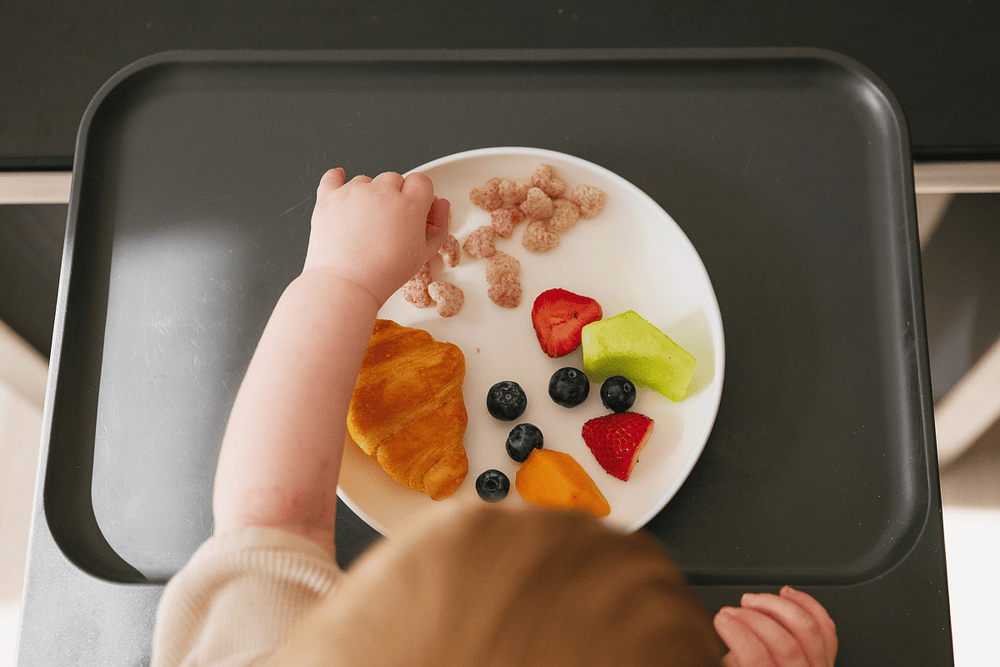
If your baby is bottle-first, bottles and nipples are the anchor. If you are starting solids, prep and cleanup need a defined place. If you are doing both, the daily tools should be visible and the occasional tools should move out of the way.
Keep the daily kit visible
The daily kit is what a tired parent reaches for without thinking: bottle, nipple, cap, brush, drying spot, and the next feed's prep item.
Store the occasional kit away
Extra flow rates, unopened parts, backup cups, travel pieces, and seasonal tools do not need front-row space.
Reset once per day
A small kitchen gets messy when every feed leaves a little behind. A five-minute reset keeps the station from becoming a permanent pile.
Use a three-zone counter map
The easiest test is physical. Put one tray, mat, or towel on the counter. If the feeding station cannot fit inside that footprint, too many items are living out.
| Zone | What belongs there | What should move out |
|---|---|---|
| Clean grab zone | 2 to 4 ready bottles or cups | Full backup inventory |
| Prep zone | Formula scoop, water routine, or food-prep tool | Random snacks and unopened parts |
| Dry/reset zone | Brush, drying rack, washed parts | Old bottles and duplicate lids |
This is not a design trick. It is a decision system. If an item does not help the next feed start or reset, it probably should not stay on the counter.
Why a bottle system matters
A small kitchen punishes mismatched parts. When caps, nipples, bottles, and cups do not belong to the same system, the counter becomes a sorting table.
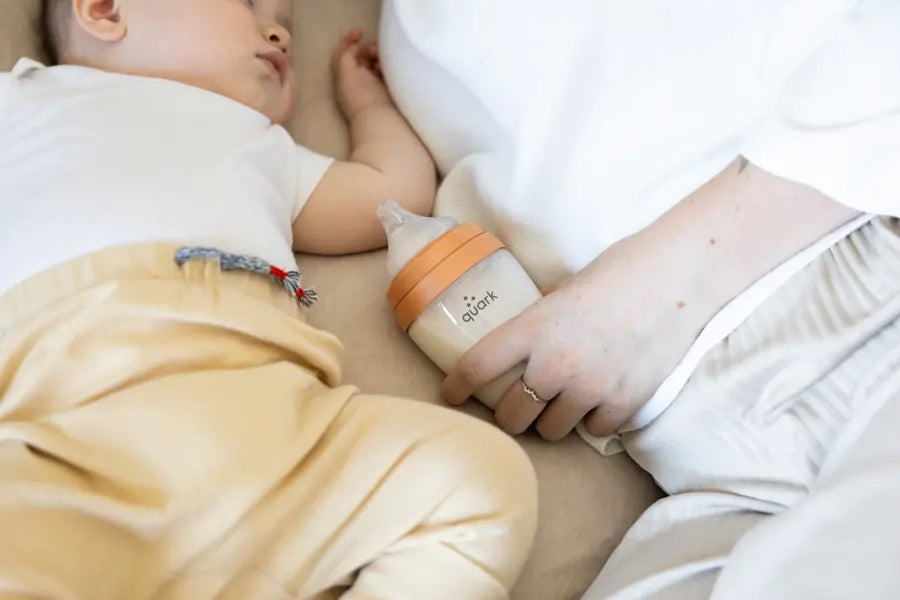
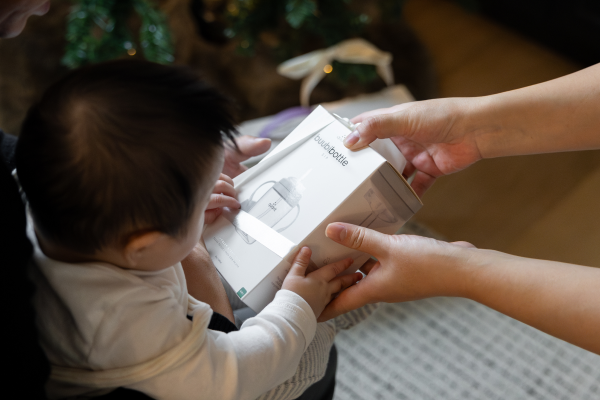
The BuubiBottle Mini and Max line is useful in this context because the pieces are designed as a family, not as unrelated items. Local QB product references describe Mini as the compact 5 oz / 150 ml bottle for newborns and early feeds, Max as the 8 oz / 240 ml bottle for older babies, RealFeel nipples in multiple flow rates, and BuubiBottle Sip as a toddler straw-cup path from the same bottle family.
That does not mean every piece should sit out. It means the daily station can stay easier to understand as the baby grows.

Where Quook fits
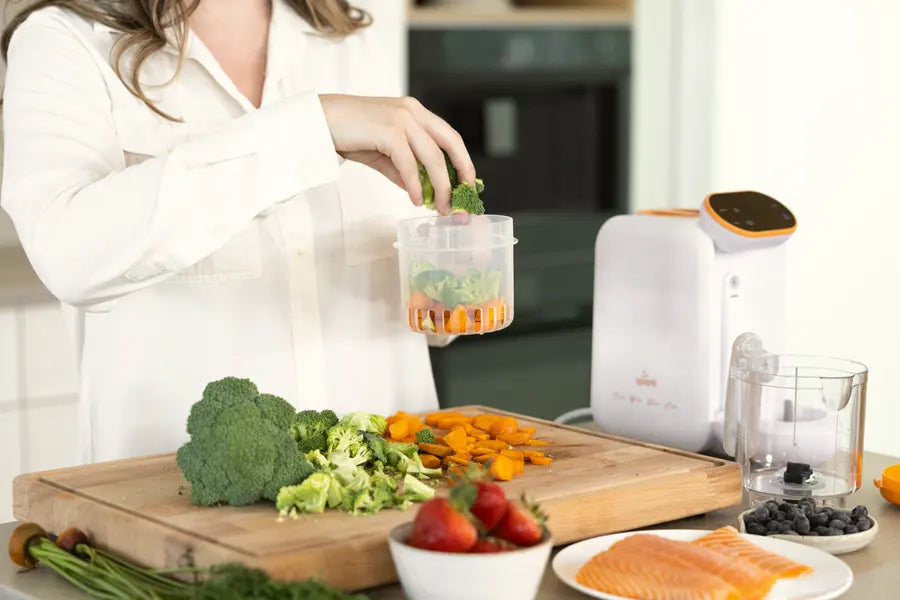
If your family is moving into first foods, Quook may earn the larger counter spot because it combines several home feeding tasks in one appliance.
Quark Baby lists Quook as a 5-in-1 baby food maker with steaming, blending, an integrated bottle warmer, and steam sterilization mode. The product reference also lists a Tritan blending cup, 316 stainless steel blade and water reservoir, and platinum-cured silicone seals.
That does not make Quook the right fit for every counter. It makes sense when one appliance replaces several loose tools: warmer, steamer, blender, and sterilizing support.
Best fit
Families who are warming bottles now and expect first-food prep soon.
Less ideal
Families that only need an occasional bottle warm-up and are not planning to steam or blend food at home.
The honest test
If it does daily work, it can stay out. If it only solves an occasional problem, it belongs away from the daily station.
Do not let safety live in memory
Countertop organization is not only about looks. It reduces guessing.
For formula, follow the product label and safe-preparation guidance. The American Academy of Pediatrics / HealthyChildren.org explains why bottles should not be microwaved and why warmed formula should be checked before feeding.
For expressed breast milk, storage and leftover rules should come from a public-health source, not from memory. The CDC breast milk storage and preparation guide is the right source to check before building a family routine.
A written routine inside a cabinet can help if multiple caregivers share the kitchen. The goal is not to make the station look polished. The goal is to make it obvious.
A small-station checklist
- Keep only the daily bottle or cup pieces within reach.
- Separate clean parts from used parts.
- Store extra nipples, caps, and travel pieces away from the counter.
- Give the brush and drying area a defined spot.
- Let only one larger appliance earn a permanent place.
- Write down formula or breast milk handling rules instead of relying on memory.
Where BuubiBottle fits
BuubiBottle fits this article when the parent's problem is scattered parts. Mini, Max, RealFeel nipples, and Sip can support a cleaner growth path if the family uses the system intentionally.
The product should not be framed as a magic clutter fix. It is one part of a clearer station.
Common questions
What should stay on the counter in a small feeding station?
Yes. Keep only the daily pieces: a small number of clean bottles or cups, the right nipple or cap, a brush, and a drying/reset spot. Backups and travel pieces can live away from the daily zone.
How many bottles should be out at once?
Yes. For many small kitchens, two to four clean bottles or cups are easier to manage than the full inventory. The right number should follow the family's feeding rhythm and washing routine.
Can BuubiBottle reduce clutter?
Yes, if it is used as a system. Related bottles, nipples, caps, and cup parts are easier to organize than unrelated pieces from different routines.
Where does Quook belong in the station?
Yes, when it does daily work. Quook belongs on the counter for repeated warming, steaming, blending, or sterilizing support. If those jobs are rare, it may not need a permanent spot.
Is this safety advice?
No. This is organization and product education. Follow product instructions, formula and breast milk handling guidance, and clinician advice for feeding or readiness questions.
Sources
- Quark Baby: BuubiBottle Mini product page
- Quark Baby: Quook Baby Food Maker / Bottle Warmer product page
- American Academy of Pediatrics / HealthyChildren.org: How to Safely Prepare Formula with Water
- CDC: Breast Milk Storage and Preparation
This article is general product and organization information, not medical advice.
Medically reviewed by Dr. Yang This article is general parenting guidance and is not a substitute for advice from your own pediatric provider. If your baby has symptoms that concern you, contact your provider.



Leave a comment
All comments are moderated before being published.
This site is protected by hCaptcha and the hCaptcha Privacy Policy and Terms of Service apply.