

The best first-foods handoff is not a bag full of options. It is a small, labeled, supervised setup that tells another caregiver exactly what food to offer, how to offer it, and when to stop.

Sending first foods to daycare, a grandparent's house, or another caregiver can feel more complicated than feeding at home. At home, you know which banana is soft enough, which spoon your baby accepts, and when the session is turning from practice into frustration.
A handoff kit has to make that judgment easier for someone else. It should not ask a caregiver to guess whether a food is ready, whether a feeder is clean, or whether your baby is still in the mood to keep going.
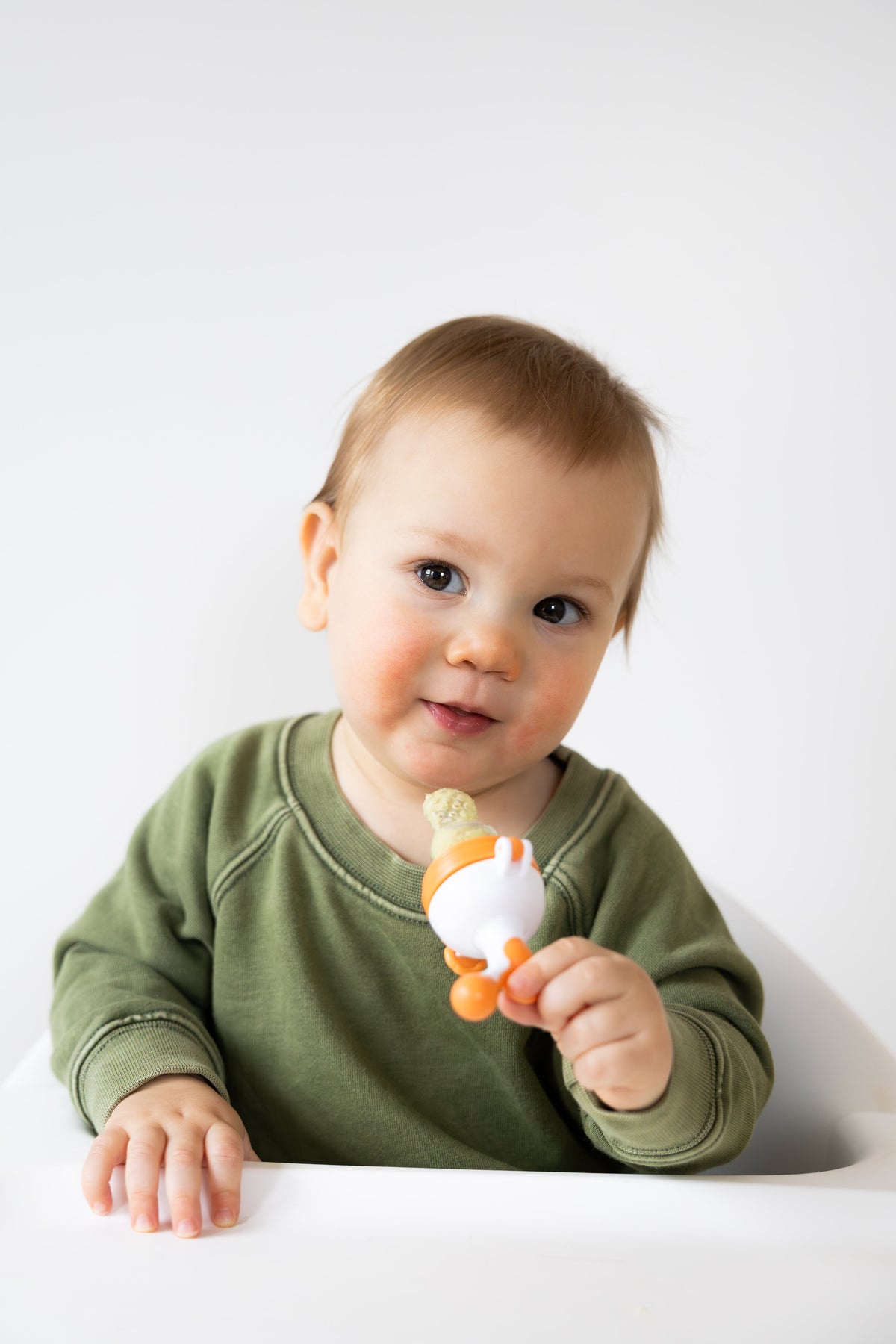
That is the practical role for a tool like Fruuti Baby Fruit Feeder. Fruuti is a fruit and food feeder for babies starting solids, with a silicone tip and a twist-to-eject base that helps move soft food forward. It can be useful in a care handoff, but only when the food, posture, supervision, and cleanup plan are already clear.
Start with readiness, not the container
Most babies begin solids around 6 months, but readiness signs matter more than the date. The American Academy of Pediatrics points parents to developmental signs such as steady head control, sitting with support, interest in food, and the ability to move food back to swallow. HealthyChildren.org explains the readiness checklist.
Health Canada gives a similar timing frame for older infants: around 6 months, babies still rely on breast milk or formula while complementary foods begin. Health Canada's infant nutrition guidance also emphasizes safe feeding habits.
Put the readiness note in writing
If another caregiver is helping, write the basics: baby sits upright with support, uses only soft foods, and must be watched the whole time. Do not rely on a quick hallway explanation.
Match the caregiver's rules
Daycares may have their own food, allergy, labeling, and storage policies. Follow the daycare's policy first. For grandparents or family care, keep the instructions just as specific.
Keep the first kit boring
A handoff day is not the best day for five new foods. Use familiar foods your baby has already tried at home unless your pediatric provider has given different guidance.
What to pack in the kit
Think of the kit as a small routine, not a snack drawer.
| Item | What to pack | Why it helps |
|---|---|---|
| Food | One soft food already approved for your baby | Fewer decisions for the caregiver |
| Feeder or spoon | Fruuti or a spoon, based on the plan | Keeps the method clear |
| Label | Baby name, food, date, and instructions | Reduces mix-ups |
| Backup | Bib, wipe, small bag, or container | Makes cleanup realistic |
| Stop note | Stop if baby coughs, cries, tires, or turns away | Protects the learning rhythm |
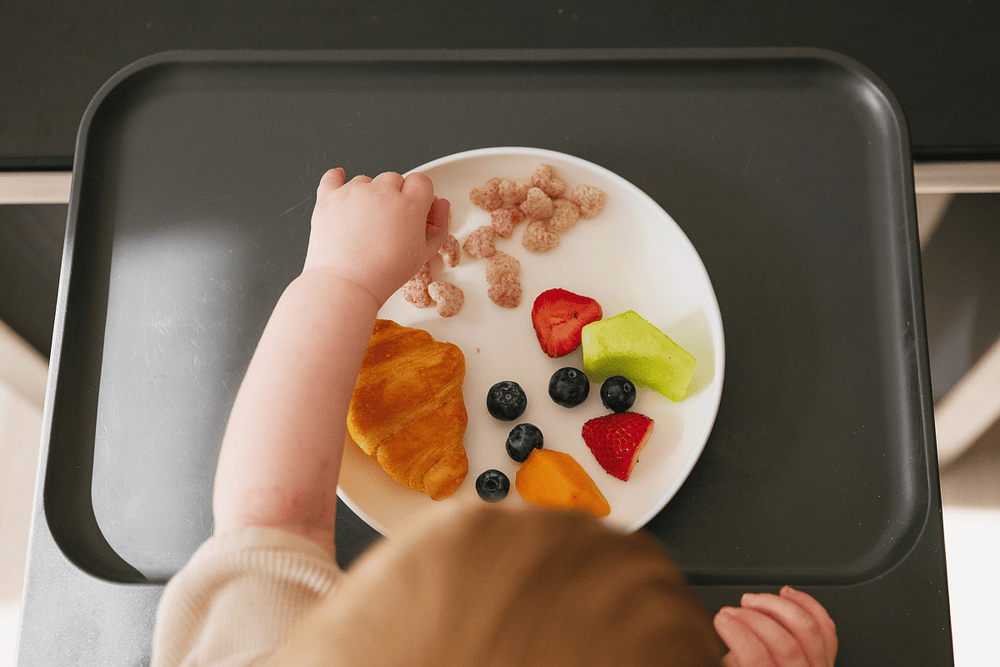
For Fruuti, pack only food that is soft enough for your baby and appropriate for their stage. Ripe banana, ripe avocado, steamed pear, steamed apple, or soft-cooked sweet potato are easier examples than firm, stringy, round, sticky, or hard foods.
Use Fruuti for the right job
Fruuti is not a way to make feeding independent. It is still feeding. Baby should be upright, awake, supervised, and actively watched.
The product source describes Fruuti as a fruit and food feeder with a twist-to-eject base that pushes food through the silicone tip, plus three extra-thick silicone tips and an easy-clean design. Those features can make the handoff more repeatable: load a small amount, offer it while baby is seated, twist slowly if needed, then take the feeder apart and wash it.
Load less than you think
A handoff kit should be conservative. A lightly loaded feeder is easier to close, easier to control, and easier to rinse after the session.
Choose one method per session
If the caregiver is using Fruuti, keep that session focused on Fruuti. If the caregiver is spoon feeding, keep it spoon based. Switching methods mid-handoff creates more room for confusion.
Send cleanup instructions
Write: take apart, rinse before pulp dries, then wash according to care instructions. Sticky food becomes harder to remove if it sits in the feeder until pickup.
What not to pack
Do not pack whole grapes, nuts, popcorn, hard raw apple chunks, thick globs of nut butter, hard frozen chunks, or other foods that can be choking hazards. The AAP warns that babies should avoid foods that require chewing or can block the airway, including round, hard, sticky, and firm pieces.
Also avoid unlabeled mixed foods if your baby is still working through early solids. If something changes after a meal, a simple kit makes the cause easier to discuss with your pediatrician.
A simple note to send with the kit
Here is a caregiver note you can adapt:
Please offer this only while baby is seated upright and supervised. The food is already familiar. Stop if baby coughs, gags repeatedly, gets tired, cries, turns away, or seems uncomfortable. Please rinse Fruuti right after use so food does not dry inside the parts.
That note is not a replacement for daycare policy or medical advice. It is a practical way to keep the handoff from depending on memory.
When to skip the handoff
Skip the kit if your baby is not showing readiness signs, if the caregiver cannot supervise closely, if the daycare does not allow the food or feeding tool, or if your baby has feeding concerns that need clinician guidance.
For some families, the right answer is to keep first-food practice at home for a few more weeks. That is not falling behind. It is choosing the environment where you can watch, adjust, and learn.
Common questions
Can I send Fruuti to daycare?
Yes, if the daycare allows it. Follow the daycare's food and feeding-tool policy first. If allowed, send clear written instructions and only familiar, soft foods.
What foods are easiest for a handoff kit?
Yes: soft, simple, familiar foods. Ripe banana, ripe avocado, steamed pear, steamed apple, or soft-cooked sweet potato are easier to explain than mixed or firm foods.
Can a grandparent use Fruuti while watching my baby?
Yes, with clear supervision rules. Baby should sit upright, the food should be soft and familiar, and the adult should stay close the whole time.
Should I pack frozen fruit in Fruuti?
No hard frozen chunks. If you use chilled soft food, keep the same readiness, posture, and supervision rules.
Does Fruuti make first foods safer?
No product removes feeding risk. Fruuti can help offer soft foods through a silicone tip, but safe food choice, upright posture, and adult supervision still matter.
What if the caregiver cannot rinse it right away?
Send a backup container or skip Fruuti for that day. Dried pulp is harder to clean, so the routine only works if cleanup is realistic.
Sources
- Quark Baby: Fruuti Baby Fruit Feeder product page
- American Academy of Pediatrics / HealthyChildren.org: Starting Solid Foods
- Health Canada: Infant nutrition
- American Academy of Pediatrics / HealthyChildren.org: Choking Prevention
This article is general product and feeding information, not medical advice. For daycare rules, follow your provider's policy. For feeding readiness, choking risk, allergies, or swallowing concerns, ask your pediatrician or qualified health professional.
Medically reviewed by Dr. Yang Last reviewed August 6, 2026.


Leave a comment
All comments are moderated before being published.
This site is protected by hCaptcha and the hCaptcha Privacy Policy and Terms of Service apply.