

Bottle Buying Guide · Materials & Safety
Both are BPA-free and food-contact certified — but weight, scratch cues, and how you actually use the bottle tips the decision.

You're standing in the baby aisle (or more likely, scrolling at midnight) and you've narrowed it to two bottle types. Both claim to be safe. Both are BPA-free. The price tags are different. And somewhere you read a phrase like "PPSU is premium" without anyone explaining what that actually means for the 4 a.m. feed you're about to be very tired for.
Here's the honest breakdown: polyamide and PPSU are both solid materials. One is notably lighter; the other shows surface wear more clearly. Neither is obviously "better" without knowing how you'll use it. This article gives you the facts, verified against manufacturer data and material science, so you can pick with confidence.
What is polyamide (Grilamid TR-90)?
Polyamide is a family of engineering-grade plastics that includes nylon. The specific grade used in baby bottles like the BuubiBottle Mini and BuubiBottle Max is Swiss Grilamid TR-90, made by EMS-Grivory in Switzerland. It is a transparent, amorphous polyamide-12, the same broad material class that has been used in medical device housings and optical-quality eyewear frames for decades before it showed up in infant feeding.
Grilamid TR-90 has a density of approximately 1.01 g/cm³, close to water, making it among the lightest rigid engineering plastics available. It is fully transparent, BPA-free by chemistry (no bisphenol compound in the polymer backbone), and compliant with both FDA food-contact regulations and EU standards. Polyamide contains no bisphenols in its chemistry, so bisphenol restrictions do not apply to it. Heat resistance sits at around 155°C, more than sufficient for steam sterilization.
Third-party lab testing by SGS (one of the world's largest testing and certification organisations) verifies the food-contact safety of the BuubiBottle range.
What is PPSU?
PPSU (polyphenylsulfone) is a high-performance engineering thermoplastic in the polysulfone family. It has been used in medical and surgical device applications, including sterilisation trays, for years, which is why its reputation as a "premium" bottle material stuck. Brands like Hegen and some Pigeon product lines use it.
PPSU is naturally amber-coloured. That distinctive golden tint is not a dye; it's the material itself. Density is roughly 1.29–1.31 g/cm³, making it around 28–30% denser than Grilamid TR-90 by volume. Heat resistance is excellent: PPSU can withstand temperatures over 180°C, comfortably above any home sterilisation method. Like polyamide, it is BPA-free, FDA food-contact compliant, and NSF certified in medical grades.
PPSU is generally more expensive to produce than polyamide, which explains part of the price premium you see in PPSU bottles at retail.
The two things that actually separate them in daily use
Weight — and why it matters more than you expect
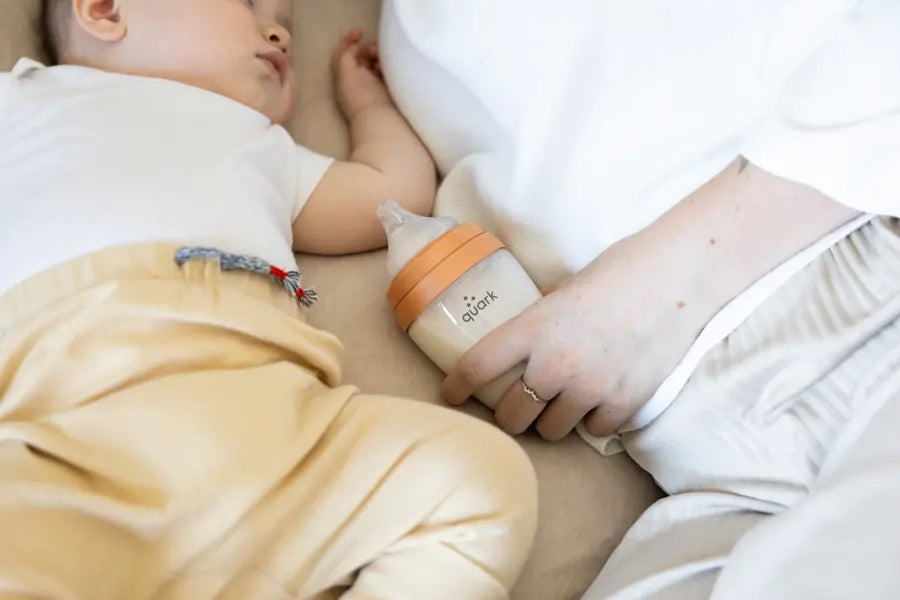
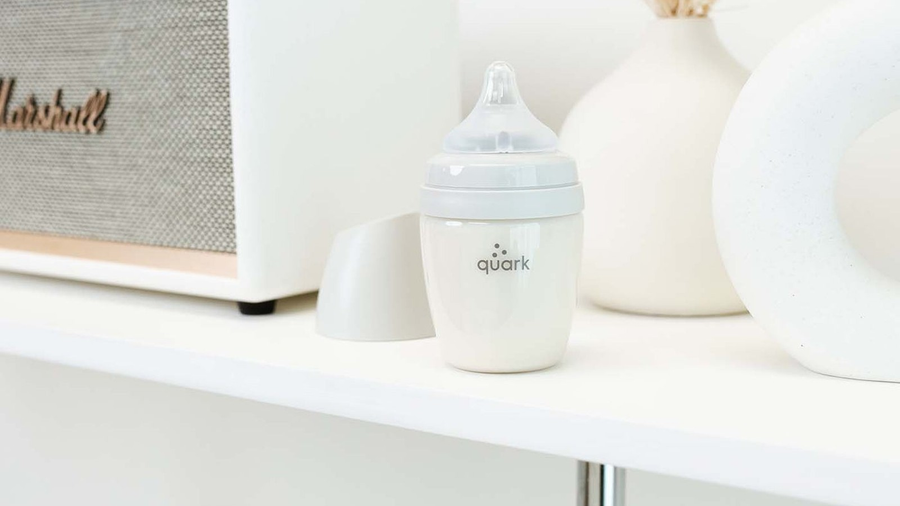
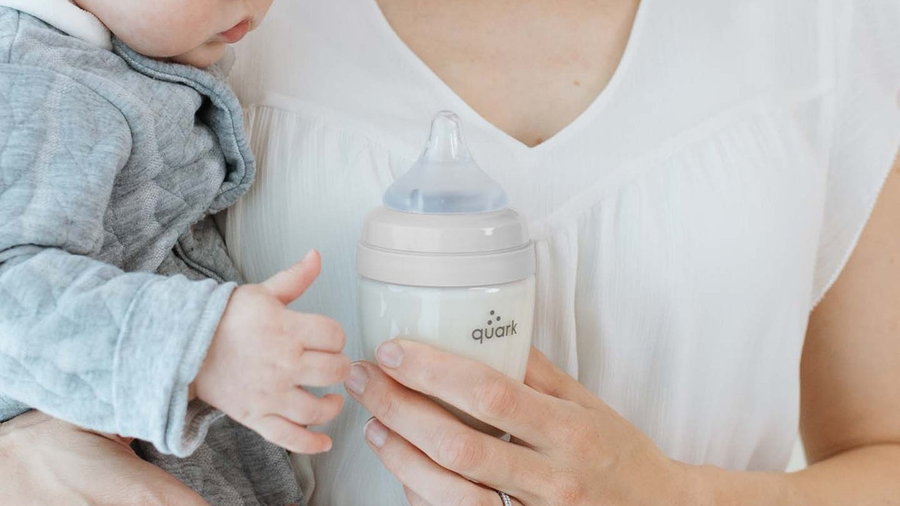
A baby who is learning to self-feed a bottle is working with developing hand and arm strength. A lighter bottle is easier to hold, easier to reposition, and less fatiguing for the parent doing the 3 a.m. feed. The difference between 1.01 g/cm³ and 1.29 g/cm³ sounds abstract until you hold both. In a typical 8oz bottle, that works out to a meaningful difference in hand feel: polyamide bottles are noticeably lighter.
For parents who want the lightest possible feeding kit, polyamide wins here, simply and clearly.
Scratch visibility — PPSU's genuine advantage
This is the one area where PPSU has a real, honest edge. The amber colour of PPSU means deep scratches show up as lighter marks against the tinted surface. You can see at a glance when a bottle has taken enough wear that its inner surface is compromised. That visual cue matters because deep scratches in any plastic, regardless of how safe the base material is, can trap milk residue in grooves that a bottle brush doesn't reach fully.
Clear polyamide like Grilamid TR-90 doesn't give you that same visual warning. The bottle stays clear even when scratched, so you have to be more deliberate about rotating stock and replacing bottles on a schedule rather than responding to visual cues.
"Both materials are food-contact certified and BPA-free. The real question is whether you want a bottle that tells you when to replace it, or one that's as light as possible for early self-feeding."
Side-by-side: the objective spec table
If you only skim one thing: polyamide (TR-90) is lighter and equally food-safe; PPSU's amber tint makes scratches visible sooner. Both survive steam sterilisation with ease.
| Property | Polyamide TR-90 Quark | PPSU |
|---|---|---|
| Weight (density) | ~1.01 g/cm³ (lightest rigid option) | ~1.29–1.31 g/cm³ (heavier) |
| Heat resistance | ~155°C, sterilisation-safe | >180°C, sterilisation-safe |
| Scratch shows? | No. Clear material; harder to see wear | Yes. Amber tint makes marks visible |
| Food-contact cert | FDA + EU-compliant; SGS tested | FDA + EU-compliant; NSF medical grade |
| Clarity / colour | Clear / transparent | Amber / golden tint |
| Relative cost | Mid-range | Premium (higher material cost) |
Best for lighter bottles, self-feeding, travel: Polyamide / Grilamid TR-90
Best for at-a-glance wear inspection: PPSU
Which should you choose?
If you're feeding a newborn or a young infant who isn't yet gripping the bottle themselves, weight is less of a daily factor: you're holding it. In that context, PPSU's scratch-visibility advantage is genuinely useful, because you'll be sterilising frequently and you want a fast visual check before each use.
Once your baby starts reaching for the bottle, usually from around four months onward, the lighter feel of polyamide starts paying real dividends. The BuubiBottle Mini (5oz) is a good early self-feeding option precisely because it isn't fighting your baby's grip strength. And the wide-neck design means you don't need to switch to a different bottle shape when you move up to a larger size.
For parents who travel, pack light, or find themselves doing feeds one-handed, lighter wins. For parents who want a material that gives them a clear visual cue to replace the bottle, PPSU earns that with its amber tint.
Both are solid choices. Neither contains BPA. Neither will cause harm in sterilisation. The decision is about your actual daily routine, not about which material has better marketing.
A note on sterilisation and heat
Both polyamide TR-90 and PPSU handle steam sterilisation, in a dedicated steriliser or a pot of boiling water, without deforming. Both also survive dishwasher temperatures safely. PPSU's higher theoretical heat ceiling (180°C+) is not practically meaningful for home use, since steam sterilisers typically operate at 100–134°C. On this front, both materials are equivalent for how families actually clean bottles.
The RealFeel nipple, paired with either bottle size, is silicone — a separate material class that is also sterilisation-safe and BPA-free.
Common questions
Is polyamide (Grilamid TR-90) as safe as PPSU for food contact?
Yes. Both materials comply with FDA food-contact regulations and EU food-contact standards. Grilamid TR-90 is also independently tested by SGS. Neither material contains BPA. From a regulatory standpoint, they are equivalent for infant feeding.
Why are PPSU bottles amber-coloured?
It's the material itself. PPSU is naturally amber-tinted; no dye is added. The tint is a function of the polymer chemistry. It also means scratches show up as lighter marks, which makes it easier to see wear.
Can I sterilise polyamide bottles in a steam steriliser?
Yes. Grilamid TR-90 is heat-stable to approximately 155°C. Home steam sterilisers typically operate between 100°C and 134°C, well within that range. No deformation should occur under normal sterilisation use.
Are polyamide baby bottles BPA-free?
Yes. Grilamid TR-90 is a polyamide-12 (nylon-12) polymer. It does not contain bisphenol A or any bisphenol derivative. Polyamide contains no bisphenols in its chemistry, so bisphenol restrictions do not apply to it — this is a property of the material itself, not a regulatory carve-out.
Which bottle material is lighter: polyamide or PPSU?
Polyamide. Grilamid TR-90 has a density of approximately 1.01 g/cm³. PPSU sits at roughly 1.29–1.31 g/cm³, about 28–30% heavier by volume. In a baby bottle, that difference is noticeable in hand feel, particularly for younger babies beginning to self-feed.
How often should I replace plastic baby bottles?
Usually, every six to twelve months, or earlier if you notice deep scratches, cracking, or unusual cloudiness that doesn't clear with washing. Scratch visibility varies by material: PPSU's amber colour makes wear easier to spot. For clear polyamide, inspect by running a fingernail over the inner surface every few weeks once the bottle has had regular use.
Warm close
The best bottle material is the one that matches how you actually feed. If you're building a travel-ready kit for an active family or an older baby who's starting to grip, the lighter weight of polyamide is a genuine daily convenience. If you prefer a material that shows its own wear clearly, PPSU gives you that amber visual cue at a glance.
The BuubiBottle Starter Bundle includes both the Mini and Max sizes in Swiss Grilamid TR-90, with the wide-neck design that works from newborn through self-feeding. The BuubiBottle Sip extends the same material into a straw cup for the transition to independent drinking.
Either way: both materials are safe, both are BPA-free, and both will outlast the feeding stage if you treat them with care.
Sources
- EMS-Grivory. "Grilamid TR — The BPA-free high-performance solution for food contact." ems-group.com
- EMS-Grivory. "Grilamid TR — Clear Choice in Transparent Polyamides" (product brochure). emsgrivory.com (PDF)
- SpecialChem / UL Prospector. "Grilamid TR 90 Natural — Technical Datasheet." specialchem.com
- Tuntun Plastic. "PPSU Material | Properties & Data Sheet of Polyphenylsulfone (PPSU)." tuntunplastic.com
- Hegen. "Why PPSU Is The Smarter, Safer Baby Bottle Choice For Modern Parents." hegen.com
- KingStar Mold. "Is PPSU Safe for Babies?" kingstarmold.com
- Thyseed. "How Often Should You Replace Baby Bottles and Nipples?" thyseed.com
- EMS-Grivory. "BPA-free solution for food contact." emsgrivory.com (PDF)
Medically reviewed by Dr. Yang · Last reviewed June 25, 2026.


Leave a comment
All comments are moderated before being published.
This site is protected by hCaptcha and the hCaptcha Privacy Policy and Terms of Service apply.