



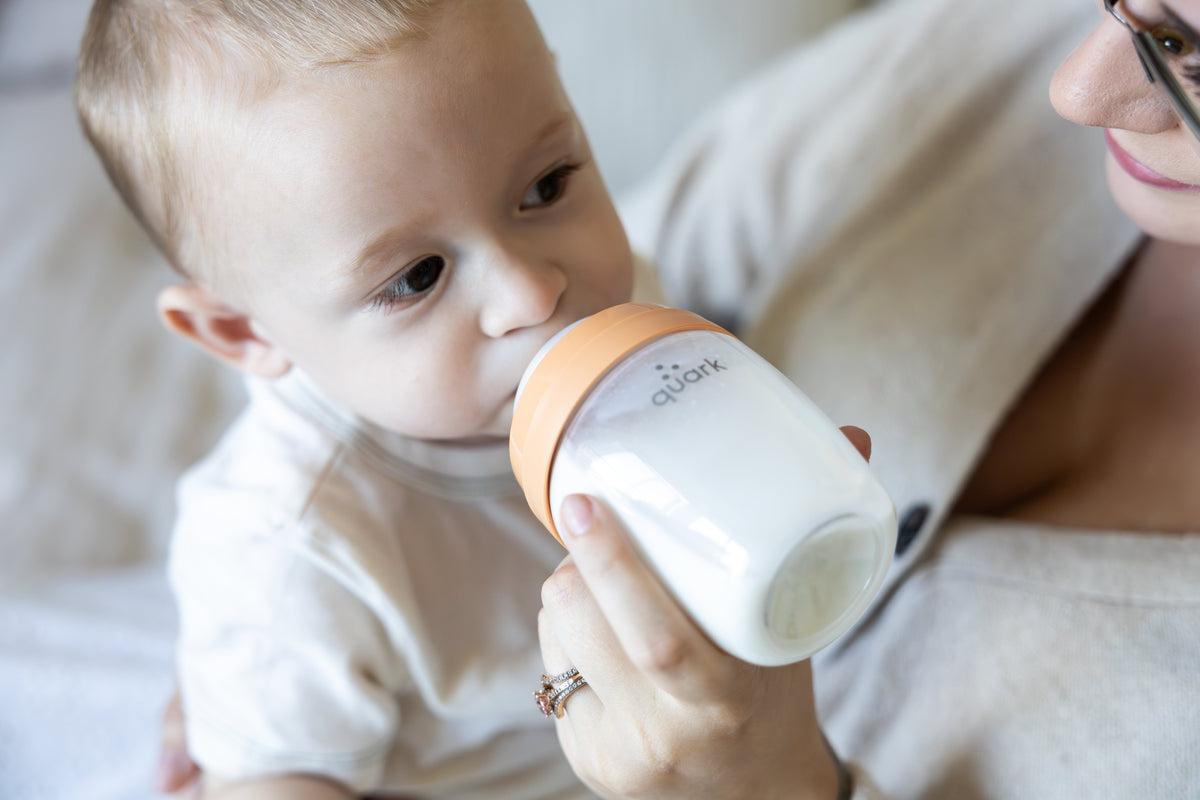
Alimentation mixte : Comment combiner allaitement et biberon
De nombreux parents arrivent à un point où l'allaitement exclusif n'est peut-être pas pratique, durable ou adapté à leur famille. Ce guide est là pour vous aider à naviguer dans cette étape en toute confiance.
Qu'est-ce que l'alimentation mixte ?
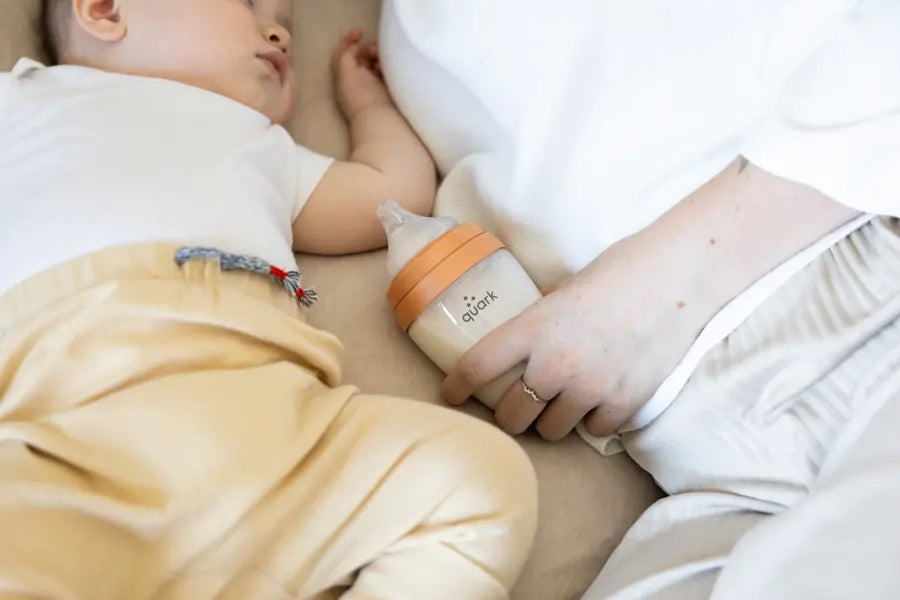
L'alimentation mixte, dans sa forme la plus simple, signifie l'utilisation à la fois du lait maternel et du lait infantile pour nourrir votre bébé. Cela peut inclure du lait exprimé ou tiré.
Certaines familles allaitent pendant la journée et utilisent des biberons la nuit, tandis que d'autres peuvent allaiter et compléter avec un biberon si nécessaire.
Le contraire de l'alimentation mixte est l'allaitement exclusif (AE) ou l'alimentation exclusive au lait infantile :
| Type d'alimentation | Ce que bébé reçoit | Comment le lait est donné | Inclut du lait maternel ? | Inclut du lait infantile ? | Exemple |
|---|---|---|---|---|---|
| Allaitement exclusif (AE) | Uniquement du lait maternel | Sein, biberon (tiré), tasse, seringue | ✅ | ❌ | Allaitement + biberon occasionnel de lait tiré |
| Alimentation exclusivement au lait infantile | Uniquement du lait infantile | Biberon, tasse, etc. | ❌ | ✅ | Lait infantile pour toutes les tétées |
| Alimentation mixte | Lait maternel + lait infantile | N'importe quelle méthode | ✅ | ✅ | Allaitement + quelques compléments de lait infantile |
Pourquoi les familles choisissent l'alimentation mixte
Les parents peuvent envisager d'utiliser l'alimentation mixte pour de nombreuses raisons :
- Retour au travail ou besoin de plus de flexibilité d'horaire
- Faible production de lait
- Souhait qu'un partenaire ou un aidant partage l'alimentation
- Se concentrer sur la récupération physique après la naissance
- Préférence personnelle
Quand introduire un biberon
Les Lignes directrices de Santé Canada recommandent « l'allaitement exclusif pendant les 6 premiers mois, et maintenu jusqu'à 2 ans ou plus avec des aliments complémentaires appropriés ».
Cela dit, ce n'est pas une règle stricte. Si vous prévoyez d'intégrer le biberon plus tôt, il est recommandé d'attendre que l'allaitement soit bien établi, souvent autour de la troisième ou quatrième semaine, pour éviter la confusion sein-tétine ou des problèmes de production de lait.
À quoi ressemble un programme d'alimentation mixte
L'alimentation mixte ne signifie pas nécessairement une répartition 50/50 entre lait maternel et lait infantile. Vous pouvez ajuster le ratio en fonction de votre style de vie, de votre emploi du temps professionnel et des responsabilités entre les aidants. Voici quelques styles courants d'alimentation mixte :
| Style | À quoi cela ressemble | Objectif | Exemple |
|---|---|---|---|
| Réactive | Nourrir en fonction des signaux de faim de bébé | Dirigée par le bébé | Allaiter quand bébé fait signe, puis offrir du lait infantile s'il a encore faim |
| Alimentation | Nourrir en fonction des signaux de faim de bébé | Dirigée par le bébé | Allaiter quand bébé fait signe, puis offrir du lait infantile s'il a encore faim |
| Alimentation basée sur le temps | Les tétées se font à heures fixes | Dirigée par le parent | Allaiter toutes les 3 heures, puis offrir une quantité fixe de lait infantile |
| Alimentation d'appoint | Allaiter d'abord, puis ajouter du lait infantile après | Assurer la satiété | Allaitement → offrir 30 à 60 ml de lait infantile après |
| Alimentation fractionnée | Certaines tétées sont au lait maternel, d'autres au lait infantile | Diviser les tétées | Jour = allaitement, nuit = biberons de lait infantile |
L'alimentation mixte affecte-t-elle ma production de lait ?
La production de lait maternel fonctionne sur la base de l'offre et de la demande :
Lorsque le lait est retiré par l'allaitement ou le pompage, votre corps en produit davantage.
Lorsque le lait n'est pas retiré, la production peut diminuer progressivement.
Si les biberons commencent à remplacer les tétées et que le maintien ou l'augmentation de votre production est une priorité, envisagez d'allaiter ou de tirer votre lait pour aider à maintenir votre production.
En savoir plus sur le maintien de votre production de lait pendant l'alimentation mixte.
Pourquoi certains bébés développent une préférence pour le biberon
Les biberons délivrent généralement le lait plus rapidement et de manière plus continue que le sein, et certains bébés peuvent percevoir la différence.
Une façon de réduire cette confusion est une technique appelée alimentation au biberon à débit contrôlé. Cette approche est conçue pour ralentir les choses et donner à votre bébé plus de contrôle, imitant plus fidèlement l'expérience de l'allaitement.
Éléments clés de l'alimentation au biberon à débit contrôlé :
- Tenez votre bébé en position semi-verticale
- Gardez le biberon plus horizontal, plutôt qu'incliné fortement vers le bas
- Utilisez une tétine à débit lent pour que les tétées durent environ 15 à 20 minutes
- Attendez que votre bébé ouvre la bouche et prenne la tétine, plutôt que de l'insérer
- Faites des pauses périodiquement pendant la tétée
- Changez de côté à mi-chemin, comme vous le feriez au sein
Défis courants et comment les aborder
Mon bébé semble préférer le biberon. Essayez de ralentir le débit avec les techniques d'alimentation au biberon à débit contrôlé, et offrez le sein lorsque votre bébé est calme et n'a pas trop faim.
Je pense que ma production diminue. Envisagez d'ajouter une séance de pompage lorsqu'un biberon remplace une tétée, ou essayez d'offrir le sein en premier et de compléter avec un biberon si nécessaire.
Je me sens dépassée. C'est une réaction tout à fait compréhensible à la parentalité précoce. Les décisions concernant l'alimentation sont prises alors que vous êtes fatiguée, que vous récupérez et que vous apprenez à connaître votre bébé en même temps.
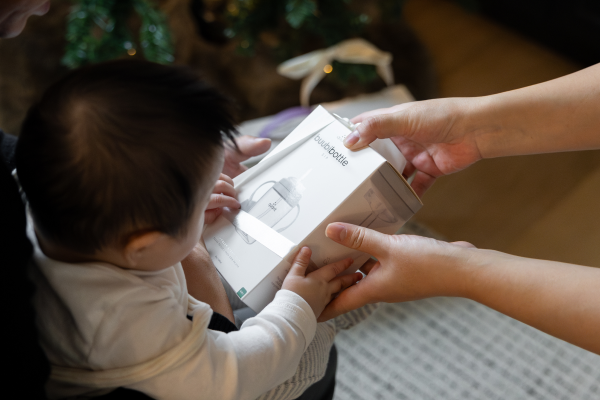
Si vous souhaitez commencer l'alimentation mixte, la BuubiBottle est conçue pour passer en douceur du sein au biberon. Elle a un débit réellement lent et correspond à l'anatomie buccale de votre bébé pour réduire la préférence pour le biberon.
Révision médicale : Dr Yang · Dernière révision : 6 août 2026
Sources
- Organisation mondiale de la Santé — Infant and young child feeding (fact sheet): “breastfeed exclusively (are fed only breast milk) for the first 6 months of life and then continue breastfeeding up to 2 years of age or beyond … introduce additional (complementary) foods around 6 months of age”




Laisser un commentaire
Tous les commentaires sont modérés avant d'être publiés.
Ce site est protégé par hCaptcha, et la Politique de confidentialité et les Conditions de service de hCaptcha s’appliquent.