



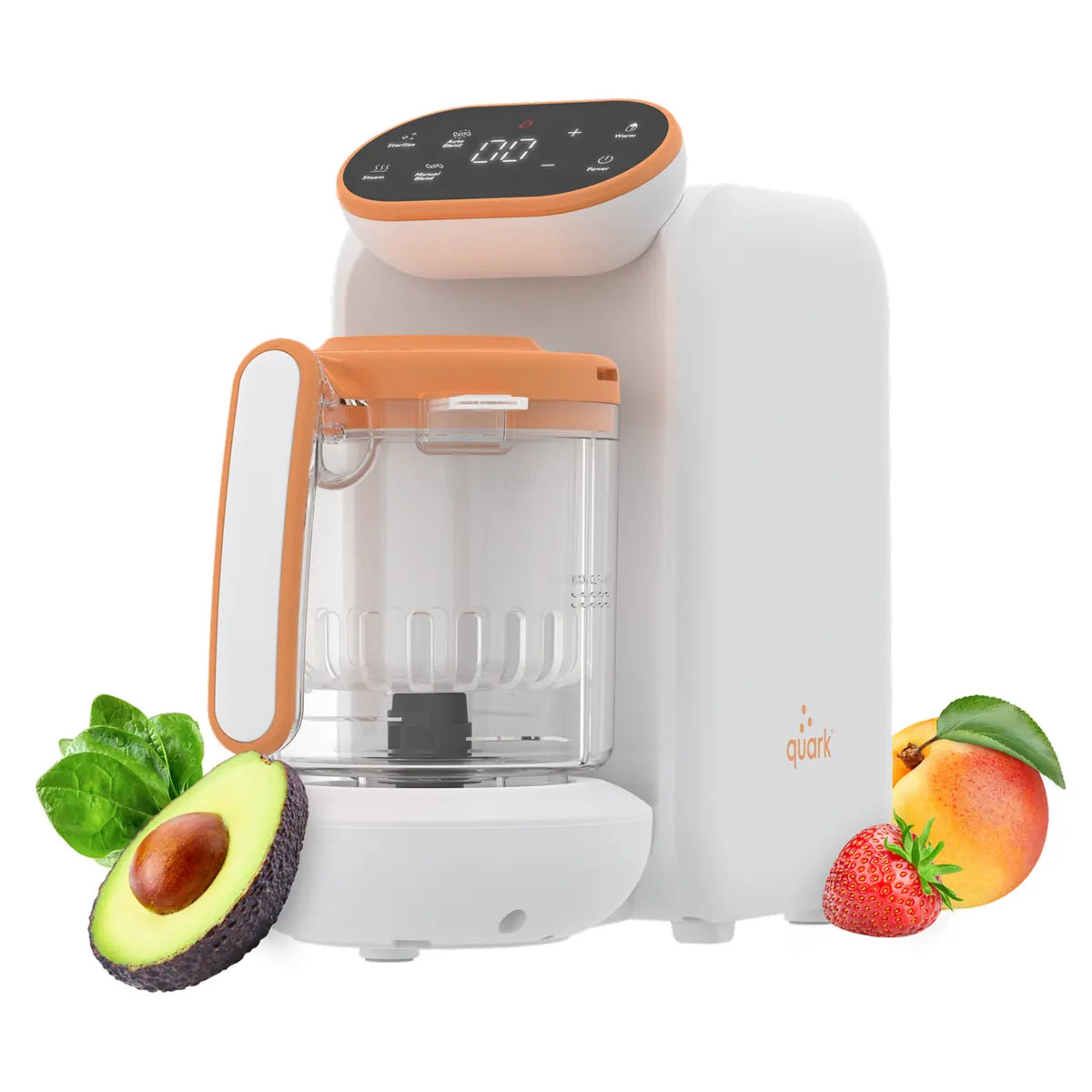
Nettoyage du robot culinaire pour bébé : lames, panier, bol & ; cycle autonettoyant
La démo montre toujours la cuisson vapeur et le mixage. Personne ne filme le moment où vous êtes ensuite debout devant l’évier, à gratter de la patate douce coincée dans le moyeu de la lame.
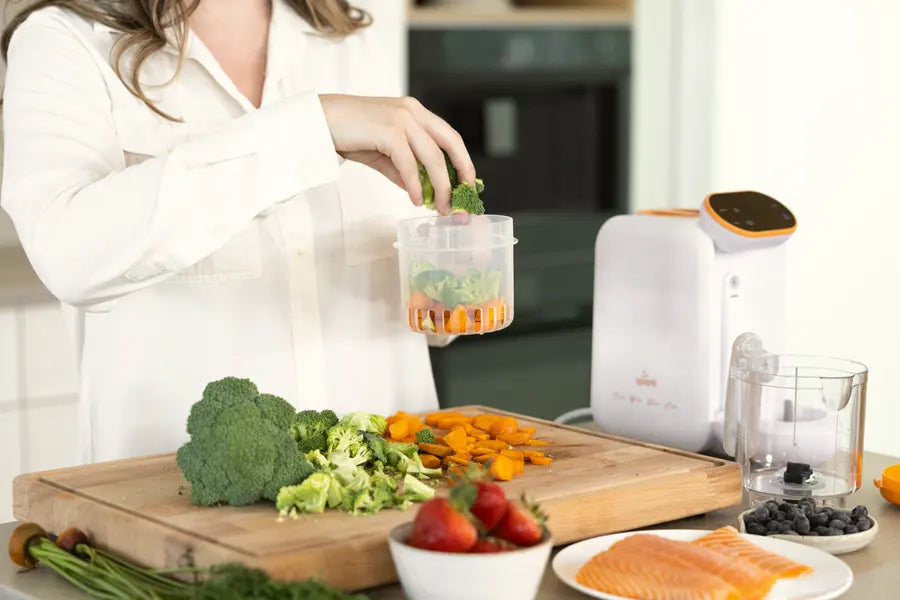
Vous préparez votre première patate douce en lot. Ça cuit à la vapeur, ça mixe, ça sent bon, et le bébé mange vraiment. Puis vous ouvrez le bol et voilà — de la purée orange tassée autour de la lame, une fibre coincée sous le joint de silicone, un couvercle avec de la nourriture dans une lèvre dont vous ignoriez l’existence. La cuisson a pris huit minutes. Le nettoyage, c’est la partie que vous referez encore et encore, chaque fois, pendant un an.
C’est la moitié de la vie avec un robot culinaire pour bébé que la fiche produit passe sous silence. Voici donc la routine de nettoyage dans l’ordre, sans détour : quelles pièces retiennent la nourriture, lesquelles on oublie, et ce que le cycle autonettoyant fait vraiment une fois le marketing retombé. Si vous hésitez encore entre les formats, notre point de vue sur le robot tout-en-un contre un cuiseur-vapeur et un mélangeur séparés mérite d’être lu d’abord — le nettoyage pèse lourd dans ce choix.

Les pièces qui retiennent vraiment la nourriture
La majeure partie d’un robot culinaire pour bébé se rince en quelques secondes. Le problème se concentre à quelques endroits, et les connaître transforme le nettoyage en une boucle rapide et répétable plutôt qu’en devinette. Cinq éléments touchent la nourriture : la lame, le panier ou le bol de cuisson, les parois du bol, le couvercle et les joints. Chacun retient les résidus à sa façon.
La lame
La lame est la pièce à respecter avant votre premier lot. Elle touche toutes les textures cuites et c’est là que les purées collantes se tassent le plus : autour du moyeu, sous la base, dans l’interstice où elle se loge. Lisez les instructions du fabricant pour savoir comment la retirer et la manipuler en toute sécurité, puis nettoyez-la ainsi chaque fois. Une lame amovible ou clairement inspectable vaut mieux qu’une vitesse de plus, parce qu’une lame dont on ne voit pas l’intérieur est une lame à laquelle on cesse de faire confiance. Le robot culinaire pour bébé Quook utilise une lame en acier inoxydable 316 dans un bol en Tritan, de sorte que les surfaces en contact avec les aliments s’essuient au lieu de se tacher.
Le panier, le bol et les parois
C’est là que les parents sous-estiment le travail. Carottes, courges, petits pois, céréales et fruits laissent de la couleur, de l’amidon, des fibres ou une odeur sur les parois du bol et autour de la base — et comme l’explique notre guide sur la cuisson des légumes, des fruits, de la viande et des céréales, chacun salit le bol un peu différemment. Les légumes riches en amidon collent le plus ; une purée de fruits liquide se rince le plus vite. Une forme intérieure plus simple, avec moins de recoins, est vraiment plus facile à garder propre qu’une forme astucieuse pleine de nervures et de poches — c’est la caractéristique qui paie à l’évier, pas sur la boîte.
Le couvercle et les joints
Les joints sont la pièce que presque tout le monde rince sans y penser. Les joints de silicone se retirent exprès : la nourriture se coince dessous, et un joint nettoyé seulement sur sa face visible retourne en place sale. Sortez-le, lavez les deux côtés et vérifiez la lèvre du couvercle pendant que vous y êtes — le rebord est un piège à résidus discret.
Un robot culinaire pour bébé n’est pas propre parce que le cycle est terminé. Il est propre parce que vous avez regardé.
Ce que le cycle autonettoyant fait vraiment
Un cycle autonettoyant ou vapeur mérite sa place — après trois lots dans une semaine chargée, tout ce qui décolle les résidus aide vraiment. Mais traitez-le comme une étape d’appoint, pas comme un verdict. Le cycle ramollit ce qui est collé ; il ne garantit pas que la base de la lame, le fond du bol, les points de contact du couvercle et les joints sont impeccables. La meilleure version de cette fonction est celle qui facilite votre propre inspection rapide, pas celle qui vous en dissuade.
Même chose pour le mode de stérilisation à la vapeur. La stérilisation agit sur des pièces déjà propres — elle réduit les germes, elle ne décolle pas la nourriture d’une lame. Lavez d’abord, stérilisez ensuite si vous le souhaitez, et suivez à la fois les instructions du fabricant et les conseils de votre pédiatre sur la nécessité et le moment de stériliser le matériel de votre bébé.

Le séchage, c’est la moitié du travail
L’erreur qui provoque le moment « pourquoi ça sent ? » n’est pas un mauvais lavage — c’est un bon lavage suivi d’un mauvais séchage. Un couvercle propre refermé sur un bol propre alors que les deux sont humides emprisonne l’humidité, et c’est l’humidité emprisonnée qui retient l’odeur. Démontez, posez chaque pièce là où l’air circule et laissez-les sécher complètement avant de les remonter ou de les ranger dans une armoire. Rangez les pièces séparées, pas refermées et humides.
Le nettoyage change selon ce que vous avez cuisiné
La charge n’est pas la même chaque fois ; il vaut donc mieux l’anticiper selon l’étape. Les premières purées de fruits lisses se rincent presque aussi vite que vous tenez le bol sous le robinet. Les mélanges de légumes épais — courge, petits pois, patate douce — collent aux parois et tassent la lame. Les mélanges de viande et de céréales sont ceux qui font ralentir les parents et revérifier les joints et le séchage. Si vous préparez d’avance et congelez des portions dans quelque chose comme le bac de congélation en silicone Chiill, ce bac et son couvercle rejoignent la même boucle de lavage et de séchage — prévoyez toute la boucle, pas seulement la machine.
Comment juger le nettoyage avant d’acheter
Ne jugez pas un robot culinaire pour bébé à la longueur de sa liste de fonctions. Jugez-le au nettoyage que vous répéterez plusieurs fois par semaine. Que l’appareil cuise à la vapeur, mixe, réchauffe et stérilise dans un seul corps ou dans quatre est une vraie commodité — mais chaque fonction ajoutée est un autre ensemble de surfaces à laver, alors le tout-en-un ne gagne que si ses pièces sont vraiment faciles à nettoyer et à sécher. Le vrai test de possession, c’est trois lots dans une semaine, pas une démo sur un comptoir propre. Le même regard nettoyage-et-matériaux traverse notre analyse des matériaux, du nettoyage et de la capacité des robots culinaires, et c’est aussi pourquoi bien des parents comparent le fait maison à l’autre option dans robot culinaire contre purées du commerce.
Si vous ne retenez qu’une chose : jugez le nettoyage, pas le nombre de fonctions — les pièces ci-dessous, c’est là que le travail se trouve vraiment.
| Pièce | Ce qu’il faut vérifier | La règle rapide |
|---|---|---|
| Lame | Amovible ou clairement inspectable ? | Il faut pouvoir voir dedans et la manipuler en sécurité |
| Bol & ; panier | Forme simple, peu de recoins ? | Moins de nervures, rinçage plus rapide |
| Couvercle & ; joints | Le joint se retire pour nettoyer les deux faces ? | Nettoyer sous le joint, chaque fois |
| Autonettoyage | Décolle les résidus, ou promet seulement la propreté ? | Utilisez-le, puis inspectez quand même |
| Espace de séchage | De la place pour faire sécher les pièces à l’air, séparées ? | Ne jamais ranger humide et assemblé |
Une couche de survol pour les pièces — le jugement est dans les paragraphes ci-dessus ; ceci n’est que le coup d’œil rapide.
La liste de vérification après chaque lot
- Démontez pendant que c’est encore tiède — lame, bol, panier, couvercle, joints
- Lavez les pièces en contact avec les aliments selon les instructions du fabricant
- Retirez le joint et nettoyez les deux faces ; vérifiez la lèvre du couvercle
- Regardez sous la base de la lame et autour pour repérer les résidus tassés
- Lancez l’autonettoyage ou la vapeur comme étape d’appoint — puis inspectez à l’œil
- Faites sécher chaque pièce complètement à l’air ; ne rangez jamais humide ni assemblé
- Lavez les bacs ou sachets de conservation dans la même boucle
Un robot culinaire pour bébé n’est commode que dans la mesure de son nettoyage, parce que le nettoyage est la partie qui se répète. Réglez une fois la question de la lame, des joints et d’un coin de séchage, et le lavage cesse d’être la raison pour laquelle la machine finit au fond d’une armoire. Les bons modèles rendent l’inspection facile — et après une semaine de vrais lots, vous saurez exactement lequel vous avez acheté.
Questions fréquentes
Les questions de nettoyage que les parents nous posent le plus.
Faut-il vraiment nettoyer un robot culinaire pour bébé après chaque lot ?
Oui. Lavez les pièces en contact avec les aliments selon les instructions du fabricant, puis inspectez et séchez avant de ranger — les purées cuites collent, et les pièces humides retiennent les résidus.
Un cycle autonettoyant ou vapeur veut-il dire que je peux sauter le frottage ?
Non. Il décolle les résidus comme étape d’appoint, mais vous vérifiez quand même la lame, le bol, le couvercle et les joints à l’œil.
Quelle pièce est la plus facile à oublier au nettoyage ?
Les joints et la base de la lame. Retirez le joint de silicone, nettoyez les deux faces et regardez sous la lame.
Comment éviter que les pièces sentent mauvais ?
Démontez et faites sécher chaque pièce complètement à l’air. Ne refermez pas un couvercle humide sur un bol humide — c’est l’humidité emprisonnée qui retient l’odeur.
La facilité de nettoyage devrait-elle peser dans le choix d’un robot pour bébé ?
Oui, c’est l’un des critères les plus lourds. Le nettoyage est un coût que vous payez plusieurs fois par semaine pendant des mois. Si la lame est difficile d’accès ou si le bol est plein de recoins serrés, l’appareil sert moins souvent, quelle que soit la longueur de sa liste de fonctions.
La stérilisation équivaut-elle au nettoyage ?
Non. La stérilisation réduit les germes sur des pièces déjà propres. Lavez d’abord, stérilisez ensuite si vous le choisissez, et suivez les instructions de votre appareil et les conseils de votre pédiatre.
Révision médicale : Dr Yang · Dernière mise à jour : juin 2026 · Conseils d’entretien généraux, qui ne remplacent pas l’avis de votre propre professionnel de la santé. Suivez toujours les instructions de nettoyage et de stérilisation de votre appareil précis.


Laisser un commentaire
Tous les commentaires sont modérés avant d'être publiés.
Ce site est protégé par hCaptcha, et la Politique de confidentialité et les Conditions de service de hCaptcha s’appliquent.