

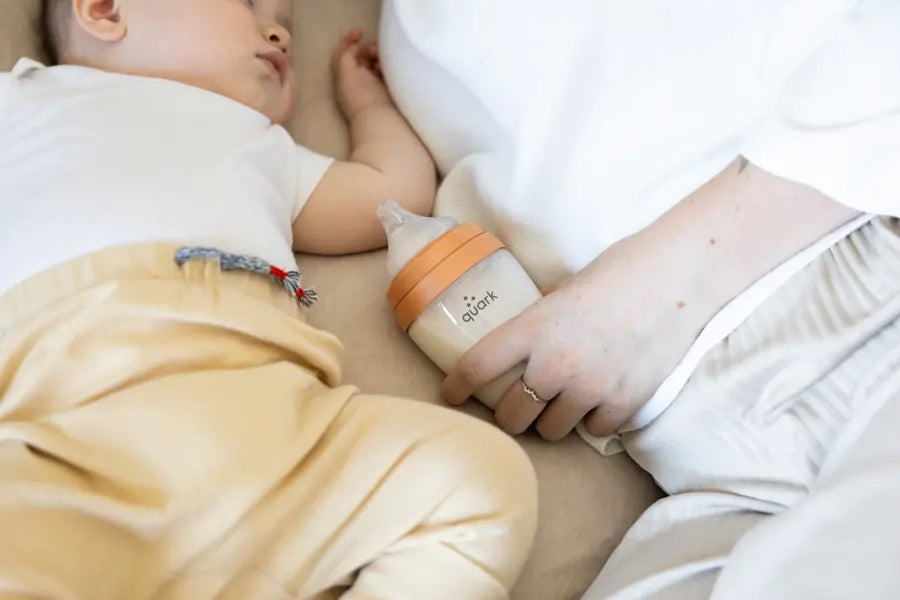
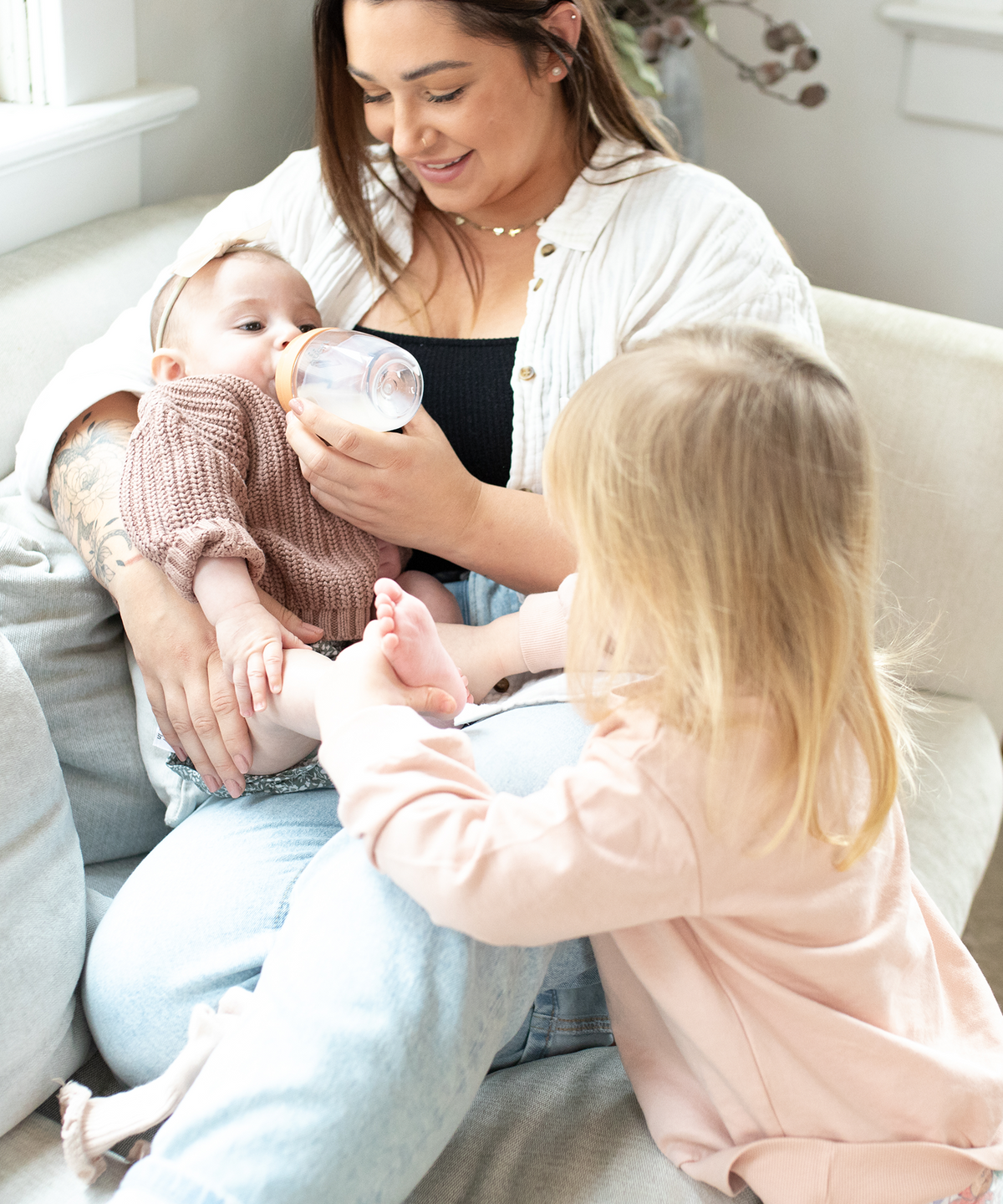
It is 3 a.m., you warmed a bottle, your baby took three sips and drifted back to sleep, and now you are standing in the dark holding a still-warm bottle and a small question that feels strangely high-stakes: can you save this and warm it again later, or do you have to pour it down the sink? Almost every bottle-feeding parent runs into some version of this, usually when they are too tired to think clearly. The good news is that the safe answer is simple once you know which bottle you are actually holding, and most of it comes down to two habits you can run on autopilot.
This guide walks through what the U.S. CDC, the American Academy of Pediatrics (AAP), and Health Canada actually say about reheating a baby's bottle, leftover milk, and the warming methods that keep your baby safe. By the end you will know exactly what to do with that 3 a.m. bottle, and why.

The short answer
Here is the stance, before the detail. If your baby has not yet drunk from the bottle, a single gentle warm-up is fine within the milk's normal safe-keeping window, but you should not keep warming, cooling, and re-warming the same bottle through the night. If your baby has already fed from it, do not save it and do not reheat it for a later feed: use what is left within a short window and then throw it away. And whichever bottle you are holding, never warm it in a microwave. Those three rules cover almost every real-world situation, and the rest of this article is simply the "why" behind them.
Reheating vs. re-warming: which bottle are you holding?
The single most useful thing to sort out is what kind of bottle is in your hand, because the guidelines treat two situations very differently:
- A warmed bottle your baby has not touched. You made it up, warmed it, and then your baby fell asleep or wasn't hungry after all. No saliva has gone into the milk. This bottle is still governed by the ordinary storage clock for that milk.
- A bottle your baby has already fed from. The moment a baby drinks, a little saliva travels back into the bottle. As the CDC puts it for formula, "the combination of infant formula and your baby's saliva can cause bacteria to grow." That changes everything about how long the milk stays safe.
So "can I reheat this bottle?" is really two questions wearing the same coat. Get the distinction right and the time limits below fall into place.
What the guidelines actually say
If you only remember one line from this section: warm fresh, warm once, and never microwave. Here is the detail, drawn directly from public-health guidance. The table keeps the rules short and scannable; the paragraphs after it explain the reasoning.
| Your situation | What to do | Time limit | Source |
|---|---|---|---|
| Formula warmed, baby has not fed yet | Feed it, or refrigerate it right away; do not re-warm it again and again | Within 2 hours of preparation; up to 24 hours if refrigerated promptly | CDC |
| Breast milk warmed, baby has not fed yet | Use it; never refreeze milk that has thawed | Within the room-temperature window (fresh milk up to 4 hours) | CDC |
| Formula, baby has fed from the bottle | Throw out the leftover; do not reheat for later | Within 1 hour from when feeding begins | CDC |
| Breast milk, baby has fed from the bottle | Use the leftover once, then discard it | Within 2 hours of your baby finishing | CDC |
| Any milk, warming method | Warm gently in warm water or a controlled warmer; never use a microwave | Warm once | CDC / AAP |
For formula, the CDC's wording is precise: "use prepared infant formula within 2 hours of preparation and within one hour from when feeding begins," and "if you do not start to use the prepared infant formula within 2 hours, immediately store the bottle in the fridge and use it within 24 hours." Health Canada gives the same practical bottom line for a bottle your baby is drinking: once feeding has started, use it within two hours and throw out whatever is left. Health Canada also adds a point that matters for the reheating question specifically: do not refrigerate and reuse formula you have already warmed.
For breast milk, the CDC's storage limits are the anchor. Freshly expressed milk keeps "at room temperature (77°F or colder) for up to 4 hours," "in the refrigerator for up to 4 days," and "in the freezer for about 6 months is best; up to 12 months is acceptable." Two breast-milk rules are worth committing to memory: "if your baby did not finish the bottle, use the leftover milk within 2 hours," and "never refreeze breast milk after it has thawed." Milk thawed in the fridge should be used within 24 hours. Our complete breast milk storage guide lays out all of those clocks in one place.

Why a used bottle isn't worth saving
It is tempting to view a half-finished bottle as simply paused, ready to pick back up after a nap. The reason the guidelines say otherwise is bacteria. Warm milk is an ideal growth medium, and once your baby's saliva mixes in, that growth speeds up. Reheating does not reset the clock; gently warming a bottle is nowhere near hot enough to sterilize it, so it warms the bacteria along with the milk. Each warm-cool-rewarm cycle simply gives any bacteria more time in the comfortable temperature range where they multiply fastest.
This caution is not about being fussy. Health Canada is direct that the short time limits exist to lower the risk of foodborne illness, because a young baby's immune system is still developing and less able to fight off an infection than an adult's. Those tighter limits are simply why the leftover rules are stricter for babies than they would be for, say, your own cup of coffee. If you want the related storage-and-labelling system that keeps daycare and multi-caregiver days organized, our daycare bottle prep guide and our combination feeding logistics guide both cover it.
Warm it gently, and never in the microwave
When you do warm a bottle, the method matters as much as the timing. Both the CDC and the AAP are unambiguous about microwaves. The CDC says to "never use a microwave," because "microwaves heat milk and food unevenly, resulting in hot spots that can burn your baby's mouth and throat." The AAP echoes it for formula: "never microwave formula. Microwaving can affect ingredients in formula and cause hot spots in the liquid that can burn your baby's mouth." For breast milk specifically, the CDC adds that "microwaving can destroy nutrients in breast milk."
The safe way is gentle and low-tech. The CDC suggests you "place the bottle under running warm water," keeping the water off the nipple. The AAP offers the same options: a bottle warmer, warm running tap water, or standing the bottle "in a container of warm water for 5-10 minutes." Aim for roughly body temperature, about 37°C (98.6°F), then test before you feed. The AAP's test is the classic one: "shake a few drops on the inside of your wrist," where the milk "should feel warm but not hot." Our guide on why warming the milk helps and how to do it safely and our piece on whether warming breast milk and formula differ go deeper on technique.

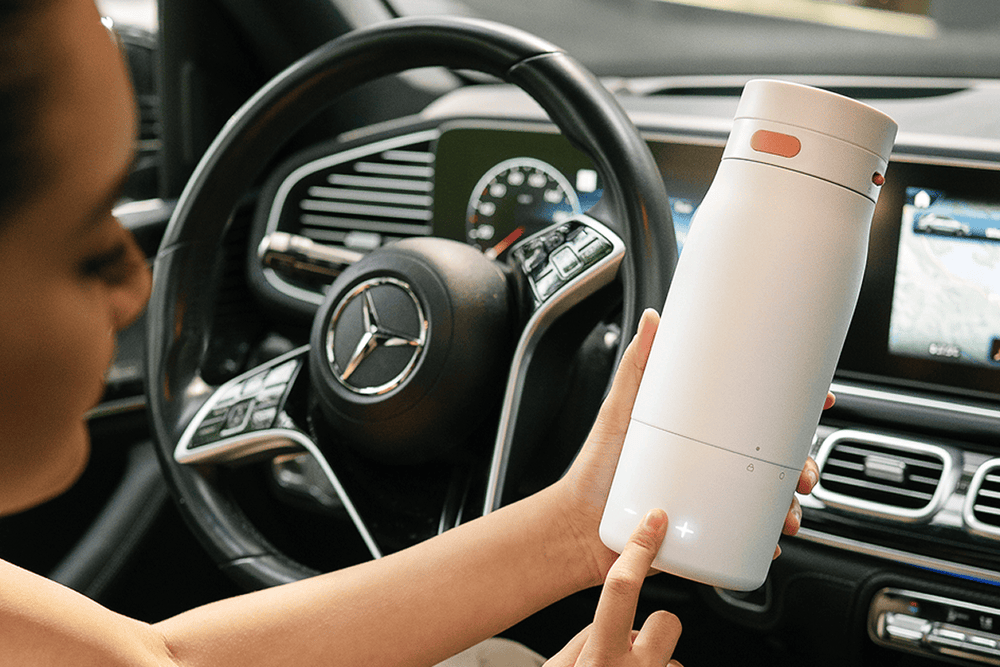
The cleanest way to sidestep the reheating dilemma is to avoid creating it: warm only what your baby is likely to drink, fresh, at the moment of the feed, instead of warming a large bottle and risking half of it to an early nap. That is straightforward beside a kitchen sink, and harder in a car, on a flight, or at a relative's house with no kettle. A controlled warmer helps in both places. The BuubiBottle Smart Portable Milk Warmer charges over USB-C, holds 300 ml / 10 oz, is made from Tritan, and warms within a controlled 37–50°C (98–122°F) range with a real-time temperature display, so you can bring a bottle gently to body temperature on the spot and still finish with the wrist test. Warming fresh, in the right amount, means far fewer leftover bottles to agonize over. If you are weighing the device against simpler methods, our look at how long a bottle warmer takes and our portable warmer temperature guide are useful companions.

The takeaway
For all the precise hours and exceptions, reheating a baby's bottle comes down to two habits. Warm fresh, in roughly the amount your baby will actually drink, so you rarely have a warmed bottle going spare. And warm once, gently, never in the microwave, so the milk reaches your baby at a safe temperature without spending extra time in the range where bacteria thrive. Keep those two in your back pocket and the 3 a.m. version of this question answers itself. For anything specific to your baby or your formula, your pediatrician and the label on your own tin are always the final word.
Common questions
Can I reheat a baby's bottle more than once?
No. Warm a bottle just once. Reheating does not kill bacteria, and each warming-and-cooling cycle gives any bacteria more time in the warm range where they multiply. If your baby has already fed from the bottle, do not reheat it at all: use the leftover within the short window above (1 hour for formula from the start of feeding, 2 hours for breast milk after your baby finishes), then discard it.
My baby fell asleep after a few sips. Can I save the rest for later?
No, not for a later feed. Once your baby has drunk from the bottle, saliva has mixed into the milk, so the leftover should be used within its short window and then thrown away rather than refrigerated and reheated hours later. The CDC is explicit that leftover formula in the bottle after a feeding should be thrown out.
Can I refrigerate a bottle I warmed but my baby never drank from?
It depends on the milk. If it is formula, the CDC allows a prepared bottle to be refrigerated within 2 hours of preparation and used within 24 hours, but Health Canada advises against refrigerating and reusing formula you have already warmed, so the safest move is to feed a warmed bottle promptly or not warm it until you are ready. If it is freshly expressed breast milk that has not been fed from, it can go back in the fridge within its normal storage window.
Is it safe to reheat breast milk?
Yes, gently and only once. Warm it in warm water or a controlled warmer, never a microwave, and never refreeze breast milk that has already thawed. If your baby did not finish a bottle of breast milk, the CDC says to use the leftover within 2 hours and then discard it.
Can I warm a bottle in the microwave to save time?
No. Both the CDC and the AAP advise against it because microwaves heat unevenly and create hot spots that can scald your baby's mouth and throat, and microwaving can also degrade nutrients in breast milk. Warm water or a controlled bottle warmer is the safe alternative.
How do I warm a bottle safely when I am away from a kitchen?
Use a controlled portable warmer or a thermos of warm water rather than improvising with anything hot. A device like the BuubiBottle Smart Portable Milk Warmer holds a gentle 37–50°C range with a real-time readout, so you can warm a fresh bottle to body temperature in a car or on a trip and confirm it with a wrist test before feeding, and never in a microwave. The BuubiBottle Portable Milk Warmer PRO is the current model in the same line and works the same way for this purpose.
Sources
- U.S. Centers for Disease Control and Prevention — Infant Formula Preparation and Storage (2-hour and 1-hour limits, 24-hour refrigeration, discard leftovers, never microwave, warm under running water).
- U.S. Centers for Disease Control and Prevention — Breast Milk Storage and Preparation (room-temperature, refrigerator, and freezer times; leftover within 2 hours; never refreeze; never microwave).
- American Academy of Pediatrics / HealthyChildren.org — How do I mix and serve infant formula for my baby? (never microwave; warm with a bottle warmer or warm water for 5-10 minutes; wrist test).
- Health Canada — Preparing and handling powdered infant formula (use a feeding bottle within 2 hours of starting; discard leftovers; do not refrigerate and reuse warmed formula; reduce risk of foodborne illness).
Medical disclaimer: This article is for general informational purposes and is not a substitute for medical advice. Storage, warming, and discard figures reflect U.S. CDC, AAP, and Health Canada recommendations current at the time of writing; always follow the instructions on your own infant formula and breast-milk storage and the advice of your pediatrician, lactation consultant, or healthcare provider. Portions of this content draw on AI assistance and are reviewed by a qualified medical reviewer before publication. Medically reviewed by Dr. Yang. Last reviewed 2026-08-18.



Leave a comment
All comments are moderated before being published.
This site is protected by hCaptcha and the hCaptcha Privacy Policy and Terms of Service apply.