



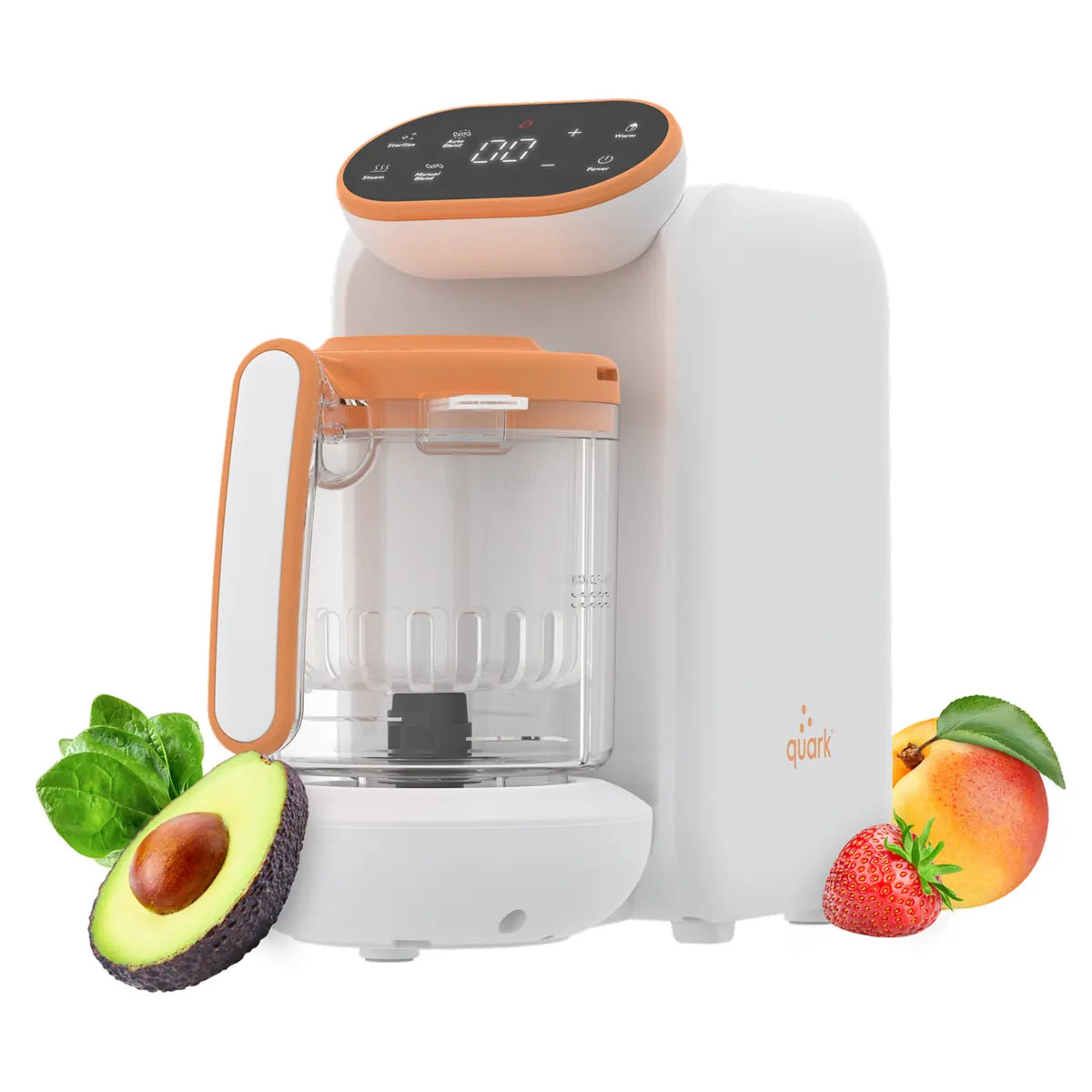
Baby Food Maker Cleaning: Blades, Basket, Cup & the Self-Clean Cycle
The demo always shows the steaming and the blending. Nobody films the part where you’re standing at the sink afterward, picking sweet potato out of a blade hub.
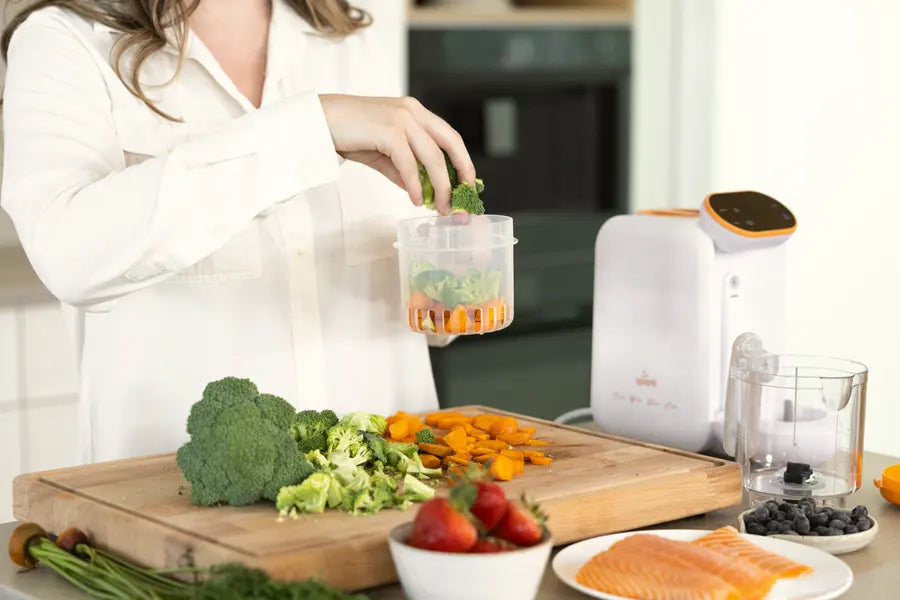
You batch your first sweet potato. It steams, it blends, it smells great, the baby actually eats it. Then you open the cup and there it is — orange paste packed around the blade, a fiber stuck under the silicone seal, a lid with food in the lip you didn’t know existed. The cooking took eight minutes. The cleanup is the part you’ll do again and again, every time, for the next year.
That’s the half of owning a baby food maker the product page skips. So here’s the cleaning routine in plain order — which parts trap food, which ones people miss, and what the self-clean cycle actually does once the marketing wears off. If you’re still deciding between formats, our take on a food maker vs a separate steamer and blender is worth a read first — cleanup is a big part of that call.

The parts that actually trap food
Most of a baby food maker rinses clean in seconds. The trouble is concentrated in a few spots, and knowing them turns cleanup from a guessing game into a quick, repeatable loop. Five things touch food: the blade, the basket or cooking cup, the cup walls, the lid, and the seals. Each one holds residue differently.
The blade
The blade is the part to respect before your first batch. It touches every cooked texture and it’s where sticky purees pack in tightest — around the hub, under the base, in the gap where it seats. Read your manufacturer’s instructions for how to remove and handle it safely, then clean it that way every time. A removable or clearly inspectable blade is worth more than one extra speed setting, because a blade you can’t see into is a blade you stop trusting. The Quook baby food maker uses a 316 stainless steel blade in a Tritan cup, so the food-contact surfaces wipe down rather than stain.
The basket, cup, and walls
This is where parents underestimate the job. Carrots, squash, peas, grains, and fruit leave color, starch, fiber, or scent on the cup walls and around the base — and as you can read in our guide to cooking vegetables, fruit, meat, and grains, each one messes up the cup a little differently. Starchy vegetables cling worst; thin fruit puree rinses fastest. A simpler interior shape with fewer corners is genuinely easier to keep clean than a clever one with ridges and pockets — that’s the spec that pays off at the sink, not on the box.
The lid and seals
The seals are the part almost everyone rinses past. Silicone gaskets pull out on purpose: food wedges underneath, and a seal cleaned only on its top face goes back in dirty. Pop it out, wash both sides, and check the lid lip while you’re there — the rim is a quiet residue trap.
A baby food maker isn’t clean because the cycle ended. It’s clean because you looked.
What the self-clean cycle really does
A self-clean or steam cycle earns its spot — after three batches in a busy week, anything that loosens residue is a real help. But treat it as a support step, not a verdict. The cycle softens what’s stuck; it doesn’t guarantee the blade base, cup bottom, lid points, and seals are spotless. The best version of this feature is the one that makes your own quick inspection easier, not the one that talks you out of inspecting.
Same goes for the steam-sterilize mode. Sterilizing works on parts that are already clean — it reduces germs, it doesn’t lift food off a blade. Wash first, then sterilize if you want to, and follow both the manufacturer’s instructions and your pediatrician’s guidance on whether and when your baby’s gear needs sterilizing at all.

Drying is half the job
The mistake that causes the “why does this smell” moment isn’t bad washing — it’s good washing followed by bad drying. A clean lid snapped onto a clean cup while both are damp traps moisture, and trapped moisture is what holds odor. Take it apart, stand every piece where air can reach it, and let it dry fully before it goes back together or into a cupboard. Store parts loose, not sealed up wet.
Cleaning changes by what you cooked
The load isn’t the same every time, so it helps to expect it by stage. First smooth fruit purees rinse off almost as fast as you can hold the cup under the tap. Thick vegetable blends — squash, peas, sweet potato — cling to the walls and pack the blade. Meat and grain blends are the ones that make parents slow down and double-check the seals and drying. If you’re batching ahead and freezing portions in something like the Chiill silicone freezer tray, that tray and its lid join the same wash-and-dry loop — plan for the whole loop, not just the machine.
How to judge cleaning before you buy
Don’t weigh a baby food maker by its longest feature list. Weigh it by the cleanup you’ll repeat several times a week. Whether the device steams, blends, warms, and sterilizes in one body or in four is a real convenience — but every function you add is another set of surfaces to wash, so the all-in-one only wins if its parts are genuinely easy to clean and dry. The honest ownership test is three batches in one week, not one demo on a clean counter. The same cleanup-and-materials lens runs through our look at food maker materials, cleaning, and capacity, and it’s also why a lot of parents weigh homemade against the alternative in food maker vs store-bought purees.
If you only skim one thing: judge the cleanup, not the feature count — the parts below are where the work actually lives.
| Part | What to check | The quick rule |
|---|---|---|
| Blade | Removable or clearly inspectable? | Must see into it and handle it safely |
| Cup & basket | Simple shape, few corners? | Fewer ridges, faster rinse |
| Lid & seals | Seal pulls out to clean both sides? | Clean under the gasket, every time |
| Self-clean | Loosens residue, or just claims clean? | Use it, then still inspect |
| Drying space | Room for parts to air-dry apart? | Never store damp and assembled |
A skim layer for the parts — the judgment’s in the paragraphs above; this is just the quick scan.
The after-batch cleaning checklist
- Take it apart while still warm — blade, cup, basket, lid, seals
- Wash food-contact parts per the manufacturer’s instructions
- Pull the seal out and clean both sides; check the lid lip
- Look under and around the blade base for packed residue
- Run self-clean or steam as a support step — then inspect by eye
- Air-dry every piece fully; never store damp or assembled
- Wash any storage trays or pouches in the same loop
A baby food maker is only as convenient as its cleanup, because the cleanup is the part you repeat. Sort out the blade, the seals, and a drying spot once, and the washing stops being the reason the machine ends up in a cupboard. The good ones make the inspection easy — and after a week of real batches, you’ll know exactly which one you bought.
Common questions
The cleanup questions parents ask us most.
Do I really need to clean a baby food maker after every batch?
Yes. Wash the food-contact parts per the manufacturer’s instructions, then inspect and dry before storing — cooked purees cling, and damp parts hold residue.
Does a self-clean or steam cycle mean I can skip scrubbing?
No. It loosens residue as a support step, but you still check the blade, cup, lid, and seals by eye.
Which part is easiest to miss when cleaning?
The seals and the blade base. Pull the silicone gasket out, clean both sides, and look under the blade.
How do I keep parts from smelling?
Take it apart and air-dry every piece fully. Don’t snap a damp lid onto a damp cup — trapped moisture is what holds odor.
Should how easy it is to clean affect which baby food maker I buy?
Yes — it’s one of the biggest factors. Cleaning is a cost you pay several times a week for months. If the blade is hard to access or the cup is full of tight corners, the machine gets used less, no matter how good the feature list looks.
Is the steam-sterilize function the same as cleaning?
No. Sterilizing reduces germs on already-clean parts. Wash first, then sterilize if you choose, and follow your device’s instructions and your pediatrician’s guidance.
Reviewed for accuracy by Dr. Yang · Last updated June 2026 · General care guidance, not a substitute for advice from your own healthcare provider. Always follow the cleaning and sterilizing instructions for your specific device.


Leave a comment
All comments are moderated before being published.
This site is protected by hCaptcha and the hCaptcha Privacy Policy and Terms of Service apply.