

Quick answer: No single material wins. Glass is the purest and easiest to inspect but is heavy and can shatter. Silicone is light, shatterproof, and soft against little hands. Plastic is the lightest and cheapest, but confirm it is BPA-free and respect its heat limits. Match the material to where and how the bottle is used.
Glass vs silicone vs plastic baby bottles is a tradeoff question, not a single-material contest. The right answer depends on weight, breakage risk, heat exposure, cleaning routine, cost, and which part of the bottle actually touches milk or your baby’s mouth. Below is a criteria-first comparison, then plain answers to the questions parents actually search for.
Glass vs silicone vs plastic baby bottles: full comparison
| Dimension | Glass | Silicone | Plastic |
|---|---|---|---|
| Safety / chemicals | Inert; no leaching, no BPA, easy to see residue. | Food-grade silicone is inert and BPA-free; flexible and soft. | Confirm BPA-free (and BPS/phthalate-free); replace if scratched or cloudy. |
| Weight | Heaviest; harder for babies to self-hold. | Light and grippy. | Lightest; easy for travel and small hands. |
| Durability | Scratch-resistant but can break or chip if dropped. | Shatterproof; can tear or hold odor over time. | Shatter-resistant but scratches, clouds, and wears. |
| Heat tolerance | Handles boiling and most sterilizers well. | High heat tolerance; check the product’s stated limit. | Lowest; never microwave, follow the stated max temperature. |
| Cleaning | Dishwasher-safe, easy to inspect for film. | Dishwasher-safe; can retain smell if not dried fully. | Dishwasher-safe but inspect for scratches that trap residue. |
| Cost | Higher upfront; long-lived if it survives drops. | Mid-range. | Lowest upfront; may need replacing more often. |

Are silicone baby bottles safe?
Yes — food-grade silicone is one of the safest bottle materials. It is inert, BPA-free, shatterproof, and tolerates high heat and dishwashers. The caveats are practical, not chemical: silicone can absorb odors and can tear over time, so dry it fully and replace any part that is torn, tacky, or smells off. Silicone is especially good for nipples, seals, and soft sleeves where softness and grip matter against a baby’s mouth and hands.
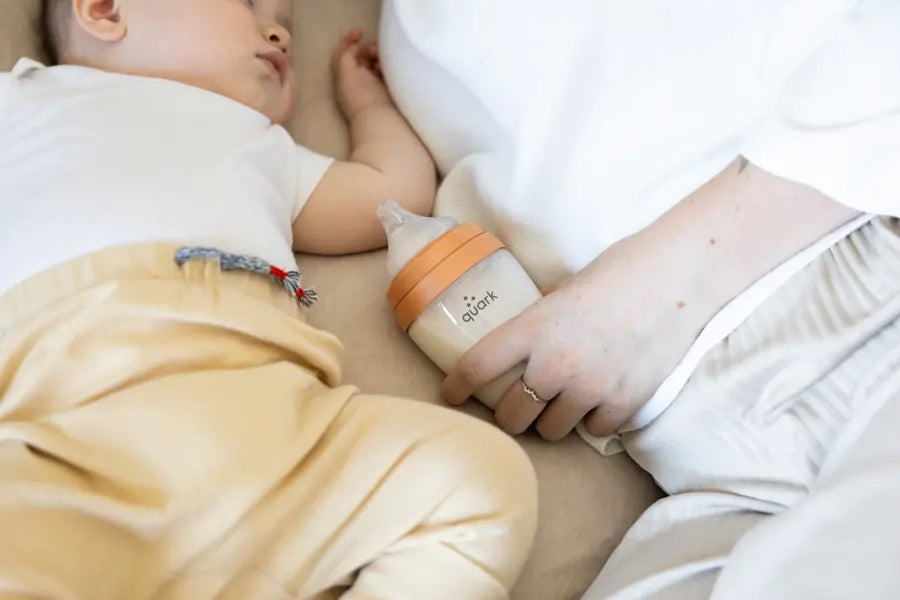
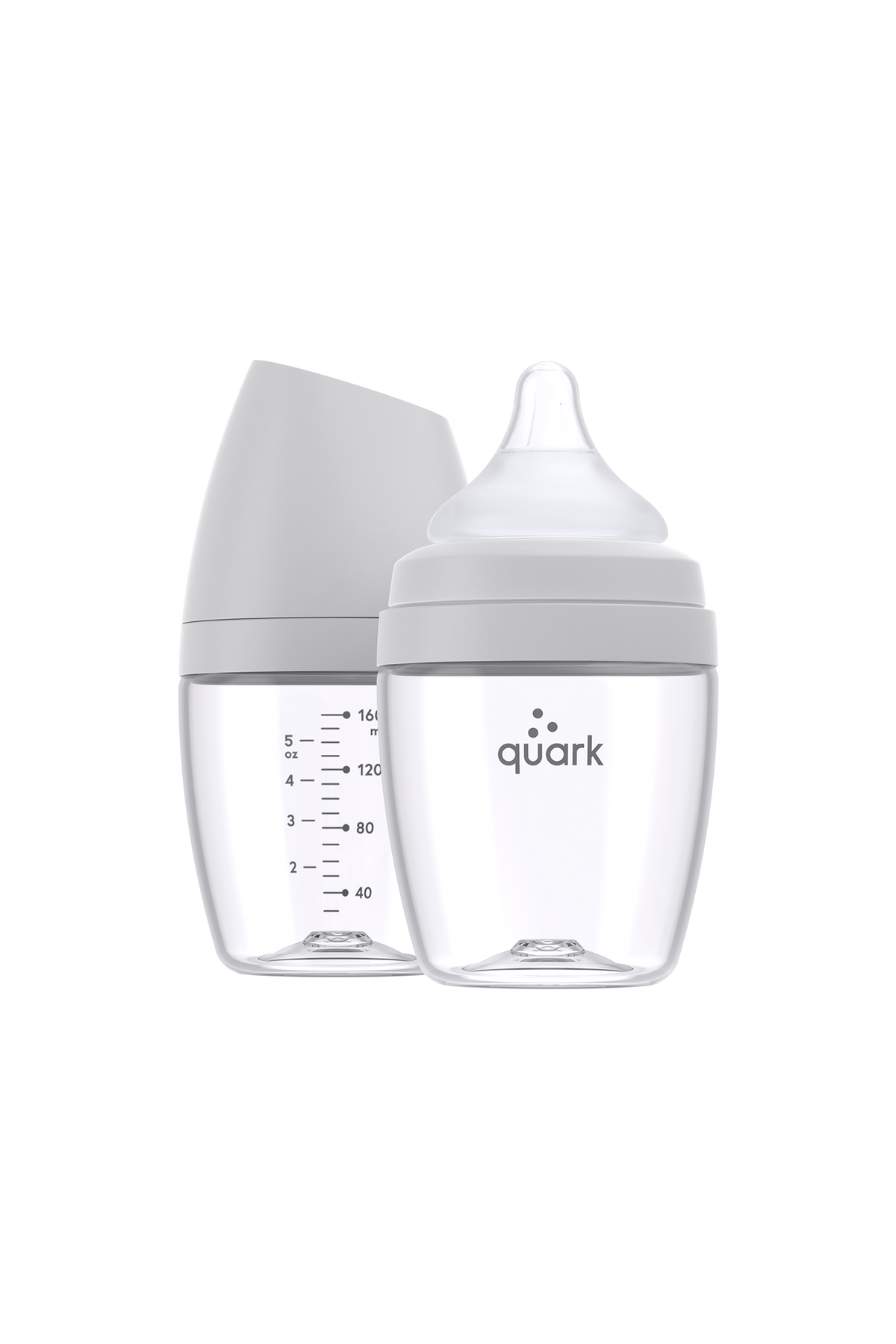
Quark Baby’s BuubiBottle Mini uses a silicone-tip hybrid design — a soft, food-grade silicone feeding tip on a rigid, heat-resistant body — so the part that touches your baby’s mouth gets silicone’s softness while the body stays sturdy and easy to clean.
Glass vs plastic baby bottles — which is better?
It depends on your priorities. Choose glass if chemical purity and easy inspection matter most and you can manage the extra weight and breakage risk — glass leaches nothing and handles repeated sterilizing. Choose plastic if weight, travel, and cost matter most — just confirm it is BPA-free, keep it away from the microwave, and replace it once it scratches or clouds. Many families use glass at home and a lighter, shatterproof bottle for daycare, the car, and travel. There is no need to pick only one material for every situation.
Is Tritan or plastic safe for babies?
Modern BPA-free plastics can be safe when used correctly, but the material matters. Tritan and similar copolyesters are marketed as BPA-free, but “BPA-free” is a narrow claim — it does not by itself answer questions about heat limits, scratching, or other chemicals. The safe-use rules are the same across plastics: confirm BPA-free, never microwave the bottle, follow the stated maximum temperature, and replace any bottle that is scratched, cloudy, or worn, because damaged plastic is harder to clean and more likely to degrade.
Quark Baby’s BuubiBottle bottles are no longer made from Tritan. The full line now uses Grilamid TR90, a heat-resistant Swiss polyamide that is BPA-free and dishwasher-safe, paired with the soft silicone feeding tip. If you are choosing a larger-capacity option for growing feeds, the BuubiBottle Max uses the same Grilamid TR90 body so you keep the shatterproof, heat-tolerant benefits without the weight of glass.

Which bottles are actually made of each material
Materials are easier to judge once they have names attached. Here is where the bottles most people are choosing between actually sit. Everything below is what each manufacturer published on its own product pages, checked on 14 September 2026 — not our own lab testing.
| Material | Bottles sold in it | What the makers publish |
|---|---|---|
| Glass | Philips Avent Natural Response, Dr. Brown's Natural Flow Options+ | Both brands sell the same bottle in glass and plastic versions, so you can pick the material without changing nipple or vent system |
| Silicone | Comotomo Natural Feel, Tommee Tippee Natural Start (silicone version) | Comotomo publishes a food-grade silicone body, BPA/PVC/phthalate free, in 5 oz and 8 oz. Tommee Tippee sells both plastic and silicone and states “always BPA free” |
| Plastic | Philips Avent, Dr. Brown's, Tommee Tippee, MAM Easy Start Anti-Colic | MAM did not publish the bottle material on the page we checked, which is worth knowing if material is your deciding factor |
| Swiss polyamide | BuubiBottle Mini (150 ml) and Max (240 ml) | Grilamid® TR-90 medical-grade polyamide body with a platinum-cured silicone nipple |
That last row is the honest complication in a glass-versus-silicone-versus-plastic framing: our own bottles are none of the three. Grilamid TR-90 is a polyamide, so it belongs in the broad “not glass, not silicone” family, but calling it plastic and leaving it there hides the thing that matters — it is shatterproof like silicone while staying rigid and clear like glass. We would rather name the material than let the three-way comparison flatter us by accident.
One more pattern worth carrying into the shop: two of these brands sell the same bottle in two materials. If you like a particular nipple or vent design, check whether it comes in the material you want before you switch brands entirely.
If you want the bottles compared on venting, part counts and what has to be washed rather than on material, that is in our six-bottle comparison.

How to choose by real use case
- At home: Glass works well when breakage risk is low and you want the easiest material to inspect for residue.
- Travel or daycare: A shatterproof, lightweight body (silicone or a TR90-type polyamide) is easier to carry and survives drops.
- Mouth-contact parts: Favor soft food-grade silicone for nipples and feeding tips, and replace them on a schedule.
- Warming routines: Match the bottle and parts to your warmer’s instructions; never microwave plastic.
- Inspection: Replace any part with scratches, cracks, bite marks, tears, tackiness, odor, or clouding.
Safety and claim boundaries
Material choice never replaces safe feeding habits. Follow CDC cleaning and sanitizing guidance, prepare and store formula and breast milk per public-health instructions, and inspect every part regularly. No material makes old formula safe, removes the need to clean, or survives misuse such as microwaving plastic.
Frequently asked questions
Are silicone baby bottles safe? Yes. Food-grade silicone is inert, BPA-free, shatterproof, and heat-tolerant. Dry it fully to avoid odor and replace any part that is torn or tacky.
Are glass baby bottles safer than plastic? Glass leaches nothing and is the easiest to inspect, which many parents prefer. But it is heavier and can break, so “safer” also depends on handling and your use case.
Does BPA-free mean a plastic bottle is risk-free? No. BPA-free is one specific claim. You should still avoid microwaving, respect the heat limit, and replace the bottle once it is scratched or cloudy.
Can I microwave a baby bottle? No. Microwaving creates hot spots that can scald your baby and can degrade plastic. Warm bottles in warm water or a bottle warmer instead.
Sources
- AAP (HealthyChildren.org): Infant feeding and nutrition
- CDC: How to clean, sanitize, and store infant feeding items
- FDA: Bisphenol A (BPA) use in food contact applications


Leave a comment
All comments are moderated before being published.
This site is protected by hCaptcha and the hCaptcha Privacy Policy and Terms of Service apply.