




It is the second week, the baby is squirming on your chest, and you are trying to work out whether this is hunger again (it has only been ninety minutes) or wind, or boredom, or the start of a cry you will not be able to stop. Every new parent runs this guess dozens of times a day.
Here is where we land: feed on the early signs, not on the clock and not on the cry. A baby who is licking their lips, rooting or bringing a hand to their mouth is asking, and answering then is easier for both of you than answering a scream. The harder skill is the reverse one, noticing when sucking and fussing are not hunger at all, especially with a bottle, where a baby can keep drinking past full.
Signs your baby is hungry: the early cues
The American Academy of Pediatrics (AAP) lists these as "typical hunger cues in babies":
- Licking lips
- Sticking tongue out
- Rooting (moving jaw and mouth or head in search of breast)
- Putting their hand to their mouth repeatedly
- Opening their mouth
- Fussiness
- Sucking on everything around
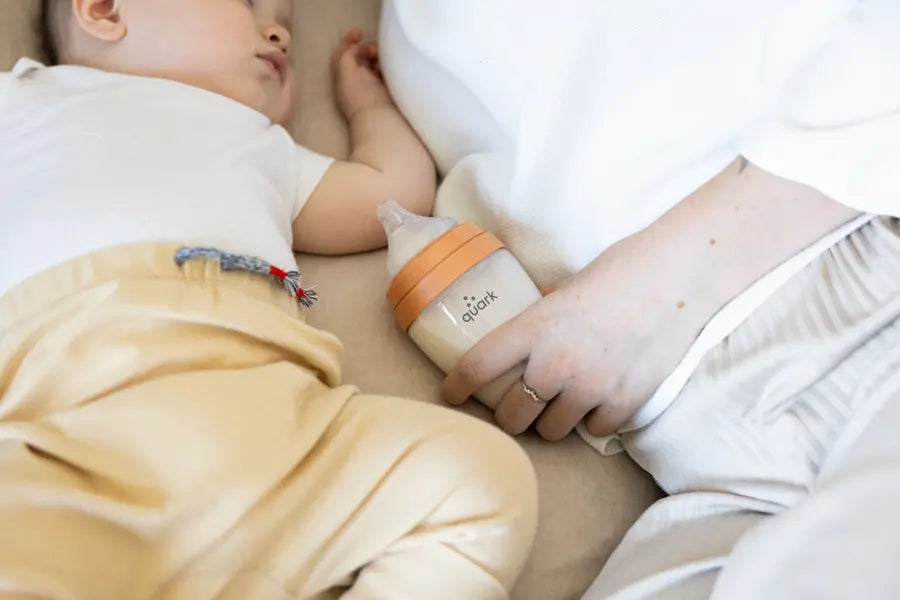
In a newborn, these often show up as the baby is waking: eyes opening, small stirring movements, then the mouth gets busy. If you are bottle feeding, the same cues apply. The baby does not know which way the milk is coming; they only know they want it.
It helps to think of the cues in three loose stages. This grouping is ours, not an AAP list, but it matches how most babies escalate:
- Early: stirring, lip licking, tongue out, mouth opening. The best moment to start a feed.
- Getting stronger: rooting, hands to mouth again and again, sucking on fists or clothing, fussing.
- Late: crying. The AAP calls crying "a late sign of hunger" that "can make it hard for them to settle down and eat."

Why crying is the cue to avoid waiting for
Crying is a real signal, and the AAP is clear that you "cannot spoil a young baby with attention." The problem is practical. A baby who has worked up to a full cry has to be calmed before they can latch or take a bottle well. The AAP's crying guide notes that "If you're not quick to respond, your baby's hunger cry may turn to a wail of rage."
So if you have reached the crying stage, that is not a failure. Calm first (hold them upright against you, a few minutes of skin contact, a quieter room), then feed. Next time, try starting when the hands go to the mouth.
Not every cry is hunger, either. Newborns routinely cry 1 to 4 hours a day, according to the AAP, often without an obvious cause. If your baby was fed recently, is dry and warm, and is still crying for long stretches, our guide to colic and how to soothe a crying baby picks up from there.
When it isn't hunger: sucking for comfort
This is the part most hunger-cue lists leave out. The AAP puts it plainly: "every time your baby cries or sucks it is not necessarily because they are hungry. Babies suck not only for hunger, but also for comfort." Sometimes, the AAP adds, "your baby just needs to be cuddled or changed."
A few things that help you tell the difference:
- Timing. If the last full feed ended a few minutes ago, comfort is more likely than hunger. If it has been a couple of hours in the early weeks, assume hunger.
- The rest of the body. A hungry baby tends to root, turn toward you and get more urgent. A baby sucking for comfort often settles while sucking.
- The pacifier test. The AAP notes that "Some babies have higher needs for sucking and may just want to suck on a pacifier after feeding." In our experience, a baby who takes a pacifier and relaxes was probably after comfort; a baby who spits it out, roots and fusses harder is probably hungry, so offer a feed. This is a rule of thumb, not an AAP test. For breastfed babies, the AAP suggests waiting "until around 3 to 4 weeks of age, when breastfeeding is well-established" before offering a pacifier. More in our guide to pacifiers for breastfed babies.
When in doubt in the first weeks, offering a feed is the safer mistake. A newborn who is not hungry will usually turn away or stop sucking within a minute.
How often a newborn shows hunger cues
Expect cues often. The AAP gives these patterns for healthy, full-term babies:
| Age and feeding | How often (AAP) | How much per feed (AAP) |
|---|---|---|
| Breastfed newborn | About every 2 hours; 10 to 12 sessions in 24 hours is the norm | About 1 oz in the first few weeks |
| Bottle-fed newborn | Every 2 to 3 hours; at least 8 feeds in 24 hours | No more than about 1 to 2 oz (30 to 60 ml) in the first week |
| End of the first month (formula) | About every 3 to 4 hours | At least 3 to 4 oz (120 ml) |
| About 6 months (formula) | 4 or 5 feeds in 24 hours | 6 to 8 oz (180 to 240 ml) |
Two things follow from that table. First, hunger cues ninety minutes after a breastfeed are normal, not a sign that something went wrong. Second, the clock still matters in one direction: for formula-fed babies, the AAP says that if your baby "sleeps longer than 4 to 5 hours during the first few weeks after birth and starts missing feedings, wake them up and offer a bottle." Our article on whether to wake a baby to feed covers that in more detail, and the newborn feeding and diaper log helps if you are tracking feeds in the blur of the first two weeks.
Babies born early, or with some medical conditions, are different. The AAP says that for them, "scheduled feedings advised by your pediatrician are best." Follow your pediatrician's plan rather than cues alone.

Still hungry after a bottle? Check for fullness first
A newborn who still seems hungry after a bottle is one of the most common worries, and sometimes the baby is not hungry at all. The AAP explains why bottles are different: babies who bottle feed "may be more likely to overfeed, because drinking from a bottle is faster and may take less effort than breastfeeding. Infants may not pull away or raise their hands and indicate that they are full, and may keep sucking."
Signs a baby has had enough, from the AAP: "If they become fidgety or easily distracted during a feeding, they're probably finished." Signs they may want more: "If they drain the bottle and continues smacking their lips, they might still be hungry."
What we would do when a baby finishes a bottle and still seems to want more:
- Pause before refilling. The AAP advises that "It's better to offer less, since you can always give more if your baby wants it," and that pausing gives babies "a chance to realize when they're full." Burp, hold them upright for a few minutes, then offer again if the cues return.
- Slow the flow. The AAP suggests "a slower-flow nipple and/or tipping the bottle to prevent milk flow for a few seconds" so a baby can "realize when they are full." This is the idea behind paced bottle feeding; our nipple flow rate guide explains how to tell if the flow is too fast.
- Check the daily total, not one bottle. The AAP's rough guide for formula is about 2½ ounces (75 mL) per pound of body weight a day, and usually "no more than an average of about 32 ounces (960 mL) of formula in 24 hours." If your baby consistently wants much more or much less, the AAP says to discuss it with your pediatrician.
Overfeeding is not harmless. The AAP notes that overfed babies "can have stomach pains, gas, spit up or vomit." Frequent spit-up after big bottles is worth mentioning at the next checkup.
How to know your baby is getting enough
Cues tell you when to feed. Diapers and weight tell you whether feeds are working. From the AAP:
- In the first few days after birth, 2 to 3 wet diapers a day.
- After the first 4 to 5 days, at least 5 to 6 wet diapers a day.
- For breastfed babies, seeming "satisfied and happy for an average of 1 to 3 hours between feedings" and nursing "at least 8 to 12 times every 24 hours."
- Steady progress on the growth chart at checkups.
For breastfeeding specifically, our guide to telling if your baby is getting enough goes deeper.
When to call your pediatrician
- Your baby wants to eat all the time, even when they seem full. The AAP says to talk with your pediatrician.
- Your baby consistently wants much more or much less than the amounts above.
- Fewer wet diapers than the AAP counts above, or a baby who is too sleepy to wake for feeds.
- Your baby is having trouble gaining weight. The AAP's advice is not to wait too long between feeds, "even if it means waking your baby," and to talk with your pediatrician.
Getting the feed ready before the cry
We make feeding gear, not medicine, so this part is practical. The window between early cues and crying can be short, and for bottle-fed babies the slowest step is often getting the milk ready. If you feed expressed milk or formula, having the bottle prepared while the cues are still early is half the battle.
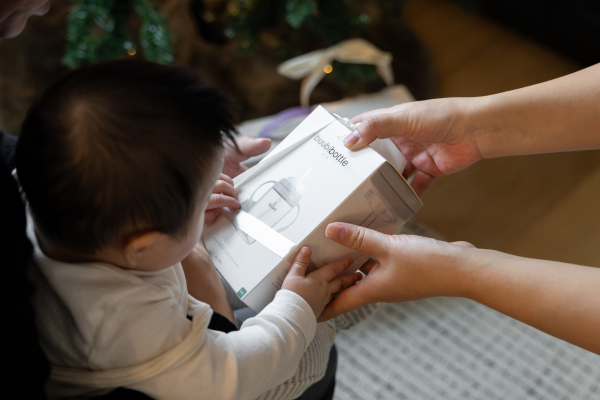
The BuubiBottle Mini is our 5 oz starter bottle for newborn feeds and top-ups, with the RealFeel nipple, which we design for a slow, paced flow. For warming, the BuubiBottle Portable Milk Warmer PRO holds breast milk at the temperature you set and has a Formula Preparation Mode that heats water to 158°F (70°C). For night feeds, see how to warm a bottle at night without fully waking up.


Common questions about baby hunger cues
What are the first signs a newborn is hungry?
Stirring awake, licking lips, sticking the tongue out and opening the mouth. Rooting and hands to the mouth usually come next. The AAP lists all of these as typical hunger cues.
Is crying a sign of hunger?
Yes, but a late one. The AAP calls crying "a late sign of hunger." Try to feed on the earlier cues, and calm a crying baby before feeding.
Is my baby hungry every time they suck on their hands?
No. The AAP notes that babies "suck not only for hunger, but also for comfort." Look at timing since the last feed and whether the baby is rooting and getting more urgent.
Why does my newborn seem hungry again an hour after feeding?
It depends on how they feed. The AAP says breastfed newborns usually nurse about every 2 hours, counted from the start of one feed to the next, so cues soon after a feed are common. A bottle-fed baby who seems hungry right after a full bottle may be full but still wanting to suck.
Can I overfeed a bottle-fed baby?
Yes. The AAP says bottle-fed babies may be more likely to overfeed and may keep sucking past full. Offer less, pause, and give more if the cues come back.
Should I wait for a schedule or feed on cues?
For most healthy, full-term babies, cues. The AAP says parents "can look to their baby rather than the clock." Premature babies or those with medical conditions should follow the schedule their pediatrician sets.
Sources
- American Academy of Pediatrics, HealthyChildren.org: How Often and How Much Should Your Baby Eat? (last updated April 2, 2024)
- American Academy of Pediatrics, HealthyChildren.org: Amount and Schedule of Baby Formula Feedings (last updated May 16, 2022)
- American Academy of Pediatrics, HealthyChildren.org: How to Tell if Your Breastfed Baby is Getting Enough Milk (last updated January 13, 2025)
- American Academy of Pediatrics, HealthyChildren.org: Responding to Your Baby's Cries (last updated February 20, 2025)
Written by the Quark Editorial Team. Medically reviewed by Dr. Yang. Last reviewed October 27, 2026.
This article is general parenting guidance and is not a substitute for advice from your own doctor. Quark makes baby feeding gear, not medical products. If your baby is feeding poorly, has fewer wet diapers than expected, is hard to wake for feeds, or you are worried about weight gain, call your pediatrician.



Leave a comment
All comments are moderated before being published.
This site is protected by hCaptcha and the hCaptcha Privacy Policy and Terms of Service apply.