



Treating sore nipples while breastfeeding
Painful nipples are one of the most common challenges new mothers face during their breastfeeding journey. While tender and sensitive nipples are normal as you begin breastfeeding your new baby, very painful, cracked, or bleeding nipples are not normal and should be addressed. Understanding proper positioning, achieving a correct latch, and knowing effective treatment methods can help you overcome this uncomfortable issue. Usually, nipple pain is related to the way your baby latches to the breast, making it essential to ensure your baby gets a big mouthful of the nipple and areola for comfortable, successful feeds.
Understanding Normal vs. Problematic Nipple Pain
It's important to distinguish between typical initial sensitivity and more serious nipple problems. Some tenderness when you first start breastfeeding is expected as your body adjusts. However, severe pain, cracking, or bleeding indicates that something needs to be corrected—most often the latch or positioning.
Proper Positioning for Breastfeeding
Correct positioning is the foundation of comfortable breastfeeding. Here are the key steps to position your baby correctly:
Three Essential Steps:
- Hold your baby's head behind the ears
- Align your baby "nose to nipple"
- Roll baby "belly to belly"
Recommended Breastfeeding Positions:
Football Hold: This position provides excellent visibility and control, making it easier to guide your baby to a proper latch.
Laid Back Breastfeeding: Recline with your baby "on top" using pillows to support you and your baby as needed. This is an excellent position for feeding and may just be the trick to remedy sore nipples.
Cross-Cradle Hold: Another effective position that allows you to support your baby's head and guide them to the breast.
Achieving a Proper Latch
The latch is crucial for pain-free breastfeeding. Use a "sandwich hold" to achieve a better latch-on by gently squeezing the breast to shape it like an oval that fits deeply in your baby's mouth.
What to Look For:
- A wide mouth on the breast (approximately 140 degrees)
- Your baby's mouth covering a large portion of the areola, not just the nipple
- Comfortable, pain-free nursing
Important: If breastfeeding hurts, break the suction and try the latch again. Do not continue with a feeding if you experience pain. Continuing to nurse through pain can worsen nipple damage and make recovery more difficult.
Treatment Solutions for Sore Nipples
If you're experiencing nipple pain, these measures can help you resolve uncomplicated problems:
Immediate Actions:
- Correct position and latch-on with each feeding
- Check for a wide open 140-degree mouth
- Start feeding on the less painful side first
- Rotate the position of your baby at each feeding to distribute pressure differently
Healing Measures:
- Apply your expressed breastmilk to nipples after feeds (it has natural healing properties)
- Use purified lanolin to moisturize and protect damaged skin
- Use hydrogel dressings to speed healing
- Use breast shells to protect the nipple between feedings
Managing Engorgement: If your breasts are very full, which can make latching more difficult, try these techniques before feeding:
- Hand express some milk
- Use reverse pressure softening
- Use a breast pump to relieve fullness
Feeding Frequency: Feed for short, frequent feedings rather than long, infrequent sessions. This keeps your baby from getting overly hungry (which can lead to aggressive sucking) while maintaining your milk supply.
Making Feeding Time More Comfortable
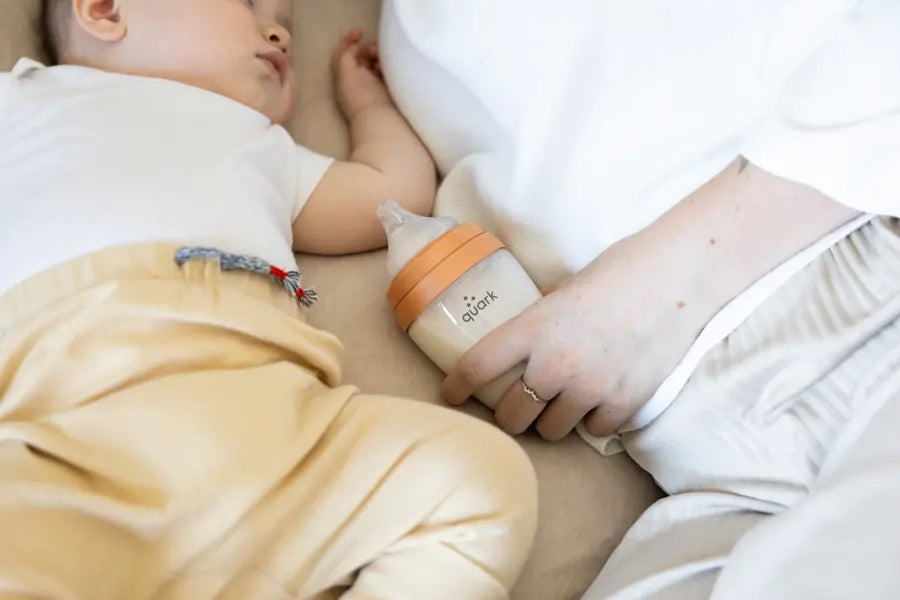
Beyond positioning and latch, having the right feeding tools can support your breastfeeding journey. Whether you're exclusively breastfeeding or combining breast and bottle feeding, products like the BuubiBottle Mini can help maintain your baby's natural feeding patterns and reduce nipple confusion during your recovery period.
When to Seek Professional Help
While the measures outlined above may help you resolve uncomplicated problems with nipple pain, there are circumstances where nipple pain indicates a more severe problem. Please seek help from a lactation consultant or healthcare provider if:
- Your problem does not resolve quickly
- Pain worsens despite correcting position and latch
- You notice signs of infection (fever, red streaks, warmth)
- Nipple damage is severe
Remember, the information provided is intended solely for general educational and informational purposes only. It is neither intended nor implied to be a substitute for professional medical advice. Always seek the advice of your healthcare provider for any questions you may have regarding your or your infant's medical condition. Never disregard professional medical advice or delay in seeking it because of something you have read here.
Key Takeaways
Sore nipples don't have to derail your breastfeeding goals. By focusing on proper positioning, ensuring a correct latch with a wide mouth opening, and implementing appropriate treatment measures, most mothers can overcome nipple pain and enjoy a comfortable breastfeeding experience. Don't hesitate to reach out for professional support—lactation consultants are specially trained to help you troubleshoot these common challenges and get back to pain-free feeding.
This article is general parenting guidance and is not a substitute for advice from your own pediatric provider.
Medically reviewed by Dr. Yang Last reviewed August 6, 2026.



Leave a comment
All comments are moderated before being published.
This site is protected by hCaptcha and the hCaptcha Privacy Policy and Terms of Service apply.