






Foods That Support a Baby’s Immune System: A Pediatric-Informed Guide
No single food “boosts” a baby’s immunity or prevents illness — but a varied, balanced diet does help the immune system develop normally. Specific nutrients — iron, zinc, vitamin C, vitamin D, and vitamin A — each play a role in healthy immune development, and babies get them from a mix of breast milk or formula plus iron-rich and colourful complementary foods from around 6 months. The most protective thing you can do early on is keep breastfeeding where possible and offer a wide variety of nutritious foods, rather than relying on any one “superfood.”
Medically reviewed by Dr. Yang · June 12, 2026.
This guide explains which nutrients support immune development, the everyday foods that supply them, how to prepare them safely, and the claims to be skeptical of. It reflects guidance from the American Academy of Pediatrics (AAP), the CDC and the World Health Organization (WHO). It is general information, not medical advice — talk to your pediatrician before starting solids, introducing a new food, or giving any supplement, especially if your baby has allergies or a medical condition.
Can foods actually “boost” a baby’s immunity?
It’s a common phrase, but it’s misleading. A baby’s immune system matures gradually over the first years of life, and nutrition supports that process rather than supercharging it. No fruit, vegetable, or spice has been shown to ��boost immunity” or prevent colds and infections in babies. What the evidence does support is that getting enough of certain nutrients — as part of an overall varied diet — helps the immune system develop and function normally. Deficiencies in nutrients like iron, zinc, and vitamin C can, on the other hand, impair a child’s normal immune defences, which is why variety and adequacy matter more than any single food.
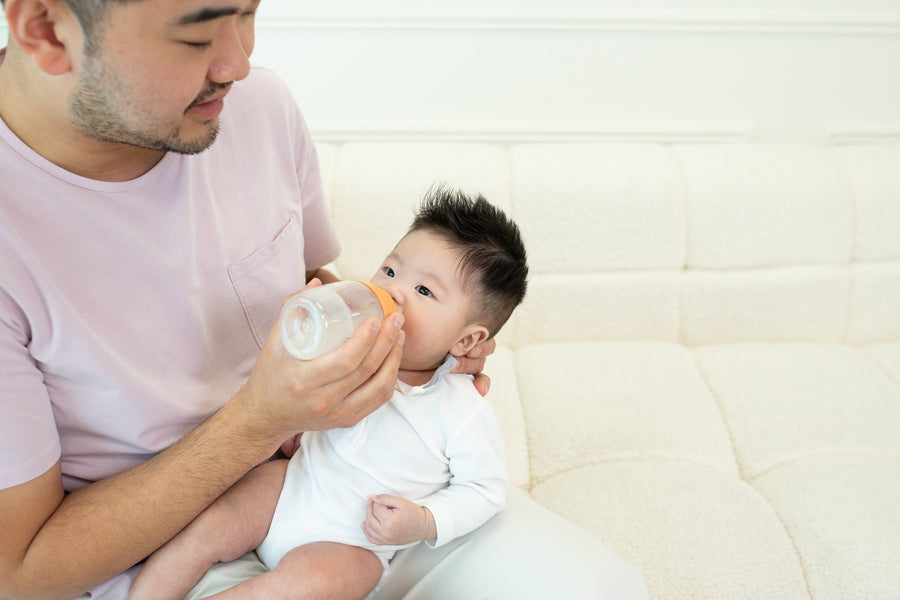
The biggest early contributor isn’t a food at all. The WHO notes that breast milk contains antibodies that help protect against many common childhood illnesses, which is why exclusive breastfeeding for around the first 6 months — followed by safe complementary foods with continued breastfeeding — is recommended where possible.
Nutrients that support normal immune development
Rather than chasing “superfoods,” aim to cover these nutrients across the week. The table below shows each nutrient, everyday baby-friendly food sources, and the role it plays — framed as support for normal function, not a cure or shield against illness.
| Nutrient | Baby-friendly food sources | Role in immune support (as part of a varied diet) |
|---|---|---|
| Iron | Well-cooked soft meat & poultry, iron-fortified infant cereal, lentils, beans, tofu, egg | Supports healthy growth and the normal function of immune cells; iron stores from birth start to deplete around 6 months, so iron-rich first foods matter (CDC) |
| Vitamin C | Pureed/soft fruit & veg: strawberry, kiwi, mango, broccoli, sweet pepper, cauliflower, potato | Contributes to normal immune function and helps the body absorb iron from plant foods when eaten in the same meal |
| Zinc | Soft cooked meat, beans, lentils, fortified cereal, yogurt, egg | Supports the normal development and function of immune cells; commonly paired with iron in the same foods |
| Vitamin A | Sweet potato, carrot, pumpkin, butternut squash, mango (cooked soft / pureed) | Supports the normal maintenance of skin and mucous-membrane barriers, the body’s first line of defence |
| Vitamin D | Usually a supplement for breastfed babies; also fortified foods later | Supports normal immune function; the AAP recommends 400 IU/day for breastfed infants, since breast milk alone is low in vitamin D (AAP) |
You don’t need to hit every nutrient every day. Offering a variety of iron-rich foods plus colourful fruits and vegetables across the week, alongside breast milk or formula, covers these naturally. Iron-rich meat, meat alternatives, and iron-fortified cereal are recommended among the first complementary foods.

Everyday foods that support immune development
These are practical, well-tolerated first foods that supply the nutrients above. Each is framed by what it actually contributes — not as a magic immunity food.
Iron-rich foods: the early priority
Because a baby’s iron stores begin to run low around 6 months, iron-rich foods are a sensible early focus. Good options include well-cooked, soft pureed or minced meat and poultry, iron-fortified infant cereal, and mashed lentils or beans. Pairing these with a vitamin-C food (like a little mashed strawberry or broccoli) in the same meal helps the body absorb more iron.
Colourful fruits and vegetables (vitamin C & vitamin A)
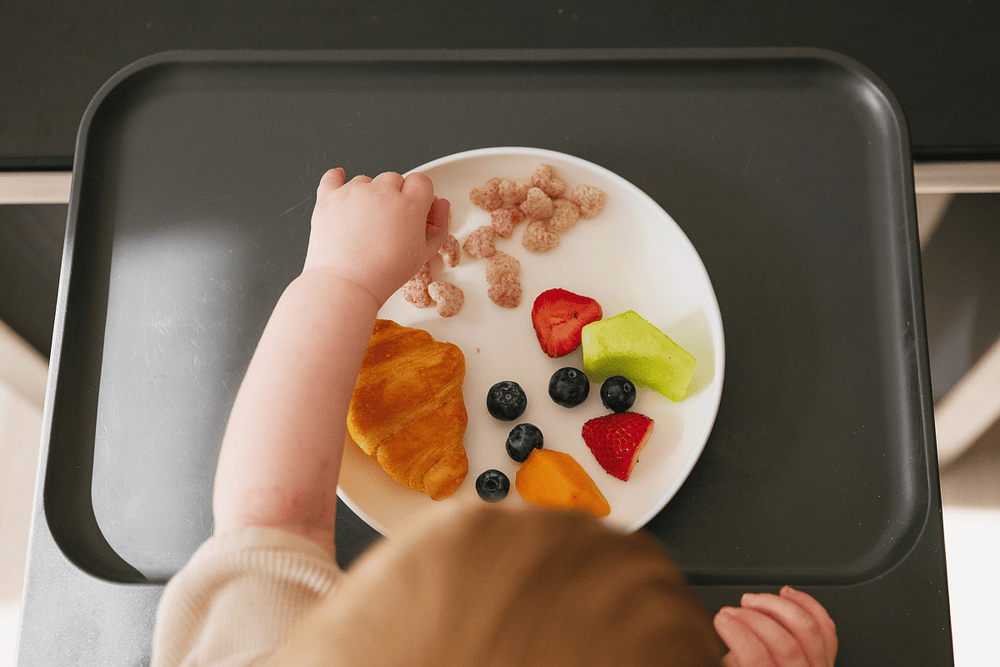
Soft-cooked sweet potato, carrot, pumpkin, and butternut squash provide vitamin A, while strawberry, kiwi, mango, broccoli, and cauliflower add vitamin C. Cook firm vegetables until very soft and serve fruit ripe and mashed or in age-appropriate textures. Variety across colours is the simplest way to cover a broad range of vitamins.
Plain yogurt and other dairy (after introduction)
Plain, unsweetened full-fat yogurt provides protein, zinc, and beneficial bacteria, and is an easy texture for babies. (Note: plain whole cow’s milk as a main drink is generally not recommended before 12 months, but yogurt and cheese in small amounts can be offered earlier as foods.) Always check with your pediatrician about timing if there is a family history of dairy allergy.
What about ginger, garlic, and turmeric?
You may see these promoted as “immunity enhancers.” In babies, they are best thought of as mild flavourings, not remedies — there is no reliable evidence they boost a baby’s immunity or prevent illness. A small amount of garlic, ginger, or turmeric used to flavour a puree is generally fine for most babies once solids are established, but they are not a substitute for the core nutrients above. Introduce them one at a time like any new food, in tiny amounts, and skip them if your pediatrician has advised caution.

Safety first: honey, allergens, choking, and textures
No honey before 12 months
Despite folk “immune” and cold-soothing claims, babies under 12 months should never have honey — including honey added to food, water, or a pacifier. Honey can contain spores that cause infant botulism, a serious illness, as the CDC warns. This is one of the clearest examples of an “immune food” myth that is actually unsafe for infants.
Introducing common allergens
The AAP recommends introducing common allergens — such as peanut and egg — around 6 months (not before 4 months), one new allergen at a time, and watching for any reaction over a couple of days. For peanut, that means smooth peanut butter thinned into puree, never whole nuts. Talk to your pediatrician first if your baby has severe eczema, an existing food allergy, or a strong family history of allergies.
Choking hazards and age-appropriate textures
Immune-supportive or not, every food has to be safe to swallow. The CDC and AAP name these among the highest-risk foods for young children — prepare them carefully or avoid them:
- Whole or uncut grapes, berries, cherries, melon balls — quarter lengthwise and mash; the AAP advises not giving round, firm foods uncut to children under 4.
- Raw hard apple or carrot — peel and cook until soft.
- Whole nuts and seeds — never whole; offer nut butter thinned into food instead.
- Tough or large chunks of meat — use only well-cooked, very soft, finely minced meat with no bones.
- Raisins and other dried fruit — firm and sticky; use soft fresh fruit instead.
Match textures to your baby’s stage: smooth purees at first, progressing to mashed, then soft lumps and soft finger foods as your baby develops. Always seat your baby upright and supervise the whole meal — a quick test is whether the food squishes easily between your finger and thumb.
Should my baby take a vitamin D supplement?
For most breastfed babies, yes — the AAP recommends a 400 IU/day vitamin D supplement starting in the first few days of life, because breast milk alone is low in vitamin D and vitamin D supports normal immune function and bone health. Formula-fed babies may get enough from fortified formula once intake is high enough. Confirm the right dose with your pediatrician rather than guessing.
How to keep nutrients in homemade baby food
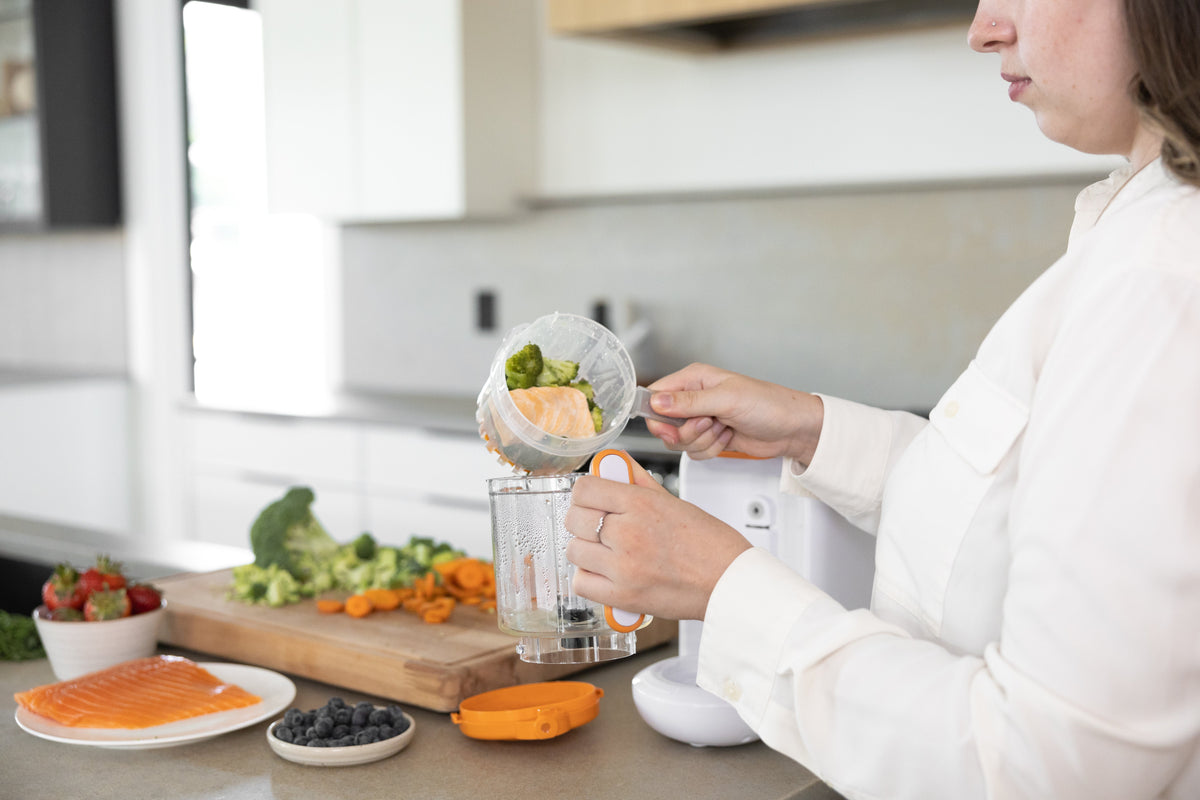
Gentle preparation helps preserve the vitamins that support immune development. Steam or roast vegetables rather than boiling them in lots of water (vitamin C is water-soluble and leaches out), serve fruit fresh where possible, and don’t over-cook. If you batch-cook, cool purees quickly and store them properly: a divided silicone freezer tray portions purees for single servings, and airtight cooling food storage containers keep prepared food fresh in the fridge. A multi-function tool like the Quook baby food maker can steam-and-blend vegetables in one step, which helps retain more nutrients than boiling. For more pairing ideas, see our baby food combinations guide.

Frequently asked questions
Can certain foods boost my baby’s immune system?
No single food “boosts” immunity or prevents illness. A baby’s immune system develops over time, and nutrition supports that process. The best approach is a varied, balanced diet — iron-rich foods plus colourful fruits and vegetables — alongside breast milk or formula, which gives the immune system the nutrients it needs to develop normally.
Which nutrients support a baby’s immune development?
Iron, zinc, vitamin C, vitamin A, and vitamin D each play a role in normal immune function. Babies get these from iron-rich foods (meat, lentils, fortified cereal), colourful produce (sweet potato, broccoli, mango, strawberry), and — for vitamin D — usually a supplement for breastfed infants. Variety across the week matters more than any one food.
Is breast milk important for my baby’s immune system?
Yes. The WHO notes that breast milk contains antibodies that help protect against many common childhood illnesses. Exclusive breastfeeding for around the first 6 months, then continued breastfeeding alongside complementary foods, is recommended where possible. Breast milk is the single biggest early contributor to immune protection — more than any solid food.
Can I give my baby ginger, garlic, or turmeric for immunity?
These are fine as mild flavourings once solids are established, but there is no reliable evidence they boost a baby’s immunity or prevent illness. Use only small amounts to flavour purees, introduce them one at a time, and don’t rely on them in place of core nutrients like iron and vitamin C.
Can babies have honey to soothe a cold?
No. Babies under 12 months should never have honey in any form — not in food, water, or on a pacifier — because of the risk of infant botulism. This applies regardless of any “immune” or cold-soothing claims you may read.
When can my baby start these immune-supportive foods?
Around 6 months, once your baby can sit up with support, holds their head steady, and shows interest in food — the readiness signs the AAP and Canadian Paediatric Society use for starting solids. Solids generally should not begin before 4 months. Iron-rich foods are a sensible early focus. Check with your pediatrician if you’re unsure your baby is ready.
Do immune-supportive foods prevent colds or infections?
No. Good nutrition helps the immune system develop and function normally, but it does not prevent your baby from catching colds or other infections. Babies are exposed to many everyday germs and will still get sick at times. Nutrition, breastfeeding where possible, routine vaccinations, and good hygiene all work together — food alone is not a shield.
Does my baby need a supplement for immunity?
Most babies don’t need an “immune” supplement. The main supplement the AAP recommends is vitamin D (400 IU/day) for breastfed infants, and sometimes iron depending on your baby’s diet and your pediatrician’s advice. Don’t give other vitamin or “immune-boosting” supplements without checking with your pediatrician first.

The bottom line
You can’t “boost” a baby’s immunity with a single food — but you can support healthy immune development by offering a varied diet rich in iron, vitamin C, zinc, vitamin A, and (via a supplement for breastfed babies) vitamin D, alongside breast milk or formula. Prepare everything safely, skip honey before 12 months, introduce allergens thoughtfully, and check with your pediatrician about supplements and any food concerns. For help getting started, see 5 signs your baby is ready for solids and the best first fruits for babies.
Sources
- World Health Organization — Infant and young child feeding (fact sheet): “breastfeed exclusively (are fed only breast milk) for the first 6 months of life and then continue breastfeeding up to 2 years of age or beyond … introduce additional (complementary) foods around 6 months of age”
This article is for general information and is not a substitute for professional medical advice. It does not claim that any food prevents, treats, or cures illness. Always consult your pediatrician about your baby’s feeding, nutrition, supplements, choking risk, and food allergies.



Leave a comment
All comments are moderated before being published.
This site is protected by hCaptcha and the hCaptcha Privacy Policy and Terms of Service apply.