



Retour au travail, une longue sortie, un partenaire qui veut partager un boire : il existe de nombreuses bonnes raisons d'introduire le biberon chez un bébé allaité, et tout autant de questions sur la façon de le faire sans perturber ce que vous avez construit. La plupart des consultantes en lactation suggèrent d'attendre que l'allaitement soit bien établi, généralement vers 3 à 4 semaines, avant d'introduire le biberon, puis d'utiliser une tétine à débit lent en forme de sein et l'alimentation au biberon à rythme contrôlé pour protéger votre relation d'allaitement. Ce guide couvre le moment idéal, la technique, et les défis les plus fréquents auxquels font face les parents.

Quand introduire le biberon chez un bébé allaité
L'American Academy of Pediatrics (AAP) recommande l'allaitement exclusif pendant environ les premiers 6 mois de vie. Si vous prévoyez combiner l'allaitement et le biberon, la plupart des IBCLC (International Board Certified Lactation Consultants) suggèrent d'attendre 3 à 4 semaines après l'accouchement, moment où l'allaitement est généralement bien établi.
Introduire le biberon très tôt, dans les premiers 1 à 2 semaines, peut nuire à la production de lait et au développement de la prise du sein pendant que votre corps régule encore sa production. Si vous reprenez le travail avant 4 semaines, parlez-en à une consultante en lactation. Il existe des stratégies pour gérer une introduction plus précoce sans compromettre la production.
Choisir le bon biberon et la bonne tétine
Toutes les tétines de biberon ne se valent pas pour les bébés allaités. Cherchez :
- Débit lent. L'allaitement demande une succion active. Une tétine à débit rapide délivre le lait trop facilement et peut entraîner une préférence pour le biberon.
- Profil en forme de sein. Une base large et arrondie qui imite le sein et favorise une prise du sein naturelle.
- Silicone souple et flexible. Elle répond au rythme de succion de votre bébé comme le fait le tissu mammaire.
- Évent anti-colique. Il réduit l'ingestion d'air lors du boire en position plus verticale.
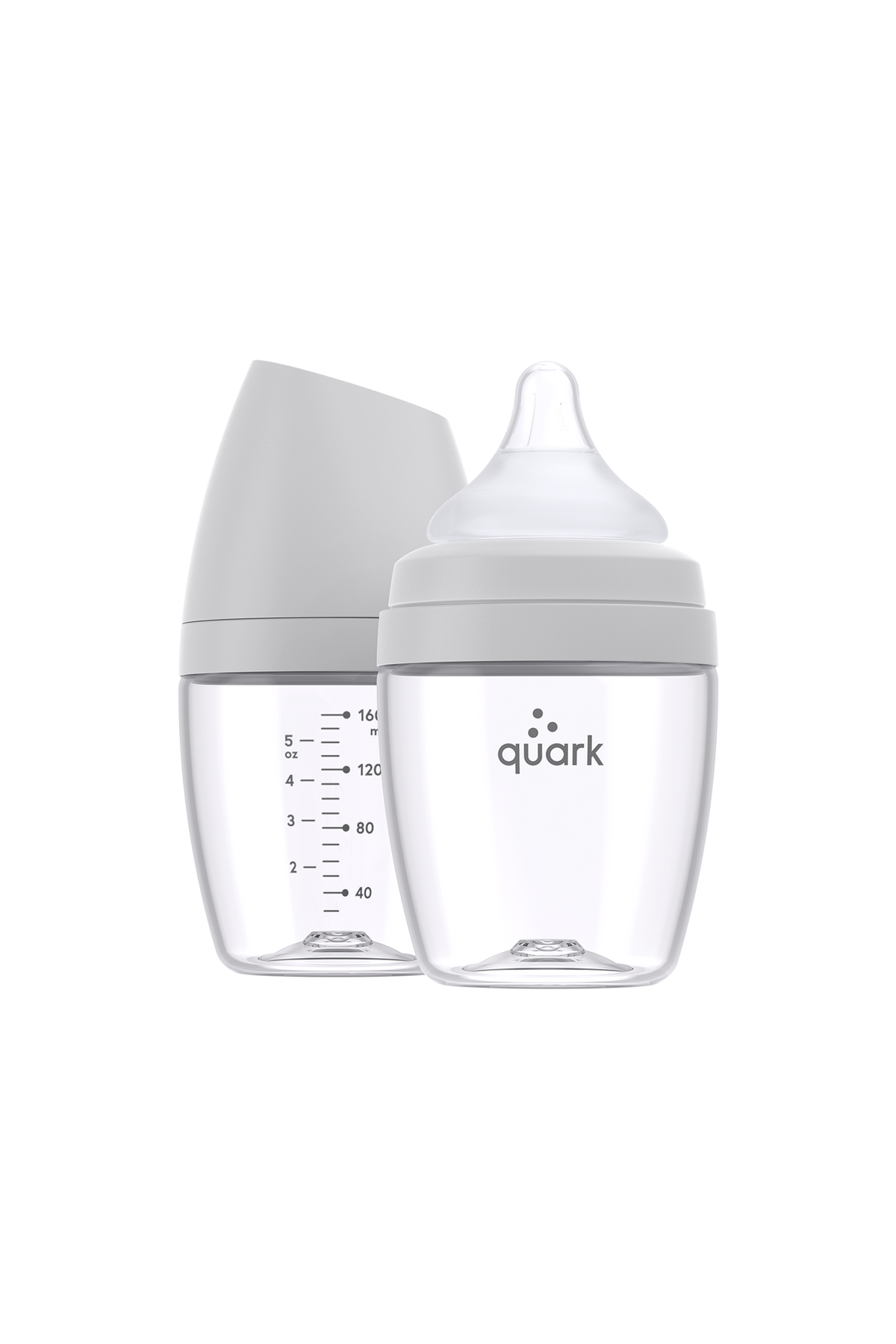
BuubiBottle Mini + RealFeel Slow Flow Nipple
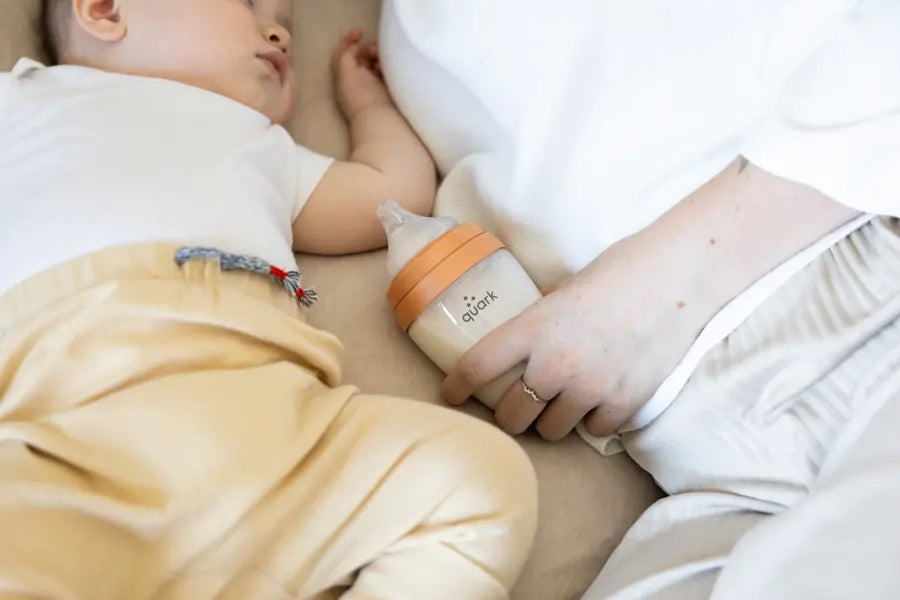
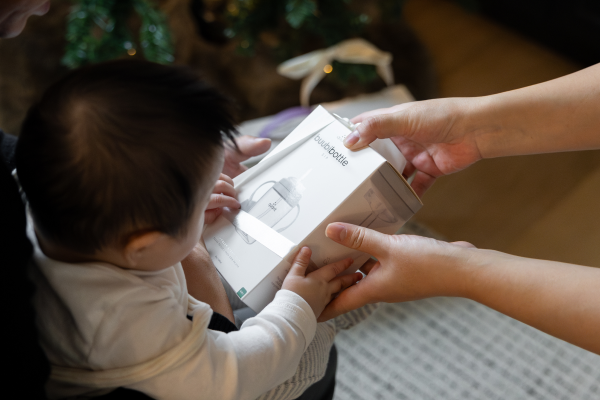
Un biberon incassable de 5oz en Grilamid TR-90 suisse avec une tétine RealFeel en forme de sein conçue pour les routines allaitement-biberon. La tétine à débit lent (0M+) exige une succion active, ce qui aide à préserver le rythme d'alimentation que votre bébé connaît grâce à l'allaitement.
Comment donner le biberon à un bébé allaité : la technique d'alimentation à rythme contrôlé
L'alimentation au biberon à rythme contrôlé est la technique recommandée pour les bébés allaités. Elle ralentit le débit du lait pour correspondre au rythme naturel de l'allaitement et aide votre bébé à lire ses propres signaux de satiété.
Conseils pour une introduction en douceur
Laissez quelqu'un d'autre offrir le premier biberon
Beaucoup de bébés allaités refusent initialement le biberon de leur parent qui allaite principalement, parce qu'ils peuvent sentir le lait maternel et préfèrent la source. Demander à un partenaire, à un grand-parent ou à un aidant d'offrir les premiers biberons facilite souvent l'acceptation.
Choisissez le bon moment
Essayez d'introduire le biberon quand votre bébé est calme et légèrement affamé, ni agité par la faim, ni repu. Un état tranquille et éveillé vous donne les meilleures chances d'acceptation.
Réchauffez la tétine
Passez la tétine en silicone sous l'eau tiède avant de la présenter. Une tétine plus proche de la température corporelle peut sembler plus familière à un bébé allaité.
Gardez le lait au chaud en déplacement
Pour les boires hors de la maison, un chauffe-biberon portable permet d'avoir le lait maternel exprimé à la bonne température sans micro-ondes. Le BuubiBottle Smart Portable Milk Warmer chauffe le lait dans une plage contrôlée de 37–50 °C (98–122 °F) sur une seule charge USB-C, que vous soyez à l'aéroport, en voiture ou n'importe où ailleurs. Terminez toujours par un test sur le poignet avant le boire.
Défis fréquents
Le bébé refuse complètement le biberon
C'est courant et généralement temporaire. Essayez différentes formes de tétines (chaque bébé a ses préférences), différentes températures, différents aidants ou différents moments de la journée. La plupart des bébés acceptent un biberon dans les 1 à 2 semaines de tentatives constantes et patientes.
Le bébé vide le biberon trop vite et semble insatisfait
C'est généralement le signe que le débit de la tétine est trop rapide. Passez à un débit plus lent et utilisez la technique d'alimentation à rythme contrôlé décrite plus haut. Le boire devrait demander un effort, avec une succion active plutôt qu'une prise passive.
Le bébé se détache à répétition et semble frustré
Vérifiez la prise du sein, car les mêmes règles s'appliquent qu'au sein : une prise large et profonde avec la tétine bien enfoncée dans la bouche. Vérifiez également que vous tenez le biberon à l'horizontale plutôt que de le lever vers le haut.
Questions fréquentes
Est-il trop tard pour introduire un biberon?
Ça dépend, il n'existe pas de seuil universel, mais l'introduction du biberon tend à devenir plus difficile après 4 à 6 mois, lorsque les bébés développent des préférences plus marquées. Plus tôt est généralement plus facile, une fois l'allaitement établi. Si vous introduisez plus tard, prévoyez une période d'acceptation plus longue et davantage de patience.
L'introduction du biberon va-t-elle affecter ma production de lait?
Ça dépend. Si un boire au biberon remplace une tétée sans tire-lait, cela réduit la stimulation dont votre corps a besoin pour maintenir la production. Pour protéger la production, utilisez le tire-lait chaque fois qu'un boire au biberon remplace une tétée. Beaucoup de parents utilisent un tire-lait électrique ou hospitalier pour maintenir leur production tout en introduisant les biberons à la garderie ou au travail.
Quel biberon est le meilleur pour un bébé allaité?
Cherchez une tétine à débit lent avec un profil en forme de sein, une texture en silicone souple et un évent anti-colique. Le BuubiBottle Mini avec sa tétine RealFeel a été conçu pour les routines allaitement-biberon : la base en forme de sein et le débit lent soutiennent la prise du sein naturelle que les bébés allaités connaissent déjà.
Quelle quantité de lait maternel exprimé dois-je mettre dans le biberon?
Commencez par de petites quantités, environ 60 ml à 90 ml (2 à 3 oz), surtout pour les premières tentatives. Remplir trop le biberon crée une pression à le finir et peut mener à la suralimentation. Vous pouvez toujours en offrir davantage si votre bébé signale qu'il a encore faim après avoir terminé. Les quantités varient d'un bébé à l'autre, alors suivez les signaux de votre bébé et les conseils de votre professionnel de santé.
Peut-on combiner sein et biberon à tout âge?
Oui, beaucoup de familles combinent avec succès l'allaitement et le biberon pendant des mois. La clé est la constance dans la technique d'alimentation à rythme contrôlé et le maintien de la production en utilisant le tire-lait pour remplacer les tétées. Consultez votre IBCLC pour un plan d'alimentation adapté à votre situation et à vos objectifs.
Qu'est-ce que l'alimentation au biberon à rythme contrôlé?
L'alimentation au biberon à rythme contrôlé est une technique qui ralentit le débit du lait du biberon pour correspondre au rythme naturel de l'allaitement. Le bébé est tenu en position semi-verticale, le biberon est tenu à l'horizontale, et le boire est interrompu toutes les 20 à 30 succions pour reproduire le rythme stop-and-go de l'allaitement.
Quelle est la différence entre l'allaitement mixte et le complément?
L'allaitement mixte désigne généralement l'alternance entre l'allaitement et le biberon (lait maternel exprimé ou lait maternisé) de façon régulière. Le complément désigne habituellement l'ajout de boires occasionnels de lait maternisé tout en maintenant principalement l'allaitement au sein. Les deux approches sont valides, et la bonne dépend de votre production, de votre mode de vie et de vos objectifs.
Sources
- American Academy of Pediatrics (HealthyChildren.org) — Bottle Feeding: How It's Done
- American Academy of Pediatrics (HealthyChildren.org) — How to Sterilize and Warm Baby Bottles Safely
- American Academy of Pediatrics (HealthyChildren.org) — Storing and Preparing Expressed Breast Milk
- American Academy of Pediatrics — Policy Statement: Breastfeeding and the Use of Human Milk. Pediatrics, 2022 (doi:10.1542/peds.2022-057988).
Avertissement médical : Cet article est fourni à titre d'information générale uniquement et ne constitue pas un avis médical. Consultez toujours votre professionnel de santé, votre sage-femme ou votre IBCLC pour des conseils adaptés aux besoins particuliers de votre bébé. Révisé médicalement par Dr. Yang.


Laisser un commentaire
Tous les commentaires sont modérés avant d'être publiés.
Ce site est protégé par hCaptcha, et la Politique de confidentialité et les Conditions de service de hCaptcha s’appliquent.