


Comment introduire une tasse à bec
Comprendre le moment idéal pour introduire une tasse à bec
Introduisez une tasse d'apprentissage dès qu'un enfant montre des signes de préparation — s'asseoir stablement, s'intéresser à l'auto-alimentation et être capable de porter des objets à la bouche. Alors que de nombreux bébés commencent à expérimenter vers six mois, d'autres montrent une préparation plus proche de 12 mois. En accord avec les recommandations pédiatriques et dentaires, visez à guider les familles vers une transition complète du biberon à la tasse avant le premier anniversaire pour soutenir le développement oral et les habitudes saines.
Choisir la meilleure tasse à bec pour une transition facile
Choisir la bonne tasse peut influencer considérablement le confort et la volonté de votre bébé à explorer. Concentrez-vous sur des designs qui correspondent aux étapes de développement et aux préférences sensorielles :
Tasses à bec souple : Idéales pour les premières introductions
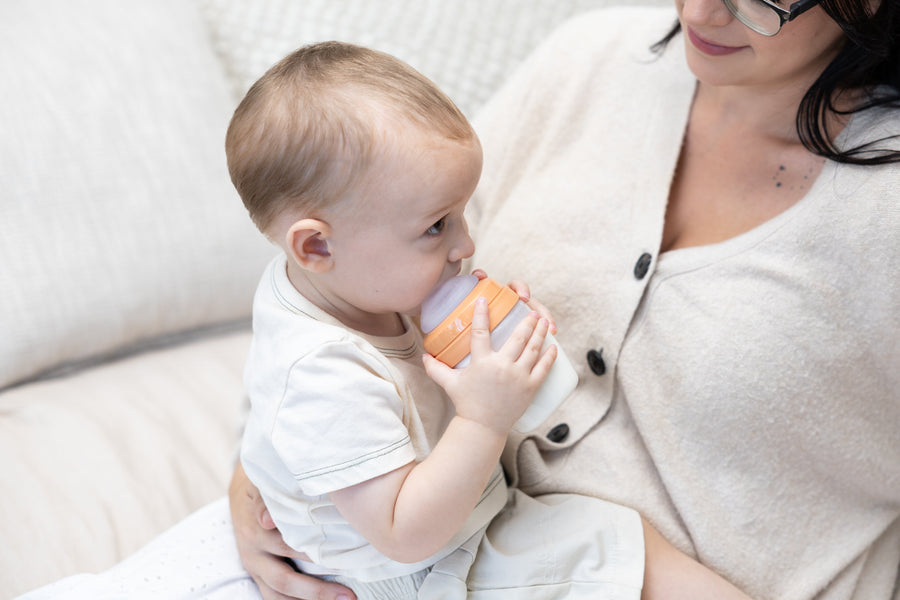
Un bec en silicone souple et flexible imite la sensation d'une tétine et favorise une adaptation précoce avec une résistance minimale.
Systèmes de conversion biberon-tasse à bec
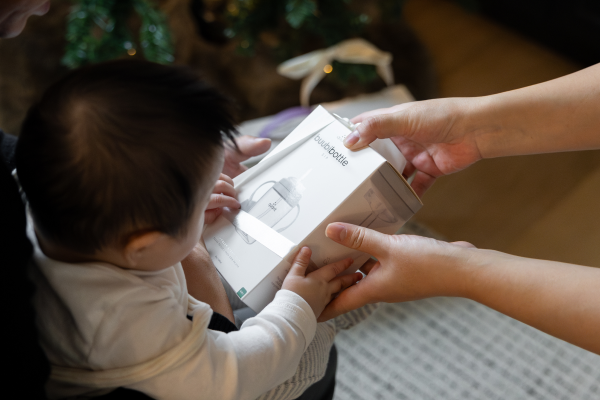
Les systèmes de transition qui s'adaptent directement sur des biberons familiers offrent une continuité. Un embout en silicone qui permet aux bébés de pratiquer de nouvelles compétences tout en conservant la sensation sécurisante de la forme de leur biberon habituel est souvent recommandé. Le Pack Hybride d'Alimentation BuubiBottle offre un système de conversion complet conçu à cet effet.
Diverses options de tasses d'apprentissage
Pour identifier la meilleure option, explorez une gamme de designs :
- Tasses à bec dur pour l'apprentissage à un stade ultérieur
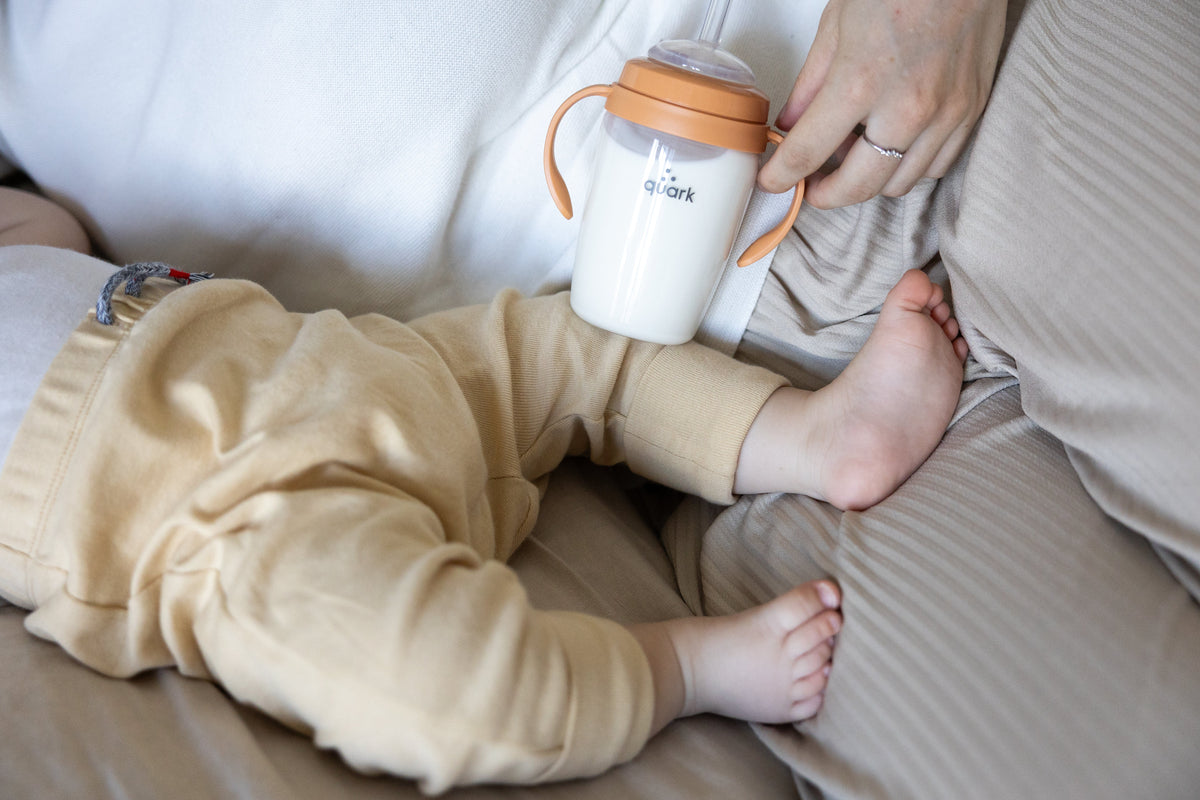
- Tasses à paille pour le renforcement oral-moteur
- Tasses 360° sans bec pour un mouvement de succion naturel
Méthode pratique étape par étape pour passer à une tasse à bec
1. Commencez par l'eau
Introduire de l'eau dans la tasse minimise le désordre et enlève la pression. Les bébés apprennent par l'exploration, et l'eau leur permet de s'exercer librement.
2. Offrez la tasse tôt et souvent
Une exposition quotidienne à faible pression aide à créer de la familiarité. Réintroduisez la tasse toutes les quelques semaines si les premières tentatives ne donnent pas de résultats.
3. Expérimentez avec différents styles de tasses
Testez plusieurs designs jusqu'à ce qu'un d'entre eux corresponde à la capacité de succion et au confort du bébé. Les bébés varient considérablement dans leur préférence pour les becs, les pailles ou les bords de style ouvert.
4. Ajustez le débit
Certaines tasses à bec contiennent des valves restrictives qui nécessitent une forte succion. Lorsqu'un bébé a du mal à aspirer le liquide, retirez ou desserrez la valve pour encourager une consommation réussie.
Stratégies pour les bébés qui résistent à la tasse à bec
Techniques de saveur et de familiarité
- Trempez le bec dans du lait maternel ou de la formule pour encourager l'acceptation.
- Commencez par la tétine du biberon, puis passez au bec de la tasse une fois que la succion a commencé.
Méthode de remplacement en milieu de repas
Donnez la moitié de la tétée au biberon, puis passez doucement à la tasse à bec pour le reste, tout en maintenant la position d'alimentation réconfortante.
Apprentissage initial à la tasse ouverte
Si la résistance persiste, apprenez aux bébés à boire dans une tasse sans couvercle avec une petite quantité de liquide. Une fois qu'ils comprennent le concept de la boisson, réintroduisez la tasse à bec couverte.
Introduire une paille
Les tasses à paille favorisent le placement naturel de la langue et peuvent parfois être plus faciles pour les bébés qui n'aiment pas les becs.
Modéliser le comportement
Démontrez la façon de boire dans la tasse à bec ou invitez les frères et sœurs à le faire.
Habitudes saines et consignes de sécurité pour l'utilisation des tasses à bec
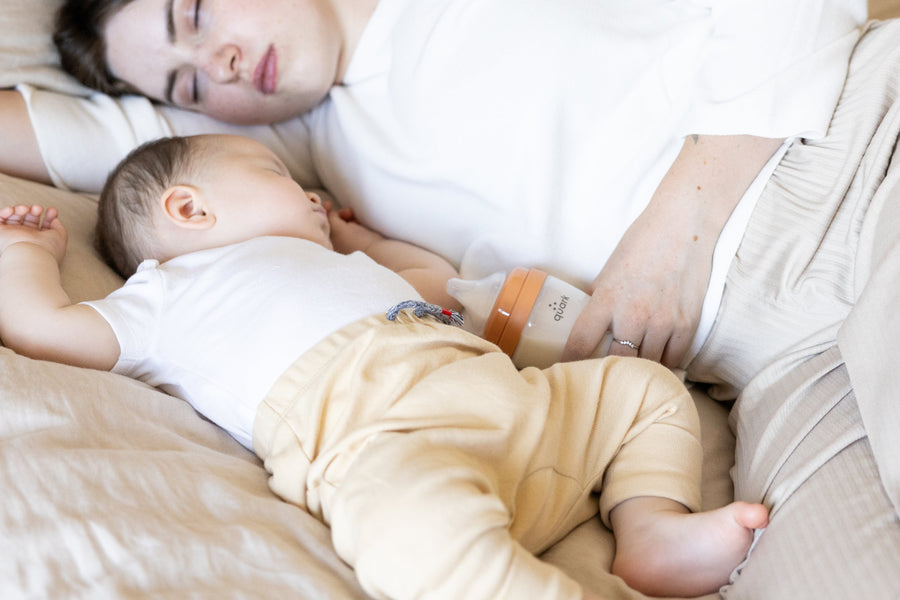
Éviter le lait au coucher dans la tasse
Les sucres du lait stagnant dans la bouche peuvent entraîner des caries de la petite enfance. Limitez le lait aux repas et aux collations et offrez de l'eau entre les tétées.
Prioriser un nettoyage minutieux
Les tasses à bec contiennent des valves et de petites pièces qui nécessitent un nettoyage soigneux pour prévenir l'accumulation de moisissures et de bactéries.
Utiliser les tasses à bec comme outil de transition
Une fois que l'enfant a acquis le contrôle, passez à une tasse ouverte. La plupart des tout-petits peuvent gérer une tasse ouverte à deux anses vers l'âge de deux ans.
Conseils spécifiques à l'âge pour l'introduction de la tasse à bec
Moins de 6 mois
Offrez une petite portion de lait maternel ou de lait infantile dans la tasse à bec pour une pratique précoce, bien que les bébés reçoivent encore leur alimentation principale par l'allaitement ou le biberon.
6 à 12 mois
L'eau devient une boisson appropriée entre les repas.
Cet article est fourni à titre d’information générale et ne constitue pas un avis médical. Consultez toujours votre pédiatre au sujet de la santé de votre bébé.
Examiné médicalement par Dr. Yang · Dernière révision : 6 août 2026


Laisser un commentaire
Tous les commentaires sont modérés avant d'être publiés.
Ce site est protégé par hCaptcha, et la Politique de confidentialité et les Conditions de service de hCaptcha s’appliquent.