

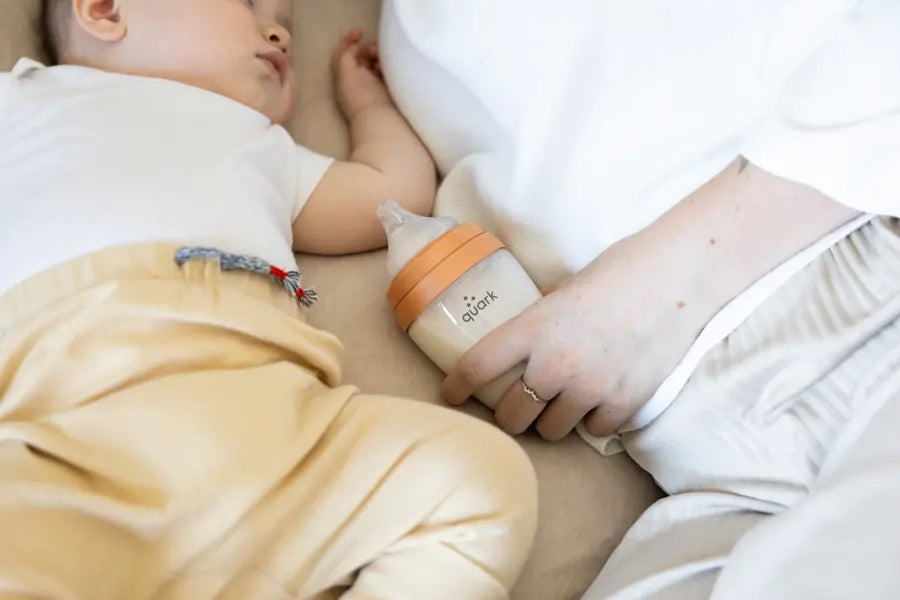


Le refus du biberon se produit lorsqu'un bébé refuse constamment de boire au biberon. Cela peut se manifester par :
- Tourner la tête loin du biberon
- Pleurer, repousser le biberon ou arquer le dos
- Mâchouiller la tétine au lieu de téter
- Ne prendre qu'une très petite quantité, voire rien du tout
Le refus du biberon peut être particulièrement stressant si vous devez vous absenter longtemps pendant les tétées, par exemple lorsque vous retournez au travail ou que vous prévoyez une soirée. Voici quelques stratégies douces que vous pouvez essayer :
Expérimenter différentes positions de tenue
Certains bébés s'habituent plus facilement au biberon lorsqu'ils sont tenus dans une position similaire à celle où ils tètent au sein. D'autres trouvent cela plus facile lorsque le contexte est complètement différent – par exemple, calés dans une position légèrement inclinée sur les genoux de quelqu'un, tournés vers l'extérieur pour voir la pièce.
Un mouvement doux peut également aider. Bercez, balancez ou marchez tout en offrant le biberon facilite parfois la transition, surtout pour les bébés habitués à être nourris en mouvement.
Laissez votre bébé explorer d'abord
Plutôt que d'essayer de faire téter votre bébé immédiatement, vous pouvez essayer de le laisser tester la tétine du biberon sans aucune pression pour qu'il boive. Le fait de laisser la tétine effleurer doucement ses lèvres et d'attendre qu'il ouvre la bouche peut être plus efficace qu'un guidage ou une poussée persistante.
Ajuster la température
Le lait maternel est, naturellement, à la température du corps – et certains bébés attendent la même chaleur du biberon. Réchauffer doucement le lait peut rendre la transition plus familière. Cela dit, certains bébés préfèrent le lait à température ambiante, et les bébés qui font leurs dents peuvent apprécier un biberon légèrement frais.
Laisser quelqu'un d'autre prendre les rênes
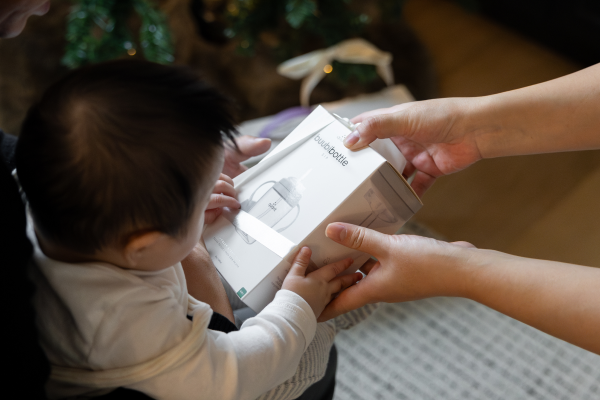
Vous pouvez également essayer de demander à une personne autre que le parent qui allaite d'offrir le biberon. Lorsque les bébés peuvent sentir la personne qui les allaite habituellement, ils attendent souvent le sein. Si vous n'avez pas de succès, demander à un partenaire, un grand-parent ou un soignant de confiance d'intervenir supprime ce signal et peut donner au bébé l'espace nécessaire pour accepter quelque chose de nouveau.
Sauter le biberon complètement
Si les biberons continuent d'être une source de stress pour votre famille, il est bon de savoir qu'un biberon n'est pas la seule voie à suivre. Les bébés peuvent apprendre à boire du lait dans une petite tasse ouverte, comme une tasse à médicaments, ou une tasse à bec souple avec le soutien d'un soignant. Reposez doucement le bord sur leur lèvre inférieure avec le lait juste au bord, et attendez qu'ils avancent leur langue, de cette façon vous ne faites pas que verser du lait.
Conclusion
Si vous avez essayé plusieurs approches pendant quelques semaines sans succès, il est peut-être temps de changer vos outils d'alimentation. Nos tétines RealFeel sont conçues pour passer facilement du sein au biberon, avec 95 % des bébés acceptant le biberon dès le premier essai, selon les résultats d'un laboratoire indépendant.
Si votre bébé semble en détresse lors des tentatives d'alimentation, consulter une consultante en lactation ou le professionnel de santé de votre bébé est une étape raisonnable et utile. Ils pourront observer l'alimentation directement, aider à identifier les facteurs sous-jacents (comme le confort buccal ou les sensibilités liées à la prise du sein) et offrir des conseils adaptés à votre situation spécifique.
Cet article est fourni à titre d’information générale et ne constitue pas un avis médical. Consultez toujours votre pédiatre au sujet de la santé de votre bébé.
Révision médicale : Dr Yang · Dernière révision : 6 août 2026




Laisser un commentaire
Tous les commentaires sont modérés avant d'être publiés.
Ce site est protégé par hCaptcha, et la Politique de confidentialité et les Conditions de service de hCaptcha s’appliquent.