









Maybe your baby takes the breast fine but fights every bottle. Maybe you are pumping around the clock and wondering if anyone can help with the bottle half of the job. Or you are still pregnant and someone told you to "line up a lactation consultant," and you are not sure that applies to you.
Our answer: yes, lactation consultants help with bottle feeding when the bottle is part of feeding breast milk, whether that is pumping, combo feeding or getting a breastfed baby to accept a bottle. If your baby is fully formula fed and struggles with the bottle itself, start with your pediatrician, who may refer you to a feeding specialist. Below is who to call for which problem, whether to book before birth, and how to find someone your insurance covers.
Do lactation consultants help with bottle feeding?
Yes, and it is a normal part of the job. The International Board of Lactation Consultant Examiners (IBLCE), which certifies IBCLCs, lists "Developing and implementing an individualised feeding plan in consultation with the client" in its scope of practice. For most families who breastfeed or pump, that plan includes bottles at some point.
US public health programs say the same in practical terms. USDA WIC tells parents that its "breastfeeding staff can also help you with bottle feeding technique and show you how to do it." The US Office on Women's Health (OWH) says that if a newborn needs supplements in the early weeks, "work with a lactation consultant," who can show you ways to supplement "that help you and your baby continue breastfeeding," such as a syringe, a tube beside the nipple or a small cup.
Common bottle problems a lactation consultant can usually help with:
- introducing a bottle to a breastfed baby, and bottle refusal once you have started;
- paced bottle feeding, so a bottle does not rush a baby who also nurses;
- supplementing in the early weeks while protecting your supply;
- a pumping plan when bottles of breast milk are most of your baby's feeds (see our exclusive pumping guide);
- keeping breastfeeding going around combo feeding or a return to work.

What if your baby is formula fed only?
IBLCE defines the IBCLC scope around "breastfeeding and human lactation." Many consultants still see bottle-only families, but not all do, so say so when you book and ask whether they work with formula-fed babies.
If the bottle itself seems hard for your baby, talk to your pediatrician first. The American Speech-Language-Hearing Association (ASHA) lists signs of a feeding or swallowing problem in babies, including when they "have problems breastfeeding or bottle feeding," "cough or gag while eating," "take a long time to eat," "arch their back or stiffen when feeding" or "are not gaining weight or growing." ASHA says your child's doctor "can help you find an SLP who is trained in feeding and swallowing." A speech-language pathologist (SLP) may lead a feeding team, and ASHA lists a lactation consultant as one possible member of it.
Who to call for which bottle problem
Our view: if breast milk is part of the plan at all, start with an IBCLC. If your baby coughs, chokes or is not gaining weight on the bottle, call your pediatrician first rather than waiting for a lactation appointment.
| Problem | Start with | Where this comes from |
|---|---|---|
| Breastfed baby will not take a bottle | IBCLC or WIC breastfeeding staff | WIC: staff can show you bottle feeding technique |
| Supplements needed in the first weeks | IBCLC, with your pediatrician | OWH: "work with a lactation consultant" |
| Pumping for most or all feeds | IBCLC | IBLCE: individualised feeding plan |
| Coughing, gagging, arching or very long bottle feeds | Pediatrician, then an SLP | ASHA: signs of a feeding or swallowing problem |
| Not gaining weight | Pediatrician | ASHA lists poor weight gain as a sign to raise with the doctor |
| Formula type or amounts | Pediatrician | IBLCE writes the IBCLC scope around "breastfeeding and human lactation" |
Do I need a lactation consultant before birth?
You do not have to, but it is worth one phone call. OWH's advice for pregnancy is to "Ask your doctor to recommend a lactation consultant," because "You can establish a relationship with a lactation consultant before your baby comes so that you will have support ready after your baby is born." That way you are not searching for a name at 2 a.m. on day three.
A prenatal visit makes the most sense if you have had breast surgery or injury, take medicines, or have a higher chance of an early birth. OWH tells pregnant parents to discuss "any breast surgery or injury" and any medicines with their doctor, and notes that premature babies "have more problems with breastfeeding than full-term babies." For the rest of your prep list, see our breastfeeding preparation guide.
For US families, Healthcare.gov says breastfeeding support and counseling "may be provided before and after birth," so a prenatal consult may be covered. Check with your plan.
When to get help after birth
Ask early. OWH's first steps after birth include "Ask for a lactation consultant to help you," and the AAP's HealthyChildren site says to ask for help "making sure your baby is latching on well and taking in enough milk" before you leave the hospital or birth center.
After you are home, these are good reasons to call:
- Feeds hurt enough that you put them off. OWH: "If you find yourself putting off feedings because breastfeeding is painful, get help from a lactation consultant." Our sore nipples guide covers what is normal.
- Plugged ducts keep coming back. OWH says to get help from a lactation consultant for this.
- You are not sure your baby is getting enough. Check the signs in our guide to knowing your baby is getting enough, and call your pediatrician if your baby is not gaining weight.
- A bottle is coming soon because of work, a partner taking a night feed, or supplementing.

IBCLC, CLC or peer counselor: who is who
OWH describes three kinds of help:
- IBCLC (International Board Certified Lactation Consultant): "certified breastfeeding professionals with the highest level of knowledge and skill in breastfeeding support." Candidates "must have a medical or health-related education and breastfeeding-specific education and experience" and "pass a challenging exam."
- CLC (Certified Lactation Counselor) or CBE (Certified Breastfeeding Educator): teaches about breastfeeding and "helps women with basic breastfeeding challenges and questions," usually after "a one-week-long course."
- Peer counselor: a parent who has breastfed and helps others. OWH notes that "Many state Women, Infants, and Children (WIC) programs offer peer counselors."
For a quick question about bottle technique, a CLC or WIC peer counselor may be all you need. For pain, weight concerns or a baby who cannot feed well, ask for an IBCLC.
What happens at an appointment
IBLCE's scope of practice includes "comprehensive maternal, child and feeding assessments" and a feeding plan made "in consultation with the client." In practice, expect a health history for you and your baby, a feed watched from start to finish, and a written plan to take home.
For a bottle-feeding visit, bring the bottles and nipples you use now, and some expressed milk or formula so the consultant can watch a real bottle feed. Questions worth asking:
- Is the nipple flow right for my baby? (Our nipple flow guide explains Slow, Medium and Fast.)
- Can you watch my partner give a bottle and adjust the pace?
- How many times a day should I pump if bottles replace some feeds?
- Which signs mean I should call the pediatrician instead?
How to find one and what it costs
OWH suggests asking "your obstetrician, pediatrician, or midwife for the name of a lactation consultant," and notes that "Many WIC offices have an IBCLC as well." The OWH Helpline (800-994-9662) is staffed by breastfeeding peer counselors, Monday to Friday, 9 a.m. to 6 p.m. ET, in English or Spanish.
On cost, Healthcare.gov says: "Health insurance plans must provide breastfeeding support, counseling, and equipment for the duration of breastfeeding." This applies to Marketplace and other plans, "except for grandfathered plans." Plans vary in which providers they cover, so ask yours before you book. If you are returning to work, our pumping at work guide covers the next step.

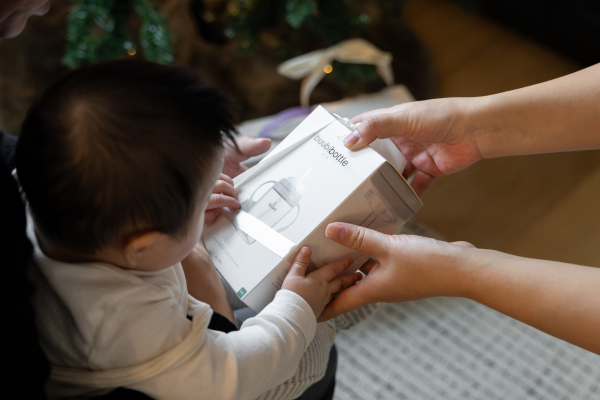
If your consultant suggests trying a different flow, the BuubiBottle Starter Set comes with RealFeel nipples in Slow, Medium, Fast and Flex flows, so you can switch without buying a new bottle. No nipple can promise a baby will take it, and our product page says so too. Bring the bottle to your appointment and let the consultant watch it in use.

BuubiBottle Starter Set
Both bottle sizes, Mini and Max, plus 8 vented RealFeel nipples in four flow rates, for trying sizes and flows as feeding changes.
Shop BuubiBottle Starter SetWhat we corrected from our earlier version
- We wrote about "our consultants." Quark does not employ lactation consultants. Removed.
- We said the first appointment should ideally happen "within 24–72 hours of birth." We found no national guidance that sets that window. Replaced with OWH and AAP advice to ask for help right after birth and before you leave the hospital.
- The earlier version did not answer whether lactation consultants help with bottle feeding. It now does.
Common questions
Can a lactation consultant help with formula feeding?
It depends on the consultant. The IBCLC scope centers on breastfeeding and human lactation, so ask when you book. For formula type or amounts, ask your pediatrician.
Do lactation consultants help with pumping?
Yes. Pumping plans are part of the work. OWH also notes you can rent an electric pump "from a lactation consultant at a local hospital or from a breastfeeding organization."
Can a lactation consultant help with bottle refusal?
Yes, for breastfed babies. Our bottle refusal methods cover what to try at home first.
Is a lactation consultant covered by insurance?
Yes, for most US plans. Healthcare.gov says plans must cover breastfeeding support and counseling, except grandfathered plans. Check which providers your plan uses.
What is the difference between a lactation counselor and a lactation consultant?
Training. OWH describes counselors (CLCs) as usually completing a one-week course for basic questions, while IBCLCs need health-related education, breastfeeding experience and an exam.
Sources
- US Office on Women's Health: Finding breastfeeding support and information, Common breastfeeding challenges and Pumping and storing breastmilk (pages last updated October 23, 2025); Preparing to breastfeed (page last updated February 22, 2021)
- USDA WIC Breastfeeding Support: Using Bottles with a Breastfed Baby (read October 23, 2026)
- Healthcare.gov: Breastfeeding benefits (read October 23, 2026)
- American Academy of Pediatrics, HealthyChildren.org: Where We Stand: Breastfeeding (last updated August 7, 2026)
- American Speech-Language-Hearing Association: Feeding and Swallowing Disorders in Children (last reviewed May 1, 2026)
- International Board of Lactation Consultant Examiners: Scope of Practice for IBCLC Certificants (effective December 12, 2018)
Written by the Quark Editorial Team. Medically reviewed by Dr. Yang. Last reviewed November 17, 2026.
This article is general parenting guidance and is not a substitute for advice from your own doctor, midwife or lactation consultant. Call your pediatrician right away if your baby coughs or chokes during feeds, has trouble breathing while feeding, or is not gaining weight.


Leave a comment
All comments are moderated before being published.
This site is protected by hCaptcha and the hCaptcha Privacy Policy and Terms of Service apply.