

Shopping for a travel bottle warmer is mostly an exercise in filtering out features you don't need and zeroing in on the few that actually matter when you're away from a kitchen. A warmer that's brilliant on your countertop can be useless in a car seat, on a plane, or in a hotel room. This checklist walks through what to look for, in priority order, so you can buy once and not regret it at 30,000 feet.
What makes a bottle warmer "travel-ready" in the first place?
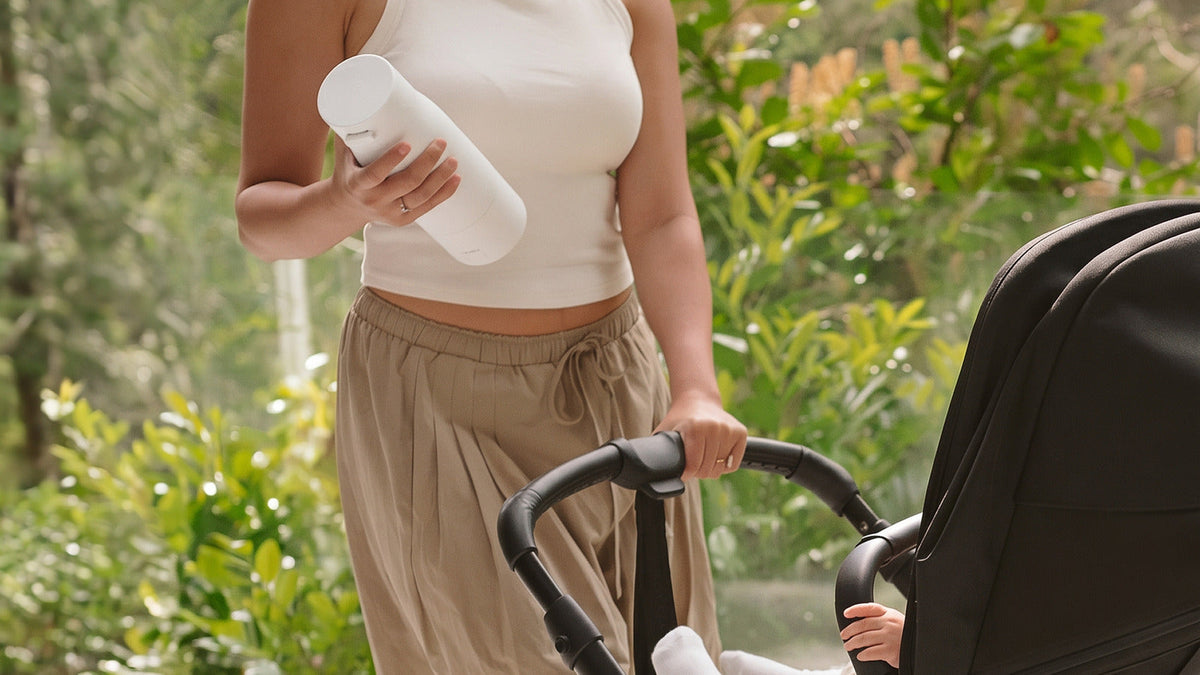
The single biggest divide is power. A travel warmer has to work where there's no wall outlet, which immediately rules out most plug-in countertop units. The ones built for the road are cordless and carry their own power, typically over USB-C, so a power bank can run them. If you're weighing a portable model against a traditional one, our breakdown of a portable milk warmer vs. a traditional bottle warmer lays out where each one actually fits.
The second divide is what it heats. A true warmer holds and warms milk to a target temperature; a thermos just keeps already-warm liquid warm for a while. They solve different problems, and confusing them is a common buying mistake. Our comparison of a portable bottle warmer vs. a thermos spells out the difference so you don't buy the wrong tool.
The travel bottle warmer checklist: what to look for
Here's the full criteria list, sorted by how much it matters on the go. Treat the top rows as non-negotiable and the bottom rows as nice-to-have. The BuubiBottle Portable Milk Warmer PRO column shows one concrete example of how a purpose-built travel warmer answers each line.
| What to look for | Why it matters on the go | BuubiBottle PRO example |
|---|---|---|
| Cordless, self-powered | No wall outlet in a car, plane, or park; it must run on its own or a power bank | USB-C powered; pair with any power bank |
| Temperature you can see | Removes the guesswork of "is it warm enough?" without a kitchen to test in | Illuminated display; set to a single degree |
| Compact & leak-resistant | It lives in a diaper bag next to clothes and snacks; bulk and leaks are dealbreakers | 17 oz single-unit form factor |
| Food-safe materials | It's a food-contact device, so the build should be a known safe material | Vacuum-insulated stainless steel vessel |
| Easy to clean | You'll clean it in less-than-ideal places; wipe-clean beats fiddly disassembly | Wipe housing; hand-wash detachable parts |
| Bottle compatibility | A warmer that only fits its own brand limits you on the road | Designed around the BuubiBottle system |
| Reasonable warm-up time | A hungry baby won't wait; predictable timing lets you plan around feeds | Plan via our heat-time guide (below) |
| Durability for transit | It gets tossed in bags and knocked around; flimsy units fail fast | Solid single-piece body |
Why power source is the make-or-break feature
If you remember one thing from this guide, make it this: how the warmer gets power decides whether it works where you actually are. A USB-C warmer you can run off the same power bank that charges your phone is genuinely portable; a unit that needs a 12V car adapter or a wall plug only works in specific spots. For a deeper look at why this matters across all your baby gear, our piece on cordless vs. corded baby gear is worth a read before you commit to anything battery-dependent.
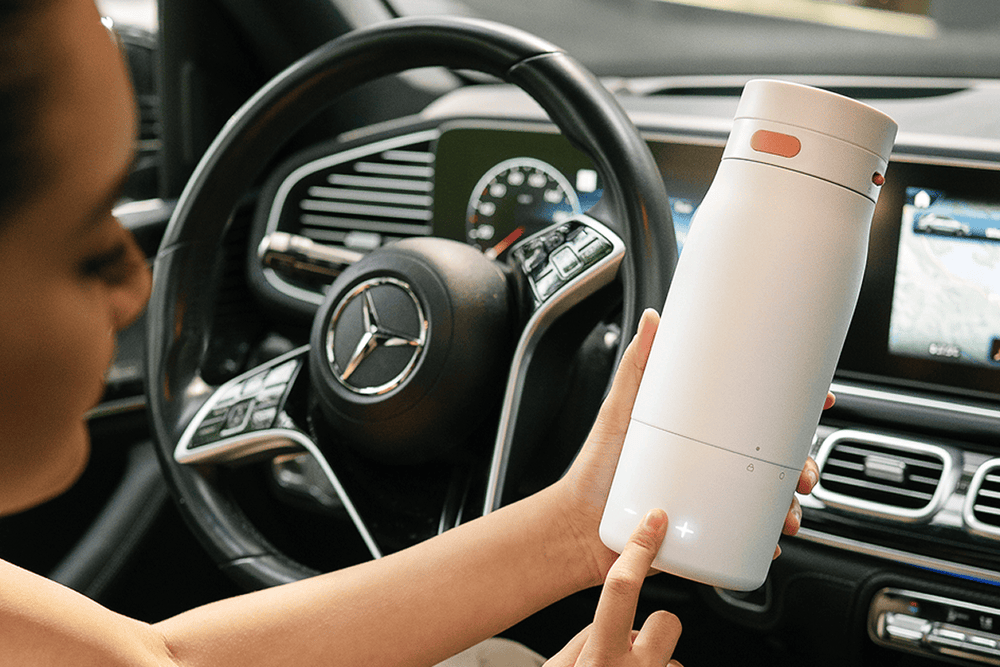
The convenience of USB-C is exactly why it's become the travel standard, and it's the approach behind the USB-C bottle warmer for travel. One cable, one power bank, and you're covered in the car, on a plane, or anywhere you can plug into a battery. No hunting for an outlet near a changing table.
How important is warm-up time when choosing a travel warmer?
It matters more than the spec sheet suggests, because a hungry baby sets the clock, not you. You don't need the fastest warmer on the market, but you do need to know roughly how long yours takes so you can start it before the meltdown, not during it. Our explainer on how long a bottle warmer takes helps you build that timing into your routine.
Starting temperature is the hidden variable here. Warming milk from cold takes noticeably longer than taking the chill off room-temperature milk, and that gap widens when you're traveling and can't control storage. The practical move is to plan around your warmer's slowest realistic scenario, so you're never caught short.
Does a travel bottle warmer need to match my bottles?
Compatibility quietly shapes your whole feeding kit. A warmer built around a single bottle system keeps everything matched, which is a real advantage when you're packing light and don't want a bag of adapters. The BuubiBottle Portable Milk Warmer PRO is designed around the BuubiBottle line, so it pairs cleanly with the BuubiBottle Mini (5oz) and BuubiBottle Max (8oz) and the same RealFeel nipples you already use at home.
If you'd rather start with a matched set instead of assembling pieces, the BuubiBottle Starter Set gives you a ready-made base that already works with the warmer. A compatible system means fewer parts to lose and fewer surprises when you open the diaper bag.
How do you clean a travel bottle warmer when you're away from a sink?
On the road you'll rarely have a proper kitchen, so a warmer you can wipe clean beats one that demands full disassembly every time. Look for a wipe-clean housing and a small number of detachable, hand-washable food-contact parts. For the full routine and the one rule that keeps an electronic warmer alive, see our guide on choosing a portable bottle warmer, which also covers upkeep.
Materials matter because this is a food-contact device. A known food-safe build like Tritan (BPA-free) is the baseline you want, not an afterthought. The combination of safe materials plus easy cleaning is what makes a warmer practical to live with for months, not just impressive in the box.
Do I even need a dedicated travel warmer?
Honest answer: not everyone does. Some families get by with a hotel kettle or a bowl of warm water and never buy one. If that's you, our look at a bottle warmer vs. a warm water bowl and the realities of relying on hotel hot water will tell you whether the manual route fits your trips. If you're still on the fence about owning one at all, start with do you need a bottle warmer.
A dedicated warmer makes the most sense for unpredictable, outlet-free situations: long car rides, flights, and stops with no kitchen. For those, the case is strongest, and our guide to using one for car rides and flights covers the practical side. One last travel note: feeding gear and baby liquids have their own security-screening rules, so check the official TSA guidance for traveling with children before you fly, and lean on your pediatrician for anything specific to your baby.
Common questions
What should I look for in a travel bottle warmer?
Prioritize a cordless, self-powered design (USB-C so it runs off a power bank), a temperature you can actually see, a compact and leak-resistant form factor, food-safe materials, easy cleaning, and compatibility with your bottles. Warm-up time and transit durability matter too. Skip anything that needs a wall outlet or a bowl of hot water to work on the go. The BuubiBottle Portable Milk Warmer PRO is built around exactly these priorities.
Why does the power source matter most for a travel bottle warmer?
Yes, it's the single most important factor, because power decides where the warmer can actually be used. A USB-C warmer runs off the same power bank that charges your phone, so it works in a car, on a plane, or anywhere with a battery. A unit that needs a wall plug or a specific car adapter only works in limited spots, which defeats the purpose of a travel warmer.
Is a travel bottle warmer the same as a thermos?
No. A bottle warmer actively warms milk toward a target temperature, while a thermos only keeps already-warm liquid warm for a while. They solve different problems, so buying a thermos when you need a warmer (or the reverse) is a common mistake. Decide whether you need to warm milk or just maintain its temperature before you buy.
Do I actually need a dedicated travel bottle warmer?
No, not always. Some families manage with a hotel kettle or a bowl of warm water and never buy one. A dedicated warmer is most useful in unpredictable, outlet-free situations like long car rides, flights, and stops with no kitchen, where guessing temperature or finding hot water is hardest. If you mostly travel where warm water is easy to get, you may not need one.
Sources
- American Academy of Pediatrics (HealthyChildren.org) — How to Sterilize and Warm Baby Bottles Safely
- Centers for Disease Control and Prevention — Infant Formula Preparation and Storage
This article is for general information and is not medical advice. Always consult your pediatrician about your baby’s health.
Medically reviewed by Dr. Yang Last reviewed August 6, 2026.



Leave a comment
All comments are moderated before being published.
This site is protected by hCaptcha and the hCaptcha Privacy Policy and Terms of Service apply.