

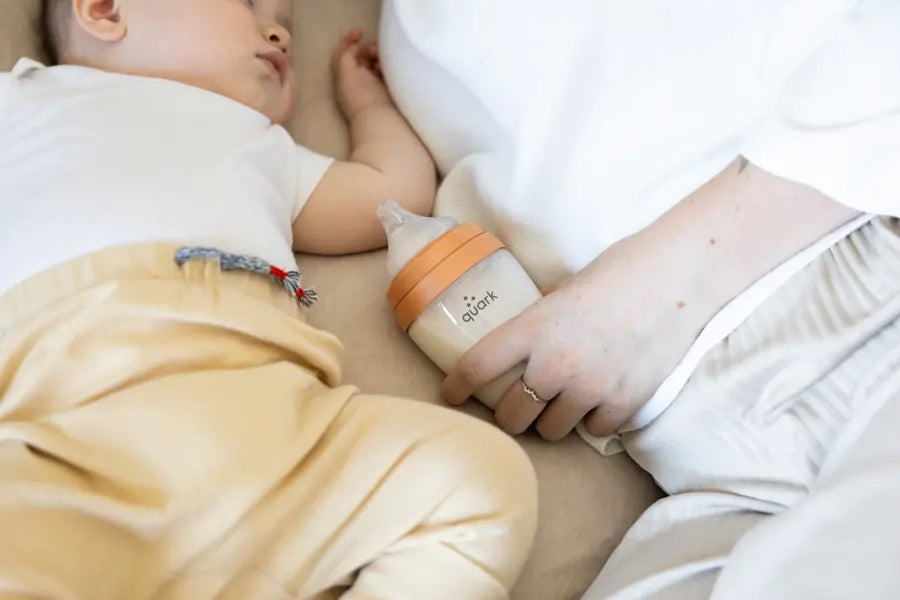
They warm the same bottles to the same gentle temperature. The only question that decides which one is right for you is where your feeds actually happen.

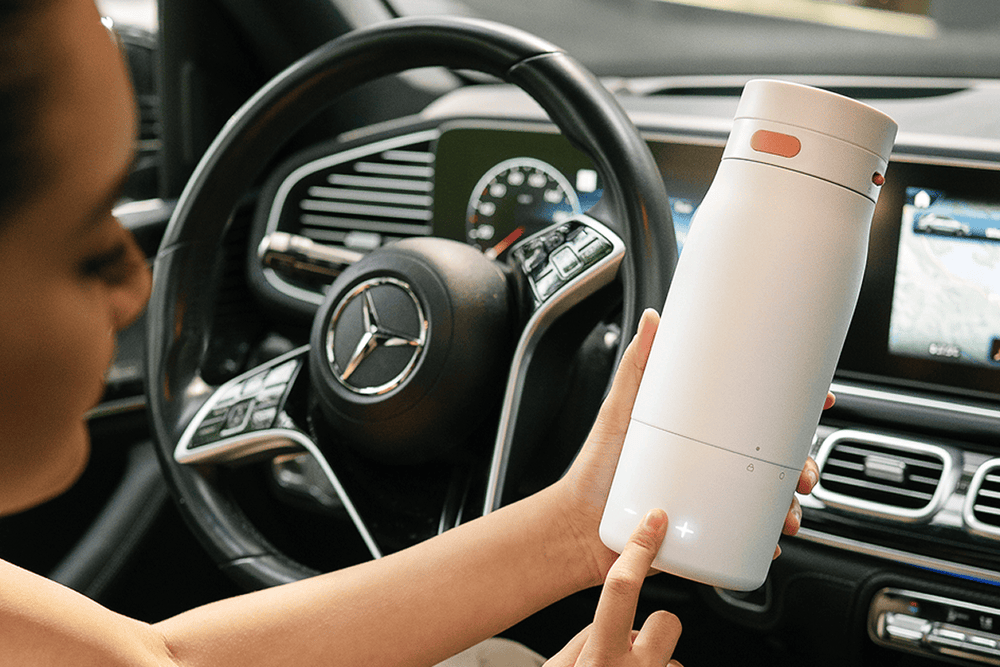
You're standing in a parked car with a cold bottle and a baby who has just decided that now is the moment. The countertop warmer you spent good money on is sitting uselessly on the kitchen counter, three kilometres away. This is the scene that sends most parents looking up "portable milk warmer vs traditional bottle warmer" in the first place, and it's the right instinct: these two tools look like rivals, but they're really built for two different lives.
Here's the short of it before we get into specifics. A traditional warmer plugs into the wall and lives on your counter. A portable warmer carries its own battery, so it works in the car, on a flight, or in a hotel room. Both bring chilled or room-temperature milk up to a comfortable feeding temperature without the hot spots a microwave leaves behind. So don't pick on heating power. Pick on geography.
The one difference that actually decides it
Strip away the marketing and the two categories differ on a single axis: power. A traditional warmer is a small, reliable countertop appliance tethered to an outlet. A portable warmer brings its own. Everything else (temperature range, the bottles it fits, how gently it heats) is close enough between good units that it rarely settles the decision. Where you feed does.
So be honest about your week before you spend anything. Picture the last seven days of feeds and roughly count how many happened within a few steps of an outlet, and how many happened somewhere else: a commute, a daycare run, a road trip, a flight, the back seat. That ratio is your answer.
Which one is right for you
If almost every feed happens at home, buy the traditional warmer and don't overthink it. A corded countertop unit is the cheaper, perfectly capable pick: it drops your existing bottle into a heated cradle, warms it, and asks nothing of you except a free outlet. You give up portability and, on many models, a live temperature readout, but if the kitchen is always a few steps away, neither costs you much. The honest trade is that it stays put. The day you try to feed in a parked car, it's no help at all.
The traditional countertop warmer
Parents whose feeds happen almost entirely at home, who want the lowest price and don't mind an appliance living on the counter.
If a real share of your feeds happen on the move, the portable warmer is worth the premium, and for that reason alone. A cordless unit that clips to a diaper bag and travels carry-on removes the scramble for hot water at the exact moments it's hardest to find. You pay more up front for the battery, electronics, and screen, and a self-contained warmer holds the milk in its own chamber rather than fitting any bottle you own. That's the trade. For a family that commutes, travels, or does daycare drop-offs, one cordless device replaces a tangle of thermoses, insulated bags, and gas-station-kettle improvisation.
The portable milk warmer
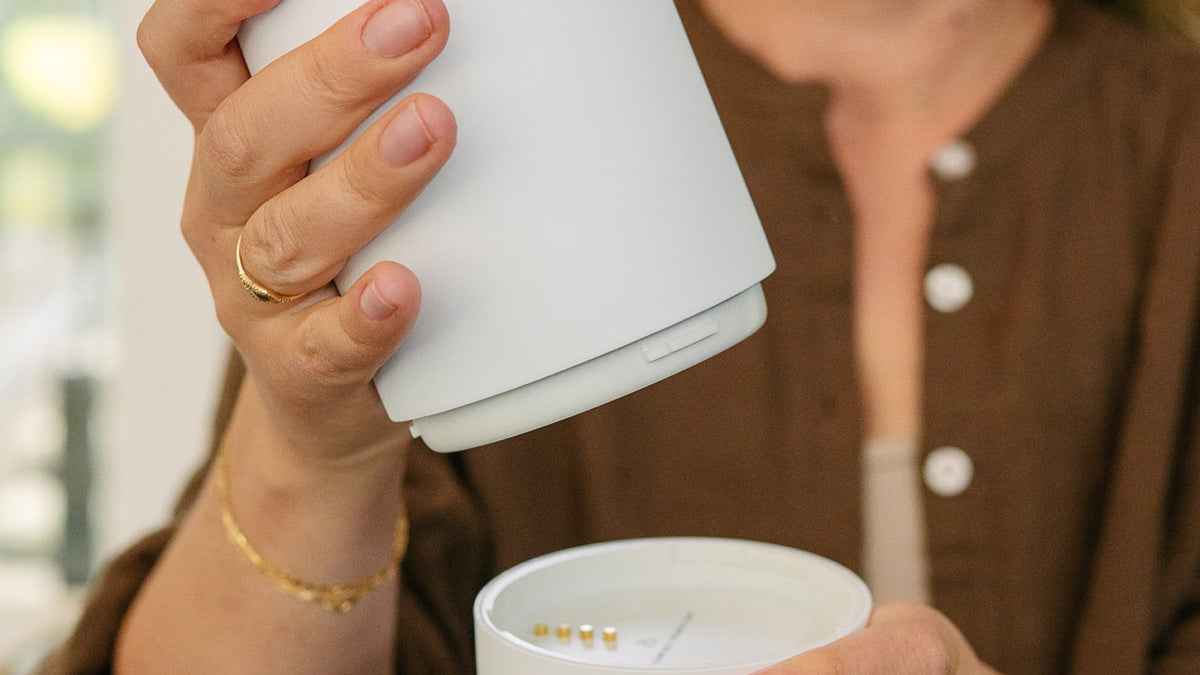
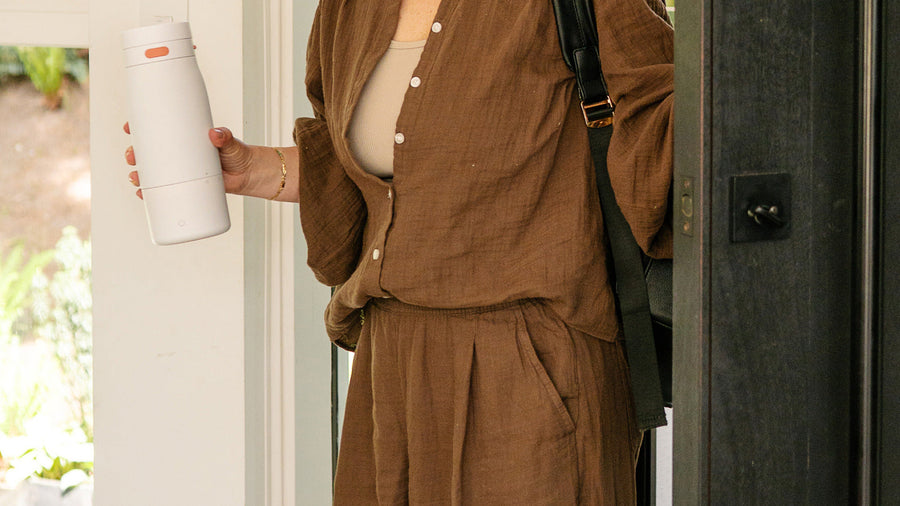
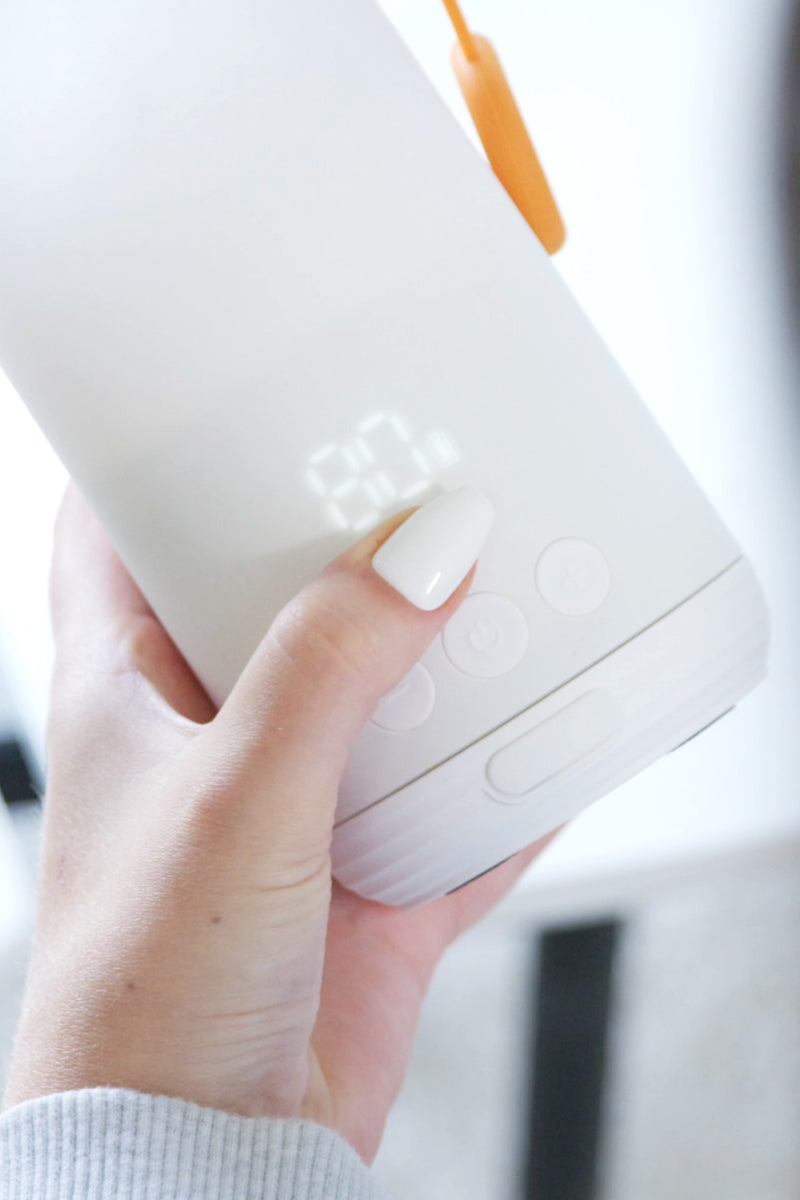
Parents who feed on the move and want a warm bottle — with a live temperature readout — without hunting for an outlet or a sink. Our pick here is the BuubiBottle Portable Milk Warmer PRO: cordless, 17 oz in a vacuum-insulated stainless steel vessel, a temperature it holds to a single degree, and a vessel that twists free of the base for washing. If you carry less and want the lighter option, the original BuubiBottle Smart Portable Milk Warmer is 300 ml / 10 oz with a Tritan bottle.
Don't choose on heating power. Choose on where you'll actually be standing when the bottle needs warming.
The specs, side by side
If you only skim one thing: both warm gently to body temperature, but only the portable one works without an outlet, and portability is what separates them.
| Traditional warmer | Portable milk warmer | |
|---|---|---|
| Power source | Wall outlet | Built-in battery, USB-C charge |
| Works away from an outlet | No | Yes |
| Carry-on friendly | No | Yes |
| Live temperature readout | Varies; often none | Yes |
| Fits bottles you already own | Yes | Own chamber |
| Up-front cost | Lower | Higher |
Just the facts for a quick scan; the verdict and the trade-offs are in the paragraphs above.
How warm is warm enough?
Whichever tool you pick, the goal is the same: warm milk gently to about body temperature, never in a microwave. The American Academy of Pediatrics flags microwaving because it heats unevenly and can create hot spots that scald (AAP, healthychildren.org). Where the two tools part ways is feedback. Many traditional warmers run on a timer or dial and ask you to judge the result by hand. A portable unit with a live readout takes some of the guesswork out: the BuubiBottle shows temperature on the side as it heats and holds the setting you choose. It doesn't replace the wrist test, though. Test a few drops on the inside of your wrist before every feed, and follow the temperature targets in our guide to warming baby milk.
Cleanup, fit, and the small daily stuff
A traditional warmer that uses a water bath needs that reservoir emptied and dried, or mineral buildup and mildew creep in. A portable warmer that heats milk in a wipeable chamber tends to be a quicker daily reset, which is one of the underrated reasons travel-minded parents keep using theirs at home. Either way, give the chamber or cradle a proper clean on a routine; our cleaning and care guide for portable warmers covers how often and how. And if speed is your real worry, how long a bottle warmer actually takes depends far more on starting temperature than on which type you bought.
So, what should you buy?
Plenty of families end up with both: a cheap warmer parked at home and a portable one living in the bag. There's nothing wrong with that. But if you're buying one device to do the most work, start with where you actually feed: home-bound feeds point to the traditional warmer, feeds-on-the-move point to the portable one. If that's you, the BuubiBottle Portable Milk Warmer PRO is the one we'd hand you. The places you feed, not the price tag, are what should settle it.
Both of these tools do the same gentle job. The portable warmer just does it in more places, for a price, while the traditional one does it cheaply, in one. Picture your real week, pick the one that meets you where the feeds happen, and you'll have made the right call.
Common questions
The questions parents weighing these two ask us most.
Is a portable milk warmer as fast as a traditional countertop warmer?
Speed depends mostly on the milk's starting temperature and how much you're warming, not the form factor. Both warm gently toward body temperature; a portable unit trades a little speed for working without an outlet.
Can a portable milk warmer warm both breast milk and formula?
Yes. The BuubiBottle is designed for breast milk, formula, and water, at a temperature you set. Warm gently and avoid overheating, which can affect some nutrients in breast milk, and follow your own feeding guidance.
Do I still need a traditional warmer if I have a portable one?
Not necessarily. A portable warmer works at home too; it just costs more up front. Many parents skip the countertop unit entirely.
Can you take a portable milk warmer on a plane?
The BuubiBottle is described as travel-safe and carry-on friendly. Battery devices generally fly in carry-on, not checked, bags; always check your airline's current rules first.
Why not just use a microwave or hot tap water?
Microwaving is discouraged by the AAP because it heats unevenly and can scald. Hot tap water is inconsistent and not always there. A dedicated warmer gives a controlled, repeatable result. Still test a drop on your wrist before every feed.
Sources
- American Academy of Pediatrics — Bottle Feeding: How It's Done
- American Academy of Pediatrics — Storing and Preparing Expressed Breast Milk
- NHS (UK) — Formula milk: common questions
Reviewed for accuracy by Dr. Yang · Last updated June 2026 · General guidance, not a substitute for advice from your own healthcare provider. Always follow current milk-preparation and storage guidance.


Leave a comment
All comments are moderated before being published.
This site is protected by hCaptcha and the hCaptcha Privacy Policy and Terms of Service apply.