

A portable bottle warmer is worth buying only if it solves a real feeding problem. Before comparing colors, accessories, or “nice to have” features, start with use case, safety, capacity, cleaning, battery, and whether the product gives enough information to warm confidently.
Use this checklist to decide whether a portable bottle warmer actually improves your family’s feeding routine. The goal is simple: compare use case, safety, capacity, cleaning, charging, and published product details before you buy.
Quick answer
Choose a portable bottle warmer if you regularly feed away from a kitchen, want a repeatable warming routine, or share feeds with caregivers. Skip it for now if your baby accepts cold or room-temperature milk, you rarely warm bottles, or your current safe method already works.
1. Use case: where will you warm most often?
Question: Are you solving home feeds, travel feeds, daycare handoffs, or night feeds?
Decision rule: If warming mostly happens at home, countertop or warm-water routines may be enough. If warming happens in cars, hotels, airports, parks, or caregiver bags, portability matters more.
2. Temperature control: can the warmer reduce guessing?
Question: Does the warmer show or control temperature clearly?
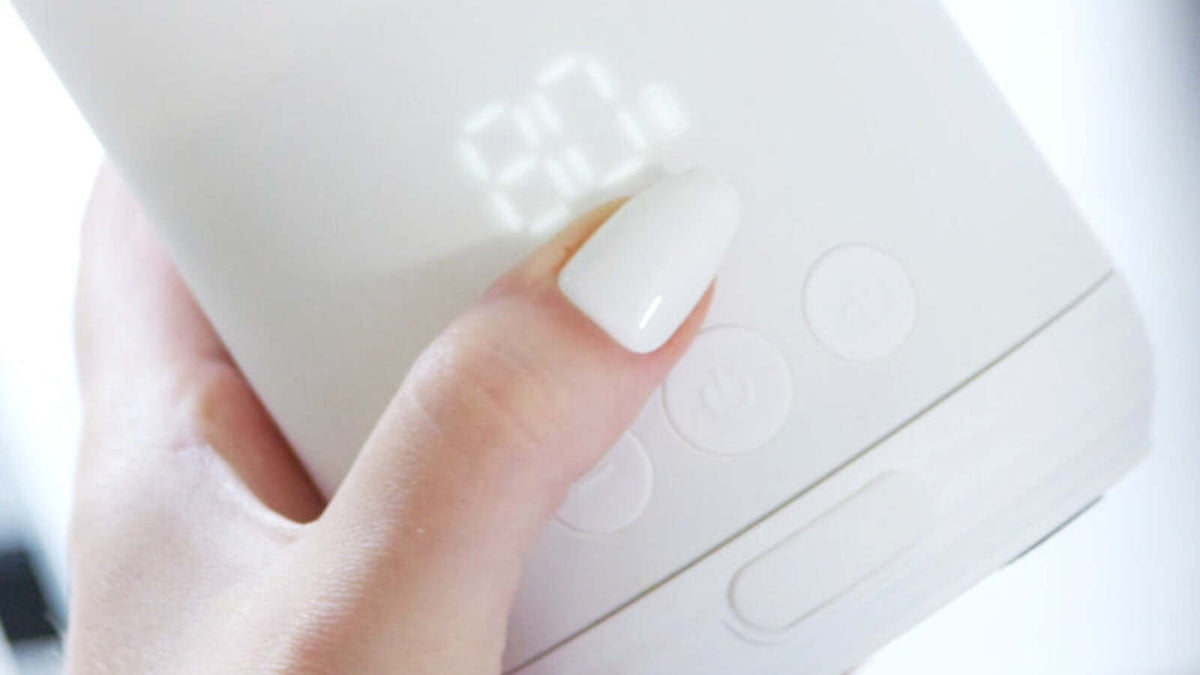
What to check: target range, display, caregiver instructions, and whether the device avoids microwave-style overheating.
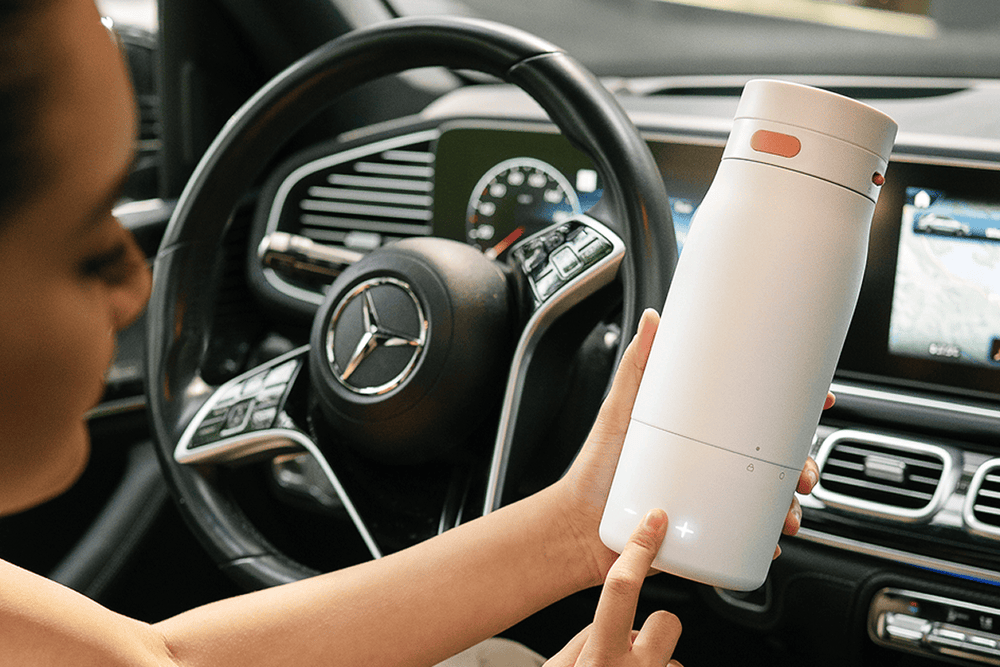
Quark Baby product detail: the BuubiBottle Portable Milk Warmer PRO holds the exact temperature you set to a single degree and adds a 158ºF / 70ºC Formula Preparation Mode; the original BuubiBottle Smart Portable Milk Warmer lists 37ºC / 98ºF to 50ºC / 122ºF with a real-time display.
3. Capacity: does it match real bottle size?
Question: Will the warmer hold the feeds you actually prepare?
Decision rule: Buy for the bottle size your baby uses now plus near-term growth, not the largest number on a spec sheet.
Quark Baby product detail: the BuubiBottle Portable Milk Warmer PRO lists 17 oz capacity, and the lighter original BuubiBottle Smart Portable Milk Warmer lists 300 ml / 10 oz.
4. Materials and seals: is the build clear?
Question: Does the product tell you what touches the feed and what creates heat?
What to check: bottle material, heating element, seals, cap, and leak resistance. Avoid products that hide material information.
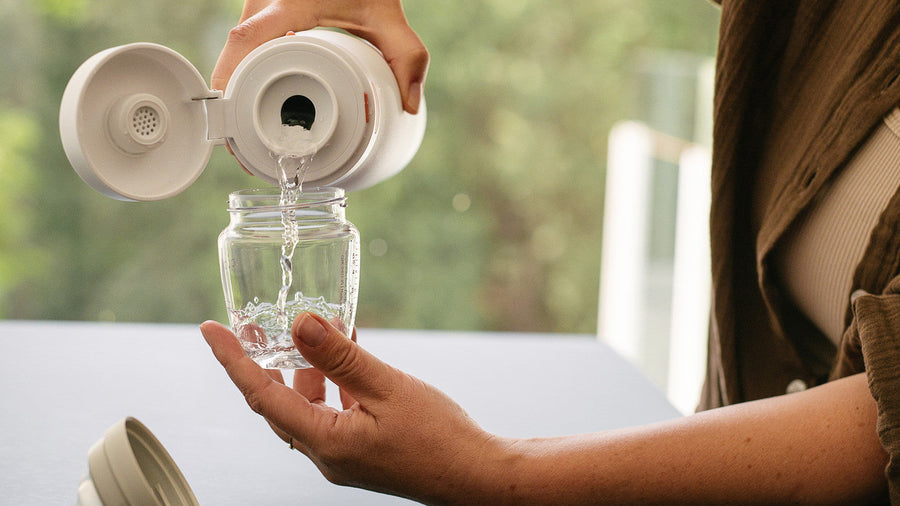
Quark Baby product detail: the BuubiBottle Portable Milk Warmer PRO lists a vacuum-insulated stainless steel vessel that twists free of the electronic base; the original BuubiBottle Smart Portable Milk Warmer lists a durable Tritan bottle, a 316 stainless steel heating element, platinum-cured silicone seals, and a locking leak-proof cap.
5. Charging and travel: will it work outside the kitchen?
Question: Can the warmer travel with your normal bag and charger setup?
What to check: charging standard, battery expectations, carry strap, cap security, and airline/travel positioning.
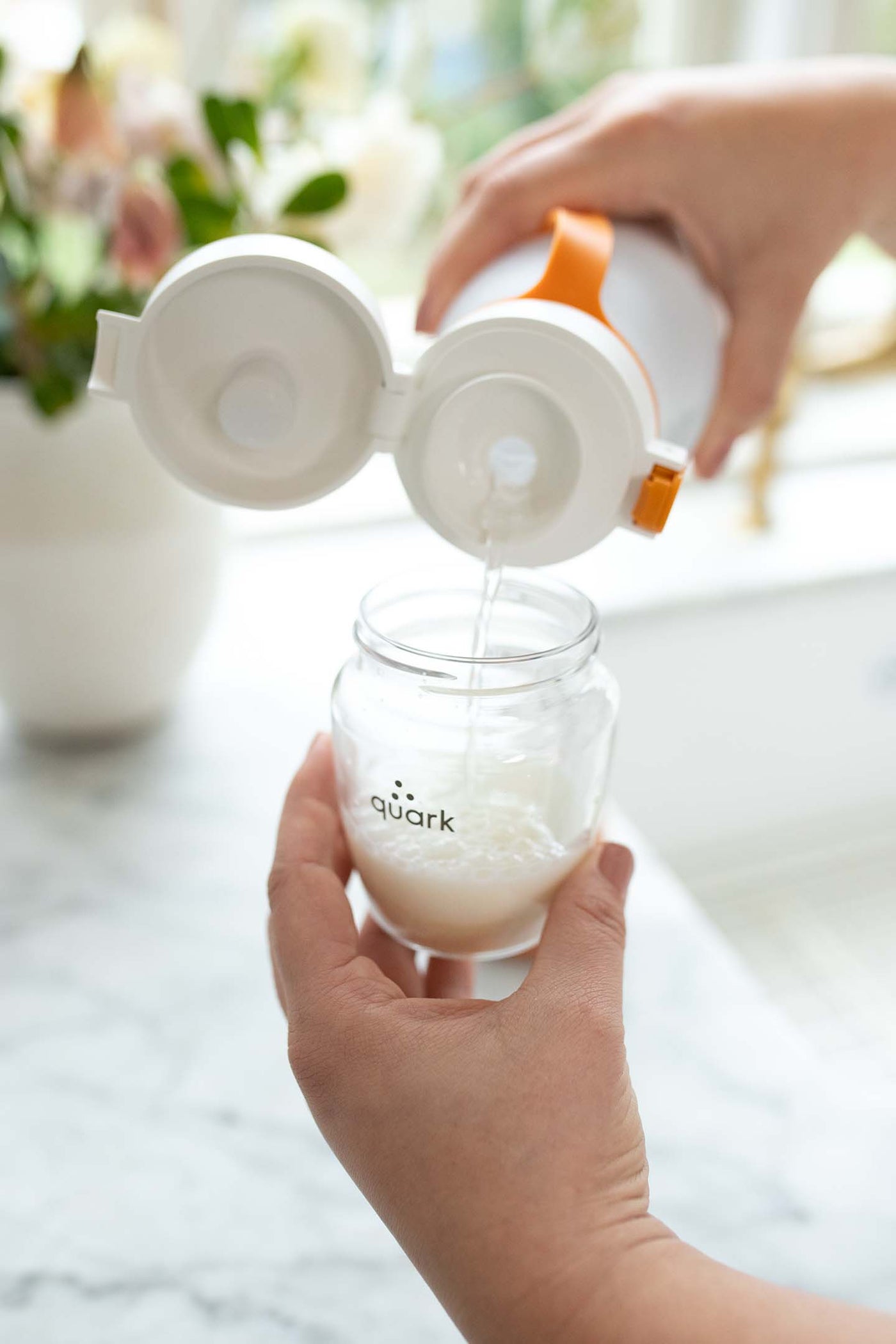
Quark Baby product detail: the BuubiBottle Portable Milk Warmer PRO lists 30W USB-C charging to 80% in about 90 minutes with all-day runtime; the original BuubiBottle Smart Portable Milk Warmer lists USB Type-C charging, travel-safe carry-on positioning, a removable silicone carry strap, and up to 10 hours of battery life.
6. Cleanup: can you maintain it when tired?
Question: Does the routine stay simple after the feed?
Decision rule: If parts are hard to wash, easy to lose, or annoying at night, the product may not be the right fit even if it warms well.
Common buying mistakes
- Choosing the largest capacity without checking your real bottle size.
- Buying for one rare trip instead of the routine you repeat weekly.
- Ignoring cleaning and drying after night feeds.
- Assuming warming gear extends safe milk or formula timing windows.
- Choosing a product without clear material and temperature information.
Buyer fit summary
Best fit: Parents who feed outside the kitchen several times a week, travel with milk or formula, or need a routine that another caregiver can repeat.
Maybe not needed: Families whose baby accepts room-temperature feeds, who rarely leave the house during feeding windows, or who already have a safe warming method that is easy to clean.
Worth checking before purchase: bottle capacity, material transparency, temperature display, charging type, leak resistance, cleaning steps, and whether the warmer fits the bag or stroller setup you actually use.
QB product fit: BuubiBottle is strongest when the parent wants a self-contained travel warmer with USB Type-C charging, visible temperature information, and a bottle format rather than a loose bowl or cup routine.
Pre-purchase scorecard
Score 0: The feature does not matter for your routine. Example: a long battery claim is less important if every feed happens beside an outlet.
Score 1: The feature is occasionally helpful. Example: a carry strap is useful for trips but not essential for home feeds.
Score 2: The feature changes everyday usability. Example: visible temperature information matters if multiple caregivers warm bottles or if feeds happen outside the kitchen.
- Capacity: 0 if you only warm small occasional feeds; 2 if you need near-full bottle volumes.
- Temperature display/control: 0 if you rarely warm; 2 if predictable warmth is the reason for buying.
- Battery and charging: 0 for counter use; 2 for road, airport, stroller, or hotel days.
- Material transparency: 2 for every buyer; unclear material claims should be a stop sign.
- Cleaning simplicity: 2 if night feeds or shared caregiving are part of the routine.
When to wait instead of buying
Waiting can be the right decision. If your baby accepts room-temperature milk, if you only leave home for short windows between feeds, or if a safe warm-water routine already works, a portable warmer may not be the next best purchase. Revisit the decision when travel increases, another caregiver starts feeding, or the current routine becomes stressful.
Final buying rule
Buy the warmer only when it removes a repeated source of friction. If the main problem is travel timing, caregiver handoff, visible temperature control, or fewer loose water-bath pieces, the purchase has a clear job. If the problem is only “maybe we will need it someday,” wait until the routine proves the need.
How to avoid buying the wrong warmer
Do not buy for the biggest feature list. A long list of modes matters less than whether the warmer supports the exact feed routine your family repeats. Capacity, temperature visibility, charging, and cleaning usually matter more than decorative settings.
Do not ignore the bottle format. Some parents want to warm an existing bottle. Others want a self-contained warmer bottle that travels as one object. Decide which routine you want before comparing product pages.
Do not skip caregiver instructions. A good purchase still needs a written routine. Note where milk or formula is stored, how it should be warmed, when it should be used, and what to discard. That turns the product from a gadget into a repeatable feeding tool.
Bottom line: A good warmer should make the safe routine easier to repeat; it should not create more parts, more guessing, or more cleanup than the problem it solves. Use the checklist against your real week, not an imagined trip.
Related Quark Baby next step
If your scorecard points to a dedicated travel warmer, compare your needs against the BuubiBottle Portable Milk Warmer PRO product specs. If you are still comparing categories, use the Buying Guides hub to keep the decision tied to real daily routines.
Frequently Asked Questions
It depends. It is useful if you warm often away from a kitchen. It is not necessary if your baby accepts cold or room-temperature feeds and your current safe method works.
No. CDC guidance advises against microwaving because it can heat unevenly, create hot spots, and affect breast milk quality.
Plan on roughly 4-8 minutes for 4 oz of refrigerated breast milk in most portable warmers, depending on the warmer's heating element and the target temperature you set. The exact number varies by product; check the manufacturer's published warm-time chart before relying on it for a feed. CDC guidance reminds caregivers to test the milk on the wrist before feeding so the baby never receives milk that is too hot, regardless of warmer model or program time.
Yes, if the warmer runs too hot or too long. CDC guidance states that breast milk does not need to be warmed and can be served at room temperature or cold; if a caregiver chooses to warm it, the milk should be warmed gently and never brought to a boil, because excessive heat reduces the activity of some heat-sensitive components. Choose a warmer with a clear target temperature display so the milk is heated to feeding temperature only, not above. Avoid leaving milk in any warmer beyond the time needed to bring it to feeding temperature.
No. Once breast milk has been warmed, it should be used promptly and not re-warmed or held at warming temperature for the next feed. Per CDC guidance, breast milk that has been thawed and brought to room temperature should be used within roughly 2 hours and should not be re-frozen; once a baby has started feeding from a bottle, any leftover milk should be used within 2 hours from when the feed started, then discarded. A portable warmer is for bringing milk to feeding temperature, not for holding milk warm between feeds.
Yes, as long as the warmer is cleaned between uses and you follow the preparation guidance for each. CDC infant formula guidance stresses safe preparation and storage practices that differ slightly from breast milk handling — for example, prepared powdered formula has its own time-and-temperature rules. Clean the warmer chamber and any silicone seals between feed types per the manufacturer's instructions to avoid residue carryover, and never substitute warming for the preparation steps each guidance specifies.
Usually, yes. USB-C is practical for travel because many families already carry compatible chargers or power banks.
Yes. A visible temperature range helps caregivers avoid guessing and makes the warming routine easier to repeat.
It depends on the airline, the warmer's battery, and onboard rules. Most portable warmers powered by lithium-ion batteries must travel in carry-on baggage rather than checked baggage; TSA guidance requires spare and built-in lithium batteries to be carried in the cabin. Breast milk, formula, and toddler drinks are also allowed through US security screening in reasonable quantities (see TSA traveling with children). Always check your specific airline's policy on operating personal electronics during the flight, and confirm before each trip — rules change. Many caregivers warm before boarding or use the warmer on the ground rather than in-flight.
It depends. A portable warmer may be designed for travel, but families should still check current airline, airport, liquid, milk, formula, and battery rules before each trip.
Five criteria separate a useful portable bottle warmer from a frustrating one. Battery type and charging — USB-C rechargeable lasts longer on travel days than disposable-battery models and works with phone chargers. Target temperature control — a clear display so you heat to feeding temperature rather than guessing. Heating method — dry-heat designs avoid the spill and storage hassles of water-bath models. Bottle compatibility — confirm the chamber fits your bottle’s diameter and height; not all warmers fit wide-neck bottles. Cleaning access — chambers that disassemble for hand-washing stay sanitary over weeks of travel. Cross-reference each against the CDC handling-breastmilk guidance so the warmer enables, not contradicts, safe feeding practice.
Three signals indicate a quality portable bottle warmer. Material disclosure — the manufacturer publishes which food-contact polymer is used (look for medical-grade polyamide, Tritan, or borosilicate glass; avoid unspecified “plastic”). Substance-screening certification — look for BPA-free, BPS-free, and phthalate-free as a baseline; advanced certifications like EA Free verify the product is free of 564 EU endocrine-disruptor substances, which goes beyond the BPA-only screen most products use. Battery safety mark — UL or CE certification on the battery and charger reduces fire/overheating risk. Avoid warmers with no stated material, no battery certification, or vague “non-toxic” language without a tested certification standard behind it. FDA guidance on BPA describes why these material disclosures matter for infant feeding products.
The BuubiBottle Portable Milk Warmer PRO uses a vacuum-insulated stainless steel vessel, while the original BuubiBottle Smart Portable Milk Warmer uses durable Tritan™ construction with a 316 stainless steel heating element and platinum-cured silicone seals. The line carries EA Free Certification, which verifies the absence of 564 EU-recognized endocrine-disrupting substances — a substantially broader screen than BPA-only certification. Products are also BPA-, BPS-, and phthalate-free, with UL/CE-certified battery components in the portable warmer line. We publish material specifications on each product detail page so parents can verify what their baby’s food contacts.
Final parent decision path
Use the checklist as a filter. If the warmer does not solve a repeated problem, wait. If it clearly improves travel feeds, caregiver handoff, visible temperature control, or cleanup, then compare product specs closely.
For BuubiBottle specifically, the strongest fit is a family that wants a self-contained portable warmer with published capacity, material details, temperature range, charging information, and travel-oriented design. The weakest fit is a family that almost never warms bottles or already has a safe, simple method that works every week.
Before buying, write down the real feeding moment you want to improve: where the baby is, who prepares the bottle, what container is used, how long the feed may wait, and where parts will be cleaned. If the product makes that moment easier and more repeatable, it has a clear job. If not, keep the current safe routine and revisit the purchase later.
References
- CDC. Breast Milk Storage and Preparation.
- CDC. Infant Formula Preparation and Storage.
- FDA. Bisphenol A (BPA) Use in Food Contact Application.
- TSA. Portable Electronic Devices and Lithium Batteries.
- TSA. Traveling with children.
- Quark Baby. BuubiBottle Portable Milk Warmer PRO product specifications.
- Quark Baby. BuubiBottle Smart Portable Milk Warmer product specifications.
A note for parents. This guide is general information to help you compare baby feeding gear. Always follow your product’s instructions, and talk to your pediatrician about your child’s specific needs.


Leave a comment
All comments are moderated before being published.
This site is protected by hCaptcha and the hCaptcha Privacy Policy and Terms of Service apply.