

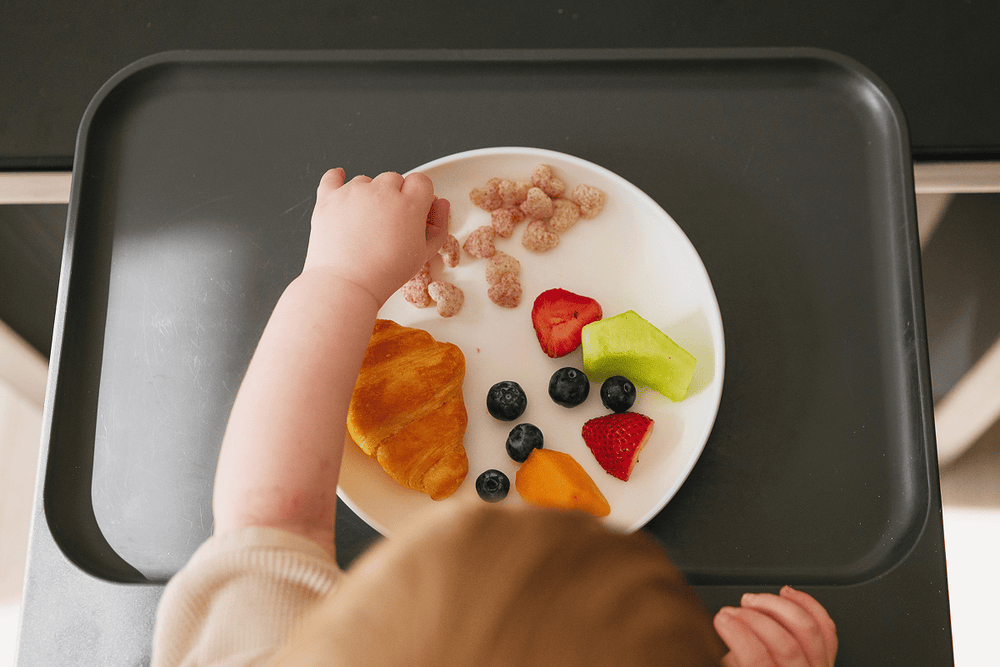
Your baby has just started solids, the high chair is covered in sweet potato, and someone at the playground mentions that their eight-month-old is already on a straw cup. Now you are standing in a store aisle looking at forty cups with spouts, straws, valves, weighted bases and 360 rims, wondering which one you were supposed to buy two months ago.
You have not missed anything. Our view: you need two cups, not a collection. An open cup at the table for learning, and a straw cup for everywhere else. The classic hard-spout sippy cup is optional, and if you use one, skip the valve. The rest of this guide explains when to bring each cup in, how to teach it, and when to move on from the bottle.

Sippy cup age range: when to introduce each cup
The American Academy of Pediatrics (AAP) recommends offering your child a cup "when they start eating solid foods, usually around 6 months." That is the start line for every cup type, not just sippy cups. If you are not sure your baby is ready for solids yet, our guide to when to start solids and the signs that matter covers it.
From there, the AAP lays out a simple arc:
- Around 6 months: bring a cup to the table at meals. The AAP suggests starting with "formula or breast milk in their cup" (whatever your baby already drinks), then adding plain water at mealtimes as they get the hang of it.
- 12 to 18 months: finish moving off the bottle. The AAP describes reducing bottle feeds slowly and "completing the transition sometime between 12 and 18 months."
- By about 2 years: "It's healthiest for kids to drink from an open cup by about 2 years of age," according to the AAP.
Babies vary a lot inside those windows. Some take to a cup in a week; others push it away for months. If your child has a chronic illness, a physical difference or a motor delay, the AAP advises asking your pediatrician to set a schedule that fits your child.
Sippy cup vs straw cup vs open cup: which to choose
The AAP accepts all three: "You can use a 'sippy' (training) cup with a spouted lid or offer a cup and straw. Some children may choose to drink from an open cup without a straw – and that's just fine, too." So this is a practical choice, not a safety one.
Here is our pick. Teach with an open cup at meals, and use a straw cup as the everyday and on-the-go cup. The open cup is where the drinking skill gets learned, and it is the cup your child will use for life. A straw cup is the most useful closed cup for car seats, strollers and daycare bags. We would only add a hard-spout sippy cup if your baby refuses both, and then only a valve-free one for a short stretch.
The reason is the valve. Many sippy cups have a valve under the spout to stop spills, and the AAP's point about them is blunt: kids "have to suck to get any liquid from them, which is just like drinking from a baby bottle." If you want a sippy cup, the AAP advises choosing one "with no valve," a snap-on or screw-on lid, a simple spout and two handles.
| Cup type | How the drink comes out | Spills if tipped | Parent help needed at first | Best use |
|---|---|---|---|---|
| Open cup (our pick for learning) | Tipped to the lips, sipped from the rim | Yes | Yes, parent holds and tips | Meals at the table |
| Straw cup (our pick for everyday) | Drawn up through a straw | Depends on lid design | Until the straw "clicks" | Car, stroller, daycare, between meals |
| Sippy cup, no valve | Flows from a spout when tilted | Drips | Little | Short bridge if a baby refuses the others |
| Sippy cup with valve | Only when the child sucks | No | Little | The AAP advises against it for learning |
| 360 (spoutless) cup | From the rim when lips press the seal | No | Some | Older babies and toddlers on the go |
What we would skip: any sippy cup with a valve, and buying more than one closed cup as a backup before you know which your baby will use. The hard-spout sippy stage itself is optional, so you can skip it too if the open and straw cups are going well.
A note on 360 cups: the AAP page does not mention them, so treat them as one more closed cup. They are handy in the car, but they are not a substitute for practice with a real open cup.
How to teach an open cup (it takes a few weeks)
Most babies dribble more than they drink for the first few weeks. That is the learning, not a sign it is not working. These steps are what we find works at home; they are not an AAP protocol:
- Use a small cup with very little in it. A shot-glass-sized cup with a sip or two of breast milk, formula or water. Less liquid means a smaller mess and a slower pour.
- Hold the cup yourself at first. Rest the rim on your baby's lower lip and tip it just enough for the liquid to touch their lips. Let them close their mouth and take it.
- Stop when they turn away. A few sips per meal is plenty at 6 months, since milk is still doing the feeding.
- Hand over control gradually. Guide their hands on the cup, then let them try alone. Expect spills, and put the cup down after each sip.
- Drink alongside them. The AAP suggests modelling "good habits by drinking water when you eat together."
If you are doing baby-led weaning, the open cup fits naturally at the same meals. Set up the table for spills; our first-foods setup for less cleanup helps.
How to teach a straw cup
Many babies get straws faster than open cups, and some take a while. Two tricks help:
- The finger trick. Dip a plain straw into water, cover the top with your finger to trap a little liquid, put the bottom end on your baby's lip, then lift your finger so a small amount flows in. Repeat until they start closing their lips around the straw.
- Show, then wait. Drink from a straw in front of them. Babies copy far more than they follow instructions.
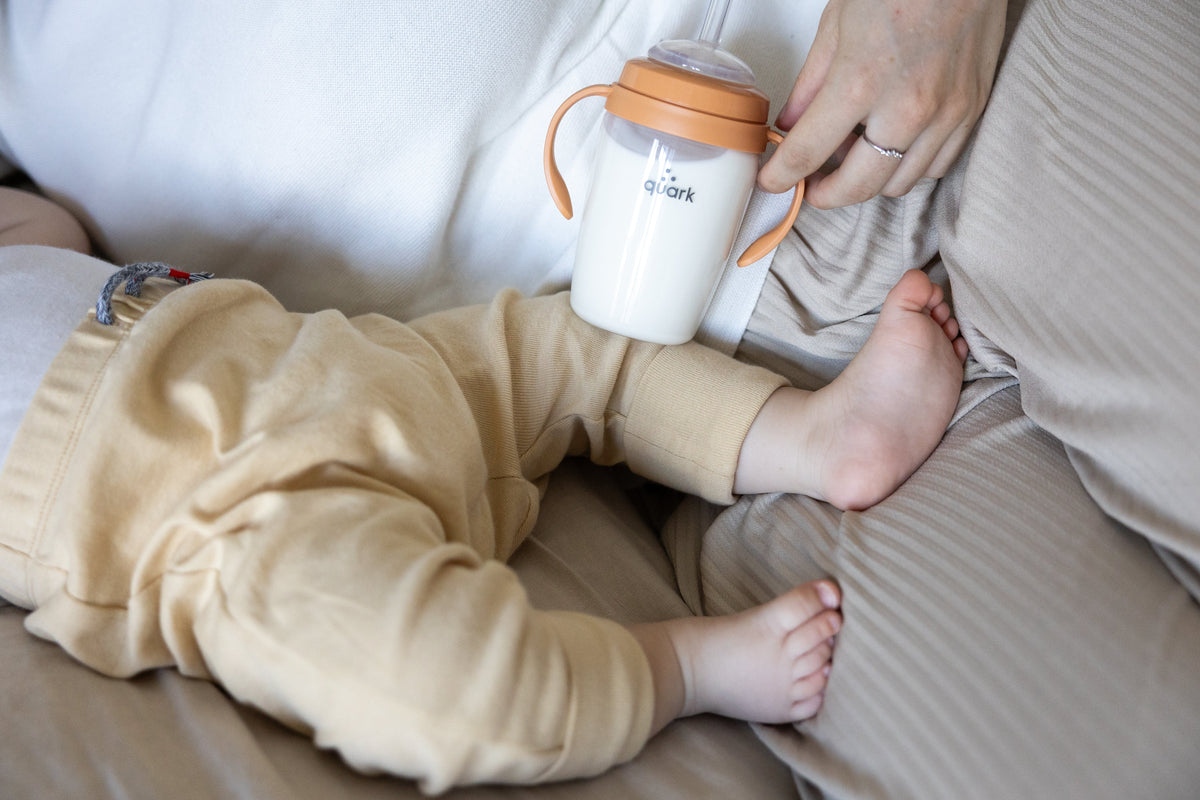
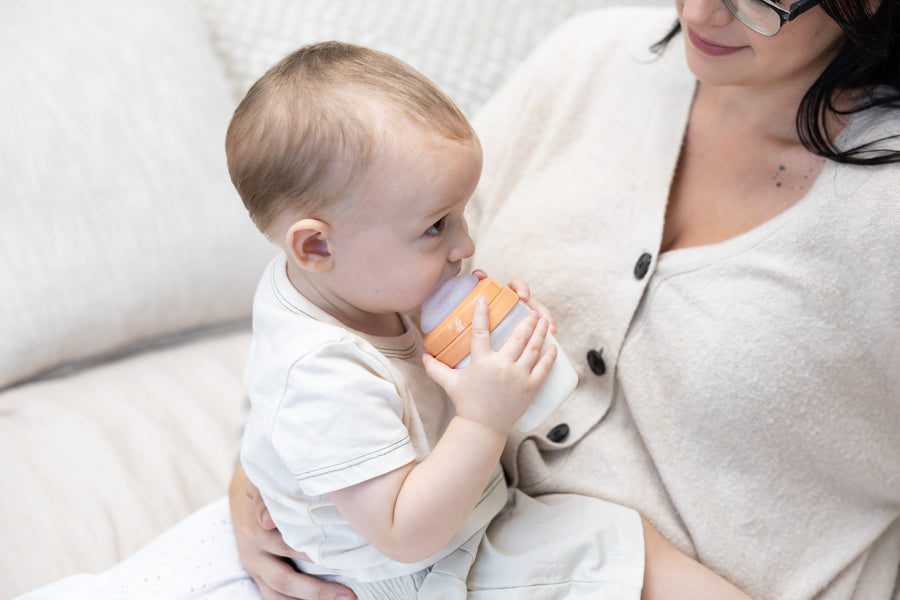
Once they can draw liquid up on their own, a closed straw cup becomes the easy everyday cup. Ours is the BuubiBottle Sip, a toddler straw cup with a soft straw, an easy-grip silicone collar and a shatterproof Grilamid® TR-90 body; the product page lists it as BPA-free and dishwasher safe. Like any closed take-along cup, it works best alongside open-cup practice at the table, not instead of it.

What to put in the cup, and how much
- Breast milk or formula at meals while your baby learns, as the AAP suggests.
- Water from around 6 months: the AAP gives 4 to 8 ounces a day (0.5 to 1 cup) for babies 6 to 12 months, offered "in an open, sippy, or strawed cup."
- No juice before 12 months. The AAP states "babies younger than 12 months should not be given juice." After 12 months, it advises only 100% fruit juice, no more than 4 ounces a day, and "only in a cup, not in a bottle."
- Keep sippy cups plain. "When your child is using a sippy cup, only fill them with plain fluoridated water without juice or sugar," says the AAP.
The AAP also advises offering cups "mainly at mealtime." A toddler who carries a cup around all day can drink too much and has teeth bathed in whatever is in it, which is part of why prolonged bottle use is linked to cavities.
Moving off the bottle without a battle
The AAP's approach is gradual: keep bottles at mealtimes at first, then drop the ones at other times, "especially naps or bedtime." Offer extra cuddles, songs or stories at those moments so the bottle is not the only comfort on offer. Every caregiver, including daycare and grandparents, should follow the same routine so your child is not getting mixed signals.

If you have been using one bottle system since the newborn days, our guide to what actually changes from newborn to toddler covers which parts carry over. If your baby is cutting teeth and chewing every spout and straw, that is common; our teething guide has gentler options.
If refusal turns into a daily standoff, the AAP's advice is to talk with your pediatrician. Resistance on its own "doesn't mean you're doing anything wrong."
Common questions about sippy, straw and open cups
Does my baby need a sippy cup at all?
No. The AAP calls the sippy cup "an optional step toward using a 'regular' cup" and notes that many children go straight from breast or bottle to a regular cup.
Is a straw cup better than a sippy cup?
It depends on the sippy cup. The AAP's concern is with valved spouts, which make a child suck just like a bottle. A valve-free sippy cup is acceptable. We still prefer a straw cup as the take-along cup and an open cup for learning.
Can I put breast milk or formula in a straw cup?
Yes. The AAP suggests starting cups with whatever milk your baby already drinks, then adding water at mealtimes.
Are 360 cups good for babies?
It depends on how you use them. They are tidy for travel, but the AAP does not list them, and a closed cup is not open-cup practice. Use one as a take-along cup, not your only cup.
When should my toddler stop using a bottle?
The AAP describes completing the move from bottle to cup sometime between 12 and 18 months, starting with a cup at meals around 6 months.
How do I clean a straw cup properly?
Take the lid and straw apart after every use, run a thin straw brush through the straw, and check for milk residue in the lid's corners. Dishwasher-safe cups, like the BuubiBottle Sip, can go in the dishwasher once disassembled. Our guide to food-grade silicone explains what to look for in soft parts.
Sources
- American Academy of Pediatrics, HealthyChildren.org (Jennifer Shu, MD, FAAP): From Bottle to Cup: Helping Your Child Make a Healthy Transition (last updated July 3, 2023)
- American Academy of Pediatrics, HealthyChildren.org (Natalie D. Muth, MD, MPH, RDN, FAAP): Recommended Drinks for Children Age 5 & Younger (last updated October 3, 2023)
- American Academy of Pediatrics, HealthyChildren.org: Starting Solid Foods (last updated June 23, 2026)
Written by the Quark Editorial Team. Medically reviewed by Dr. Yang. Last reviewed October 29, 2026.
This article is general parenting guidance and is not a substitute for advice from your own doctor. Quark makes baby feeding gear, not medical products. If your child has trouble swallowing, coughs or chokes often when drinking, or has a condition that affects feeding, talk with your pediatrician.


Leave a comment
All comments are moderated before being published.
This site is protected by hCaptcha and the hCaptcha Privacy Policy and Terms of Service apply.