

Baby Food Maker vs Store-Bought Purées: Who Each One Is Really For
Forget “which is healthier.” The real question is which one survives a normal week in your kitchen — and that answer is different for different parents.

You’re standing in the baby aisle holding a four-dollar pouch, doing the math on a freezer full of them, and somewhere in the back of your mind is the food maker your sister swears by. The pitch on both sides is loud. Pouches promise you your evenings back. The machine promises “real food, made by you.” Neither pitch tells you the part that actually matters: which one fits the version of you who is exhausted on a Wednesday.
So let’s skip the guilt and the marketing. Here’s the honest read on who should make their own purées, who should buy them, and why most families quietly end up doing both.
The short, opinionated verdict
If you already cook most nights, have a little freezer room, and want to control texture as your baby moves from smooth to lumpy to finger food — make it. A baby food maker pays off fastest for parents who batch on a Sunday and feed from the freezer all week. The real win isn’t saving money (though it can); it’s steering the texture progression yourself instead of waiting for a brand to sell you the next stage.
If your week is unpredictable, you travel or do daycare drop-offs, or the thought of washing a blade at 7 p.m. makes you want to lie down — buy them, and don’t feel bad about it. Store-bought purées are consistent, shelf-stable, and genuinely useful when feeding has to happen out of a diaper bag. The honest trade-off is cost per portion and a texture range that a brand, not you, decides.
The best baby-food system isn’t the healthiest one on paper. It’s the one you’ll still be using in three weeks.
The two-layer comparison
Two things get called “the comparison” and they’re not the same. One is the judgment — who should pick what, and what they give up. That’s the prose above. The other is the dry, scannable facts. Here’s the second layer, kept deliberately factual so you can skim it in ten seconds.
If you only skim one thing: homemade trades your time for control and lower cost per portion; store-bought trades money for convenience and shelf life.
| Baby food maker (homemade) | Store-bought purées | |
|---|---|---|
| Cost per portion | Lower with regular use | Higher per serving |
| Ingredient control | You choose everything | Fixed recipe; label shown |
| Texture control | Smooth to lumpy, your call | Set by the brand |
| Convenience | Prep + cleanup in batches | Open and feed |
| Freshness | Made fresh, used in days | Shelf-stable |
| Shelf life | ~24–48h fridge / freeze | Months sealed |
| Upfront cost | One appliance | None |
Just the facts, side by side — the verdict’s in the paragraphs above; this table is only the quick scan.
Where the money actually goes
“Homemade is cheaper” is true and misleading at the same time. The appliance is one cost. The rest is produce, your prep time, storage trays, and — honestly — the food a new eater spits out while learning. A maker is worth it when you use it regularly and waste little; it sits in a cabinet collecting dust if you batch once and lose interest.
Store-bought flips the math. You pay more per portion, but you skip the appliance, the prep, and a lot of the waste when your baby eats three spoonfuls and is done. For occasional eaters and busy stretches, that can genuinely be the cheaper-in-practice option. Compare the whole routine, not the price of one jar against one machine. If you want to weigh the appliance route, the public specs on the Quook baby food maker are a reasonable starting point.
The part nobody warns you about: cleanup
This is where most food makers quietly lose. Picture the full loop — wash produce, chop, steam, blend, cool, portion, wash the blade, dry the parts, label the trays, and serve hours later. If that sounds doable, a maker will hold up. If it sounds like a second job, store-bought and simple soft foods will keep you sane.
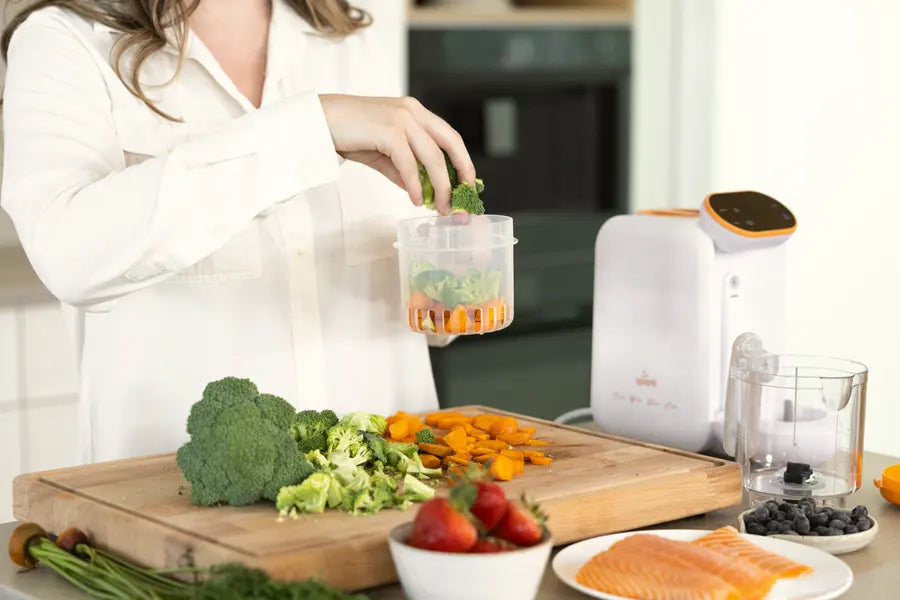
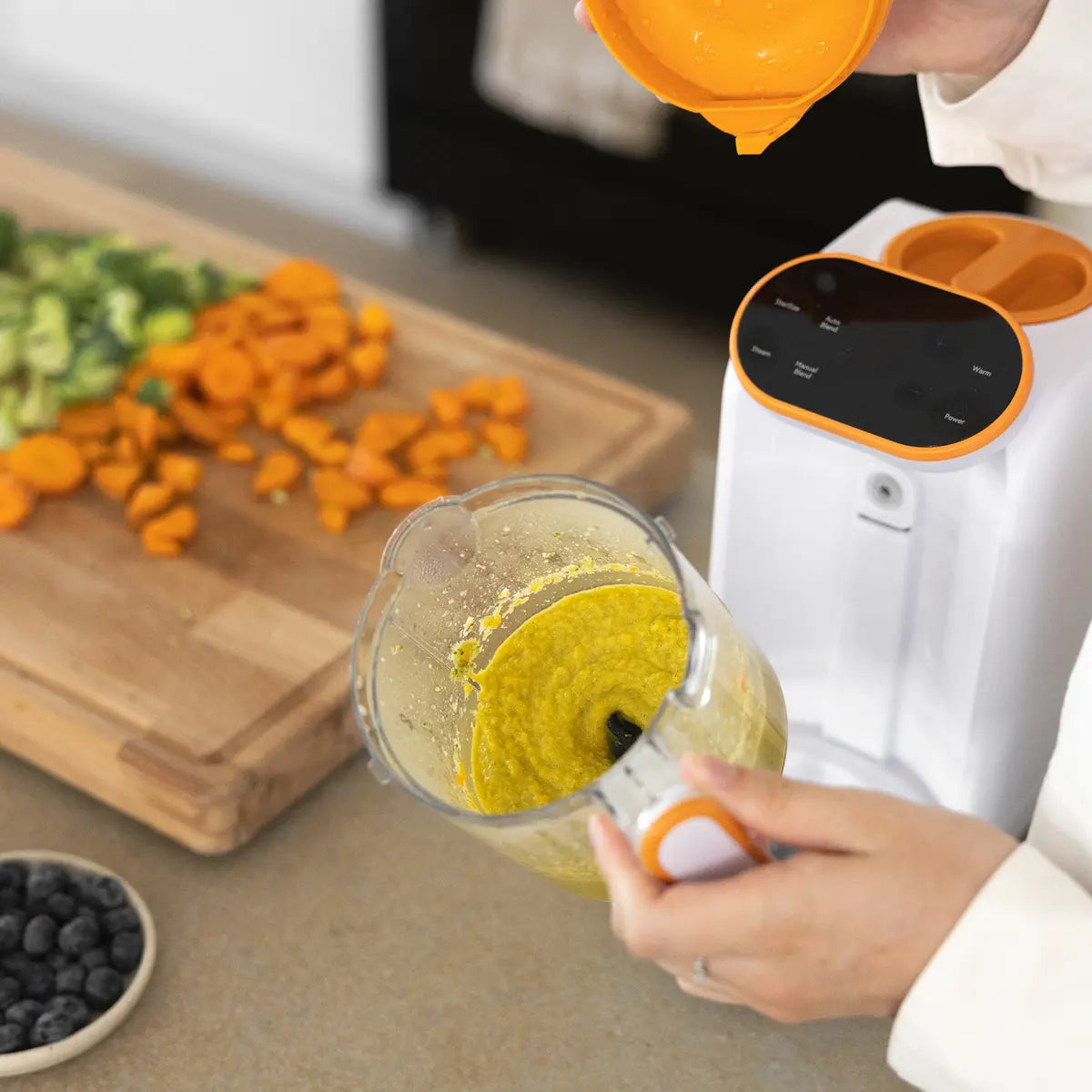
Cleanup is exactly why an all-in-one matters more than the blend quality. The blade, basket, and cup are the parts you’ll wash most, so how quickly they come apart decides whether the machine stays on your counter. A unit that steams and blends in the same cup — like the Quook’s setup — cuts the part count you’re scrubbing, which is the difference-maker on a tired night.
Control is the real reason to make it
If there’s one honest argument for a maker, it’s texture. You decide whether today’s purée is thin, thick, mashed, or barely-blended with a few soft lumps — and you advance it on your baby’s schedule, not a brand’s “stage 2” label. Manual blending is what makes that possible, and it’s a big part of why parents who want to drive the texture progression themselves reach for a machine in the first place.
That control comes with responsibility, though. Homemade food still needs safe cooking, fast cooling, dated storage, and age-appropriate texture. It doesn’t skip the work of watching for readiness, allergens, and choking risk — it just hands you the steering wheel. If you’re curious how a maker handles different foods, our walkthrough on vegetables, fruit, meat, and grains covers what each needs.
Food-safety rules that apply either way
Starting solids is a food-handling routine as much as a feeding milestone. The AAP describes around six months as the typical time to introduce foods beyond breast milk or formula, while noting every baby is different. Whichever path you pick, these boundaries hold:
- No honey before 12 months. It can cause infant botulism in babies under one — never add it to homemade purées, and check labels on store-bought foods.
- No added salt or sugar. Set aside a baby portion before you season family food, and favour store-bought options without added salt or sugar.
- Store it safely. Cool fresh purées promptly; refrigerate and use within about 24–48 hours, or freeze and label with the date. Don’t leave perishable baby food at room temperature beyond two hours, don’t save a container a spoon went back into from baby’s mouth, and don’t refreeze thawed food. Handle opened pouches and jars per the package.
- Reheat fully, then cool. Heat until steaming, stir, and cool to a safe eating temperature, checking for hot spots first.
- Match texture to age. Avoid or modify small, hard, round, or sticky foods — whole grapes, nuts, popcorn, meat or cheese chunks, hard raw veg — and always supervise.
- Introduce allergens early. There’s no evidence that delaying baby-safe forms of common allergens prevents allergy. Offer them in age-appropriate textures, watch for reactions, and ask your pediatrician for individual guidance if there’s a family history.
The hybrid is the honest answer for most families
Here’s where the majority actually land: homemade when the week allows, store-bought for travel, illness, daycare, and the days that fall apart. Reaching for a pouch on a rough Tuesday isn’t a failure of homemade feeding — it’s how feeding stays sustainable for months instead of collapsing in week three. The right system feeds your baby safely, moves them through the right textures, and doesn’t run you into the ground.
Still deciding whether an appliance belongs in your kitchen at all? It’s worth knowing how a dedicated maker compares to a steamer and blender you may already own, and which materials, cleaning, and capacity actually matter before you buy.
There’s no medal for making every purée from scratch, and no shortcut tax for buying pouches. Pick the path that matches your real week, keep a few backups for the days that don’t go to plan, and let yourself switch as your baby grows. The goal was never “homemade” or “store-bought.” It was a fed, happy baby and a parent who isn’t running on empty.
Common questions
The questions parents ask us most when they’re standing in that aisle.
Is homemade baby food healthier than store-bought purées?
Neither is automatically healthier. A maker gives you control over ingredients and texture; store-bought gives consistent labelling and convenience. Safety and nutrition come down to preparation, storage, and age-appropriate texture either way — which is why most families do well with a mix of both.
Is a baby food maker actually cheaper than buying purées?
It can be, but only with regular use. Homemade can lower cost per portion when you batch efficiently, though savings depend on produce prices, food waste, freezer discipline, and how often you really use the appliance. Compare the whole routine, not one jar versus one machine.
Are store-bought purées safe for babies?
Yes, when handled correctly. Read the label, follow package directions, and refrigerate or discard opened pouches and jars per the manufacturer’s timing. Avoid feeding straight from the container if you’ll save leftovers, since saliva can introduce bacteria.
How do I store homemade baby food safely?
Cool fresh purées promptly, then refrigerate and use within about 24 to 48 hours or freeze for longer, labelling every portion with the date. Don’t leave perishable baby food at room temperature beyond two hours, don’t save a container a spoon went back into from baby’s mouth, and don’t refreeze thawed food.
Can I do both without wasting money?
That’s what most families do. Batch homemade portions when your week allows, keep a few store-bought pouches for travel and busy days, and lean on whichever fits the moment. A small freezer stash plus a couple of backups is a sensible system, not a compromise.
Sources
- American Academy of Pediatrics (HealthyChildren.org): Starting Solid Foods
- Health Canada: Nutrition for Healthy Term Infants — Birth to Six Months
Reviewed for accuracy by Dr. Yang · Last updated June 2026 · General guidance, not a substitute for advice from your own healthcare provider. Always follow current infant-feeding and food-storage guidance.


Leave a comment
All comments are moderated before being published.
This site is protected by hCaptcha and the hCaptcha Privacy Policy and Terms of Service apply.